
The pairing of sea and painting is thought of as a perfect match. And yet the relationship between the two has not been as long or as peaceful as one might imagine, bound up as it is with the history of humankind and the sea.
For a long time the sea was seen as a place to be feared, crossed only out of necessity. That was the case from the Greeks until practically the middle of the 19th century. Which tells us that splashing about at the water's edge is a modern invention. And of course, all this has been expressed in artistic terms.
References to the sea and to seafaring have existed in art since antiquity, but marine painting only really developed as a subgenre of landscape in any consistent way towards the end of the 16th century. And through the evidence of painting you can clearly follow the evolution of what the sea has meant to human beings.
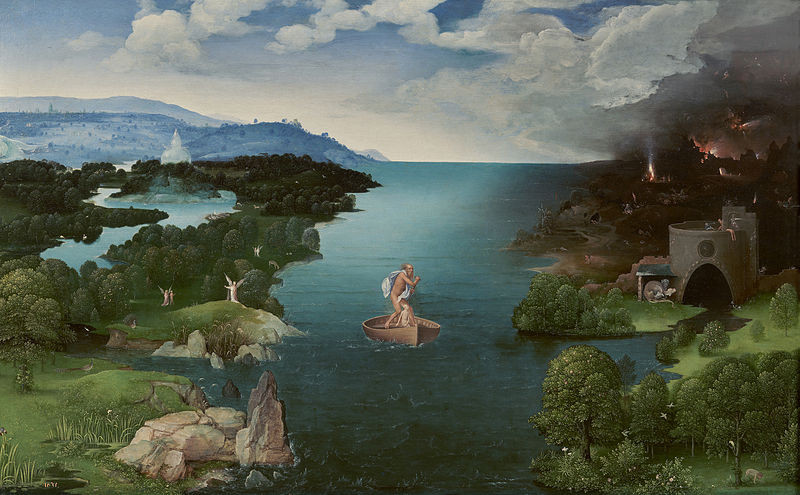
The ocean began as an ideal setting for staging battles and adventures. An unfamiliar backdrop that, on many occasions, was depicted far from reality. The master landscape painter Joachim Patinir reminds us in El paso de la laguna Estigia (1520- 1524) that the traditional idea of hell was watery. In the oil painting, the ferryman Charon carries the soul of the dead man towards its terrible final destination.
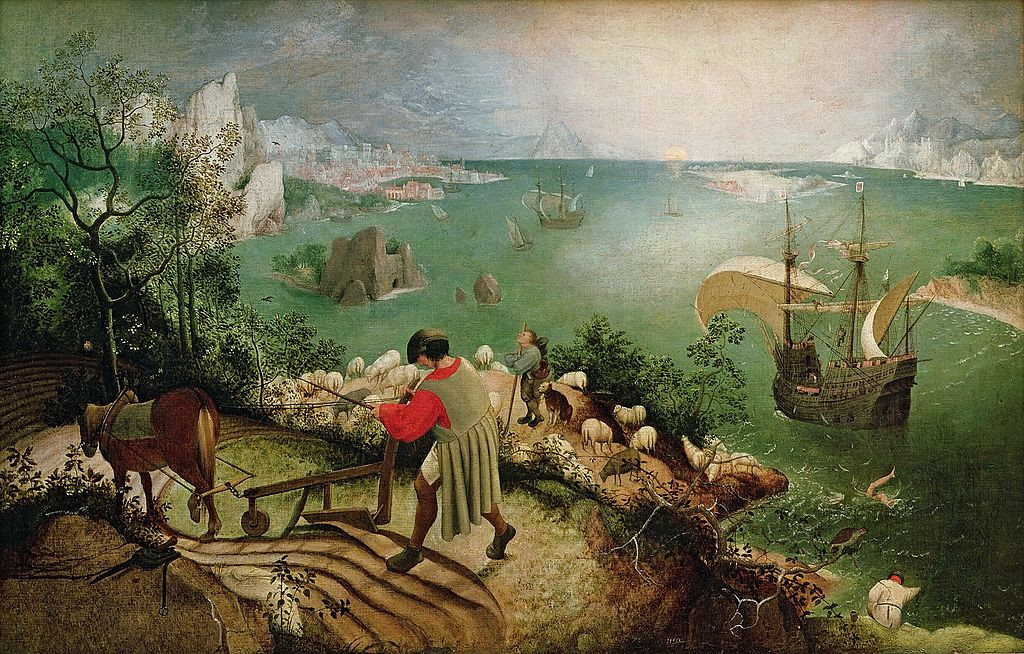
The discovery of America also had its consequences for landscape. Pieter Brueghel the Elder captures that conquest of new territories by sea in Paisaje de la caída de Ícaro (1554- 1555), where the world of the sea fades into the horizon, hemmed in by the coast and the activities of the land.
Human beings were, then, winning ground from the sea and living according to it. The best example is Holland. Which by the second half of the 17th century had become mistress of the seas thanks to its naval power. No surprise, then, that it was the first to devote real care to marine painting.
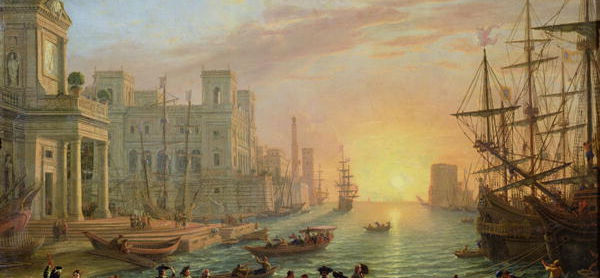
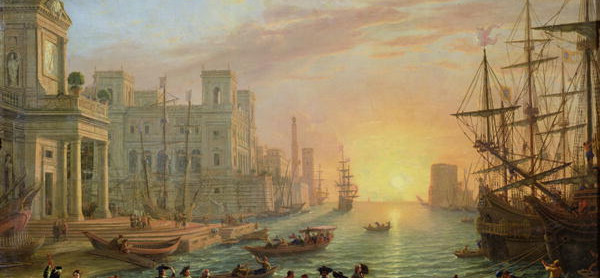
Romantic shades reached the sea with Claudio de Lorena. His reading of twilight showed that landscape is fundamentally reflected light. An influence picked up by William Turner in his paintings of the sublime, who was also interested in dealing with the evolution of ships. Caspar David Friedrich, for his part, poured into the sea the religious feeling he drew from nature.
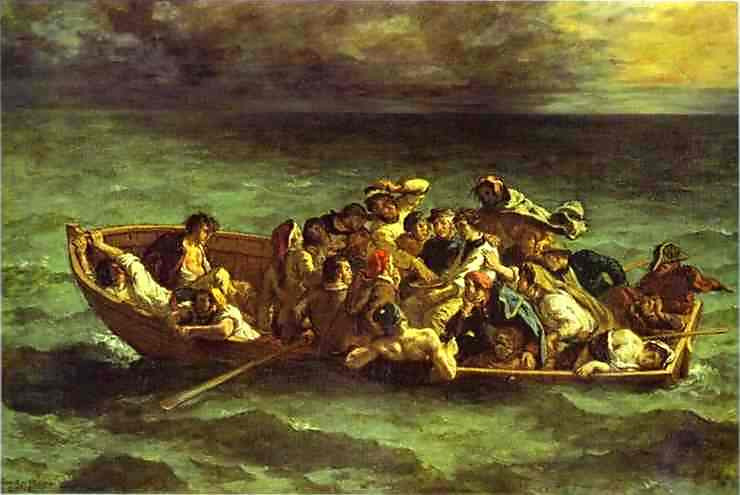
Although there was something else that caught the attention of the Romantics: the drama of shipwrecks. The Frenchmen Théodore Géricault and Eugène Delacroix built genuine artworks out of that catastrophe.
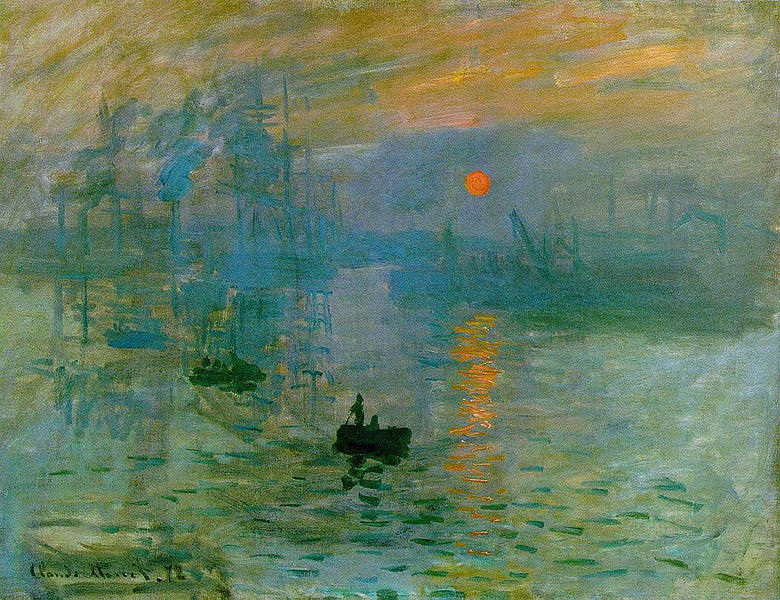
Everything changed with Claude Monet. His way of approaching the sea was revolutionary. He banished any dramatic tone and kept the naturalist view of the sea. A space that was already becoming busier and where, at the same time, the sense of danger surrounding it was fading.
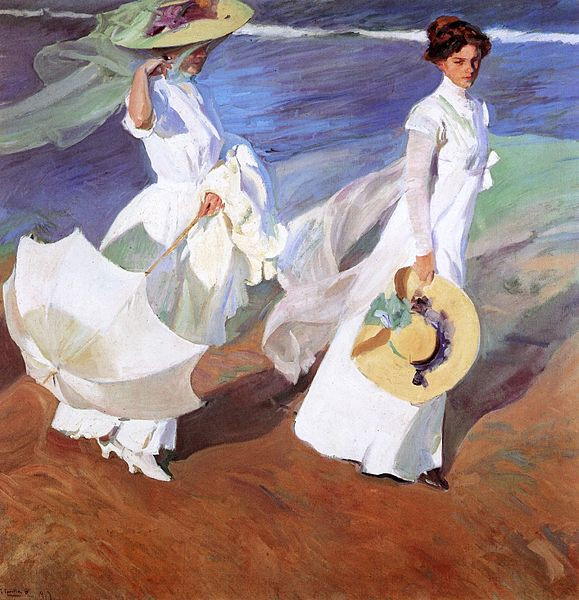
The aesthetic function became even more normal with Eugène Boudin, whose paintings showed something surprising: people spending their free time at the seaside. We are almost at the end of the 19th century now, and the beach will be the place the bourgeoisie happily head for on Sundays, taking hold as a leisure destination. And no one will capture the light and the joy of those scenes on the sand like Joaquín Sorolla.




Comments (0)
Log in to leave your comment. Log in