
In the still life the artist doesn't just paint food, flowers or everyday objects, they also interpret the poetry and the soul of domestic life. We've picked six magnificent examples that let us go deeper into its many meanings and forms.
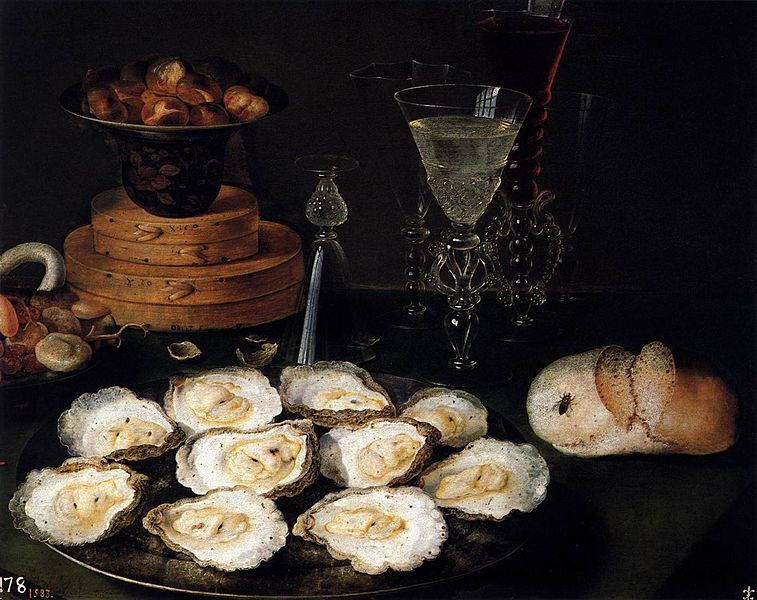
Naturaleza muerta (around 1606) by Osias Beert I
The still life reached its fullest expression with the Flemish and Dutch masters of the 17th century. These painters laid out in their creations a whole repertoire of precious objects, sophisticated tableware and exotic delicacies, giving themselves over to detail, reflections and textures. And, equally, to worlds full of connotations that sought to evoke moral feelings and sensations through the choice of particular foods or the way of presenting them. Osias Beert I belonged to this group of artists and was the driving force behind the so-called "breakfast pieces".
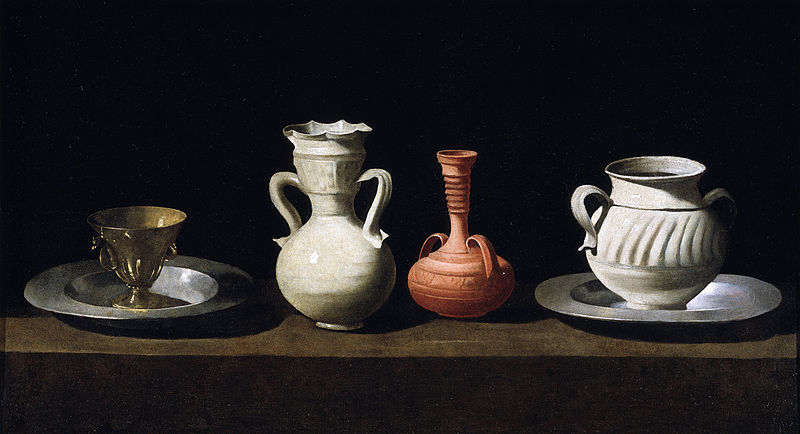
Bodegón con cacharros (around 1650) by Francisco de Zurbarán
Zurbarán painted few still lifes, but some of the finest ones are his. In this one he recreates four vessels, one metal and three of clay, along with two trays also of metal, producing a simple composition in which light becomes the real protagonist of the canvas by singling out each object. Even though the usual thing in his day was to look for a second meaning, what Zurbarán is mainly after is visual delight, avoiding any other kind of allusion in the artwork.
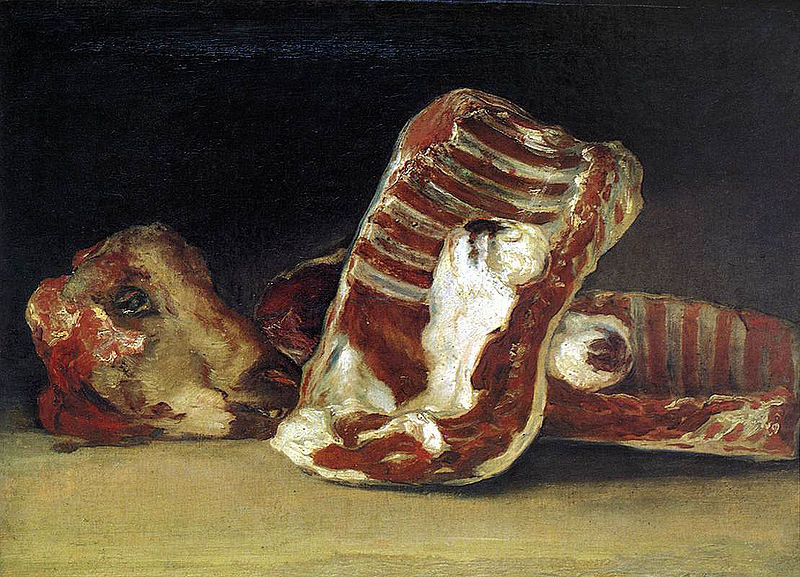
Bodegón con costillas y cabeza de cordero (1808- 1812) by Francisco de Goya
This piece belongs to the series of twelve still lifes Goya created around 1806- 1812. Stripped of the traditional character of the display of hunting trophies, they have been thought to suggest the tragic episodes of death and violence that took place in Spain during the Peninsular War, anticipating the harshness of the Desastres (1810- 1815). In them, the isolated bodies of the animals are rescued from the neutral background by the light. And, through an unrelieved rawness, Goya likens the flesh of the animals, inert and abandoned, to the bodies of the victims, mutilated and stripped of their dignity.
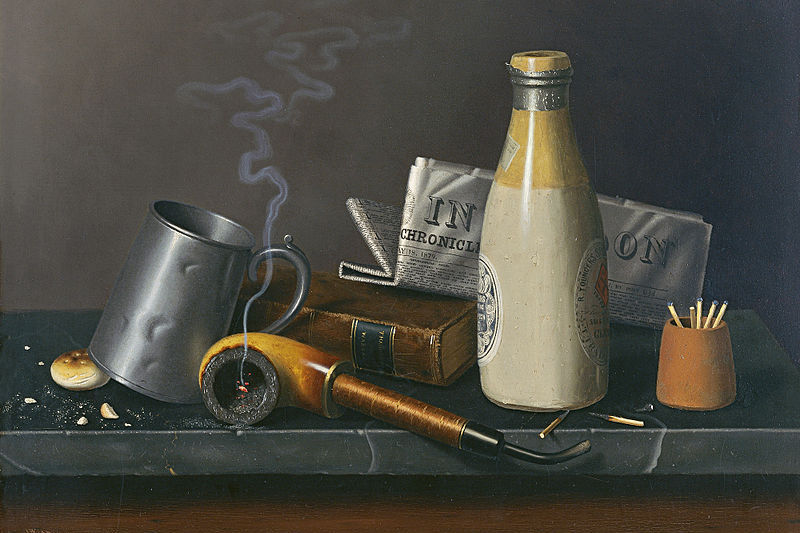
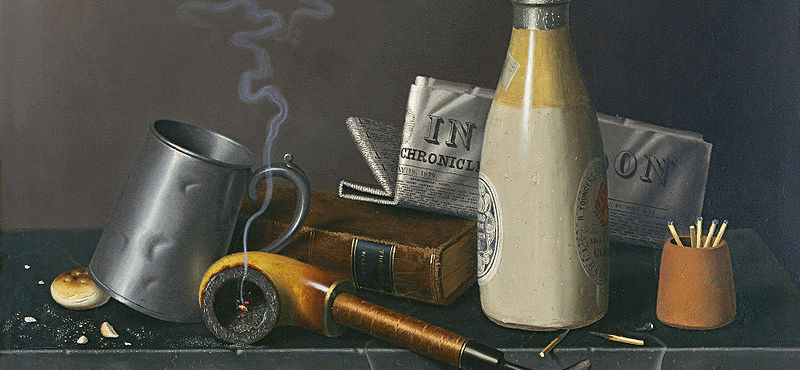
Objetos para un rato de ocio (1879) by William Harnett
Pipes and newspapers are among the elements that recur most in the still lifes of the American William Harnett, a master of trompe l'oeil. On this occasion he put together a vanitas by replacing the typical components of such creations, like skulls, clocks or coins, with burnt-out matches, an out-of-date newspaper and a smoking pipe. All of it arranged in an unstable, disorderly way in order to dismiss material wealth and hint at the fleetingness of life.
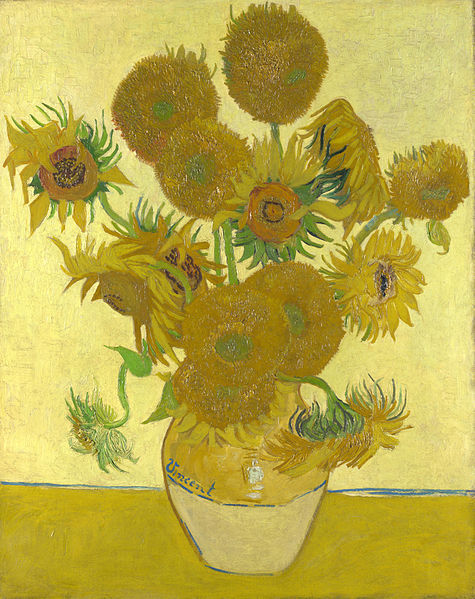
Los girasoles (1888) by Vincent van Gogh
Van Gogh made his famous floral series in 1888. That year he left Paris to paint the radiant sun of the south of France, in Arles, and invited Paul Gauguin to join him. The Dutchman, who was always drawn to sunflowers and to the colour yellow, painted some of his sunflowers while he waited, to decorate his friend's room, as a symbol of friendship and welcome. One of those paintings is the one we've chosen, the one in which the yellow shines brightest.
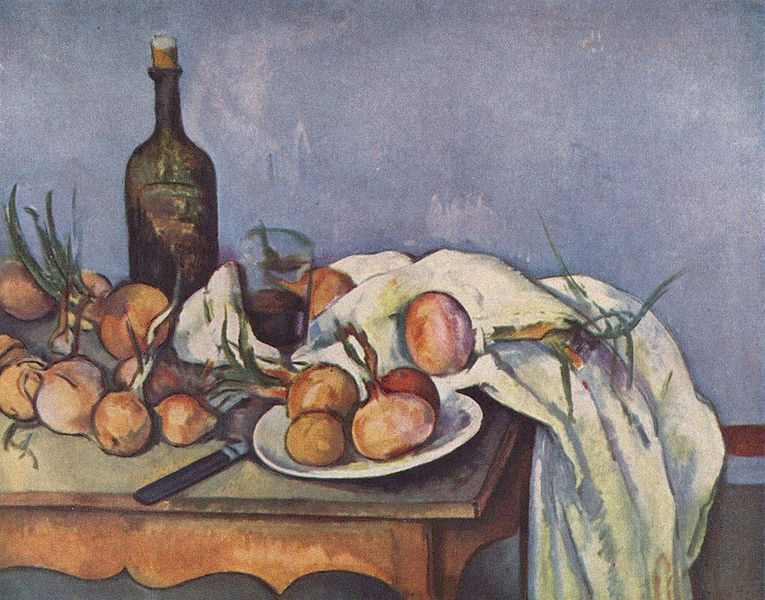
Bodegón con cebollas (1896- 1898) by Paul Cézanne
Just like landscape, the still life was for Cézanne the ideal means to investigate and analyse the structures of reality. In them he explored volume, space or the way light falls on forms with greater freedom. In this one in particular, we see how the bottle and the frieze of the piece of furniture are shown frontally, while the perspective of the tabletop is more pronounced. So within the same composition the elements have been developed from several points of view. Cézanne was setting up here a novel system of representation that he would take further later on and that opened the way to cubism.
Keep enjoying everything the still life can do in our collection!
Comments (1)
erico de groote
November 16, 2017Log in to leave your comment. Log in