
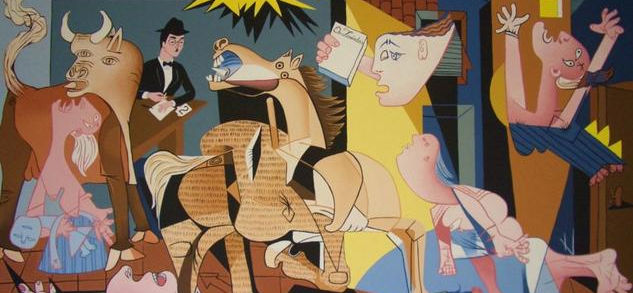
Pablo Ruiz Picasso's Guernica (Málaga, 1881 - Mougins, 1973) has been described as one of the most overwhelming and controversial artworks of contemporary art. And it has been from the start. The genius from Málaga built a symbol whose anti-war, committed message has never left anyone indifferent, and still doesn't. Nor has its aesthetic richness. Applying Picasso's maxim "I do not seek, I find", many artists have found multiple perspectives from which to interpret his most alive painting.
Since this is about history, it's worth going over it a little. The Guernica came about as a commission from the director general of Fine Arts, Josep Renau, at the request of the Government of the Spanish Republic. The canvas was born to form part of the Spanish Pavilion at the 1937 International Exhibition in Paris, with the state's aim of showing the horror caused by the Civil War and winning supporters for its cause.
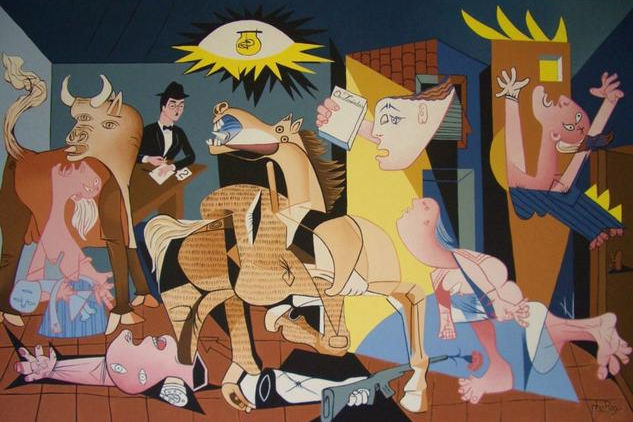
Dismayed by the dramatic images published in the French press, Picasso decided his artwork would portray the air raid carried out by the German Condor Legion on the Basque town that gives the mural its title, Gernika. The painting doesn't only refer to that event, though, it stands as a manifesto denouncing the drama unleashed by wars in general.
Picasso painted the Guernica in roughly a month, between May and June of that same year. Many of the sketches for the gigantic poster survive, and even photographs of each stage of its production, taken by Dora Maar, a close friend of the artist.
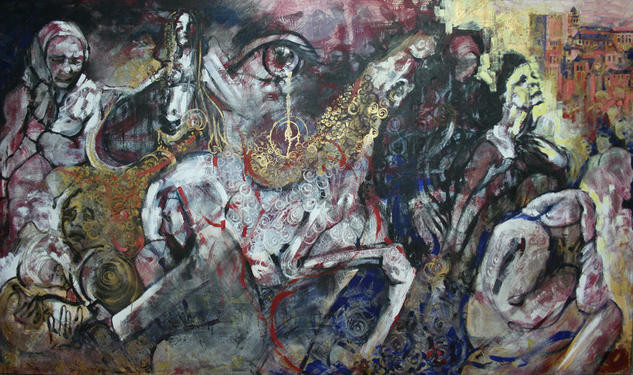
The canvas travelled around Europe and the United States. And in 1958 it was handed over, permanently, to the Museum of Modern Art in New York (MoMA). Although the painter from Málaga expressed his wish that it be transferred to the Spanish authorities once public liberties were restored in the country. On 10 September 1981, the Guernica arrived in Madrid surrounded by extraordinary security measures.
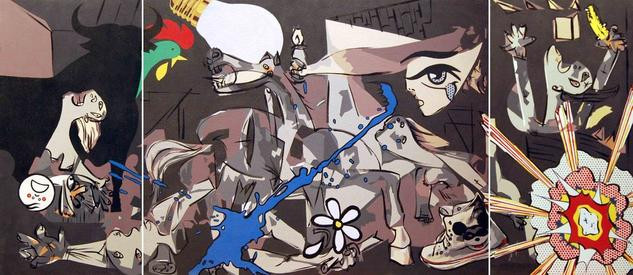
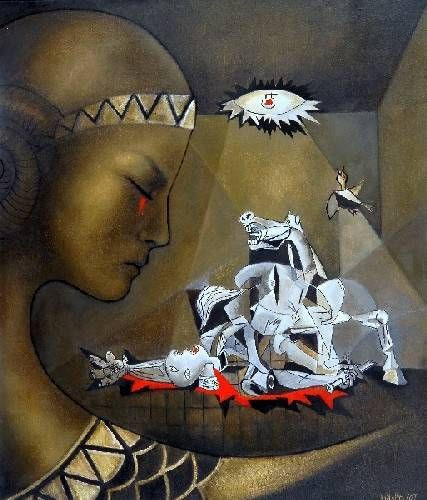
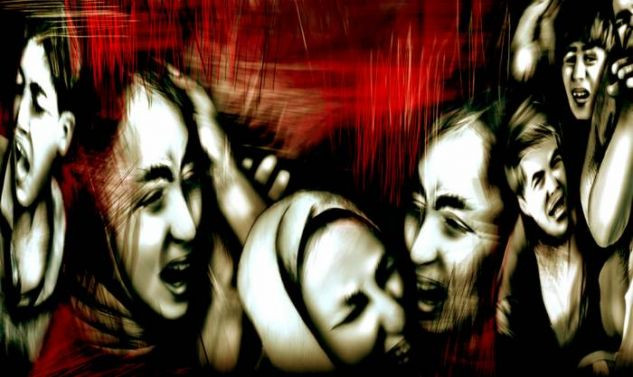
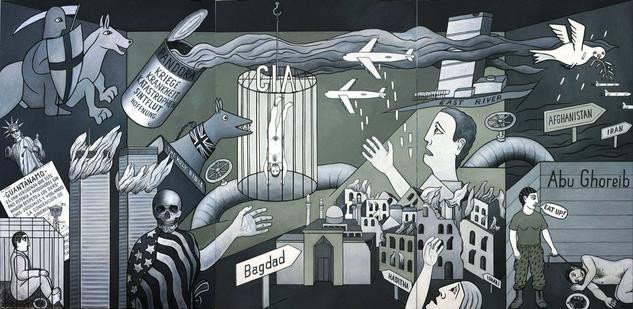
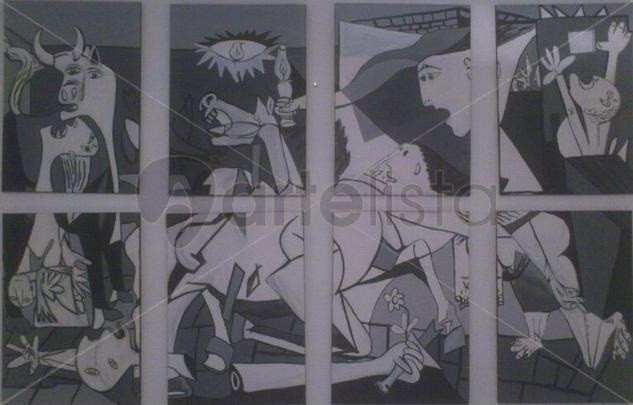
In that immensity of greys, Picasso gives his brushstrokes over to a social subject. He creates a masterpiece denouncing the suffering caused by the bombing. Its meaning inevitably invites reflection on the motives and the atrocity of that historical experience. But it also awakens the sensitivity and creativity of many artists, who reinvent the protest its figures are shouting. A mural, then, full of artistic attributes and of enormous symbolic value, one that has carried over into other eras, other conflicts.
With the Guernica becoming an icon against violence. An inexhaustible artwork that changes its light, its colour, even its shape, and yet still leaves behind a universal discourse against the senselessness and the terror of any war.
Comments (1)
Freddy
January 14, 2015Log in to leave your comment. Log in