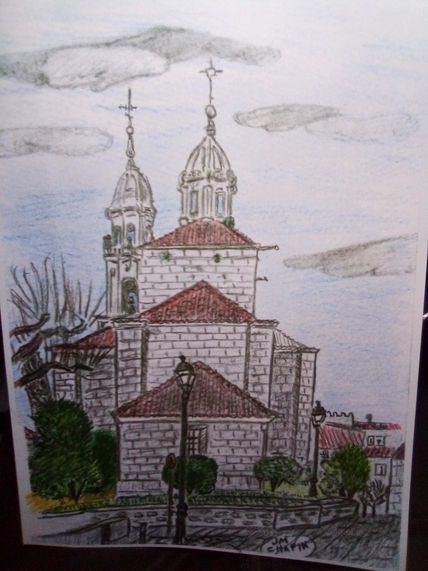
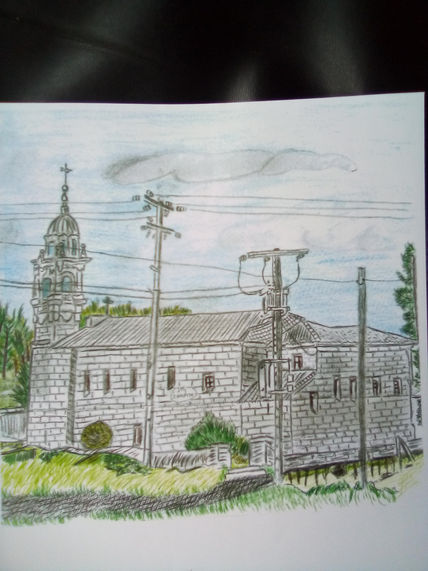
Iglesia de Caldas de reyes Pontevedra España
SELECCIONA TAMAÑO
El bastidor no está disponible para este tamaño. Elige un tamaño más pequeño.
150 €
ENVÍO Y DEVOLUCIÓN GRATIS
Compra la obra original de forma 100 % segura.
Reproducción de calidad con envío y devolución gratis.
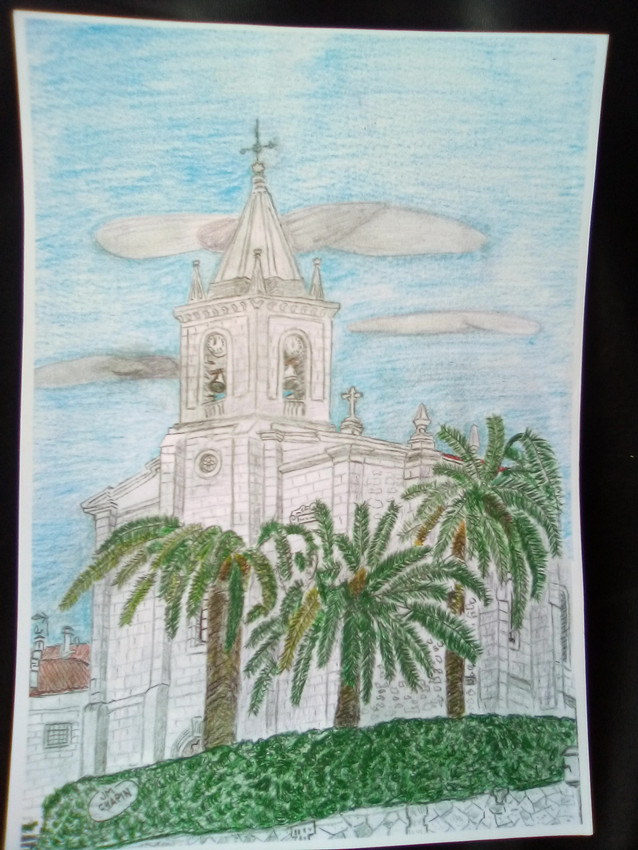
Detalles de la obra
Iglesia de santa María de Caldas de reyes Pontevedra - España
Caldas de Reis (Caldas de Reyes) es una villa de próspera, rica y de buen clima, amén de una dilatada historia y magnífico patrimonio románico.
Sus primeros pobladores, los cilenos, fueron sometidos por los romanos que constituyeron aquí el municipium "Aquae Celenae".
En la Alta Edad Media fue sede episcopal durante el dominio de los suevos, antes de su traslado en el año 569 a Iria Flavia.
En el siglo XII, la reina Urraca tenía una torre defensiva en Caldas y aquí residieron durante un tiempo ella y su hijo Alfonso, fruto de su matrimonio con el Raimundo de Borgoña, conde de Galicia y que reinaría como Alfonso VII.
El concello o municipio de Caldas de Reis es rico en arte medieval, especialmente iglesias románicas que se diseminan por sus parroquias. Tal es el caso de los templos de Santa María de Caldas de Reis, Santa María de Bemil, San Andrés de César y San Esteban de Saiar.
Monumentos de Caldas de Reis: parroquias románicas
Santa María de Caldas de Reis
La iglesia de Santa María de Caldas de Reis fue una iglesia románica del siglo XII que sufrió importantes reformas y adiciones modernas.
De su antigua fábrica románica queda su ábside, rematado en testero plano con refuerzo de contrafuertes laterales. Entre los canecillos de la cabecera hay numerosos que son historiados. Algunos muestran cabezas de bóvidos, muy frecuentes en el románico gallego y personas en distintas y confusas actitudes.
La puerta occidental es aún más interesante. Se encuentra cobijada bajo el pórtico moderno que soporta el campanario barroco.
Se trata de una buena portada de dos arquivoltas de medio punto y tímpano sobre dos parejas de columnas. La arquivolta externa muestra un perfil lobulado que se superpone al baquetón. La chambrana lleva un interesante repertorio de ángeles, que nos recuerdan lejanamente al mundo mateano.
En el tímpano se esculpió un cordero que sostiene con una de sus patas delanteras una cruz, representación del "Agnus Dei" muy habitual en los tímpanos románicos, pero especialmente repetido en la arquitectura románica gallega.
Atencion
Las medidas de esta obra son de 45*35 contando tan bien con marco y Pas partu
Tradution
Pontevedra (Spain)
Caldas de Reis (Caldas de Reyes) is a prosperous, rich town with a good climate, in addition to a long history and magnificent Romanesque heritage.
Its first settlers, the Cilenes, were subdued by the Romans who formed the "Aquae Celenae" municipium here.
In the Early Middle Ages it was an episcopal seat during the rule of the Suebi, before its transfer in the year 569 to Iria Flavia.
In the 12th century, Queen Urraca had a defensive tower in Caldas and she and her son Alfonso resided here for a time, the result of her marriage to Raymond of Burgundy, Count of Galicia who would reign as Alfonso. VII.
The council or municipality of Caldas de Reis is rich in medieval art, especially Romanesque churches that are scattered throughout its parishes. Such is the case of the temples of Santa María de Caldas de Reis, Santa María de Bemil, San Andrés de César and San Esteban de Saiar.
Atención
Esta obra tiene unas medidas de 45*35 contando tan bien con marco y Pas partu
Church of Santa María de Caldas de Reyes Pontevedra - Spain
Caldas de Reis (Caldas de Reyes) is a prosperous, rich town with a good climate, in addition to a long history and magnificent Romanesque heritage.
Its first settlers, the Cilenes, were subdued by the Romans who formed the "Aquae Celenae" municipium here.
In the Early Middle Ages it was an episcopal seat during the rule of the Suebi, before its transfer in the year 569 to Iria Flavia.
In the 12th century, Queen Urraca had a defensive tower in Caldas and she and her son Alfonso resided here for a time, the result of her marriage to Raymond of Burgundy, Count of Galicia who would reign as Alfonso. VII.
The council or municipality of Caldas de Reis is rich in medieval art, especially Romanesque churches that are scattered throughout its parishes. Such is the case of the temples of Santa María de Caldas de Reis, Santa María de Bemil, San Andrés de César and San Esteban de Saiar.
Monuments of Caldas de Reis: Romanesque parishes
Santa María de Caldas de Reis
The church of Santa María de Caldas de Reis was a 12th century Romanesque church that underwent important modern renovations and additions.
The apse remains from its old Romanesque factory, finished in a flat front with reinforcement of lateral buttresses. Among the corbels of the headboard there are numerous that are historic. Some show bovine heads, very common in Galician Romanesque, and people in different and confusing attitudes.
The western gate is even more interesting. It is sheltered under the modern portico that supports the baroque bell tower.
It is a good cover with two semicircular archivolts and a tympanum on two pairs of columns. The external archivolt shows a lobed profile that overlaps the baquette. The chambrana carries an interesting repertoire of angels, which distantly remind us of the Mattean world.
A lamb holding a cross with one of its front legs was sculpted on the tympanum, a representation of the "Agnus Dei" very common in Romanesque tympanums, but especially repeated in Galician Romanesque architecture.
Attention
The measurements of this work are 45*35, including the frame and Pas partu.
Translation
Pontevedra (Spain)
Caldas de Reis (Caldas de Reyes) is a prosperous, rich town with a good climate, in addition to a long history and magnificent Romanesque heritage.
Its first settlers, the Cilenes, were subdued by the Romans who formed the "Aquae Celenae" municipium here.
In the Early Middle Ages it was an episcopal seat during the rule of the Suebi, before its transfer in the year 569 to Iria Flavia.
In the 12th century, Queen Urraca had a defensive tower in Caldas and she and her son Alfonso resided here for a time, the result of her marriage to Raymond of Burgundy, Count of Galicia who would reign as Alfonso. VII.
The council or municipality of Caldas de Reis is rich in medieval art, especially Romanesque churches that are scattered throughout its parishes. Such is the case of the temples of Santa María de Caldas de Reis, Santa María de Bemil, San Andrés de César and San Esteban de Saiar.
Attention
This work measures 45*35, including the frame and Pas partu.
Sobre el artista

JMChapin Chapin
España | Dibujo
Por qué Lineal ? como pueden observar en mis obras ,remarcó la linea del monumento en negro con lápiz ,pues así doy caretizacion a mi obra y con ello la hago destacar aún más si cabe Comencé mi… Seguir leyendo
Más de JMChapin Chapin
TE PUEDE INTERESAR
Esta obra todavía no tiene comentarios. Sé el primero en comentarla.