
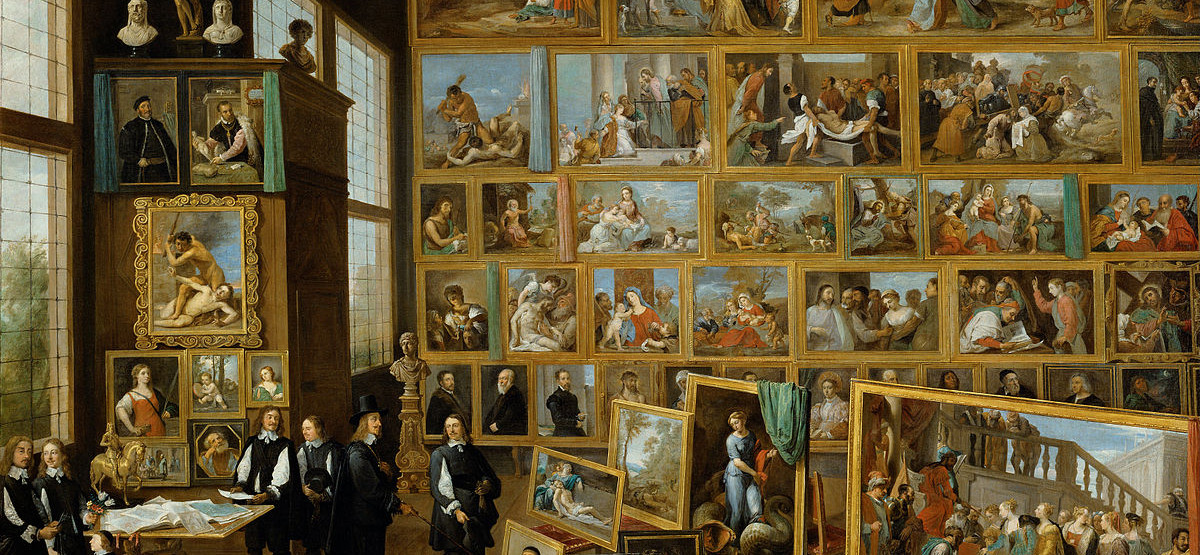
In the previous chapter, The Wunderkammern and the natural history cabinets, we discovered two very particular collecting spaces, focused on the study of the natural world from a scientific point of view. We had also seen the collecting typologies of the archaeological cortile and the gallery, which would end up culminating in the picture cabinet we are about to get to know.
During the 16th century, the great collectors were busy fighting over the Greco-Roman remains that were being unearthed, and that doesn't mean they weren't interested in painting, but rather that buying it was an act of patronage, not of collecting, since they were acquiring paintings by contemporary artists. Over time, the artist lost his status as a craftsman and, thanks to publications such as Giorgio Vasari's Lives of the Most Excellent Italian Architects, Painters and Sculptors (1550), the story of these Renaissance artists became known and, in the 17th century, a collector's interest in their artworks was born. Agents (dealers, antiquarians, or even artists) would devote themselves to finding and buying these artworks for their clients, who would display them in a specific architectural typology: the picture cabinet or picture gallery.
A pictorial genre would also be born, cabinet scenes, which would illustrate what these spaces were like and show us scenes in which the owner of the collection receives his guests and shows them his artworks. The attitude of these figures is always one of study, analysis and debate about the artworks they are looking at.
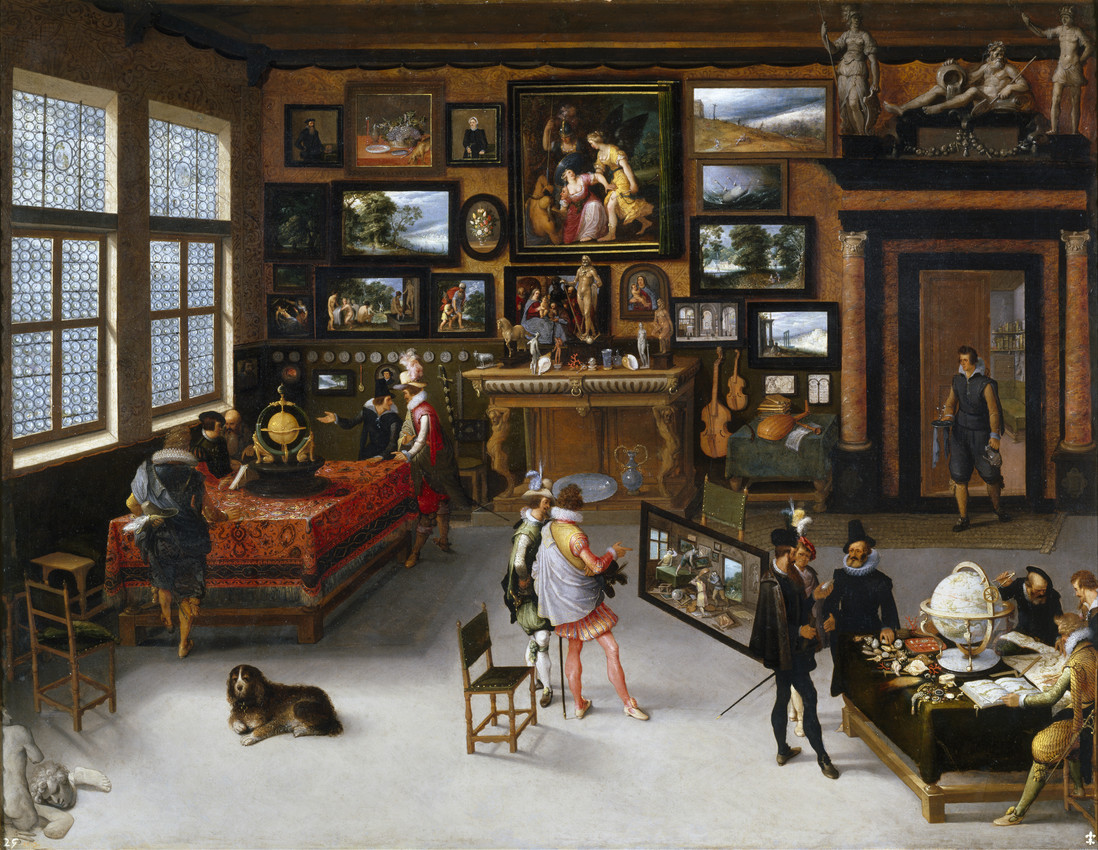
Stalbemt's artwork, Las ciencias y las artes, illustrates the transition between the natural history cabinets (sciences) and the picture cabinets (arts). Inspired by the interior of a Nordic house, he portrayed a space that would end up being a picture cabinet, but which still keeps elements typical of a natural history cabinet, such as a globe. As we were saying, the figures are shown reflecting on the elements scattered around the room.
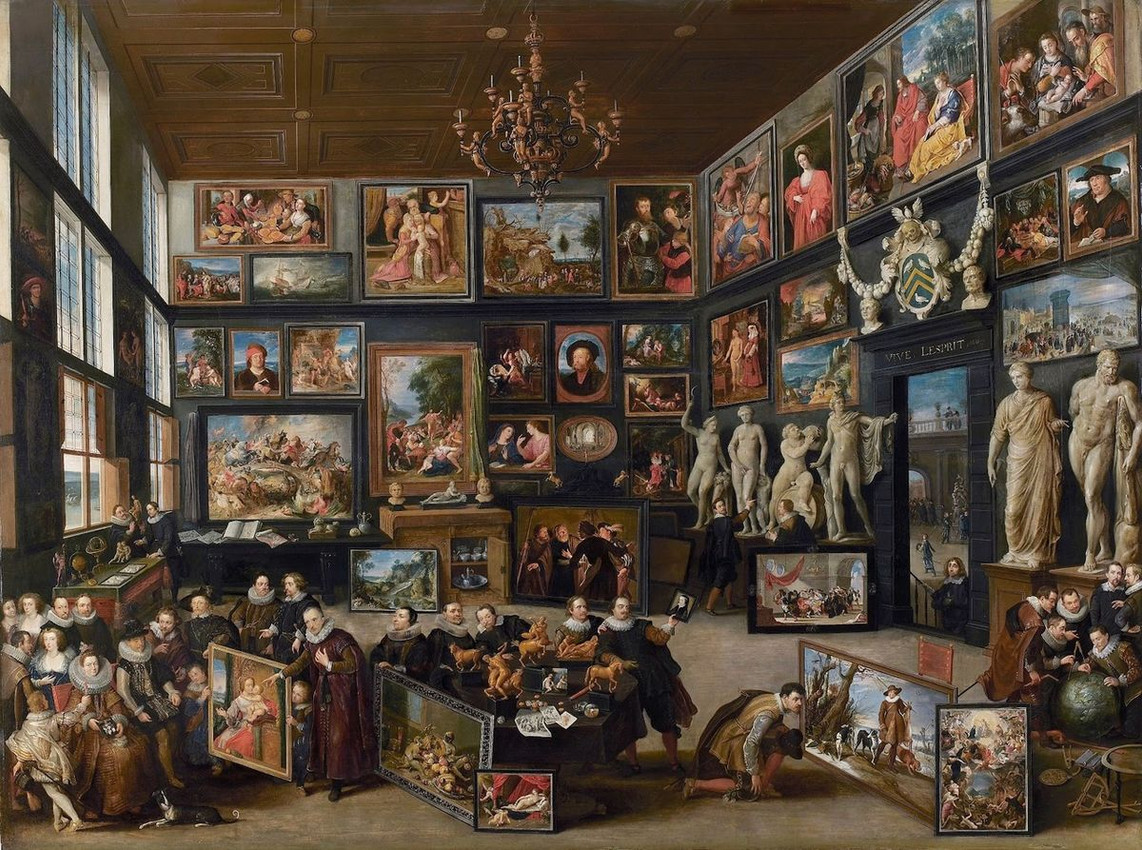
Cornelis van der Geest (1577 - 1638) was one of the many who had a picture cabinet and had himself portrayed in it. This piece confirms what we had been assuming, art collecting is a reality and men of high status must know about Art and must be able to discuss art-related subjects in public. Having an interesting art collection was important. The vast majority of these amateurs would commission paintings illustrating their collection and, on many occasions, it is easy to recognise the artworks we see in these picture cabinets, have you recognised any?
Archduke Leopold Wilhelm of Habsburg (1614 - 1662) built up over his lifetime an art collection of excellent quality, especially of Flemish and Italian painters (600 Italian artworks and around 800 Flemish ones). Thanks to the help of his court painter, David Teniers the Younger (1610 - 1690), who obtained the vast majority of these artworks for him. He purchased the entire collections of the Count of Hamilton and the Duke of Buckingham, who fell from grace along with Charles I of England, collections we will talk about in the next chapter on "Royal and aristocratic collections in England".
Leopold Wilhelm commissioned Teniers to make a dozen artworks depicting him in his gallery. These pieces were Teniers's pride and joy and the archduke would send them to other European rulers to show off the great quality of his artworks and his artistic wealth. Today we can see in the Prado Museum the one he sent to Philip IV. The bulk of Archduke Leopold Wilhelm's collection can be found today in the Kunsthistorisches Museum in Vienna.
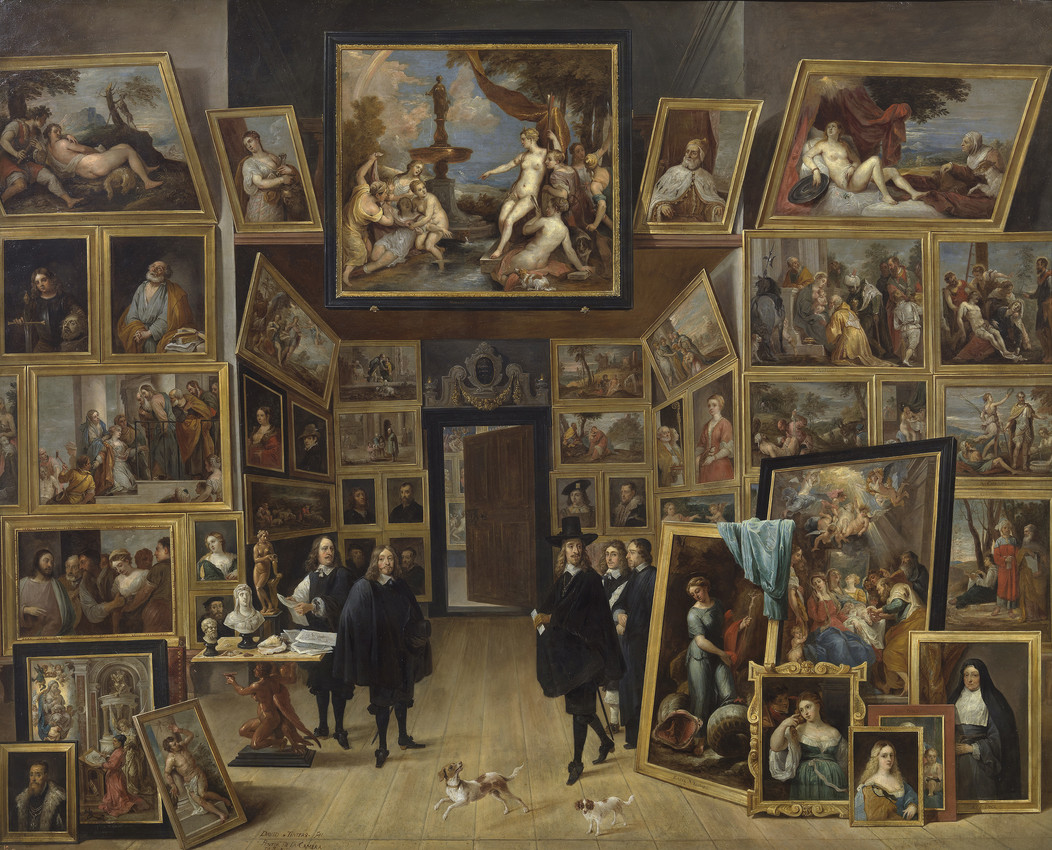
We hope you found it interesting to discover these spaces crammed with world-class artworks, called picture cabinets. They were the forerunners of the great French Salons and of the creation of the first European public museums. In the next chapter we will deal with royal and aristocratic collecting in 17th century England, through Charles I.
We encourage you to leave us a comment telling us which artworks you have recognised among all the ones depicted in these paintings. We have found quite a few...and you?

Comments (0)
Log in to leave your comment. Log in