
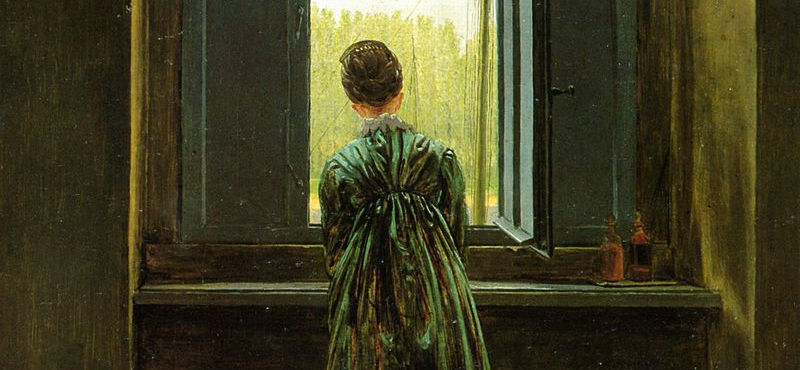
There's something magnetic about windows. Windows draw us back to them again and again. We close them, we open them, we fill rooms with their constant flow of changing light. We air out our lost nights through the windows. Those of a room with a view. The blind ones facing our inner courtyards. The fascination with windows is a recurring theme in painting, especially the one associated with women and the study of their psychology. If we take a closer look and analyse how it has evolved over the last few centuries, we find a priceless record of the sociocultural transformation of women.
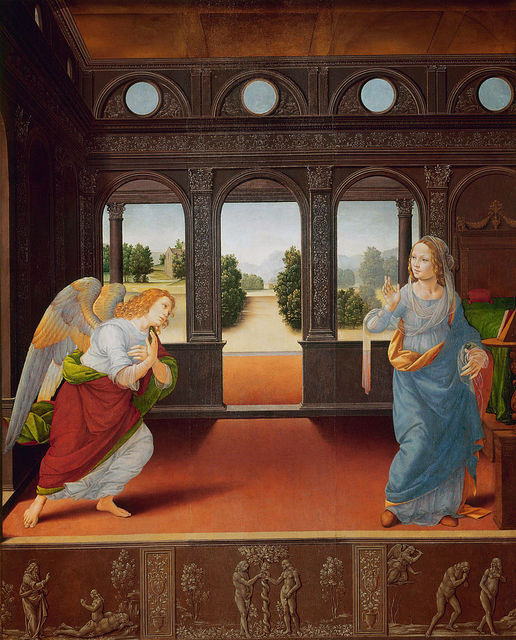
Throughout the long sequence of centuries dominated by classicism, female iconography around the window was steeped, as one would expect, in the constant mythological and religious references that, together with the straitjacket of the propaganda of monarchies and states, left little room for psychological exploration. So among the earliest representations along these lines, the Annunciations of the Italian Renaissance stand out, such as those by Fra Angelico, Filippino Lippi or Lorenzo di Credi. In them, the window is more an excuse to play with the lighting of the scene, and the woman seems to show no curiosity towards it at all.
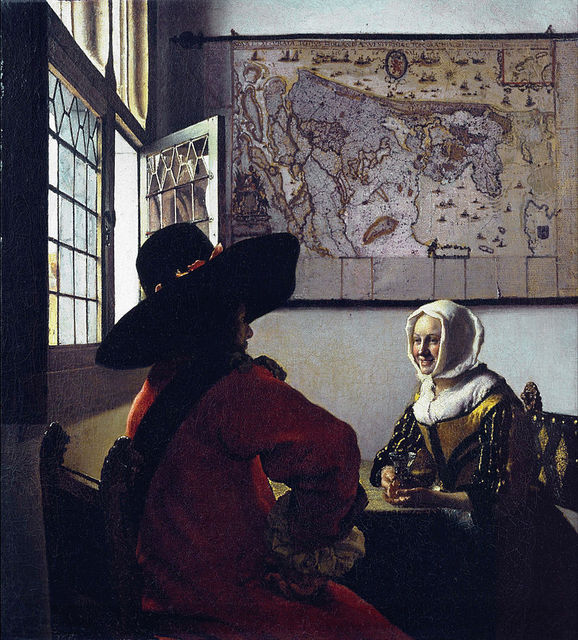
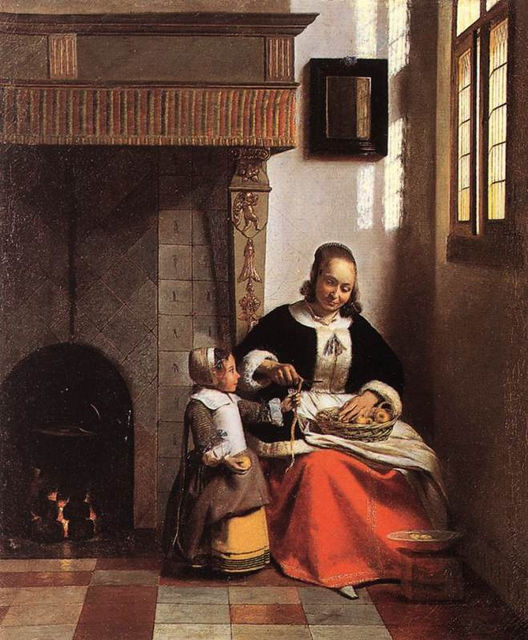
By the Flemish painting of the 17th century we still find that approach of the woman to the window as a symbol of her restraint, her chastity and her purity. That is the case in artworks such as the one by Rogier van der Weyden, which would evolve to make way for representations like Militar y muchacha riendo (around 1658) by Johannes Vermeer, or Madre e hija pelando manzanas (around 1663), by Pieter Hooch. What looked like just another element of the set turns into a component of separation from the outside, where the everyday nature of the woman's domestic chores takes on intimate, reflective shades that would be developed later by Chardin, Bonnard or Matisse himself.
But it wouldn't be until the first quarter of the 19th century, and especially through Friedrich's artwork Mujer mirando por la ventana de su estudio (1822), that the iconography of the woman and her communication with the outside, beyond the walls, became a traditional theme of artistic study. The artwork, with all the elements of romanticism, brings with it something new: it lifts the female figure out of her comfortable space of lethargy and introspection to set her directly face to face with the outside. Through its careful geometric composition of right angles, the vanishing points push us outwards, where the mast of the sailing boat could well stand for the idea of passage and exploration. Even the creases and the colouring of the protagonist's dress seem to drag us towards a desire to escape.
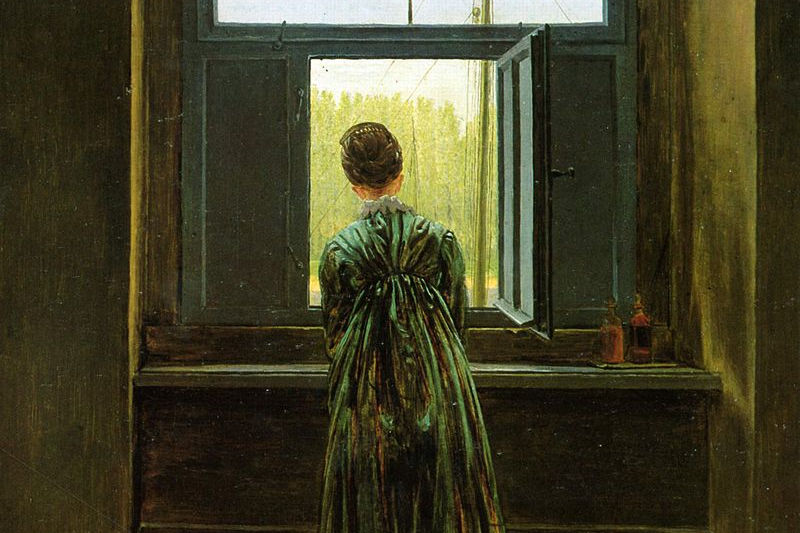
So the 19th century wakes the woman from her classic virginal, monastic image, and also from the traditional view of her as a protagonist reduced to the domestic occupations of the 17th and 18th centuries, inviting her to get to know and discover the mystery held by the outside, through what had always been there: windows. The theme would be taken up again and again, even by the avant-garde movements, by none other than Salvador Dalí who, in 1925, also left his own particular vision of the surprising independence and escape that happens when a woman leans out into the world from the window, with his artwork Muchacha en la ventana. Then came the 20th century, and modernity had largely satisfied those desires for exploration. The woman would have to face the real enigma of windows: out there as much as in here, we are still shut in, as in an Edward Hopper painting, in the loneliness of ourselves. Cavafy wrote, and in spite of the windows: "Without my noticing, they have shut me out of the world".

Comments (0)
Log in to leave your comment. Log in