
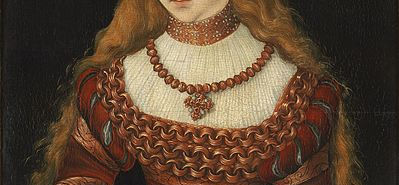
In 1995, a young waiter, Stéphane Breitwieser (France, 1971), and his girlfriend, Anne Catherine Kleinklauss, were visiting a museum in the German city of Baden-Baden. In one of its rooms hung the canvas La princesa de Clèves (1526) by Lucas Cranach the Elder. Any art lover would probably have reacted by contemplating the artwork for a while and then leaving the room fascinated by its beauty.
That was not the case with the young Frenchman who, while his girlfriend kept watch, took the painting off the wall to carry it away with him. A prominent spot awaited the piece in the private collection he had put together at his mother's house in Eschentzwiller, near Strasbourg. That collection had been inaugurated months earlier with his first theft, committed in the medieval castle of Gruyères, Switzerland, where without thinking too much about it he removed a small oil portrait by Christian Wilhelm Dietrich from its frame and slipped it under his jacket.
So began the story of one of the greatest art thieves who, over six years, plundered around 240 pieces on his tour of castles, churches, regional museums and small galleries in at least seven countries: Germany, France, Switzerland, Belgium, Denmark, Austria and the Netherlands, even stealing from Sotheby's ahead of an auction. And so too begins the second chapter of our series on the most famous cases of forgery, vandalism and theft in the history of art.
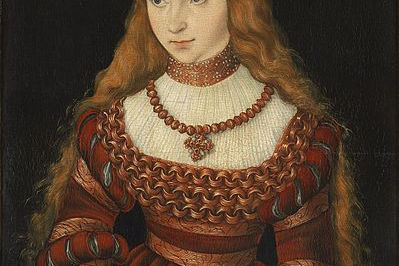
The haul amassed by Stéphane Breitwieser included numerous valuable objects, such as porcelain, weapons and musical instruments, plus important paintings. Among them, artworks by Corneille de Lyon, François Boucher, Pieter Brueghel the Younger, Watteau, the aforementioned one by Cranach the Elder and apparently a Dürer or two. The total value of the stolen items has been estimated at more than two billion euros.
However, as he himself claimed, it was not a question of money but of a fateful passion for art acquired in childhood. His aim was not to do business with what he stole, but to build his own private museum. And although he had a preference for the masters of the 16th and 17th centuries, his selection criteria came down simply to "a magnificent blue sky and marvellous people. Whether it was a Brueghel or a painting by an unknown artist, whether it was worth a thousand euros or a billion, it was the beauty of the artwork that interested me". He made this confession at the trial held in Strasbourg in 2005, in which he was sentenced to three years in prison and his ex-girlfriend to six months. Before being extradited to France he had also already been tried in Switzerland and given four years behind bars.
Breitwieser was arrested in November 2001 near the Richard Wagner museum in Lucerne, Switzerland, after being recognised for the theft of a 16th-century object. Nor did the story have a happy ending for the plundered pieces. When her son was caught, his mother, Mireille Stengel, destroyed part of the treasure hidden in her house, threw some artworks in the rubbish and sent a fair few more to the bottom of the Rhine-Rhône canal. Close to 100 items were recovered, but very badly damaged. The French courts also sentenced her to three years in prison. Breitwieser wrote a book recounting his whole experience: "Confesiones de un ladrón de arte", published in 2006.
Comments (0)
Log in to leave your comment. Log in