
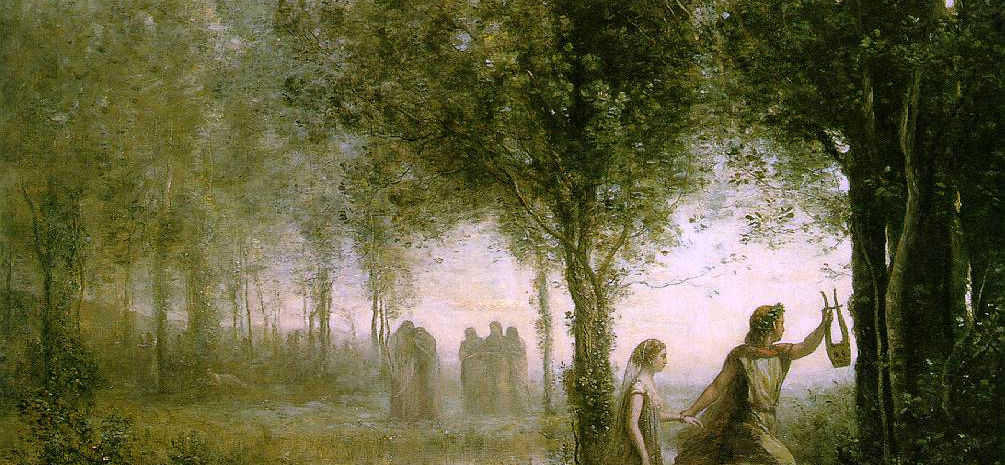
Although neither Homer nor Hesiod make any known reference to him, Orpheus is one of the leading figures of Greek mythology. Son of Oeagrus, king of Thrace, (in some other versions of the god Apollo), and of Calliope, one of the nine muses, he is portrayed as one of the great poets and musicians of antiquity. The myth reaches our time inevitably tied to the name of his lover, the nymph Eurydice, and to the tragic, impossible story of the two of them. In all sorts of artistic expression, literary, cinematic or musical, Gluck's famous opera being the obvious example, we keep returning to Orpheus's ominous descent into the underworld, where, charming the beasts that dwell there with his lyre, he will try to rescue Eurydice.
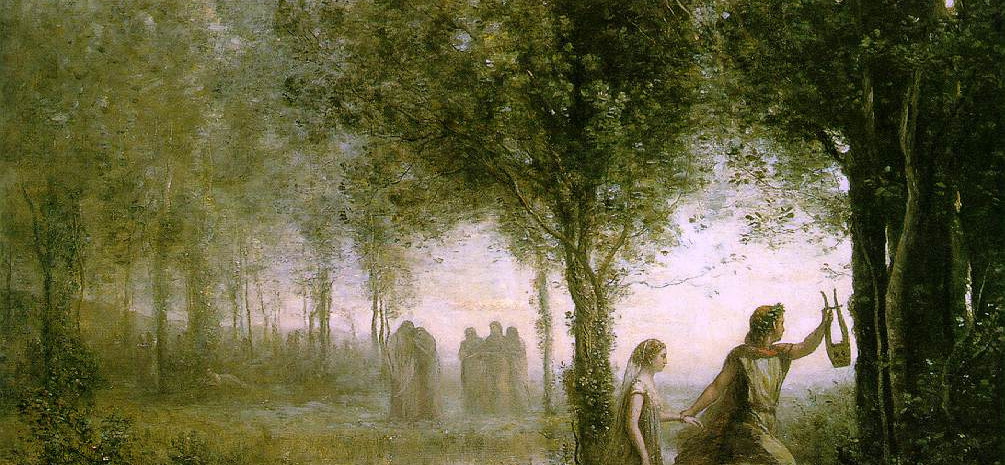
It's well known that Orpheus failed to meet the condition set by Hades and Persephone for returning his beloved to the world of the living. It's well known that he had to look back and watch her vanish among the shadows. Because it's also well known that nobody, absolutely nobody, comes back from the other side of the Styx. And to be reunited with someone who already dwells in the underworld, you have no choice but to settle in there yourself. As in Ángel González's maxim: "There is no other solution: if you truly love Eurydice, go to Hell. And never come back".
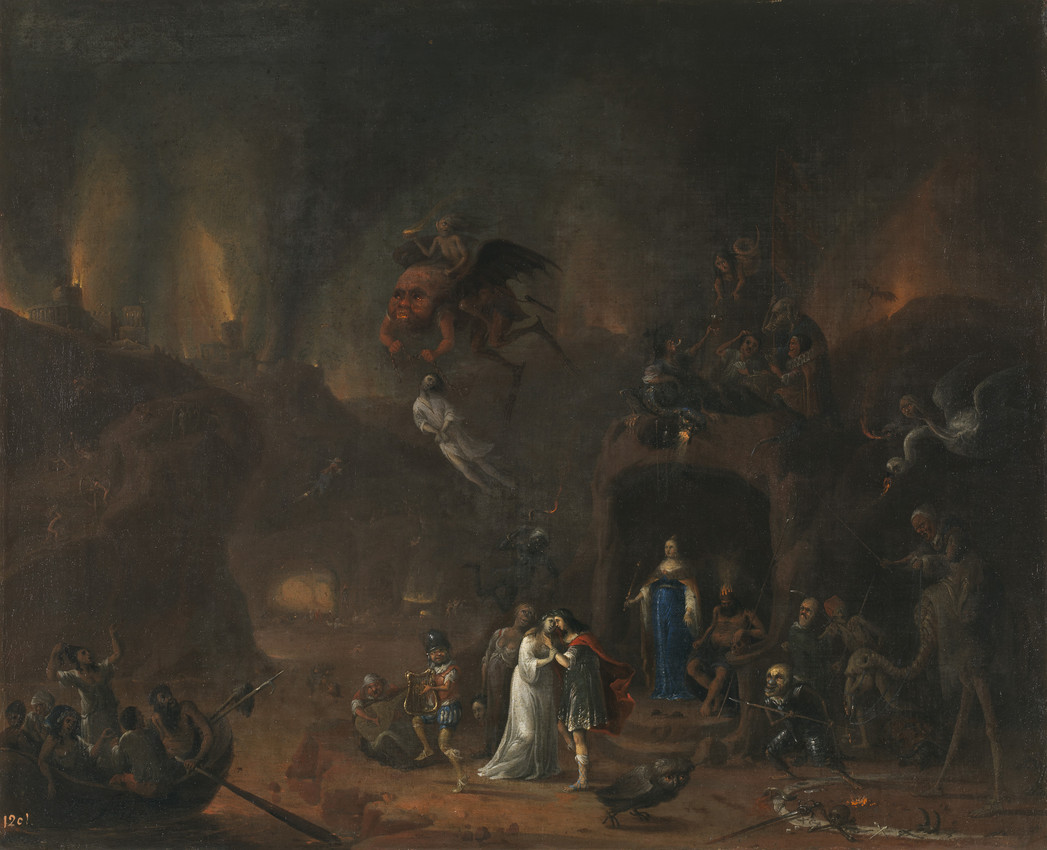
The legend of Orpheus and Eurydice has also been, of course, a particular preoccupation in painting throughout the ages. So we have notable renderings of Orpheus and Eurydice in the artworks of Rubens, Titian, Brueghel, George Frederic Watts and Camille Corot, among many others. One of the most peculiar and perhaps not entirely recognized is the artwork by Pieter Fris, Orfeo y Eurídice en los infiernos (1652). This "hallucinated dream", which owes a great deal to the imagery of predecessors like Bosch or Brueghel himself, is a whole moral lesson written in images. The central part of the painting, built as a rhombus, presents a legion of monstrous forms, embodiments of sins and evils, surrounding Orpheus and Eurydice, the only ones who look remotely human.
The whole painting is a grotesque delirium in which the underground, hermetic structure stands out, almost like a speleological study of the shapes of Hades. Within it, the five upper fires of volcanic texture catch the eye. From the one furthest to the left, out of a city being destroyed, the evil creatures that inhabit this underworld seem to come tumbling down, and Charon ferries them in his boat towards the right bank. The little literature we have on Fris keeps us from analysing his artwork in depth, but standing back and looking at it as a whole, the central part reminds us of a skull with blazing eyes and an open mouth, inside which Hades and Persephone have their throne.
The most luminous points, the ones the artwork tries to draw our attention to, are those where Orpheus and Eurydice stand and where the king and queen of Hades are placed too, the ones who give the couple permission to leave the underworld. The other great point of attention, further inside in a gloomier area, is the winged monster with a head of human features carrying a hanged man dressed in white as it flies. Above the mouth of the cave a group of card players drinks, smokes and has a good time. There also appears, among other unsettling figures, the owl, as a symbol of hidden knowledge. And even at the back, very blurred by now, a most curious witch riding a broomstick.



Comments (1)
salvador barroso
September 17, 2015Felicidades por el artículo
Salvador
Log in to leave your comment. Log in