
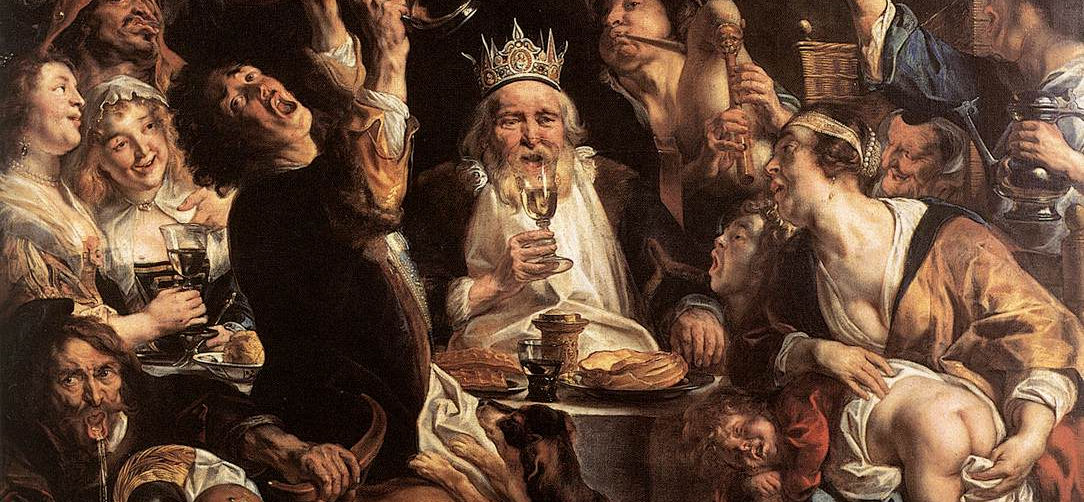
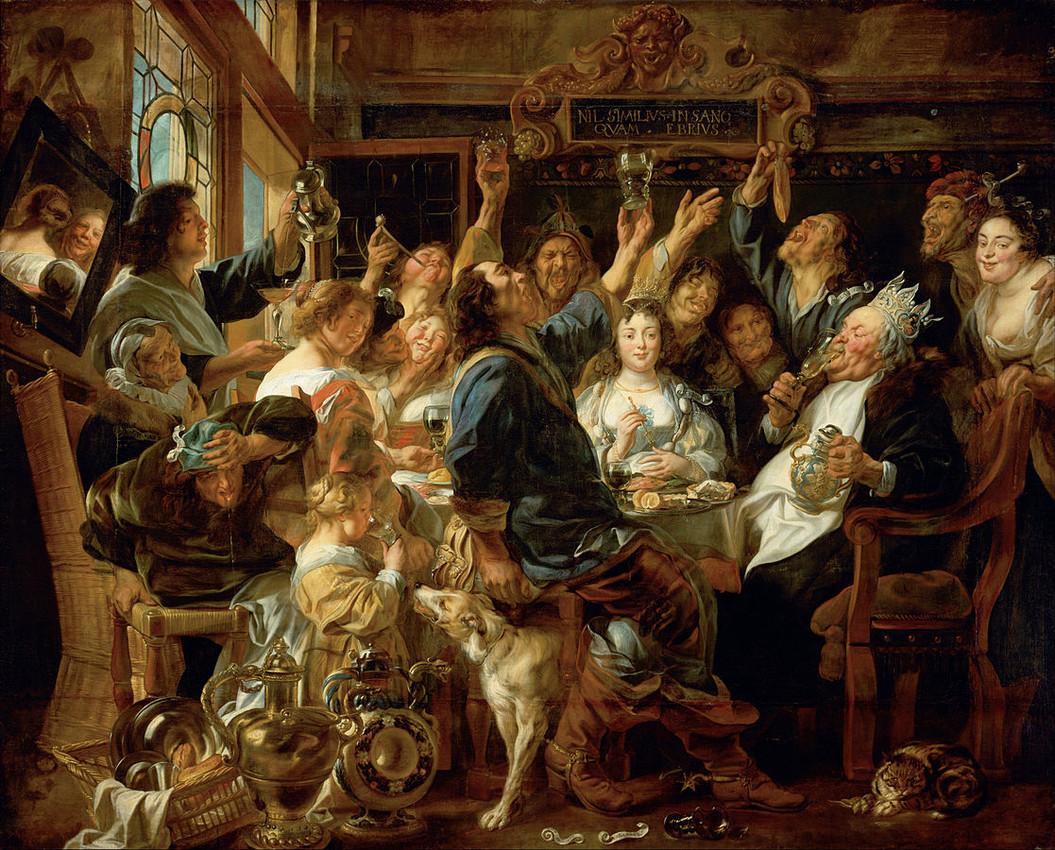
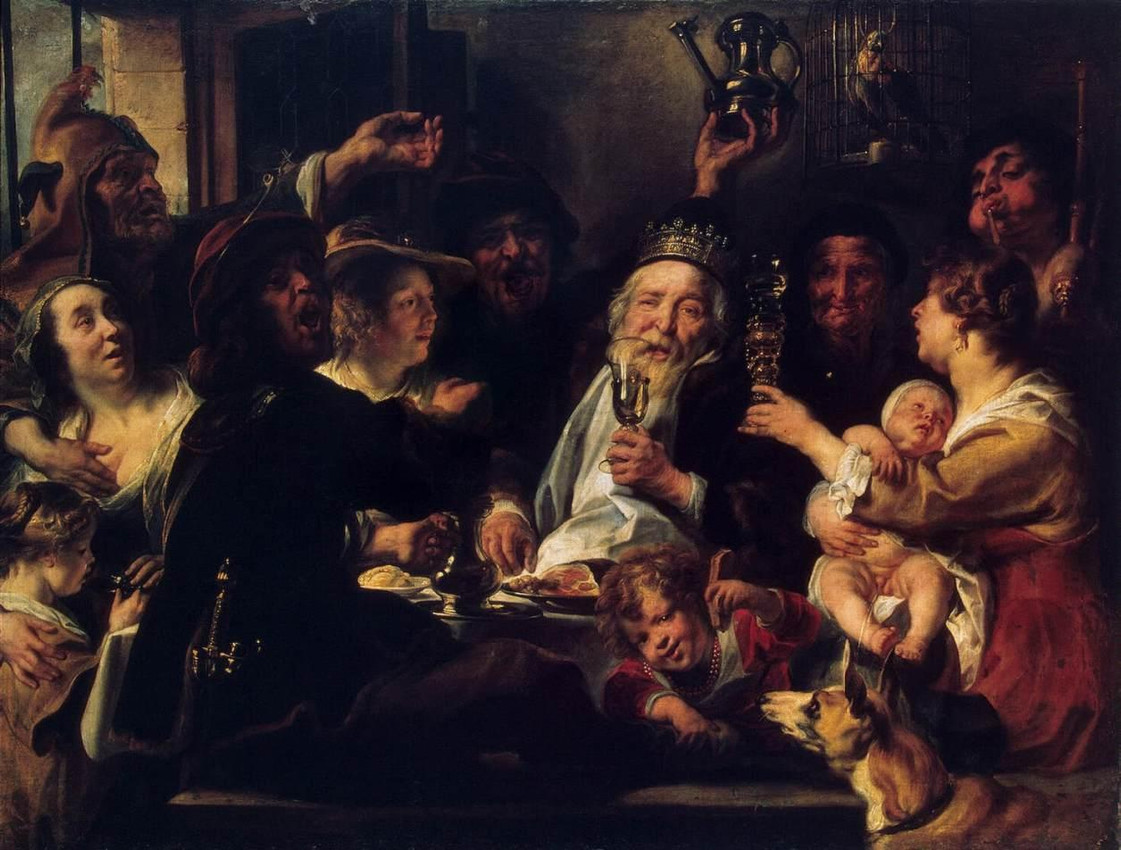
“Nil similus insanu quam ebrius” (Nothing is more like a madman than a drunkard) is the inscription presiding over El rey bebe (1640- 1645), one of the most studied paintings by Jacob Jordaens (Antwerp, 1593-1678).
The artist, born in Antwerp, is among the leading exponents of the Flemish Baroque. He began his path as a painter making cartoons for tapestries and a few other minor decorative works. After training in the studio of the man who would end up becoming his father-in-law, Adam van Noort, also mentor to another universal artist like Rubens, he joined the Guild of Saint Luke, where he spent a good part of his career. Jordaens is considered one of the three great masters of the Baroque in the Netherlands, along with Van Dyck and Rubens himself.
The glorification of worldly pleasures and popular genre painting, where the real hero is the Flemish people, are the greatest concern in Jordaens's work. Gifted with a clear naturalist sense, indulgent and honest, and with a more than evident satirical treatment, the painter fills his canvases with peasants and burghers made sacred to the point of turning them into deities. Jordaens's paintings stand out for the predominance of luminous whites and the depth of the reddish tones. His subjects take in mythological scenes and above all, as we shall see, enthusiastic parties and great banquets. These, after all, were the motifs most favoured by the clientele of the time.
On the other hand, it can't be said that imagination was our painter's strong point either. Whenever a story took hold of him, he came back to it again and again. That is the case, for example, with his artwork El rey bebe, also known as El rey de las habas, a very popular subject painted by other artists such as Jan Steen or David Teniers. And one that Jordaens ended up painting as many as six times.
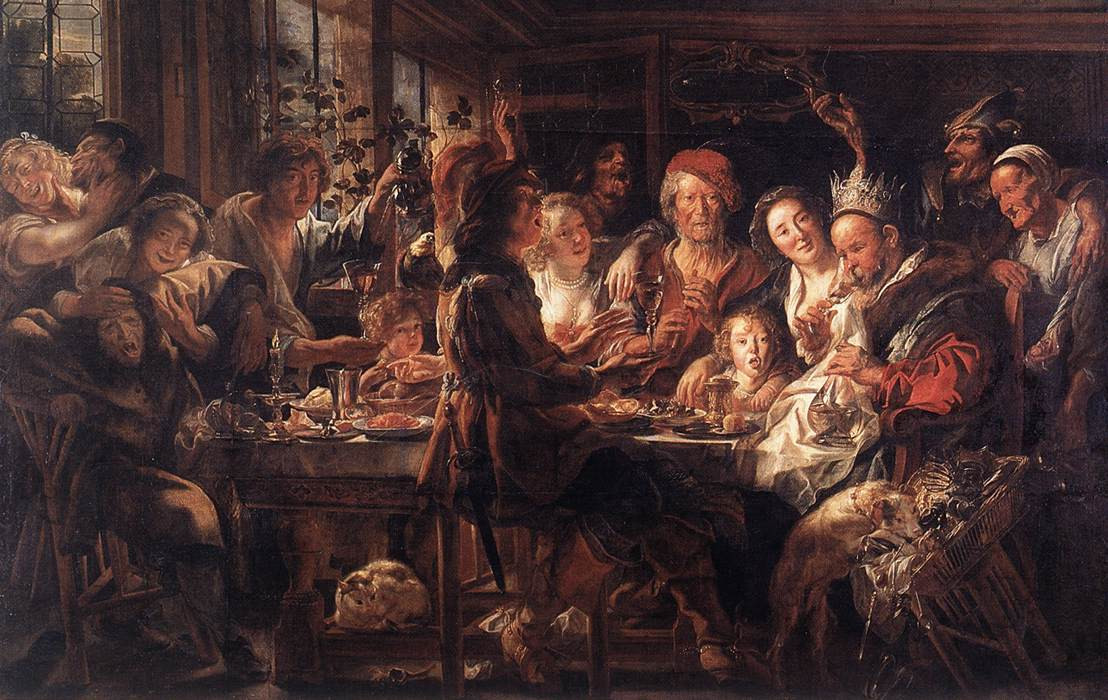
The repetition of characters in his artworks is also common. Take the figure of the obese old man wearing the crown in the painting, who could quite probably be his father-in-law, Adam van Noort, or that of the blonde girl drinking from the glass who, supposedly, would be one of his daughters.
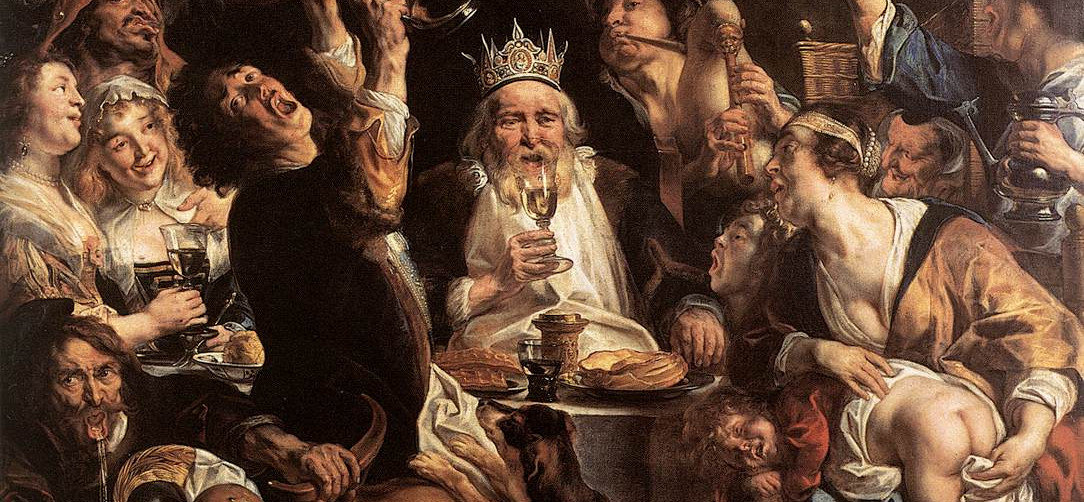
El rey bebe depicts the feast of the Epiphany, the traditional commemoration of Three Kings' Day held on 6 January, whose unbridled exaltation is one of the most typical images in Dutch Baroque painting, much praised by contemporary taste for its familiar, carefree portrayals of the exaltation, almost to the point of vulgarity, of the joy of living. One of the figures on the left-hand side of the painting, no less, appears literally vomiting. So on “Three Kings' Day” or “the day of the king of the beans”, everyone was invited to the feast, even the children and the household animals. From that era comes the custom, still with us today, of hiding a bean in the roscón de reyes and crowning whoever finds it.
The tradition of holding an opulent banquet on that day goes back to the 14th century in the churches of northern France, where after the service the dean would lay on a lavish meal that he himself presided over as king. The tradition led to genuine banquets lasting several days which frequently degenerated into drunkenness and brawls that the government tried to curb, without success, by bringing in the odd decree.
The feasts, paid for almost entirely by the dean of the corporation, made Jordaens himself turn down the chance to head the Guild of Saint Luke painters, purely because he didn't feel able to cover the enormous expense that holding them involved.
Comments (0)
Log in to leave your comment. Log in