
Few elements inside a painting alter its dimensions as much as a mirror does. An object whose function, apparently, is limited to reflecting whatever stands in front of it. But is the image it gives back really just a reflection? Do both sides hold the same meaning? The answer, in seven masterpieces.
It's true that the mirror lets the artist increase the sense of depth and volume in a composition, but also lets them develop new realities. Thanks to the reflection, the painter can show the space on the other side of the painting.
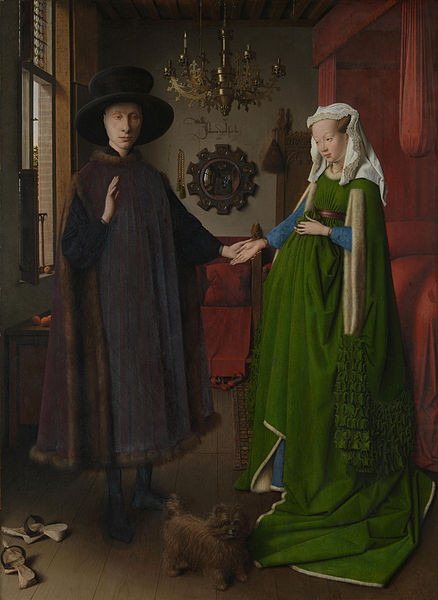
That is exactly the space laid bare in Retrato de los Arnolfini (1434), by the Flemish painter Jan van Eyck. With millimetric precision he painted the reflection of the whole room in the mirror and added two figures. The image suggests a wedding, so perhaps they are the priest officiating the marriage and the painter himself as a witness.
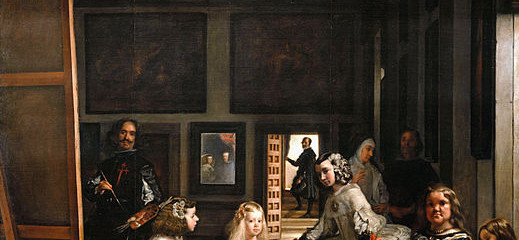
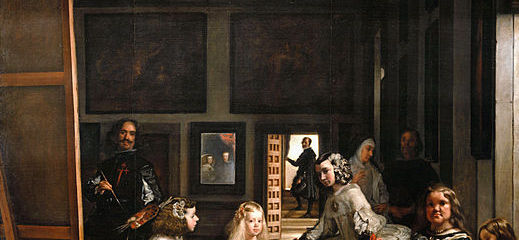
In Las meninas (1656) by Velázquez we find another example of this kind. This time he practically painted two portraits in one. On the one hand, the group portrait as the main subject and, on the other, the one of King Philip IV and Mariana of Austria, who appear together in the mirror at the back, above the Infanta Margarita.
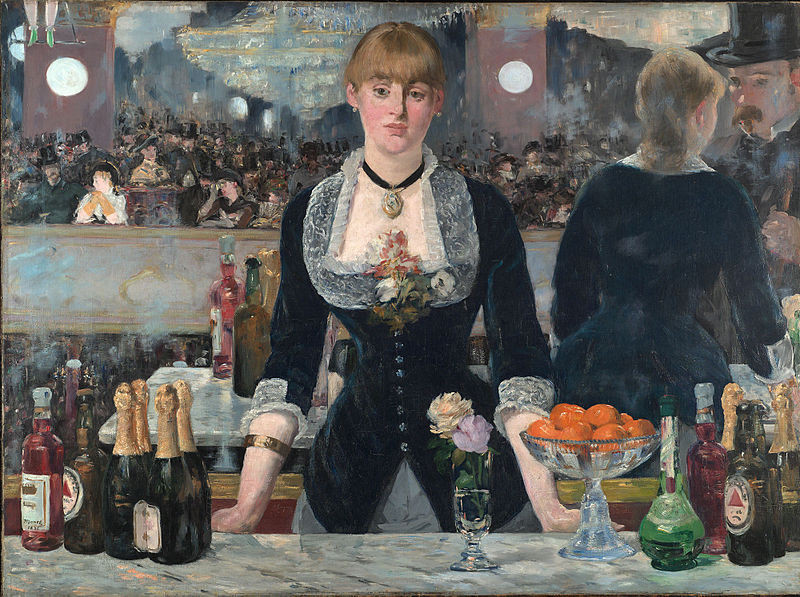
While up to now you have to look very closely to spot the mirrors, with Édouard Manet there's no need: he put it in plain sight. For this work, his last great artwork, he chose the magic of the city of mirrors, that is, Paris, and the interior of one of its most emblematic places of entertainment: Folies- Bergère. Manet portrayed a barmaid apparently oblivious to what is happening behind her, which is in fact what is happening in front of her. The scene is unsettling, and whoever looks at it ends up feeling like one of its characters.
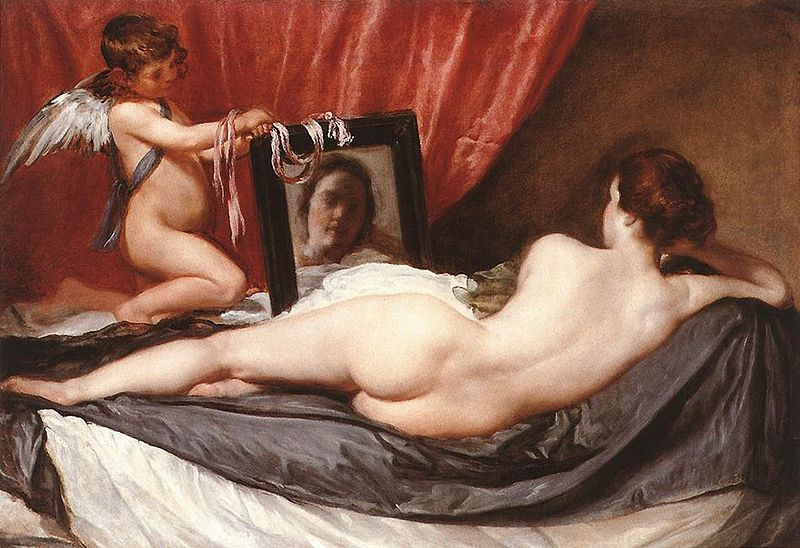
Back to Velázquez with La Venus del espejo (1647- 1651). A metaphor for beauty and vanity, it was also taken up by Titian and Rubens. The Spaniard, however, drew on the reclining version, treating it with greater naturalness and showing her face only in the mirror. That is where he places the goddess so she can know herself, and the viewer too. Although, if we look closely, it may all be an illusion, because given the young woman's position it would be impossible for the reflected face to be hers.
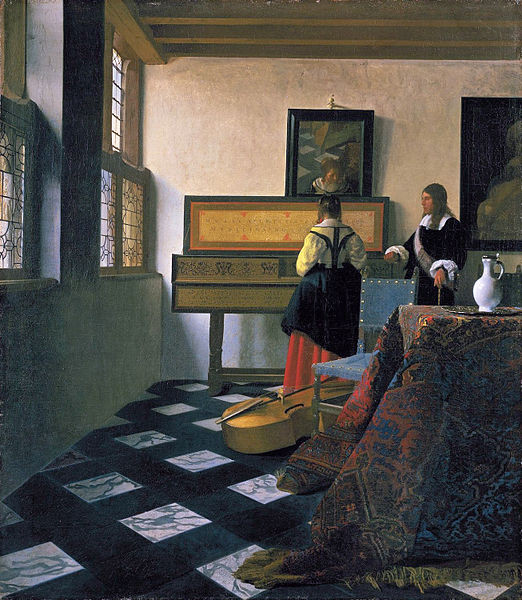
Something similar happens in La lección de música (around 1662- 1665) by Johannes Vermeer, where the mirror is once again in charge of completing the woman's face.
Why do Vermeer and Velázquez use the mirror to show the faces of both women in a blurred way? Perhaps they aren't trying to depict them as they really are, but through the subjective image a reflection gives back.
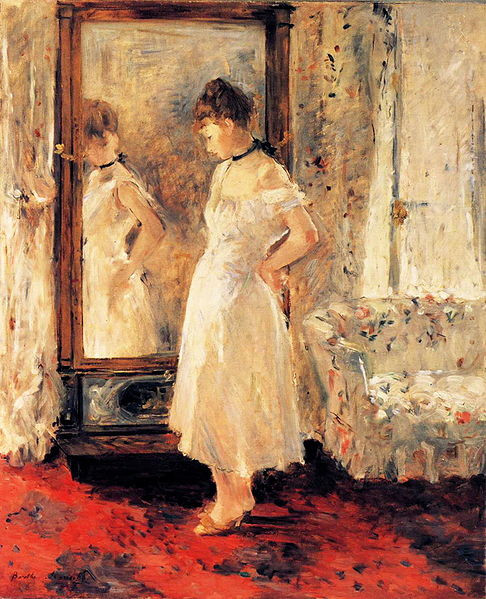
Those two sides needed for the projection to happen are clearly visible in El espejo psiqué (1876) by Berthe Morisot. Its very title in French, Psyché, points to a double meaning: it can refer both to the Greek deity, beloved of the god Eros and personification of the soul, and to the kind of full-length mirror that appears here.
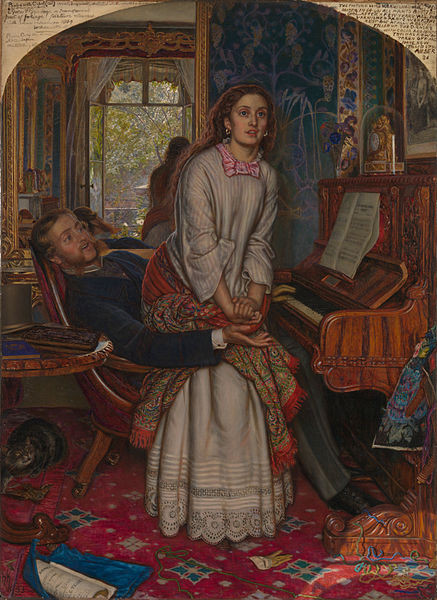
Finally, in El despertar de la conciencia (1853), two lovers spend time together. William Holman Hunt, always faithful to Pre-Raphaelite principles, fills the scene with symbolic elements. The mirror's role here is to reveal the immorality and to express the woman's diminished innocence.
All in all, we can say that through the mirror the artist turns the painting into a reflection on its true meaning, on the laws of representation and even on the role of the viewer.
Comments (2)
Jesús Zarzuela
February 24, 2015Magi Batet Balcells
February 24, 2015Felicidades por vuestro trabajo
Log in to leave your comment. Log in