
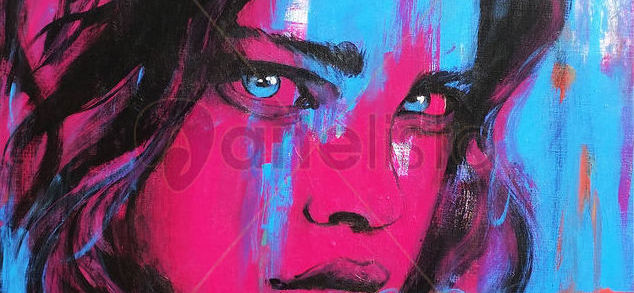
A face, a gaze. Why do we look each other in the eye? The gaze is a door that opens onto the soul, it's the hint of what lies beyond, of what's hidden. Words often head one way, and the eyes another. Because words lend themselves to deceit, but eyes have no taste for playacting. In Bet Calderer's painting the eyes say «yes», they say «no», they reveal death and life, they speak about poetry and truth.
The face of angels
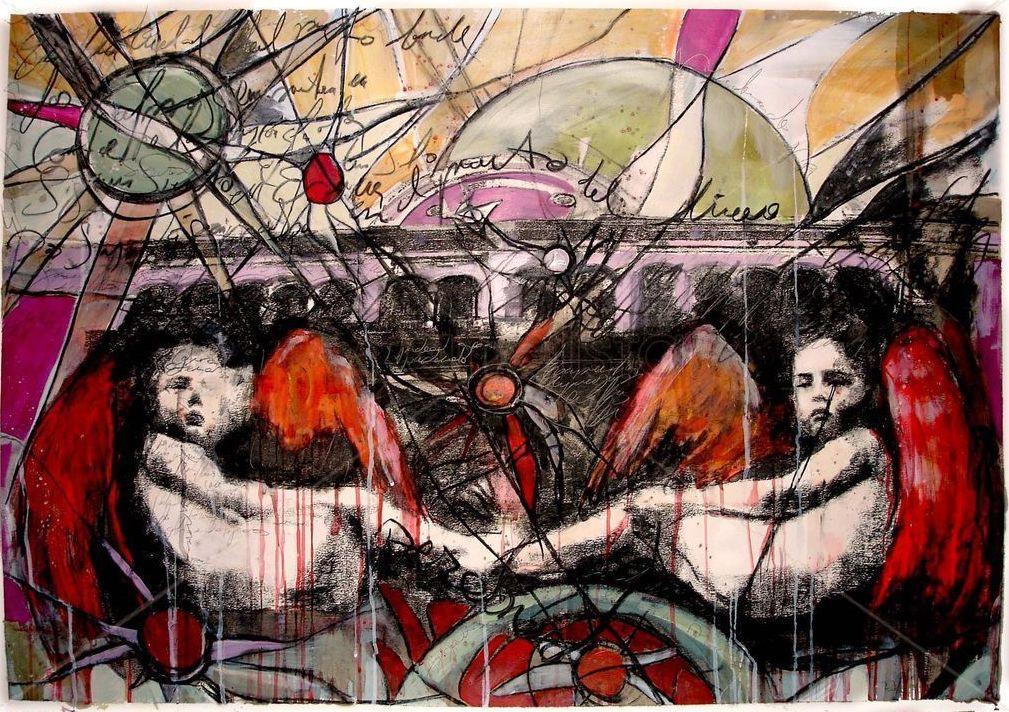
In Dos ángeles, the gaze is blind and the wings red, the canvas weeps. In the background, a medieval gallery and an apocalyptic sky announcing bad omens. The world has closed its eyes but its dream has turned into a nightmare.
In Ángel II, the gaze fills the painting. It's a fixed stare, cold but intense, dazing and exciting, all but forcing the viewer to lower their eyelids and own up to the sin. Is this the exterminating angel?
Bet Calderer's angelology carries on with Ángel III. The viewer can rest easy because the angel's gaze is turned elsewhere. It's an androgynous, classical face, melancholy, perhaps tired of interceding for humankind. And the figures in Ángel IV look up to the sky and weep blood. They fear divine wrath. And they suffer for us.
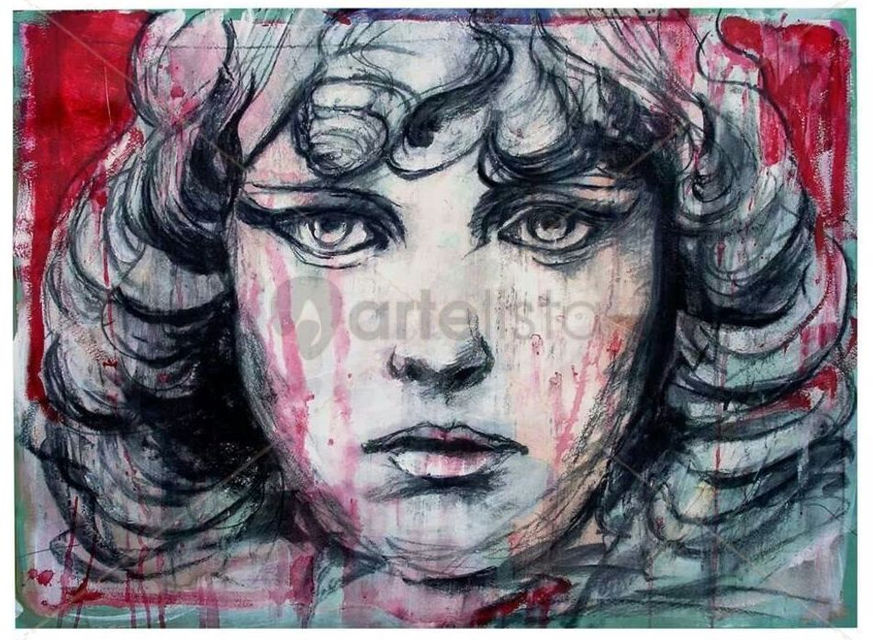
In her collection of angels, Bet Calderer displays her painterly talent and her thematic leanings. In the faces, the Catalan painter brings out her skill at drawing. As for colour, she goes for economy and contrast, with a dominant tone that supports the effect of the painting: melancholy blue, violent red, and so on. In the backgrounds, meanwhile, Calderer makes the most of her mystical, abstract streak.
The face of dance
A theatre designer and set designer, Bet Calderer gives us a series that pays tribute to great names of contemporary dance as well as a few fictional characters. Using charcoal and acrylics on watercolour paper, the series Retratos de la danza is a play of gazes on artistic genius.
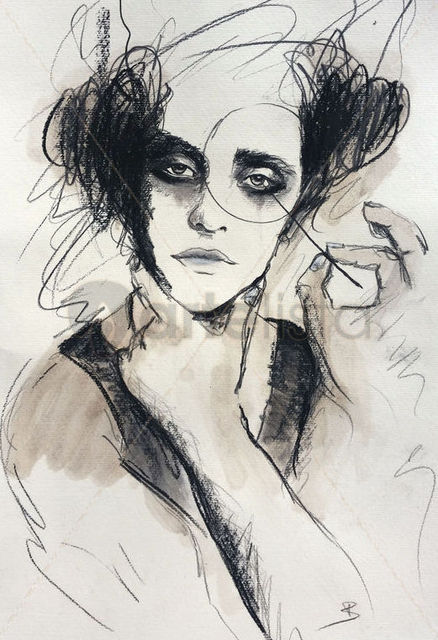
Sergei Polunin, the youngest ever principal at London's Royal Ballet, looks at us offhand and flirtatious, while a hand touches up his eye before he goes on stage. Jorge Donn, of Maurice Béjart's ballet company, dreams as he looks up at the sky. And Plitsetskaya glances sideways, her duty done. And la Carmen, who is red passion, wounded animal and worldly cunning.
Anonymous faces and abstractions
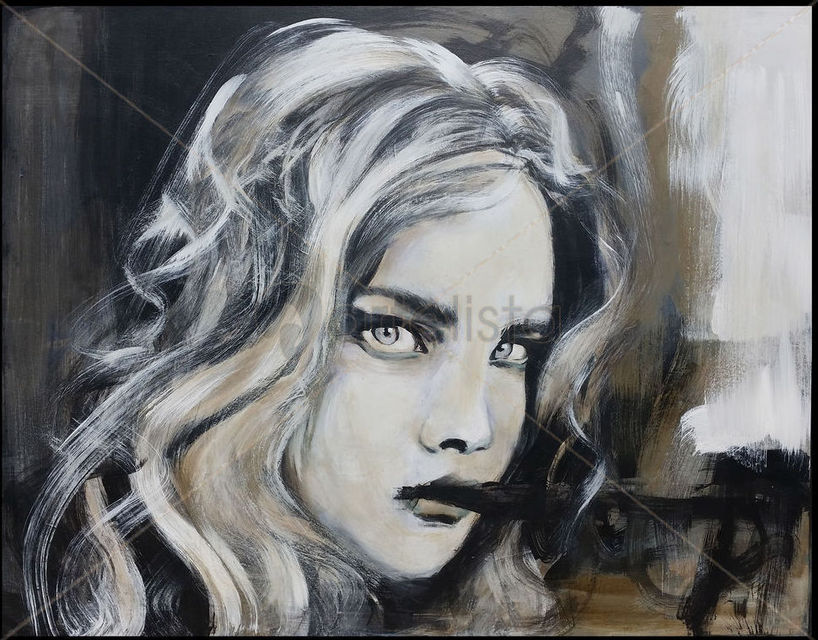
Bet Calderer's collection is rounded off by her colourful anonymous faces, acrylics larger than her dance series in which she combines blues and fuchsias. Full lips and aggressive stares in paintings with a pop, cosmopolitan flavour.
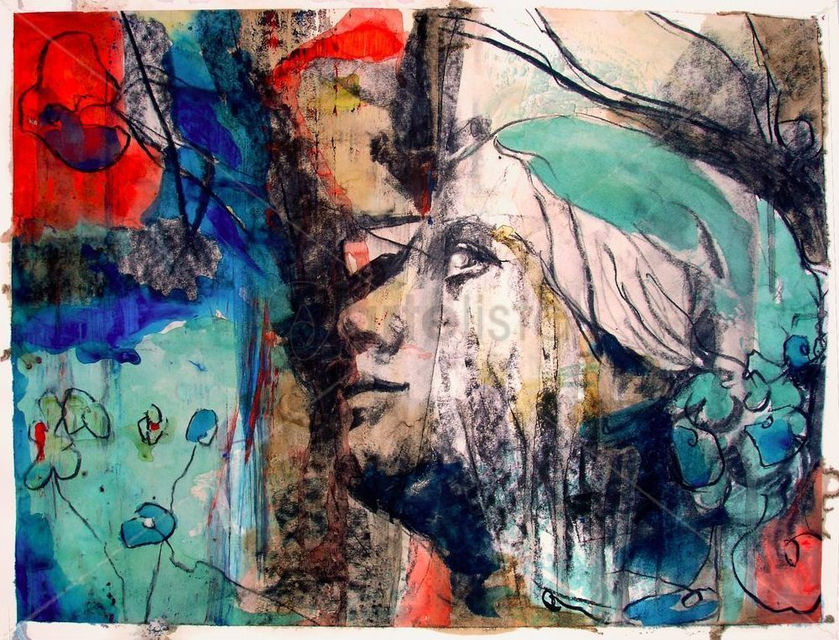
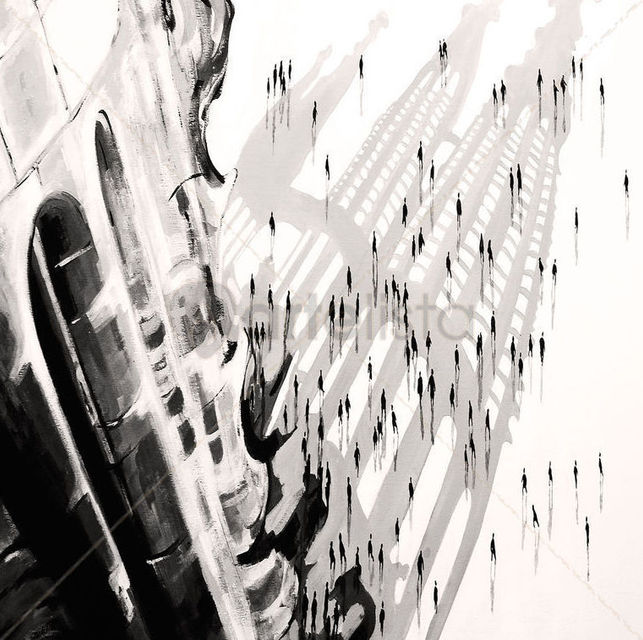
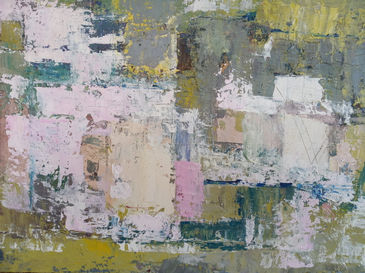
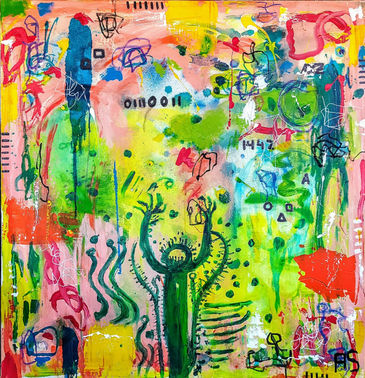
But as we said above, the Catalan painter is also drawn to abstraction, as we could see in some of her figurative paintings, such as Dos Ángeles. The poetry that seeps into some of her portraits is explored in more depth in her series Cosmologías or in paintings like F/A. Textures and flavour take the lead in these canvases by a Tarkovsky lover who has us on tenterhooks with that «secret and utterly unmentionable» project.
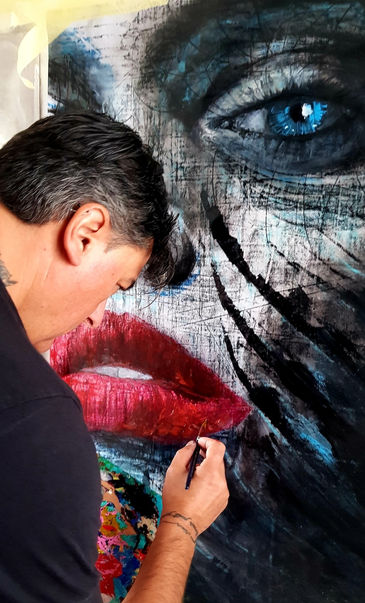
We invite you to visit Bet Calderer's studio.

Comments (0)
Log in to leave your comment. Log in