
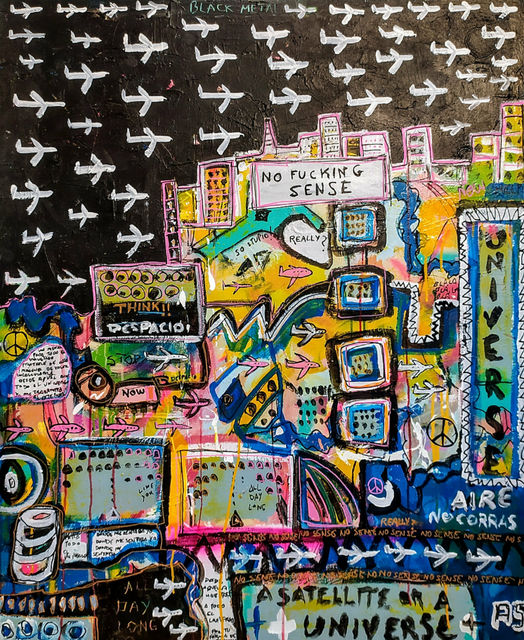
Dozens of planes cutting across a sky as black as evil, flying over a restless city plastered with thundering messages: “No fucking sense”. The senselessness of war is what drives No Sense, one of Alfonso Sánchez's latest artworks. But the painter from Alicante, as he points out himself, isn't trying to embed a message in his artwork, beyond what can't be argued with. In a world saturated with slanted reporting and commentators with sharpened fangs, it's a comfort that art keeps going its own way.
The magnetism of macro-schematic painting
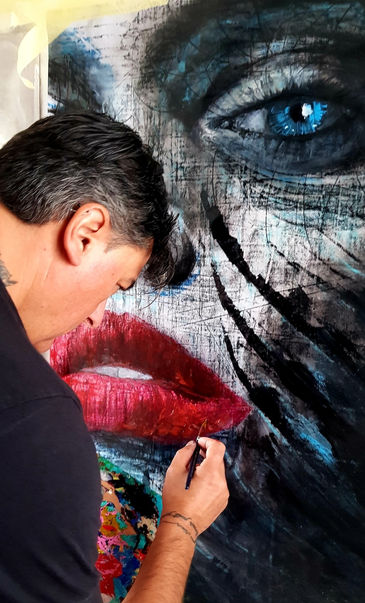
And what is art's own way? The one Alfonso Sánchez follows, discovering himself in every brushstroke, striking up a dialogue with his emotions, no filters, no captions beyond the pull of texture and colour. That same pull the Alicante artist feels when he looks at the macro-schematic painting of his home region, and which he carries over into some of his latest artworks.
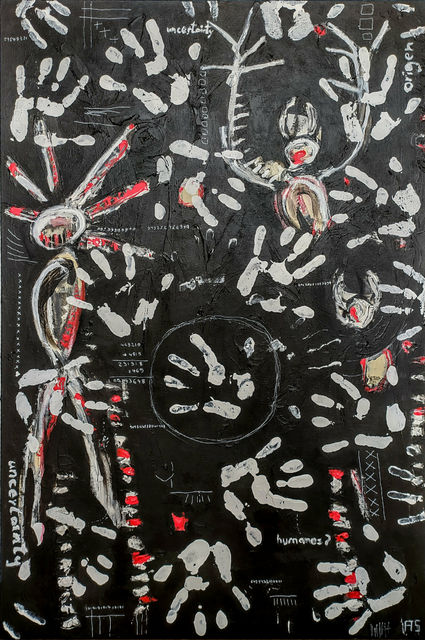
Like any artist still in the middle of discovering himself, looking back at the remote past is a necessity, it's about finding something to hold on to in order to face the uncertainty of the present. Because before working out where we're going, it helps to remember where we come from. In El hombre de la sombra, Sánchez recalls the mysterious macro-schematic paintings of Pla de Petrarcos: again on a black background, the artist picks out the figures of worshippers raising their arms towards a redeeming sky, among a web of hands, signs and schemes. A subtle use of red ends up giving this artwork an enigmatic magnetism.
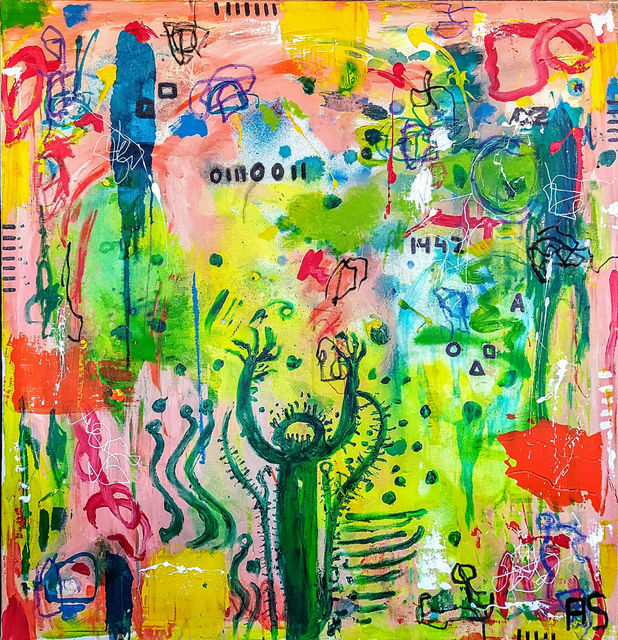
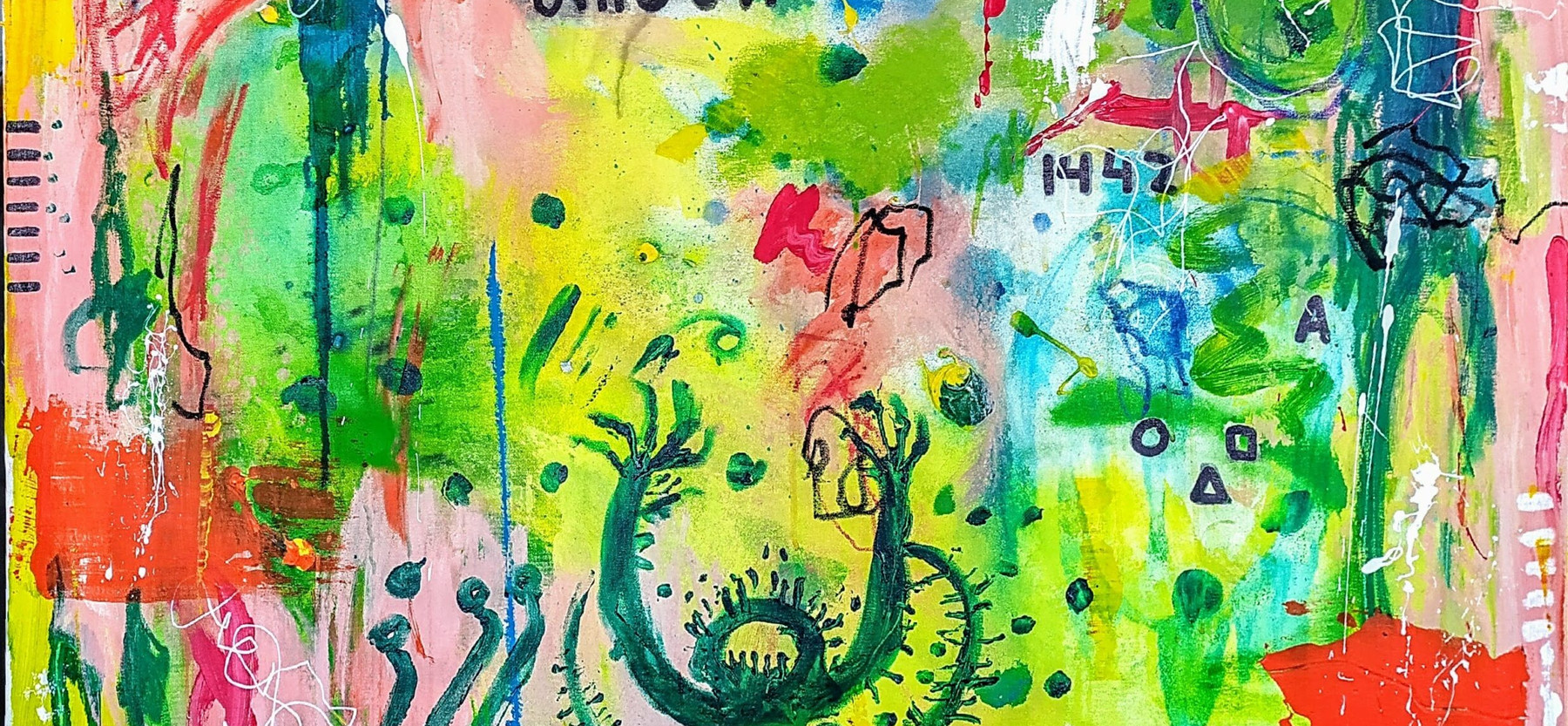
With a similar subject, but a radically different use of colour, Orante psicodélico lives up to its name. The worshipper from the macro-schematic paintings dominates the composition: a sexless figure with an elongated torso, standing out for the position of its arms in a pleading attitude, praying for a good harvest... pretty much the same as now, right? This time Sánchez wraps the worshipper in an atmosphere of vivid colour, the luminous, expressionist flip side of El hombre de la sombra.
While all art is in fact “expressionist”, since the artist can never fully cut himself off from expressing his emotions in his artistic acts, the truth is that Alfonso Sánchez is comfortable letting his most sudden emotions flow, and that's where the painter finds the ideal material to experiment with texture and colour.
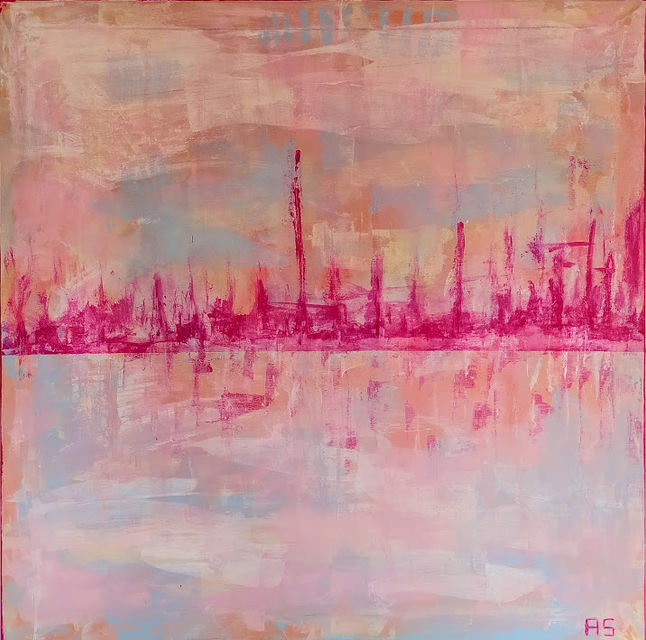
Luminous, whispering expressionism
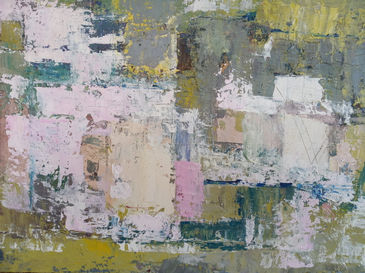
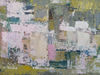
Something like that happens, for instance, in Pink Movements or No thinking only painting 3, whose title says it all: too much thinking can cut inspiration short when what you want is to express pure emotion. To get there, the Alicante painter lets music lend a hand, the best company when it comes to setting the right atmosphere for creativity to flow.
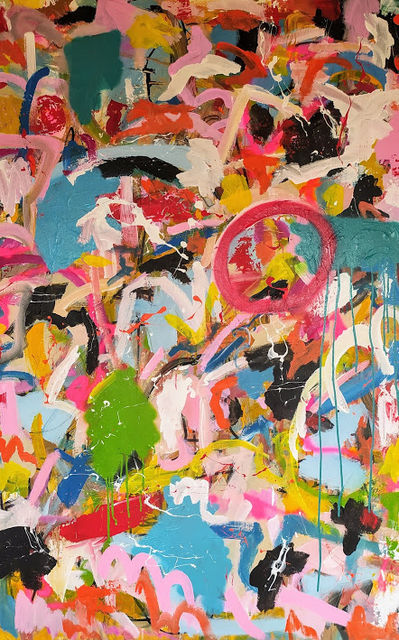
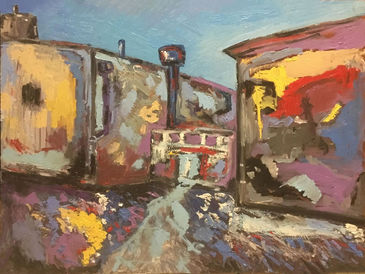
Cinema and travel are other sources of inspiration for Alfonso Sánchez. In Blade Runner, the painter turns to a classic to build a comforting artwork, thanks to that sort of pink mist behind which you can make out a world of blues and reds. The same tone, a regular in several of the painter's artworks, takes the lead in Pink City. The innocence and warmth this colour tends to give off dominate an artwork of subtle lyricism.
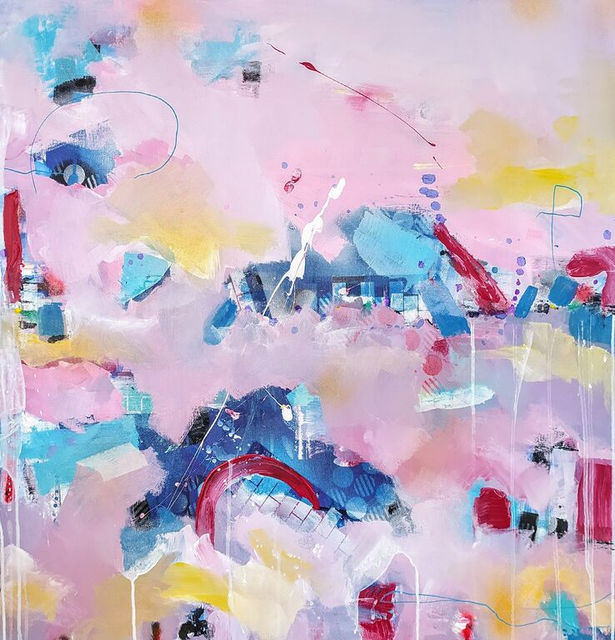
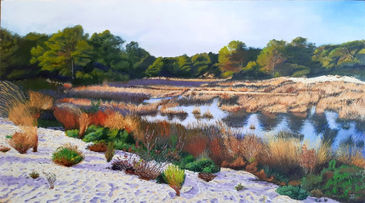
Because Alfonso Sánchez's output pivots around the most gestural kind of abstract expressionism, in which you can nevertheless sense a lyricism and a luminosity that set it apart from other, more unsettling tendencies. We see it in paintings like Costa da morte, split into two vertical sections where the inspiration of cave painting turns up again, combined this time with tiled patterns. Or in Corfú, where the healing Mediterranean light the painter knows so well vibrates before an abstract landscape that tastes of sea, salt and youth.
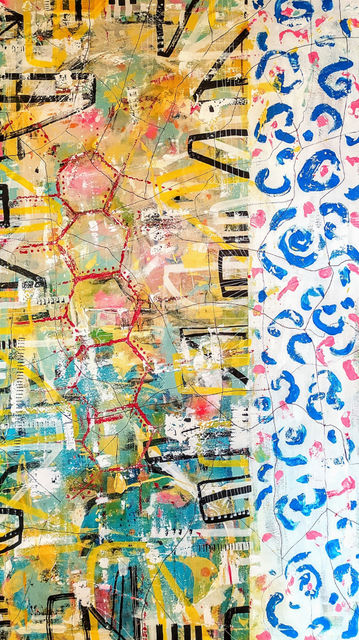
All in all, after only two years of devoting himself to painting in a “more professional way”, as the painter himself puts it, Alfonso Sánchez finds himself at a point many artists would love to go back to: like when you fall in love and passion wraps around every move you make, Alfonso Sánchez explores the endless possibilities of texture and colour, giving his painting a sweet, magnetic poetry that lulls the viewer.
Comments (0)
Log in to leave your comment. Log in