
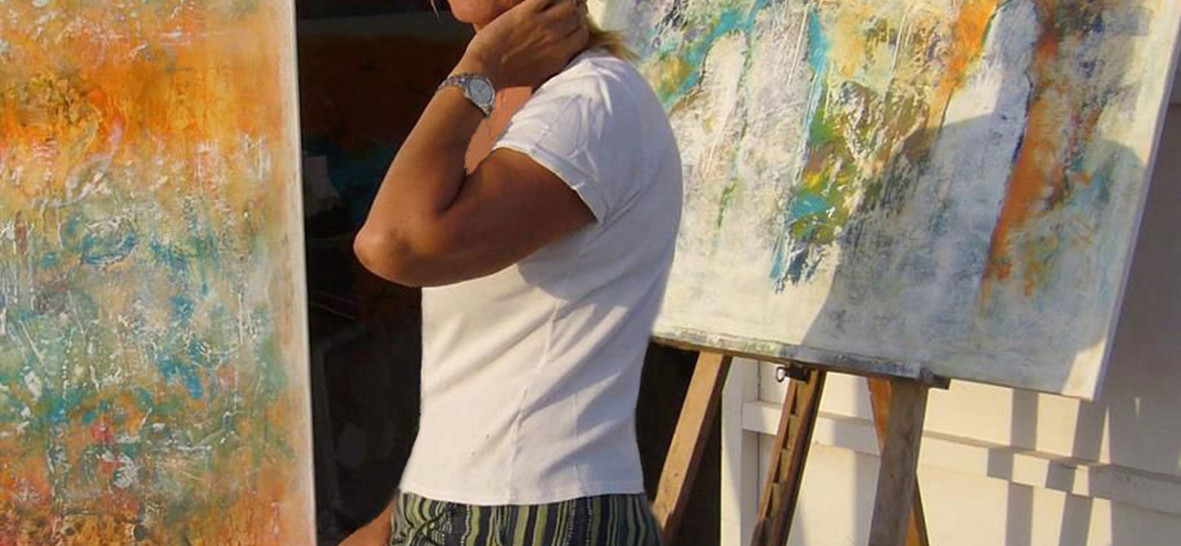
The Mediterranean has always been first-rate creative material for musicians, poets and painters. The light, the atmosphere and the sea push artists to find the missing link of harmony. Doris Duschelbauer has spent more than 20 years in Mallorca making her way through layers of time and flashes of certainty. At the edge of the sea, the German artist senses that impossible peace will arrive with the next wave.
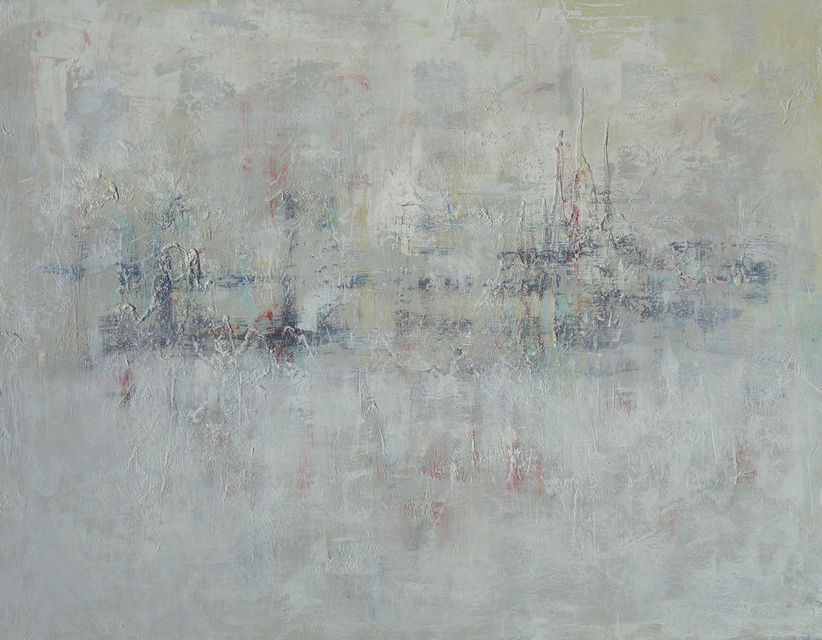
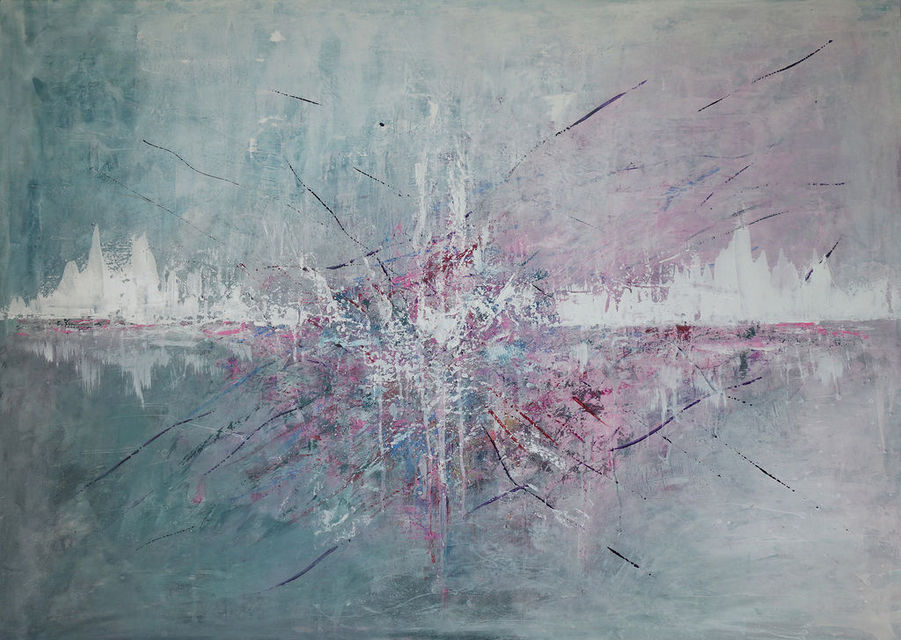
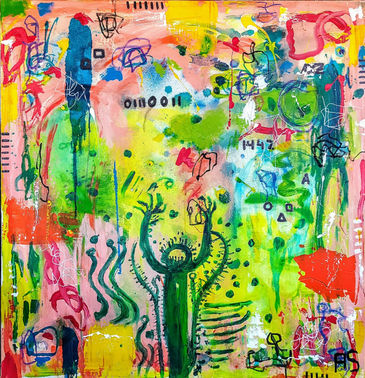
Oculto is one of the artworks that best represents the style Doris Duschelbauer has forged after several years of experimenting. It's curious that the artist should give a title with a negative edge to a series of artworks with such an encouraging theoretical basis. Because more than hidden, we could talk about revealed, about a revealed future.
Are human beings capable of making peace with their past, of looking at the future without apprehension, of letting the present breathe? Because it isn't about living the present, but about letting the present live. Doris Duschelbauer tries to bring past, present and future together through layers of paint that are superimposed yet interconnected: it's the circle of time (the eternal return) as opposed to the notion of time as something linear, as a flight forward.
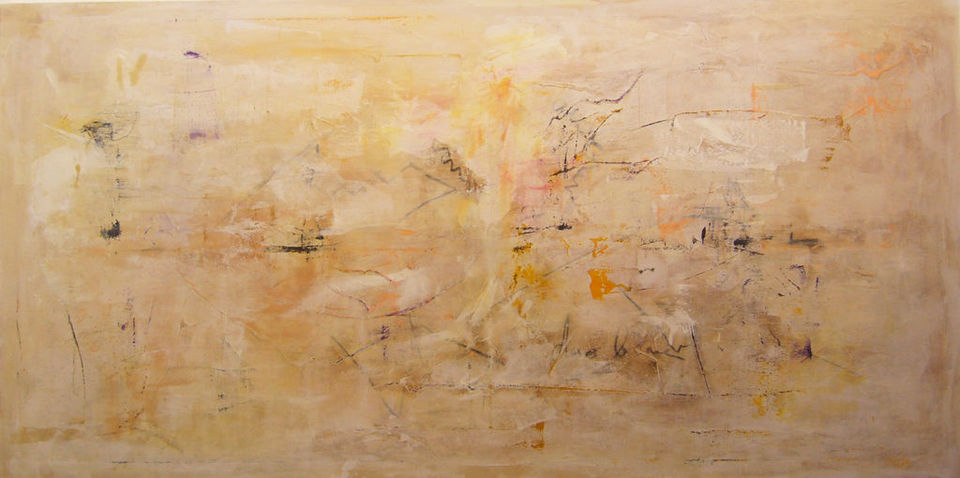
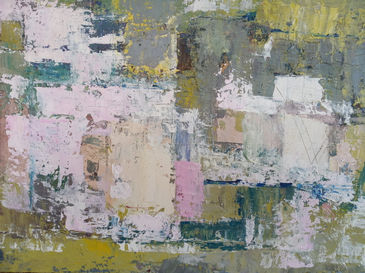
In Recuerdos sobre blanco, the Mallorca-based artist again displays that technique of layers of paint that has become her signature, both visually and symbolically. Eager to find a structure for her production, Doris began filling the surface of the painting with several layers of paint that she then mixes with water to soften the effect of the colours.
Used to working on the terrace of her home in El Molinar, Doris lets her paintings dry in the open air. Depending on the weather, this step can take more or less time and have a different effect on the painting's pictorial base. Once that base is ready, the moment comes to work her way through the layers of paint to find the aesthetic motif of the painting.
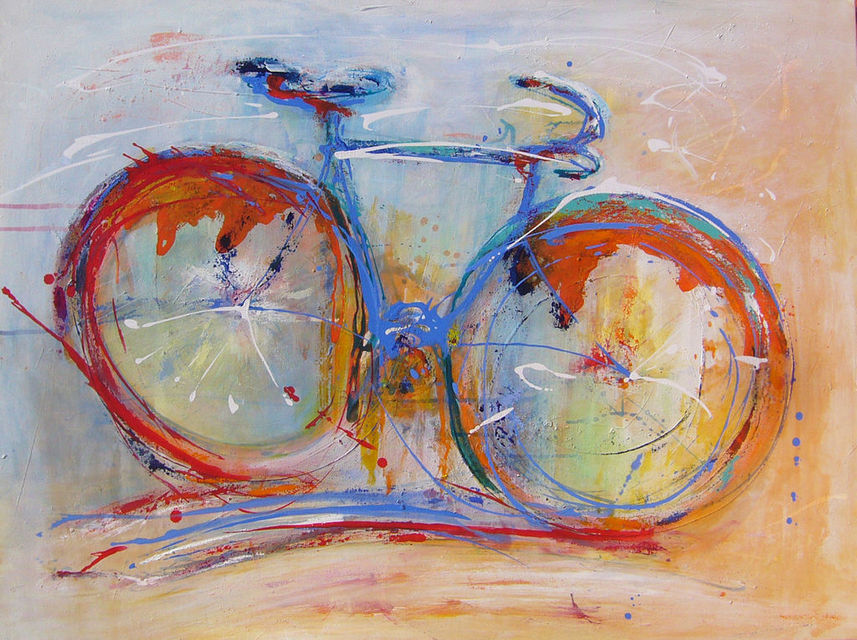
So Doris sculpts more than she paints, using sandpaper to remove parts of the layers of colour, creating chromatic harmonies and, in this case, also leaving part of a poem in view, as if it were a collage. In a way, Doris arrived at the same point as Michelangelo, who did not carve figures but freed them from the stone: Doris sands, digs and scratches at her layers of paint until the hidden motif is revealed.
From figurative painting to textural abstraction
Like many colleagues, Doris Duschelbauer started out painting figurative subjects, often influenced by the European avant-gardes of the first half of the 20th century. An inveterate traveller, for years she couldn't keep her art going, though she never turned her back on it, visiting many artists and working with them. She even experimented with fashion, going as far as creating women's underwear with recycled metal elements. “Party clothes”, as the artist herself puts it, with a touch of irony.
But it was on her arrival in Mallorca that the light of the Mediterranean invited her to stop, breathe and paint. Her slow art, as she herself defines it, is an art heavily influenced by her surroundings and her geographical atmosphere. And although she has gradually moved away from figurative art, Doris, like any artist, cannot deny the influence of her senses, not just her feelings, on her artwork.
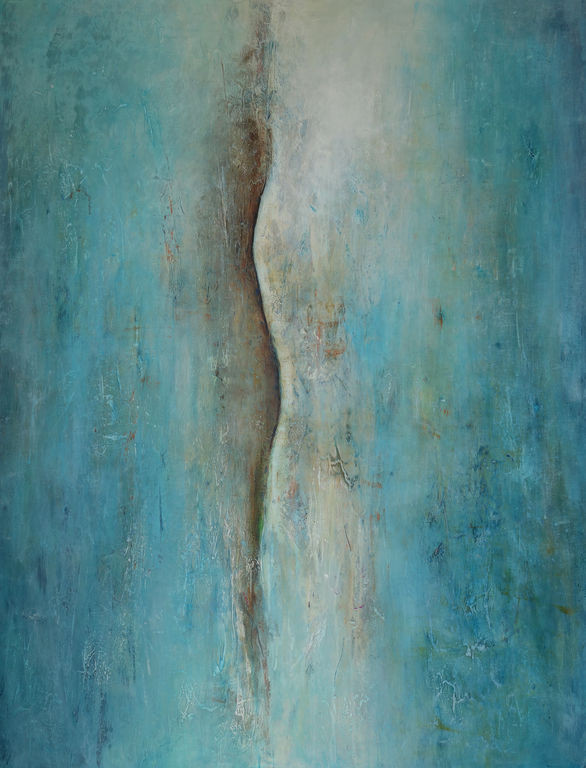
In pieces like Sensibilidad or Mujer, the German artist combines her layering technique with a figurative reference. “Woman is the most beautiful thing you can paint”, says the painter herself, and in artworks like these she emerges graceful and slender among chromatic mists of blue and white.
In other pieces the motif is much clearer. Con toda velocidad is one of those artworks in which Doris allows herself to include a clearly recognisable element. She does the same in Mar Poderoso. Two paintings with very different palettes, and yet they share a more dazzling side than much of the rest of the German artist's production. Because the heart, sometimes, beats faster and passes that energy on to the surface of the painting.
But Doris Duschelbauer seems to feel more at home discovering motifs behind the layers of paint, an almost magical instant like the one in Olivia - La tortuga rescatada, an artwork recently shown in Mallorca at the 1st ‘No Plastic’ Conference. It was going to be an abstract artwork but she “appeared in the blue and turquoise water” and, of course, she had to be rescued.
Doris's paintings often rescue us from the frenzy of the present through layers of soft colours and tasty textures, like waves of time on a dreamed shore.
We invite you to visit Doris Duschelbauer's gallery on Artelista.
Comments (2)
Doris
May 27, 2019Un saludo cordial
Doris
Miguel Reche
April 18, 2019Log in to leave your comment. Log in