
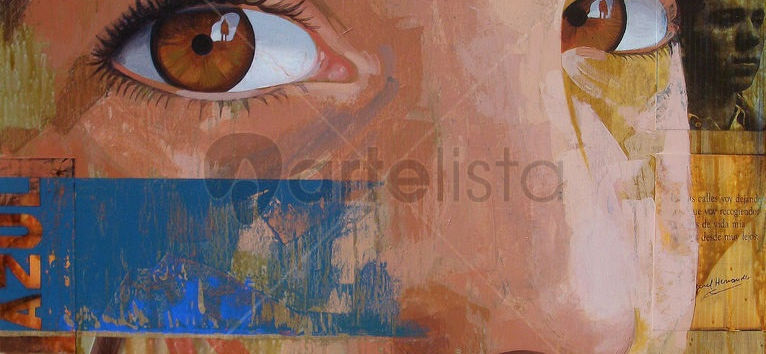
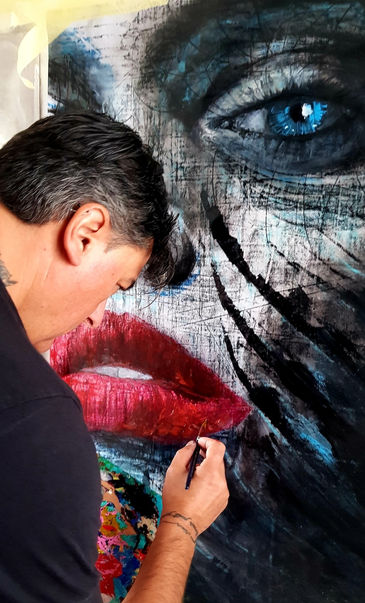
Reading José Miguel Alguer's words about La mirada azul, we understand how much he loves this artwork. And we also gather that the artist enjoys what he does, that even though he doesn't make a 100% living from his artistic activity, he has no intention of betraying his main calling. Because it's the need to express that determines art. If that need isn't there, it isn't art, it's something else.
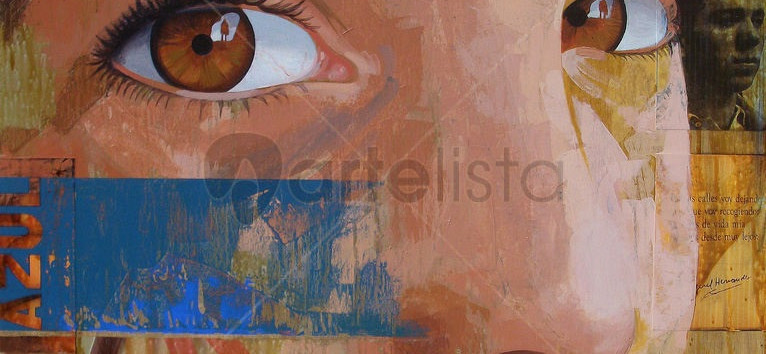
La mirada azul is his son's gaze, but also his own, remembering another time. The iris reflects forgetting, a clean gaze already clouding over with the pain of loneliness, with «goodbyes waved from windows». Made with the collage technique that Alguer has made his own, it's the kind of artwork we can't stop looking at, because it looks back at us, inwards…
Figurativo series
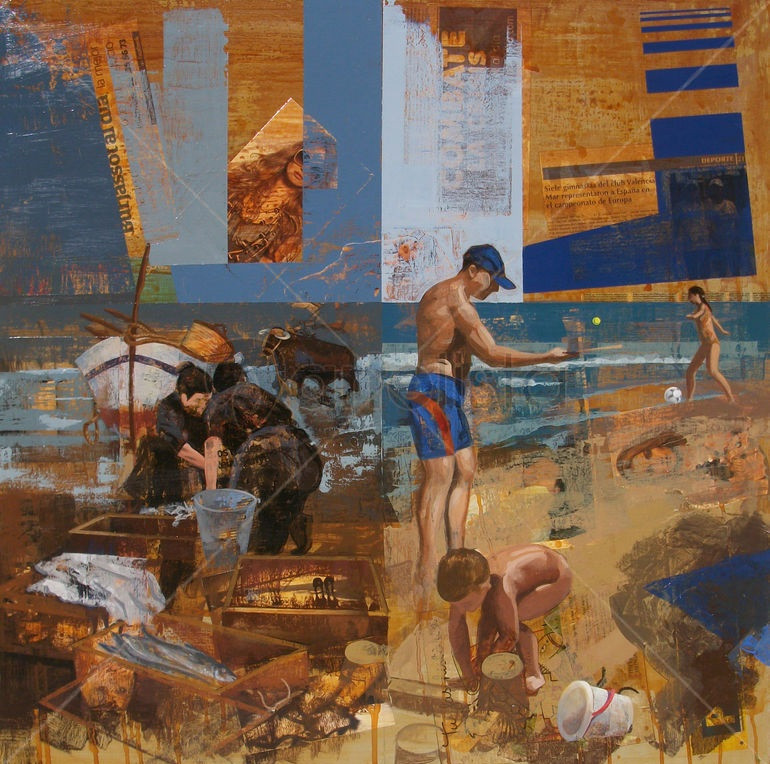
La mirada azul belongs to the Figurativo series, perhaps the most interesting one by this artist, born in Bremen (Germany) in 1965 but Valencian by adoption. For almost a decade now this painter, «branded a Fauvist in his early days», has reinvented himself thanks to his use of collage, which he handles in a particular way: he prepares the support by gluing on material that includes bits of newspaper, magazines, adverts, photographs and so on. Then he glazes it, and that becomes the base on which he draws and paints. In other words, the collage acts as the background and not as an addition, as it does in much of traditional collage.
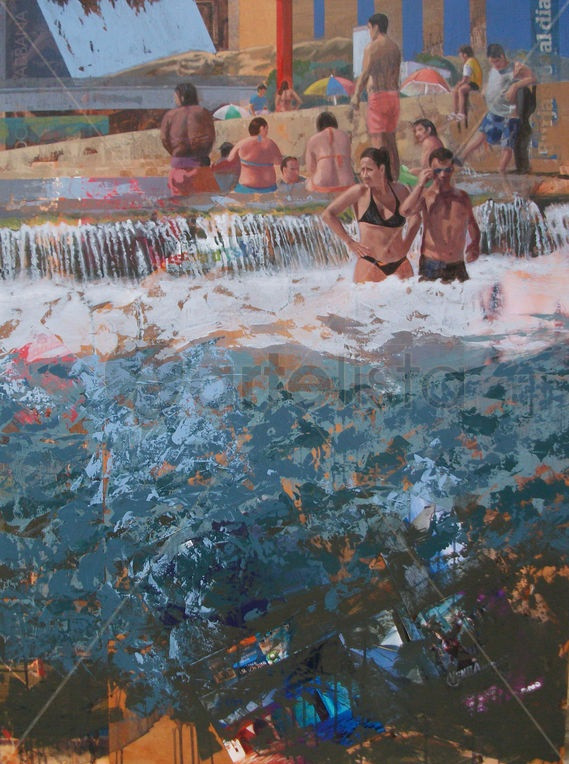
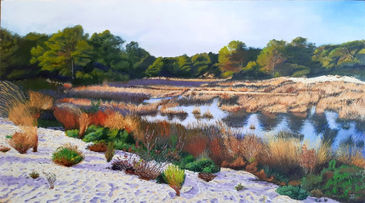
That's how artworks as surprising as Figurativo VII – Playa de Interior come about, trying to capture that very particular kind of leisure that happens in some Spanish villages around rivers or fountains.
The Figurativo series is also the most varied one, taking in landscapes and scenes of everyday life as well as artworks with a more surrealist touch like Figurativo XI – Aleix, i l’ombra del bosc, which includes denim in its collage, or with a sinisterly Pop touch like Figurativo XIII – José se afeita a contrapelo llenando de color su vida. Worth pointing out too is the extremely bold foreshortening of the photographic framing in Figurativo XII – Alex i la Marea Baixa.
Urbana Rústica series
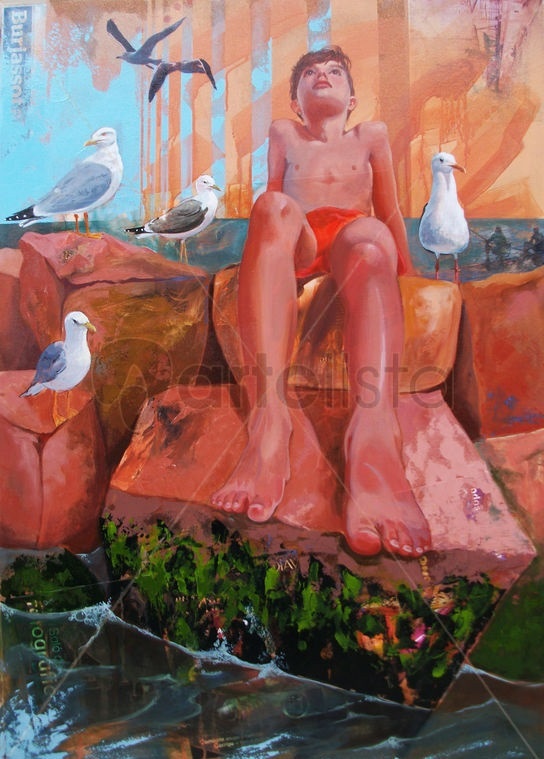
Another of José Miguel Alguer's most promising series is the one he devotes to the rural landscape, which stands out for being painting that is perhaps less emotional but also interesting from a technical point of view. Speed painting, a format the Valencian artist has been keen on for some time, has helped enrich this series and that technique too, making it more expressive and often vehement.
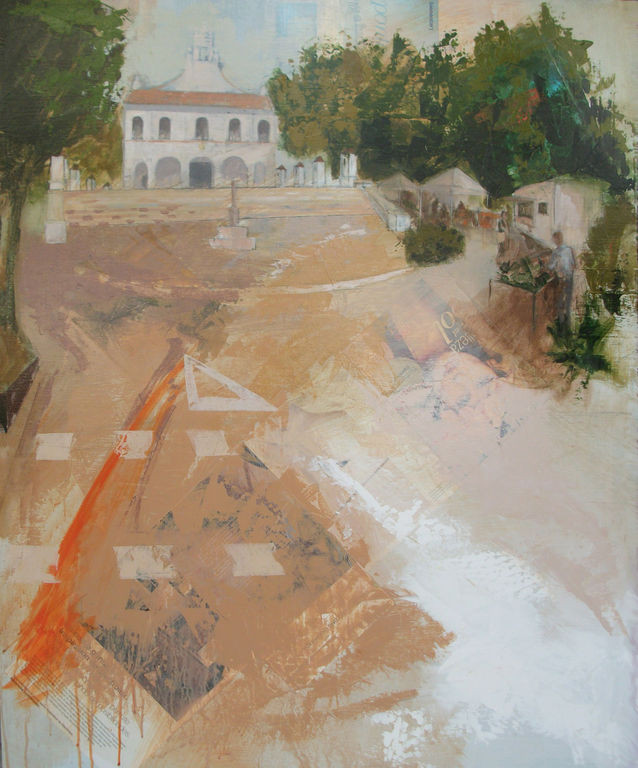
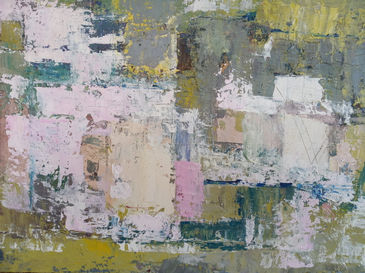
Interesting examples from this series are Urbana Rústica XXIV – Depósito Aguas Fois de Valencia, Urbana Rústica XXIX Ermita de Godella or Urbana Rústica XVIII – Paterna Valencia. All of them paintings in which the artist plays with sketchiness and the non finito and which, on top of that, offer an investigation into volumes in space, some of them recalling post-Impressionists like Cezanne or the landscapes from the pre-Cubist phase of Braque or Picasso, as happens in Urbana Rústica XIX – Alcublas Valencia.
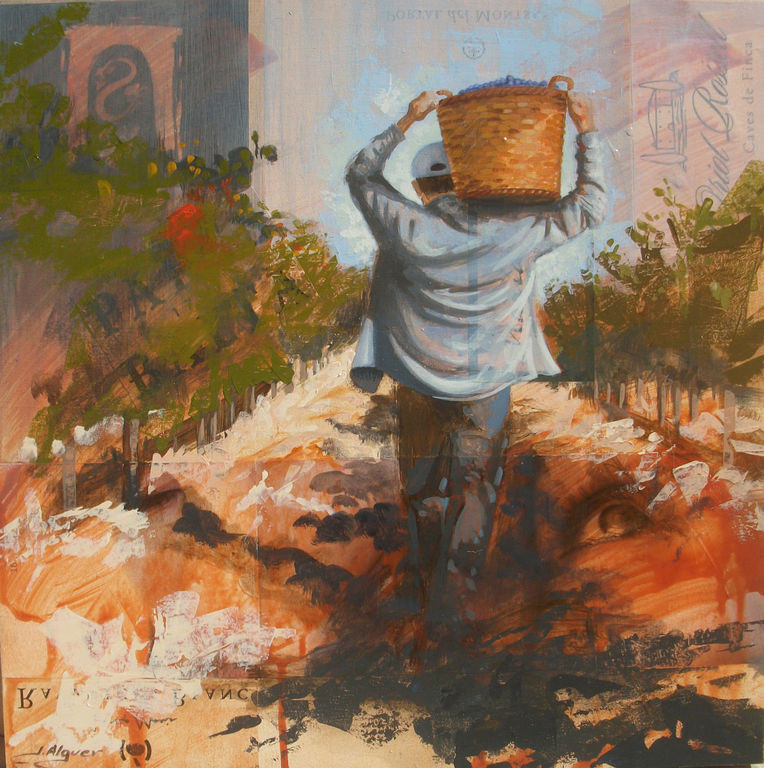
The luminism of his beloved Sorolla also turns up in other artworks with a more everyday tone, like Trabajando la tierra or Dos épocas a orillas de Valencia. Because Alguer can't escape (and doesn't want to) the captivating pull of the sun, the light and the Mediterranean.
Rostros, Buscando la inspiración and Grandes ciudades
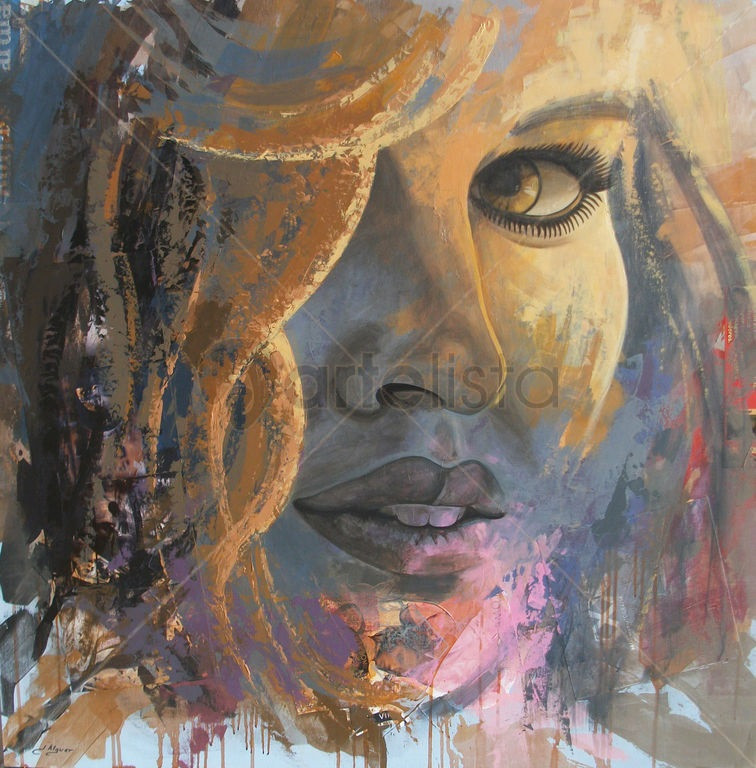
These are the Valencian painter's 'other' series, with fewer artworks, but they show Alguer's versatility and his desire to explore new paths in his painting. In his Rostros series he focuses essentially on the female figure, starting from collage and showing his great gifts as a draughtsman.
Buscando la inspiración is like a 'spin-off' of Figuraciones. Number IV of that series, in which Alguer painted a girl with a saxophone, was the starting point for a series of its own. The Valencian painter's aim is to show the passion for music that exists in his part of the world, for the classic bands, but which has opened up to other musical styles like rock or jazz (the bass player in Inspiración 005 or the trumpeter in Inspiración 004).
And finally, his Grandes ciudades series sets out to paint, also using his particular collage technique, the great cities of the planet. Like Times Square in New York 01. A good place to end our tour through the work of the prolific José Miguel Alguer.
We invite you to visit Jose Miguel Alguer Romero's gallery on Artelista.
Comments (0)
Log in to leave your comment. Log in