
Formal restraint is how the subtlest crimes in the history of art have been committed. Want to meet a few of them?.
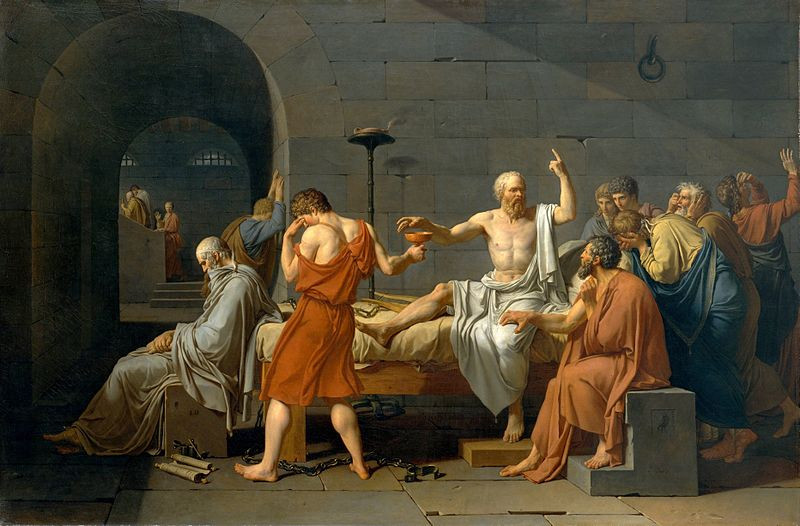
“Crito, we owe a cock to Asclepius. Pay the debt and don't neglect it” have come down to us as Socrates' last words before the poison took his life. With that tempered, distant attitude towards tragedy, Jacques- Louis David (1748- 1825) took up the classical ideal again in La muerte de Sócrates and painted the moments before the execution. This is the birth of Neoclassicism and, with it, of murder scenes full of harmony.
The Neoclassical current, the aesthetic expression of the Enlightenment, aspired to an order governed by reason and freedom. Like their classical predecessors, its painters used simple compositions and idealised figures to convey what is rational and virtuous through exemplary stories.
Socrates prepares to die in an atmosphere of contained drama. He faces his death bravely and takes pride in being able to obey the law without renouncing his principles, even if it costs him his life. Plato appears aged, at the foot of the bed, deep in thought. Pointed out by the movement of his master's hands, he is the only one who listens without distress to the last lesson Socrates gives and that J. L. David captured: the serene gesture with which he accepts death as the triumph of reason.
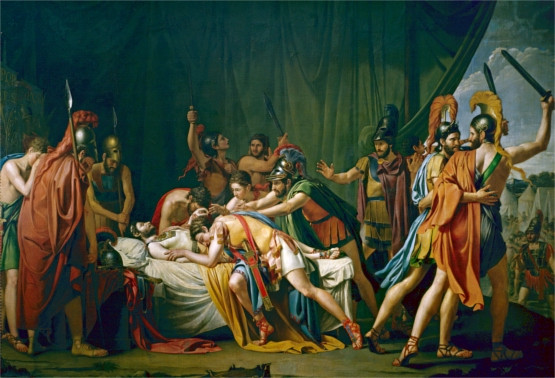
José de Madrazo (1781- 1859) painted a series of pictures representing the resistance of the peninsular peoples against Roman rule. One of them was La muerte de Viriato, the Lusitanian leader who, after securing peace with Rome in the 2nd century BC, was murdered by his own comrades.
The death takes place in a theatrical setting under a clear light that rejects any distraction. The sweeping cloths of the tent become the backdrop and confine our attention to the scene of the crime. Like a classical frieze, the figures spread out across the space with a harmonious movement that leads the eye from the deathbed to the opening of the tent, where the killers are escaping. The loyal soldiers weep for his death, but hold back their grief like perfect classical sculptures. In Viriathus, Madrazo found a liberating leader in whom he could reflect his patriotic feeling against Napoleonic expansion.
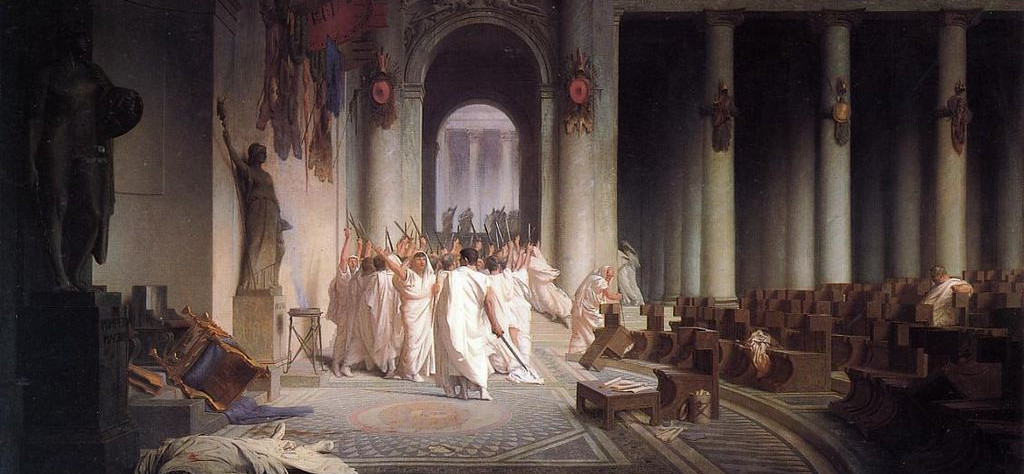
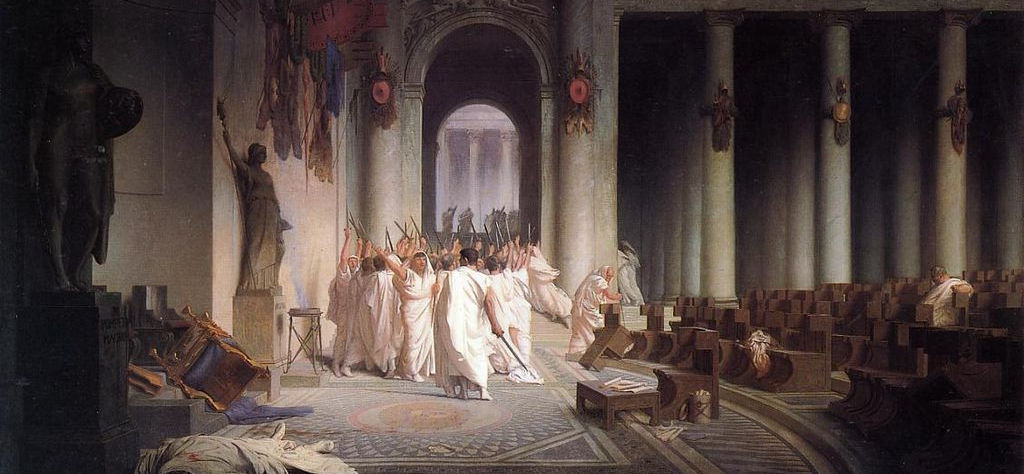
Gaius Julius Caesar lies dead in the shadows beneath the statue of Pompey. Jean- Léon Gérôme (1824- 1904) revisited La muerte de César through academicism, and he did it by giving the leading role to the executioners. Gérôme brings the celebration of the accomplished conspiracy to the foreground. A clear, intense light falls on the centre of the scene and lights up the perpetrators of the crime as they raise their daggers. The body of Julius Caesar is left in the shade, completely wrapped in his white toga, stained with blood only once, even though he was stabbed twenty-three times.
When he was killed he was preparing new conquests to make Rome greater. But the building of a great empire was not backed by most of the Senate and, taking the defence of the Republic as their motive, they agreed on the murder of the perpetual dictator.
The moralising function of Neoclassicism pours exemplary messages into the stories it tells. With these murders it seeks to exalt their protagonists as heroes and present virtue in them. And it does so by hiding the violence and the drama behind a sublime serenity. However tragic the misfortune, it will be a sober, balanced scene.

Comments (0)
Log in to leave your comment. Log in