
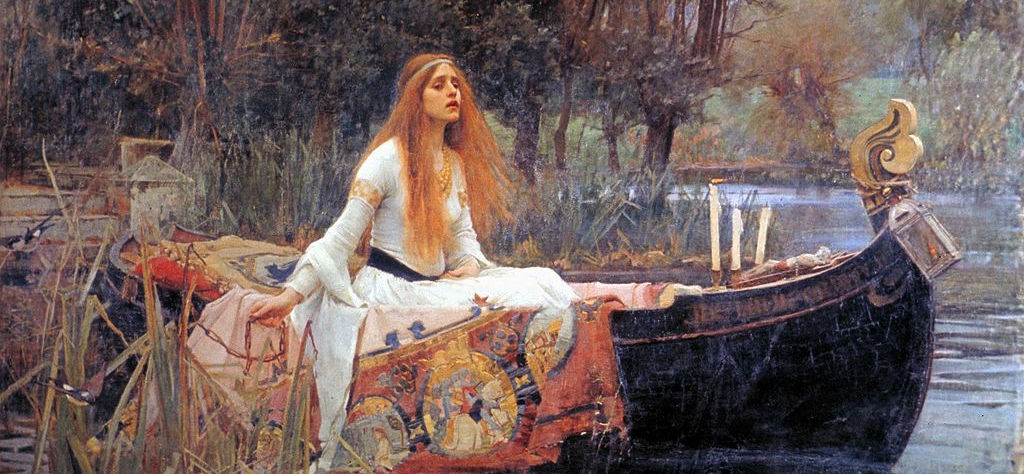
Elaine of Astolat (at some point, maybe never), better known as the Lady of Shalott, has never painted a picture in her life.
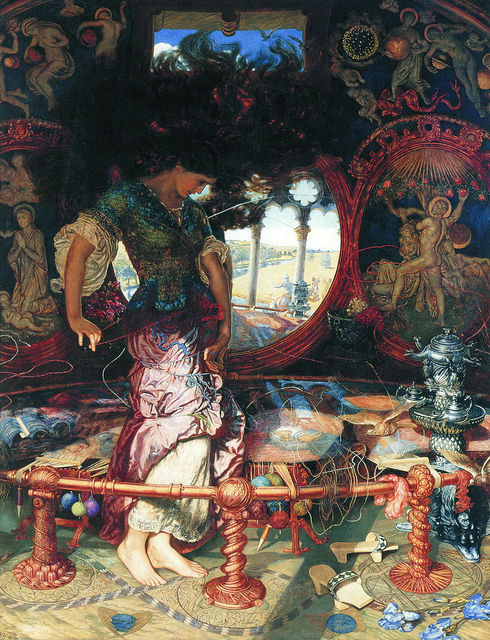
Elaine just stays there after the eclipse, weaving another morning from her tower while reality keeps wearing thin in the mirror. Elaine is a prisoner, laced tight into the curse of stitching beginnings with short stitches, when Elaine has no interest in painting anything, and even less in making endings more agreeable. Tell us, Lancelot, who could demand anything of Elaine when Elaine no longer waits for anything? Why not let Elaine sing her sadness the way she wants to sing it? Don't you see how impossible it is to impose rules on someone who is nothing now but her own surrender? You don't realize that Elaine no longer waits for anything.
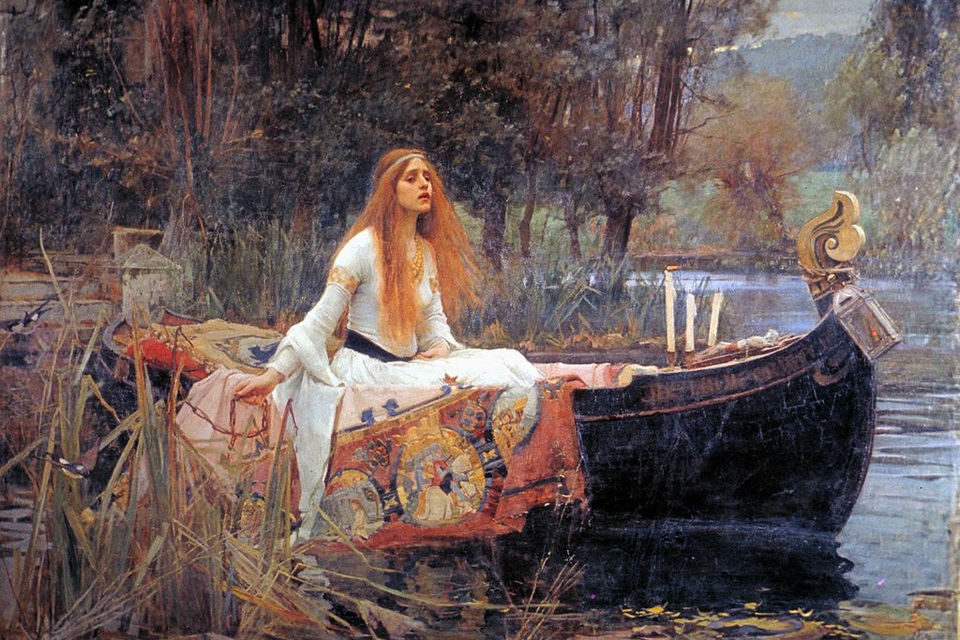
The Lady of Shalott will board her boat, like it or not, to let her lament drift downstream. With the cloths she herself has darned spilling over the sides, the way her inconsolable gaze spills out towards Camelot. For a moment she has managed to gather in her eyes all the desolation that exists behind her medieval walls. For a moment she has stored up so much abandonment, half sick of shadows, that she has managed to be free. Elaine is free. And Elaine no longer is. Elaine has ceased to be, and she is free, because Elaine no longer waits for anything.
The Lady of Shalott, a minor character in the Arthurian legend, whose best known version comes to us in Le Morte d'Arthur, the novel written by Thomas Malory in the 15th century, is now canvas in Waterhouse, now poem in Tennyson, now song in McKennitt. Her unrequited love for Lancelot is a banal excuse, insubstantial, expendable in every sense. The Lady of Shalott is not some common heartbroken desolation. The Lady of Shalott is the most honest giving of oneself, she is abdication, she is the accumulation of all the courage and all the dejection needed to cast off the moorings and learn to lose. "I had love and I have honour. That is all I know of myself", said doña Mencía in Calderón de la Barca's play. And the Lady of Shalott is Elaine. And Elaine no longer waits for anything.
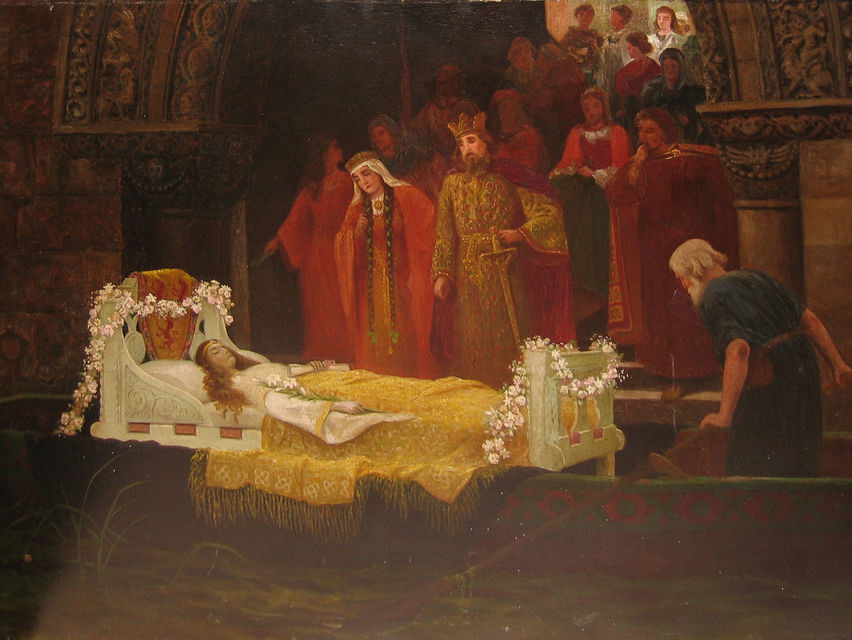
She lies with a lily in one hand and a letter with her last words in the other. What are you coming to demand of her if she has already lost? If the mirror is cracked, if she has nothing left to give up, if she will always be there in her boat. What delivery time are you asking of her? What punctuality should there be? What talent? For heaven's sake, let Elaine sing her sadness without a clock, let her sing it in whatever way and manner she wants to sing it. Don't expect to like it. Don't listen, don't pay attention. Who would be captivated by a grief that isn't their own?
There is nothing left in her gaze to give. She expects no recognition, she doesn't seem to be asking for anything in return, nothing at all. She is the Lady of Shalott. She is simply a legend. And Elaine? Elaine just stays there, weaving after the eclipse. Elaine no longer waits for anything.

Comments (2)
Beatriz Graciela Moyano
June 18, 2016Belén González
October 11, 2015Log in to leave your comment. Log in