
The figure of the cat has carried an ambivalent symbolism across different civilizations and cultures. So, while in feudal Japan the cat becomes a bad omen, or in the Kabbalah and Buddhism it is directly linked to the meaning of the serpent, in pharaonic Egypt cats were considered true divinities.
Without going any further, the goddess Bastet, who symbolizes domestic protection and harmony, is depicted in feline form. On the other hand, the cat, especially the black one, would also be associated with the magic and sorcery of witches in medieval times. As we can see, the symbolic uses of the cat in the imagination of different societies are many and very varied, and therefore, as a direct product of that, so are they in their artistic expressions.
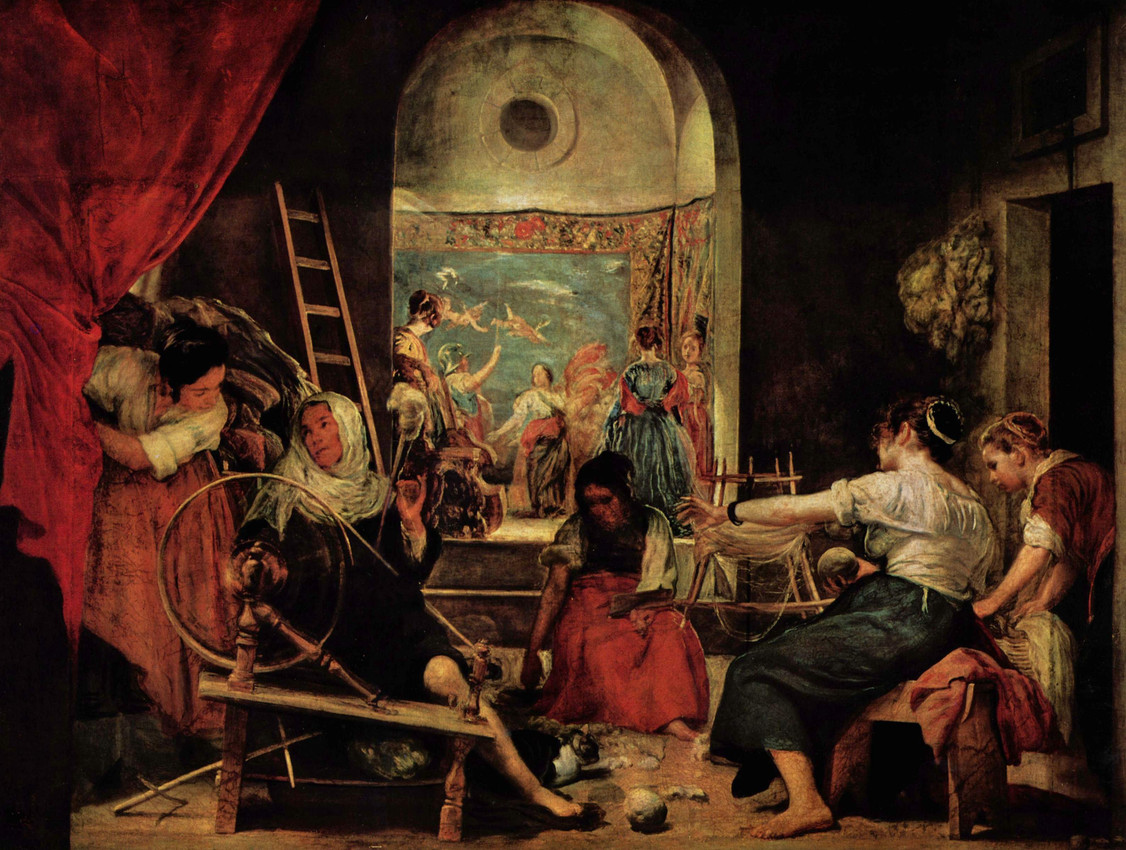
Cats star in, or are unsettling onlookers in, countless scenes by the most varied painters and artists of every period. During the Baroque they are depicted as companion animals in domestic settings, both in humble peasant rooms and in palaces. Their presence in this sense stands out in important artworks such as Gainsborough's Estudio de un gato (1765-69) or Velázquez's Las hilanderas (1657). In the latter case the cat appears crouching between the weaver's feet, almost blending in with the balls of yarn.
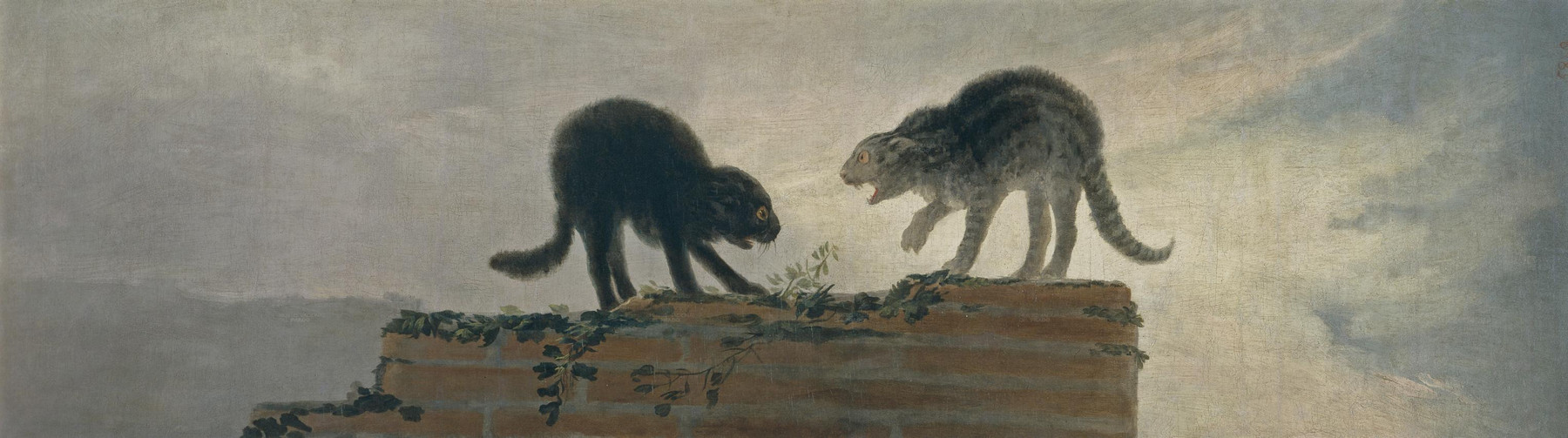
During the 18th century, in the age of the Enlightenment, paintings begin to bring out the cat's most seductive and enigmatic side. That elegant, mischievous way of depicting the cat is clear in the artworks of Jean Baptiste Chardin, William Hogarth, François Boucher, José del Castillo and Giacomo Ceruti. And of course the cat is also present in some of Goya's artworks, and he knew how to give it its hunting, quarrelsome character too. That is the case with the defiant stare of the three cats towards the bird in Retrato de Manuel de Zúñiga (1786), or the even more explicit feline tension in Riña de gatos (1786).
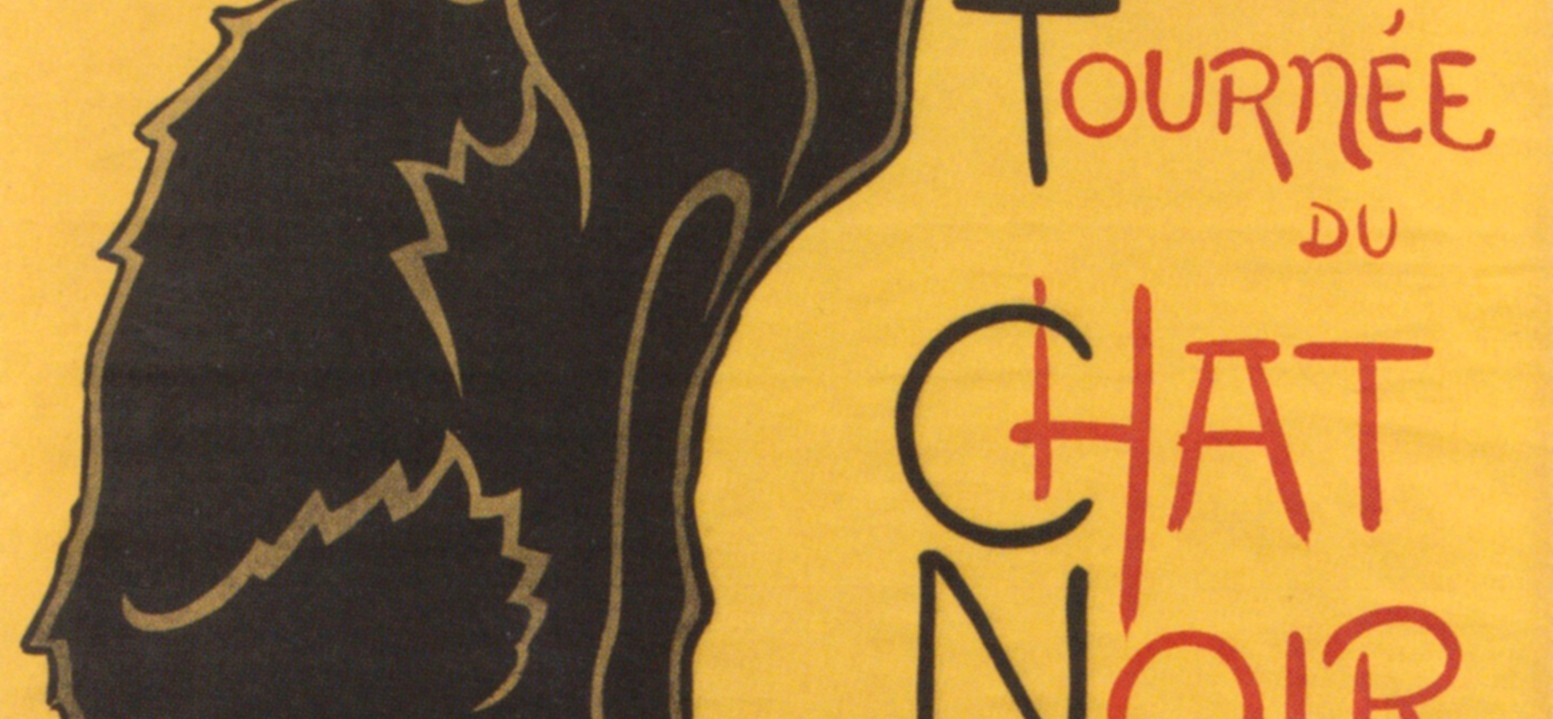
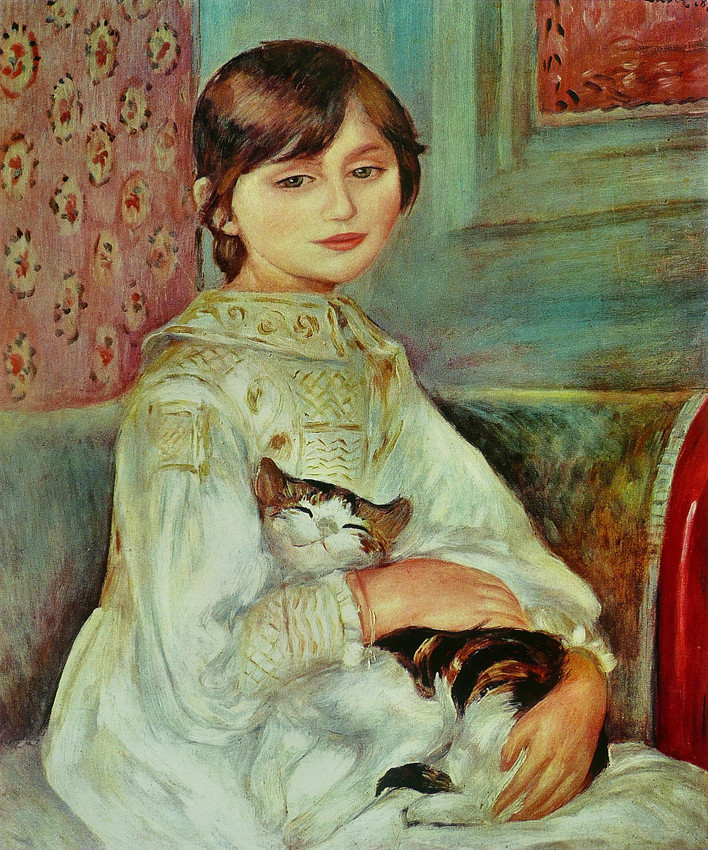
By the time of 19th century Romanticism and Impressionism, the cat takes on its most solitary, independent and melancholy form, and becomes almost indispensable company in some of the best known portraits of women. It appears, for example, in Manet's famous Olympia (1863), and following in the same painter's wake, in the portrait the Parisian painter made of his niece Julie. The cat would also be a subject of study in Toulouse Lautrec's drawings, above all in the making of his advertising posters. Particularly notable is Steinlen's poster, used to promote the Chat Noir cabaret, one of the emblems of the Belle Époque.
Steinlen is without doubt one of the contemporary painters who has devoted the most attention to painting the cat. Besides the poster mentioned, the Franco-Swiss painter and lithographer offers among his paintings a modernist vision of the cat, in which the animal takes on an identity of its own and conveys its leading role without beating about the bush. That is the case, for instance, of his artwork Des Chats (1910), in which two cats and their positions are enough to tell the story. Domestic felines are also handled by abstract painters such as Paul Klee, and especially in his painting El gato y el pájaro (1928), where the household animal is subjected to a psychological study in the conceptualization of its portrait.
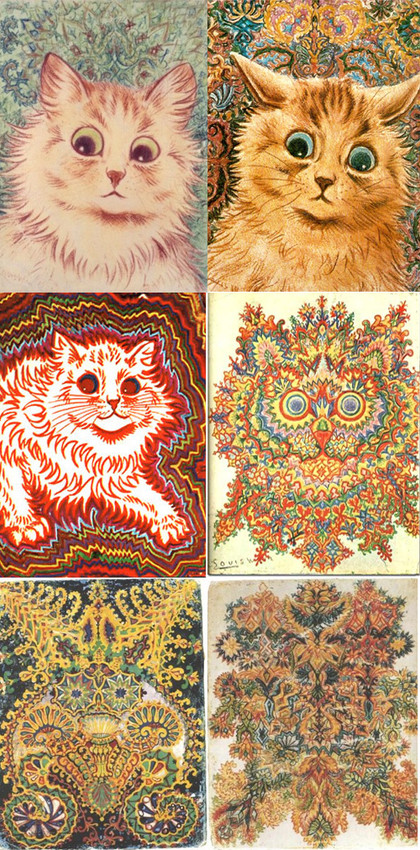
Other important artists who have shown an interest in the figure of the cat as a paradigm of cunning have been Picasso himself, or the man known as "the cat painter", Louis Wain. This English artist even went as far as giving his depictions an anthropomorphic character. Some specialists claim that Wain's work reflects his schizophrenia, in his depiction of cats in human attitudes, even dressed in clothes, but the truth is that his artworks spread so widely that they ended up on calendars, stamps and postcards of the time.
Such is the importance of the cat's history in painting that there is even a museum set up for the exclusive display of artworks in which it is the protagonist. It is the Kattenkabinet (Cat Cabinet), located in Amsterdam and founded in 1990, and it houses artworks by no less than Rembrandt, Toulouse Lautrec, Picasso and Manet, among many other well known artists. Steinlen's Apoteosis de los gatos (1885) is also among its treasures. All in all, cats are an enigma to be deciphered in artworks too. "My cat never laughs or complains, he is always reasoning", wrote Miguel de Unamuno.


Comments (0)
Log in to leave your comment. Log in