
Throughout history we find exceptional examples of artists who have used the portrait of their own studio to show part of their private world and share certain confidences. Below, we take a look at the painter's studio as seen by three geniuses: Rembrandt, Courbet and Bazille, what will they reveal in them?
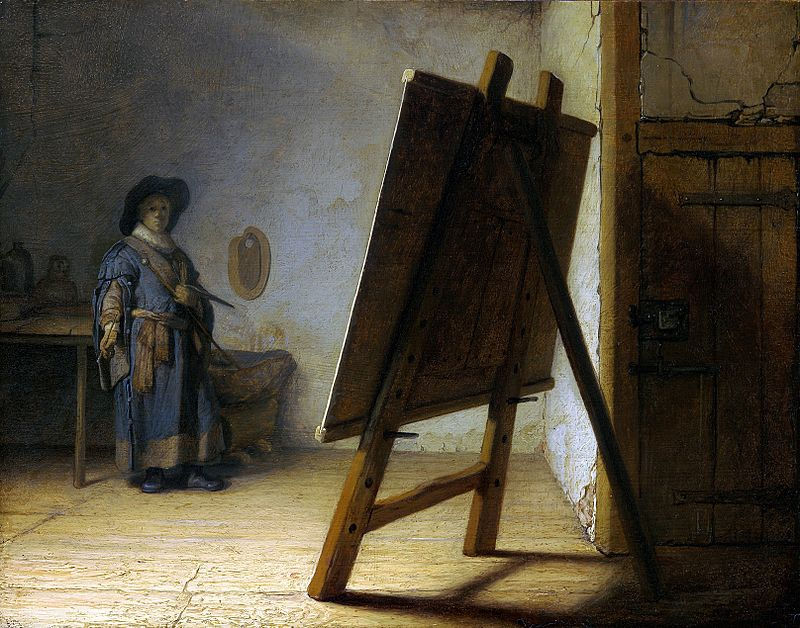
El pintor en su estudio (1629) by Rembrandt
With his usual detailed, painstaking style, the Dutch master shows the painter alone in his studio. Rembrandt chooses to depict the moment of creation. A strong beam of light lights up the canvas he is painting, though it isn't revealed to the viewer, since it isn't finished yet. The young artist, on the other hand, is placed in the half light, meditating on the artwork he is creating at that very moment. In this way he alludes to the importance of thinking out and conceiving the piece of art. That is why the figure stands away from the easel, dressed in elegant clothes and with brushes in his hand, so that he isn't mistaken for a mere visitor to the studio. An austere, simple studio which again sets up a relationship of opposition with the artist's garments. He is equally interested in capturing the details of the wall, the nails in the easel, the damp in the wood or the objects behind the painter. All of it bathed in the suggestive play of light and shadow typical of the baroque.
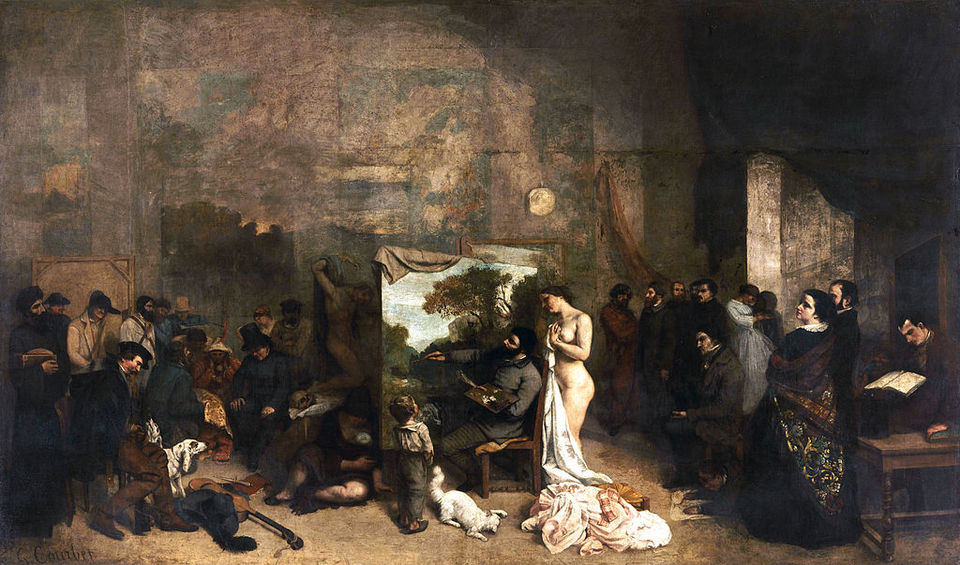
El taller del pintor (1854- 1855) by Gustave Courbet
This is one of the French artist's most enigmatic canvases and in it, as in almost all his artworks, its revolutionary character comes first, bringing together the group portrait, the landscape and the nude all at once. Within the group, on the right, we see friends, workers and art lovers. Among them we recognise the patron Alfred Bruyas, the philosopher Proudhon, the critic Champfleury and Baudelaire. On the left he places earthly life: misery and wealth, and there we find a priest, a hunter, a labourer and a beggar woman. He also symbolises free love in the two lovers painted near the window, academic art in the male model and, in the woman, truth. At the centre of all this, the painter presents himself as a mediator, underlining the social role of the artist. He does so, as he usually does, on a grand scale, giving the dimensions of history painting to his personal story and so feeding the foundations of realism.
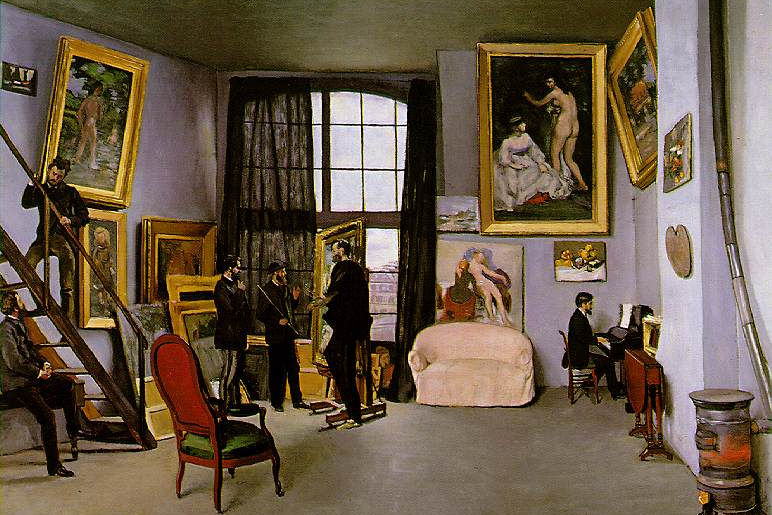
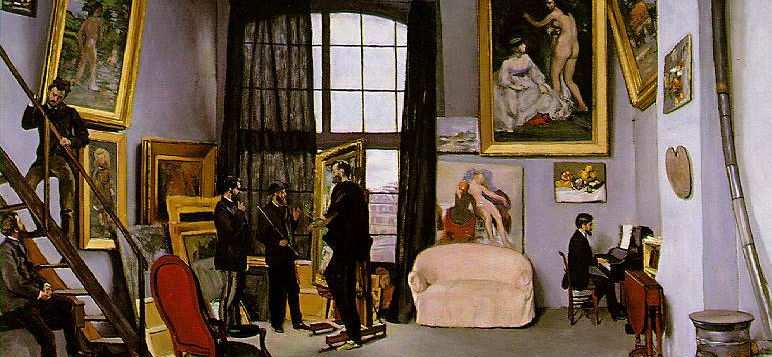
El taller de Bazille (1870)
Bazille uses the painter's studio to make an autobiographical painting, full of allusions to his life and his work. The scene is set in the studio on La Condamine street that Bazille shared with his friend Renoir from 1868 to 1870. In the centre, the painter portrays himself with the palette in his hand. The slender figure wearing a hat, looking closely at the canvas he is painting, is Manet, who was a strong influence on him. On the right, at the piano, he includes his colleague Edmond Maître. Above, he reproduces a still life by Monet, perhaps to recall the financial help he gave him by buying paintings. The other characters on the left are harder to identify. They are probably Monet, Renoir and Zacharie Astruc. Bazille also echoes some artworks of his own and of his impressionist colleagues that were rejected by the Salon, such as El aseo, Encima del diván, El pescador y el gavilán, his own, and Renoir's landscape with two figures, the large painting on the right of the picture. Thus setting out a resounding criticism of the Academy and asserting his own vision of art.

Comments (1)
carmen dell'isola
July 22, 2015Evidenciando un profundo conocimiento del arte y del contexto cultural y social en que se produjo.Muchas gracias.
Log in to leave your comment. Log in