
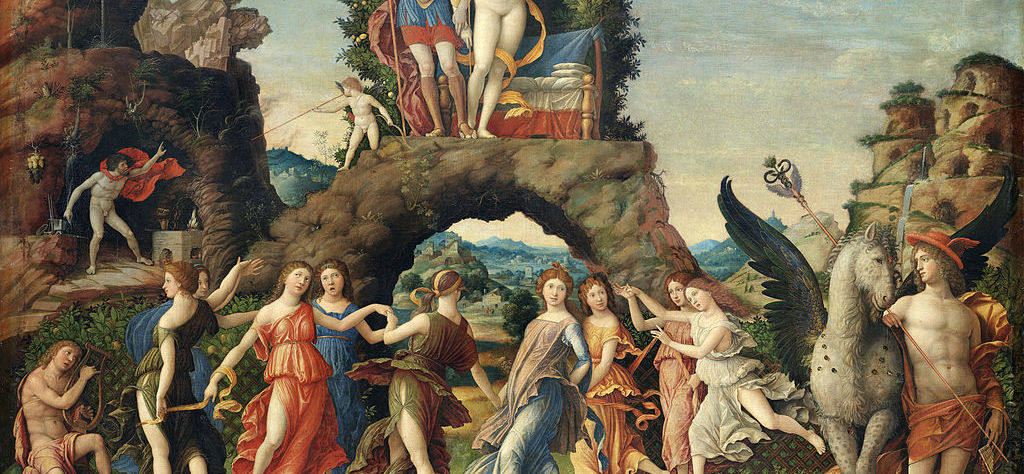
Collecting in 15th century Italy can't be understood without the space that held those collections: the studiolo. This kind of private space appeared alongside the birth of humanist culture and consisted of a room set aside for the master of the house, where he would retire to read and meditate. That intellectual retreat was influenced by the figure of the humanist thinker, such as Francesco Petrarca (1304 - 1374), a man devoted to leisure who spent his life reflecting on the humanist ideal of life. The following artwork illustrates what could be understood by a studiolo, with the meditative attitude of the sitter standing out.
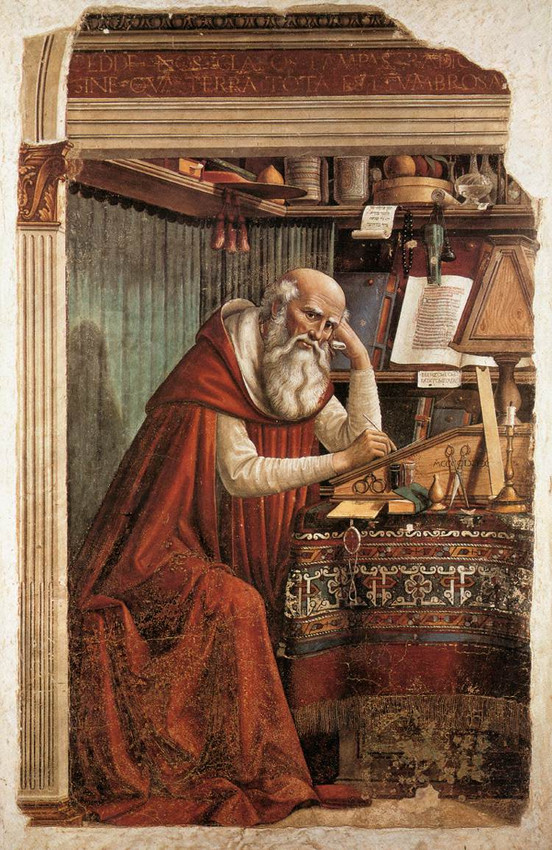
The studiolo was the space where the master of the house could retire to meditate and where he kept his documents and deeds, along with small format paintings, gold and silver work and, above all, books. The vast majority of palaces of the period had a space of this kind, and it is on record that in the studiolo of Lorenzo de Médici (1449 - 1492) more than 200 coins, medals, natural history objects, a unicorn horn and small ancient artworks were found. There were also many popes who decided to build spaces with characteristics similar to the studiolo inside the Vatican, such as Nicholas V (1397 - 1455) and Paul II (1417 - 1471).
During the Renaissance the arts flourished enormously thanks to the patronage of the great Italian aristocratic families, among which the Medici family of Florence stands out, patrons of great masters such as Michelangelo, Donatello and Fra Angelico, among many others. But they weren't the only ones, since this artistic patronage took place in every major Italian city, with figures such as Federico da Montefeltro, Duke of Urbino (1422 - 1482) and Isabella d'Este, Duchess of Mantua (1474 - 1539).
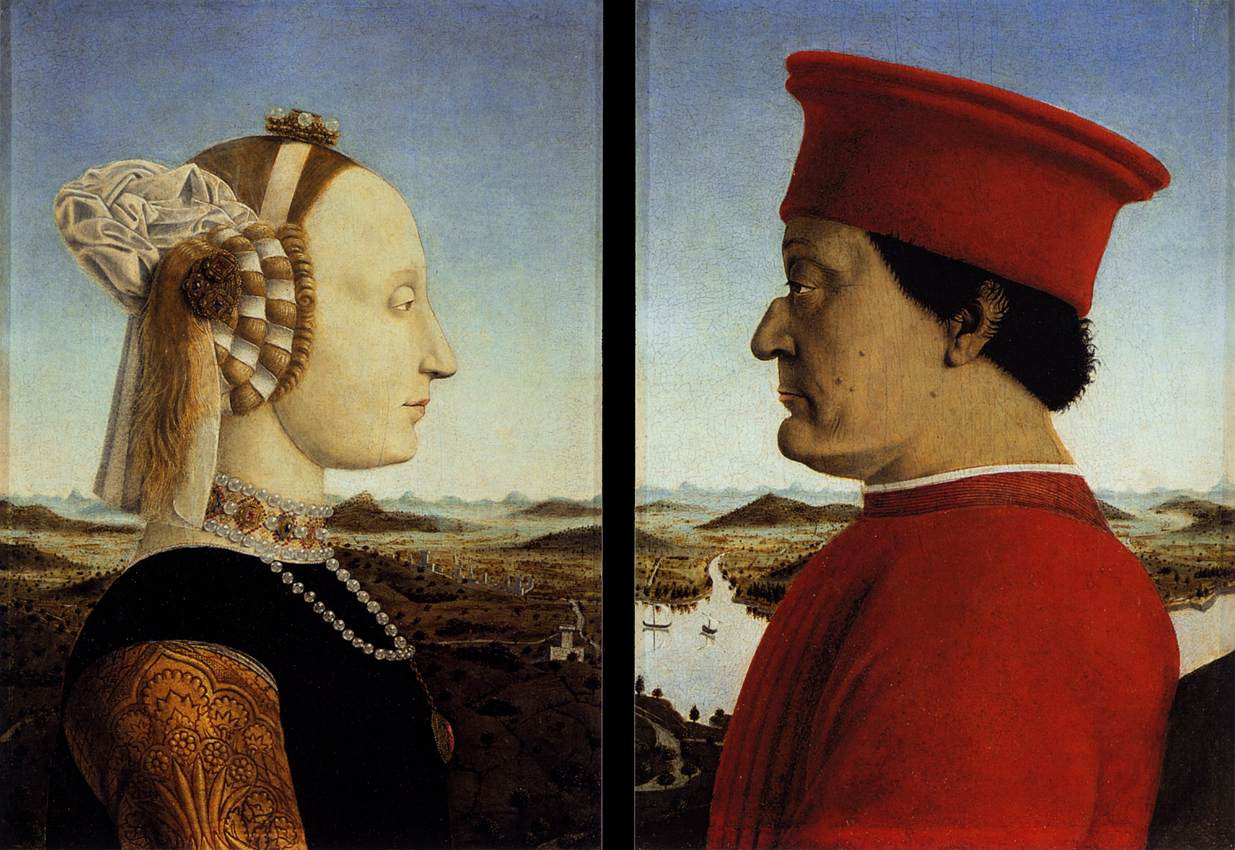
Federico da Montefeltro was the illegitimate son of the previous count of Urbino, but he was given a humanist education in Venice and Mantua. When he returned to Urbino his father died and, after a plot to murder the legitimate son and heir, he ended up being named count of Urbino. Federico turned little Urbino into a military power at the service of the highest bidder, notably through his collaboration with the Papacy, which granted him the title of Duke of Urbino. It has recently come to light that he was also one of the instigators of the Pazzi Conspiracy (1478), which aimed to put an end to Medici rule in the city of Florence.
The Duke of Urbino didn't limit himself to military life. He managed to put together a considerable collection of books and made an effort to maintain the image of a humanist intellectual. To that end, he had himself portrayed by great artists, such as Pedro Berruguete, reading and meditating in his studiolo. This room wasn't large, but it was completely decorated with artistic and scientific motifs, above all the 28 portraits of illustrious men of antiquity and of his own day hanging along the upper part of the walls.
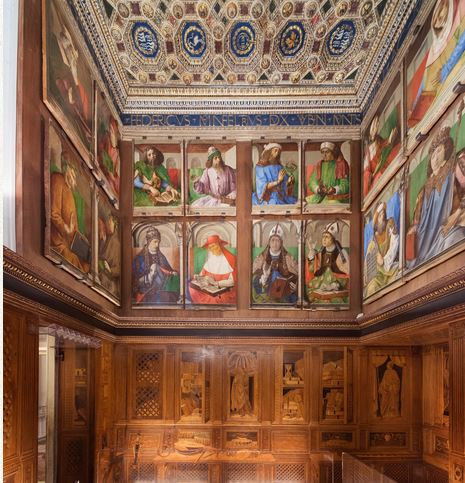
At this link you can see an interesting reconstruction of what this space was like.
Another of the humanist courts of this period was that of Mantua, ruled by the Gonzaga family. Isabella d'Este, daughter of the dukes of Ferrara, was married very young to the marquis of Mantua, Francesco II Gonzaga, who would die while she was still young. Widowhood kept her away from political life, so she could devote herself entirely to the arts, her true passion.
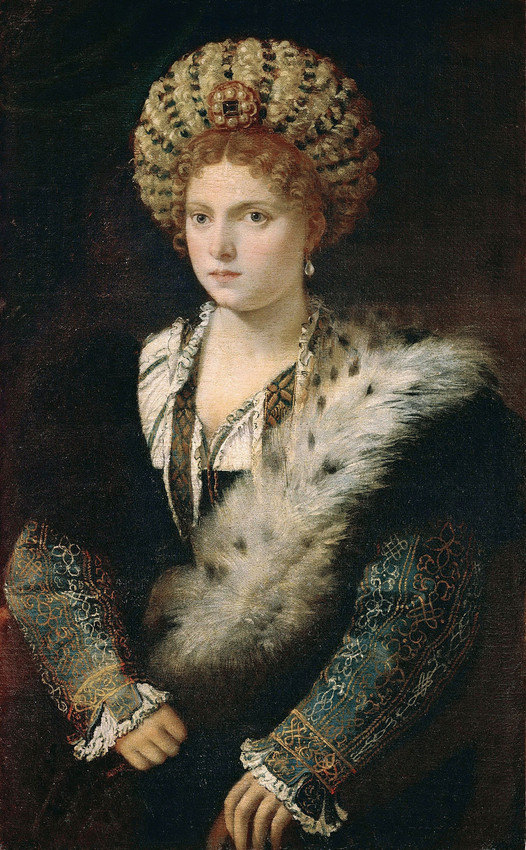
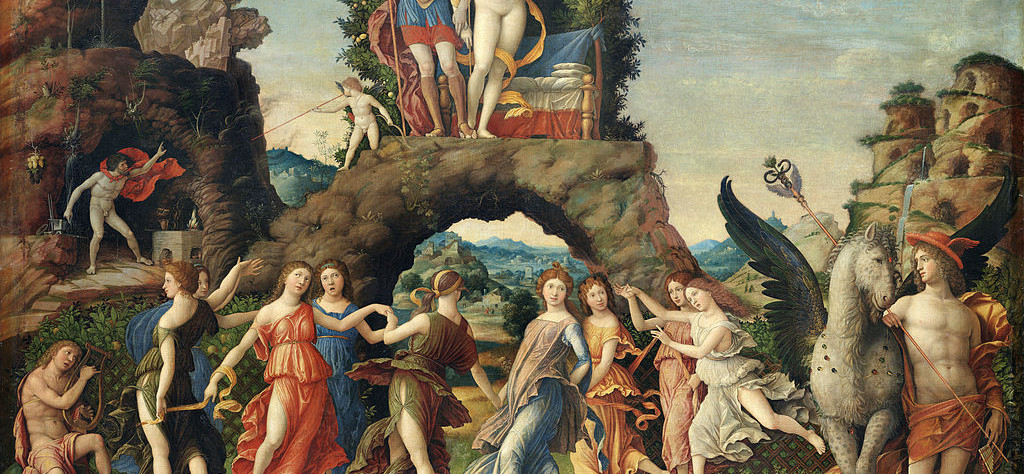
Isabella d'Este was one of the most cultivated aristocrats of the Renaissance and over the course of her life she set up two studiolos, since she had to move the original one to the residence she retired to after her husband's death. This second space was decorated with a series of paintings that today are in the Louvre and that were commissioned expressly for that room. Among these artworks, El Parnaso (1496) by Andrea Mantegna stands out, along with others by the same artist, by Correggio and by Perugino. She was portrayed by many artists, such as Tiziano, Leonardo da Vinci and Gian Cristoforo Romano. Apart from all these paintings, she collected other kinds of pieces such as small Renaissance bronzes, medals and cameos, as well as small format Roman sculptures. On her death an inventory of her private collection was drawn up and as many as 1,600 pieces were listed.
Having got to know the studiolo as a space for collecting and seen what the collections of Federico da Montefeltro and Isabella d'Este were like, we now move well into the 16th century to look at two collecting spaces typical of the Italy of the time: the archaeological Cortile and the Gallery.

Comments (1)
María
June 16, 2016Log in to leave your comment. Log in