
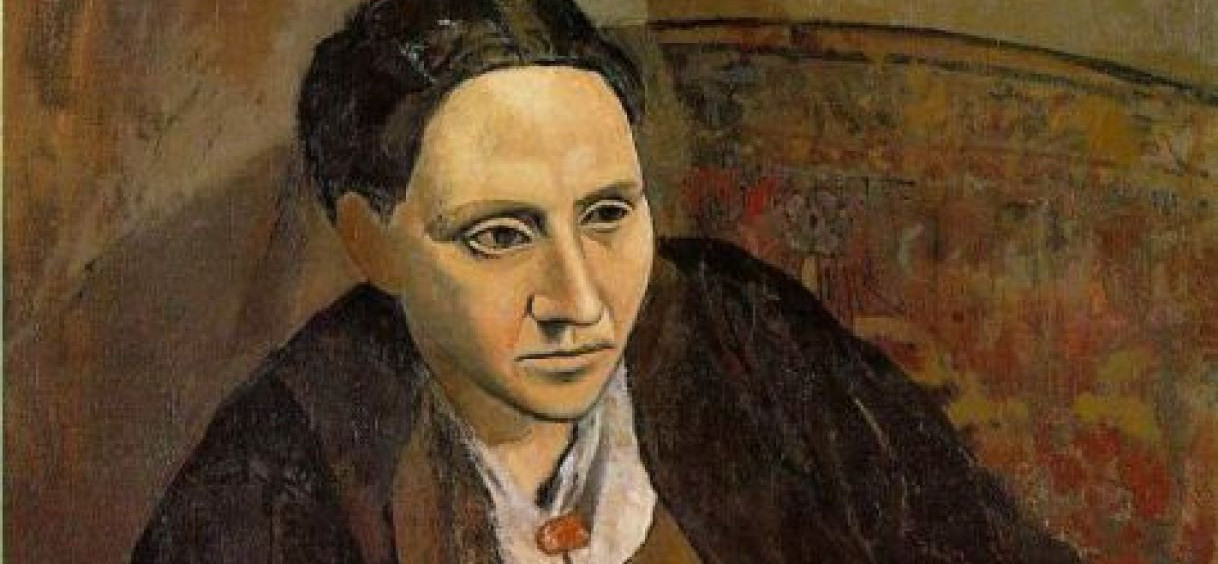
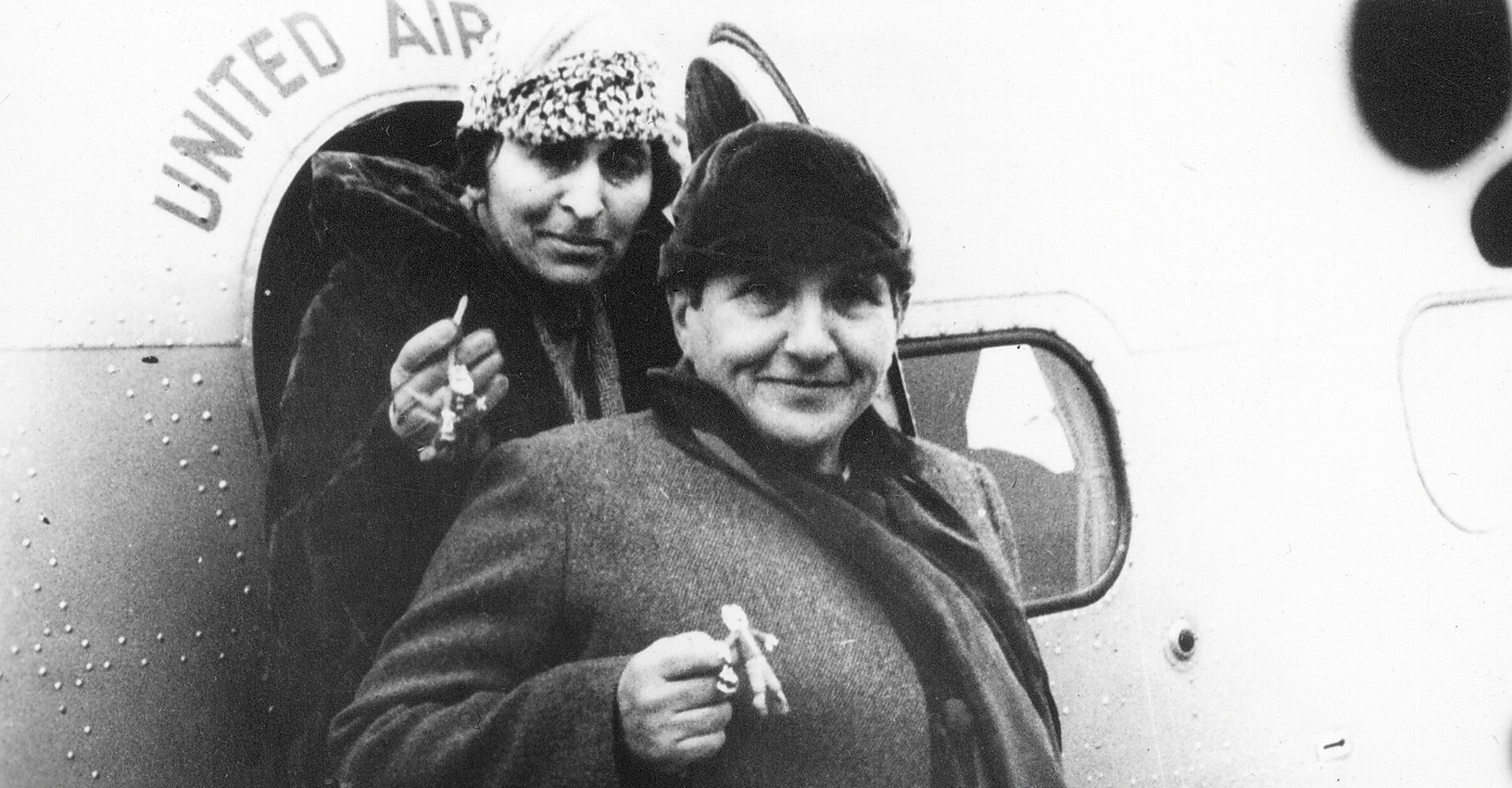
A poet in the old style, one of Sappho's kind, bent on understanding a world. A polemicist and writer, more controversial than acclaimed for her own writing but incredibly influential in the course of the artistic avant-gardes of the early 20th century. They say Gertrude Stein coined the American term "Lost Generation", they say Gertrude Stein was the one who had her photograph taken giving the Nazi salute in the bunker where Hitler died, that very same year of 1945, just to annoy. They say a lot of things about this dense woman, dense in every sense you can define, but there is one that stands above all the rest: she was Paris... "because Paris was a woman".
The writer who turned Parisian art of the early century upside down
Gertrude Stein is known for her literary works but also for her fascinating life. At just three years old she was taken from the USA to Europe, specifically to Vienna and Paris. Throughout her youth she was shaped by an education pushed along by her parents, an upper middle class Jewish family. Although this Anglo-Saxon expatriate has barely been recognised outside the most specialised art circles, she is well worth bearing in mind as one of the greatest aesthetic influences of the early 20th century.
But she was not the only one. Today there is a record of a modernist movement founded by enterprising women who were not just an aesthetic spur in the art of the great artists but also founded their own publishing houses and created literary magazines, salons, presses and literary gatherings.
..."a rose is a rose is a rose..." (Gertrude Stein)
Today we can learn more about these incredible women thanks to Shari Benstock, who published "Women of the Left Bank: Paris 1900-1940", a detailed book that brings to light "the other protagonists" of the artistic avant-garde of the early 20th century.
Art collecting in the life of the poet Gertrude Stein
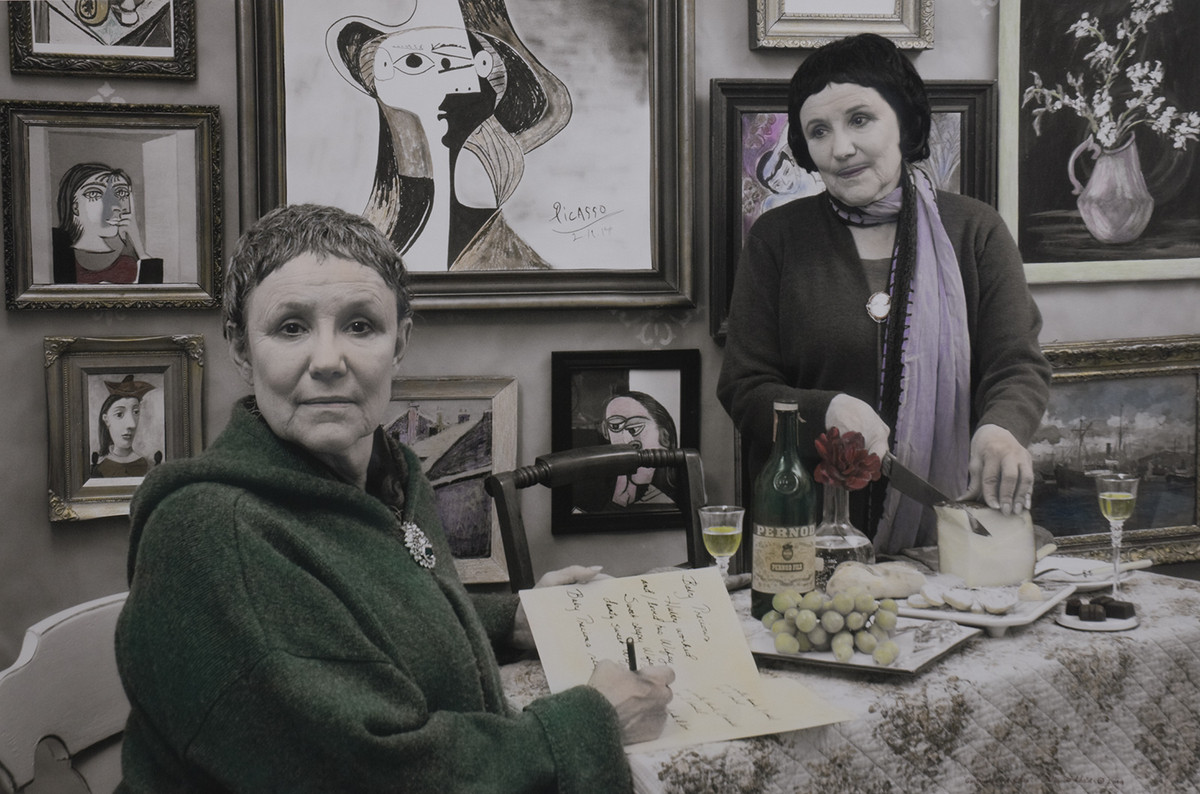
This woman amassed dozens of artworks over the course of her life, among them some by the most renowned painters of the period.
- Gauguin: Su galería poseía "Sunflowers" y "Three Tahitians".
- Cézanne: "Bathers", "Portrait of Madame Cézanne".
- Delacroix: "Perseus and Andromeda".
- Matisse: "Woman with a Hat".
- Picasso: "Young Girl with Basket of Flowers".
She also collected artworks by Renoir, Honoré Daumier, Pierre Bonnard, Henri Manguin and Toulouse-Lautrec, among others. As Henry McBride, one of the writer's friends who did a great deal to spread the art she collected in the USA, rightly noted: "Gertrude collects geniuses rather than masterpieces. She recognises them a long way off." Together with her brother, who had a special eye for business and for valuing art, collecting became one of the cornerstones of the writer's life. Today you can visit the Stein Salon at 27 Rue de Fleurus (Paris), once one of the cultural hubs of the era.
"Paris was a woman", or how Gertrude Stein met the painters of the European avant-garde
The influence Gertrude Stein had on the great Parisian artists of the early 20th century goes beyond simple theoretical inspiration. If Viennese actionism branded Dadaism for life, Gertrude Stein's action was a shot in the arm in the lives of painters of the stature of Picasso. She also turned out to be a regular with artists of the calibre of Cézanne, with whom she exchanged thousands of ideas, as she did with the no less controversial painter Toulouse-Lautrec.
A few anecdotes from the life of Gertrude Stein
Gerrtrude was pure controversy her whole life. Her overwhelming presence and her irrepressible character made her one of the most polemical artists of the period. Of herself she said that if "Einstein had been the scientific mind of the 20th century, she had been that mind in literature".
She had a good education, since she came from a well-off family in Pennsylvania. It was at Harvard, no less, where she was educated in the field of psychology. In one of her theses she took issue with what the behaviourist psychologist Skinner read in her poem "Tender Buttons" as an example of "normal motor automatism" (automatic writing). According to Stein, "there may be automatic movements, but not automatic writing. Writing for the normal person is too complicated an activity to be indulged in automatically".
Stein was not only one of the women most committed to her writing in the 20th century, she also became one of the most intellectually promising young people of her day. She was invited to study Medicine, and there are still people who are scandalised by a controversial lecture she gave at the request of one of her professors: "The average middle class woman (supported by some man) is not considered economically important. This economic dependence led her to become a sexual object... adapting herself to the abnormal desire of the male, becoming a creature that should have been first a human being and then a woman, instead of one that is a woman first and always." (From Wikipedia)
She was also the one who, long before other better known women such as Chavela Vargas or Frida Kahlo, experimented with her sexuality without a single pang of remorse, having several lovers and living her bisexuality all her life. Without knowing it, Gertrude Stein would come to be considered one of the forerunners of women's sexual and intellectual freedom. Her life companion, until the day she died, was Alice B. Toklas, one of her main inspirations.
Gertrude Stein is also considered the creator of the term "Lost Generation", led by great writers such as Ernst Hemingway and Henry Miller.
Although pro-feminist and pro-immigration, some of her statements had overtones that today would be called racist.
What we have left of her is her literature and that smile which seemed to scan the horizon of the lives of all those painters who, after her, went on to succeed. An immortal woman who remains in the historical memory of her legacy for the young generations of the 21st century.
Images: julianbluff , sallystockholdphotography , haaretz .
Comments (1)
Ixxito
May 22, 2019Log in to leave your comment. Log in