
Wunderkammern or chambers of wonders and natural history cabinets were two of the collecting spaces par excellence of the 16th and 17th centuries in central Europe. These spaces were known for displaying an enormous quantity of objects, both artistic and natural, but with a strongly exotic character. Those objects came largely from the explorations that the European powers were carrying out around the world. Bear in mind that America had been discovered relatively recently, and the interest in civilisations unknown until then gave rise to these collections.
As we saw earlier in the History of collecting (I) in the Middle Ages, it was already typical back then to collect exotic objects such as unicorn horns. This interest in fantastical objects did not disappear during the Renaissance or in later periods. It endured and lived side by side with the recent interest in the study of nature, in a more scientific and rational sense. So we are in a period in which
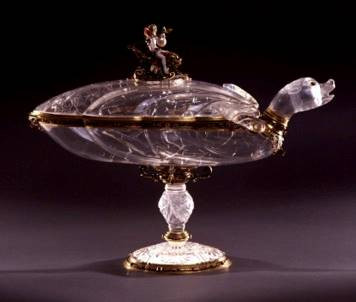
curiosity and interest in the scientific study of nature in no way clash with an interest in everything fantastical and marvellous that comes from the collective imagination, as unicorns and dragons do from a rational point of view. Mermaids, griffins, giants and other fantastical creatures appear illustrated in the bestiaries of the time as if they really existed, because people believed they might be found by exploring those lands unknown until then.
The figure of Rudolf II (1552 - 1612), Holy Roman Emperor, is essential for understanding the wunderkammern as a collecting space and the interest in those fantastical, exotic, unique objects, generally made from precious materials. He was an intellectual of his time and had an enormous interest in astronomy and astrology, and it is even said that
he collected objects connected with black magic. He welcomed to his court the astronomers Tycho Brahe and Johannes Kepler, who worked for him.
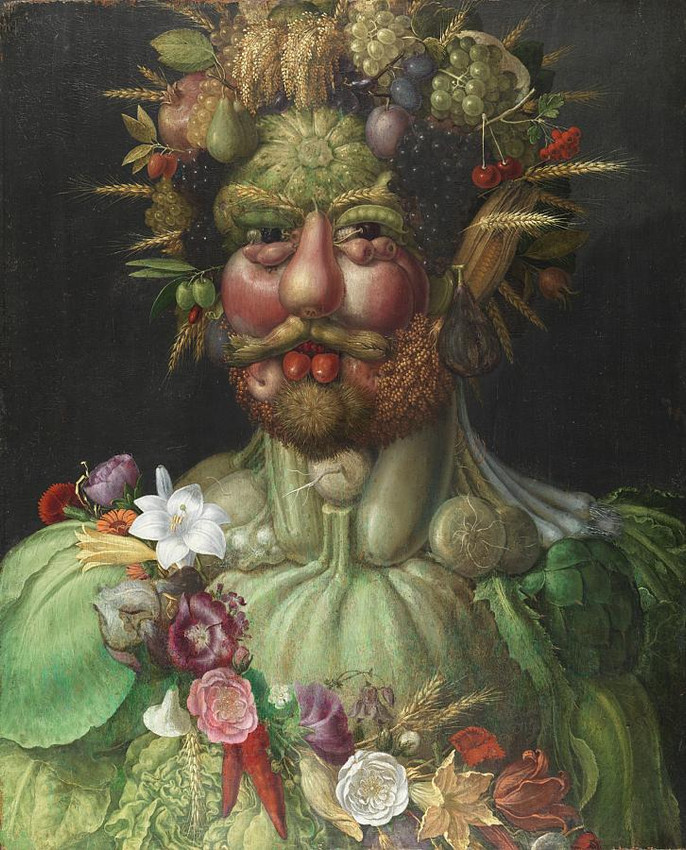
Rudolf II also had a strong interest in art and filled the Prague court with great artists such as Giuseppe Arcimboldo, Bartolomeus Spranger and Hans von Aachen. He also collected artworks by Raphael, Correggio and Brueghel the Elder, among many others.
Ferdinand II of Austria (1529 - 1595) also created a wunderkammern at Ambras Castle in the Tyrol. He had a space devoted to stuffed birds and sharks, salamanders and a fossilised set of deer antlers with a tree. A taste for the rare prevails, and it is said that people with deformities (giants and dwarfs) and strange illnesses lived in the castle, such as one that caused a great abundance of hair all over the body (hypertrichosis or werewolf syndrome). He also had a great interest in mechanised devices such as clocks and automata.
Natural history cabinets resembled the wunderkammern but were slightly different. In the cabinets, natural objects predominate, without the sumptuousness of the palace, that is, without the abundance of precious materials or such exquisite craftsmanship. The scientific character and the interest in the study of nature come first. A great deal of information has survived about what these cabinets were like and what they contained, since many of their creators decided to publish their respective catalogues with an exhaustive inventory of the pieces they owned, along with engravings illustrating them. This is highly relevant because it shows that these small museums were put together for scientific and educational purposes.
Interesting collections were formed in the natural history cabinets, such as those of Ulisse Aldrovandi, Ferrante Imparato and Manfredo Settala in Italy, though one of the most important would be the Museo Calceolarium of Francesco Calzolari (1522-1600).
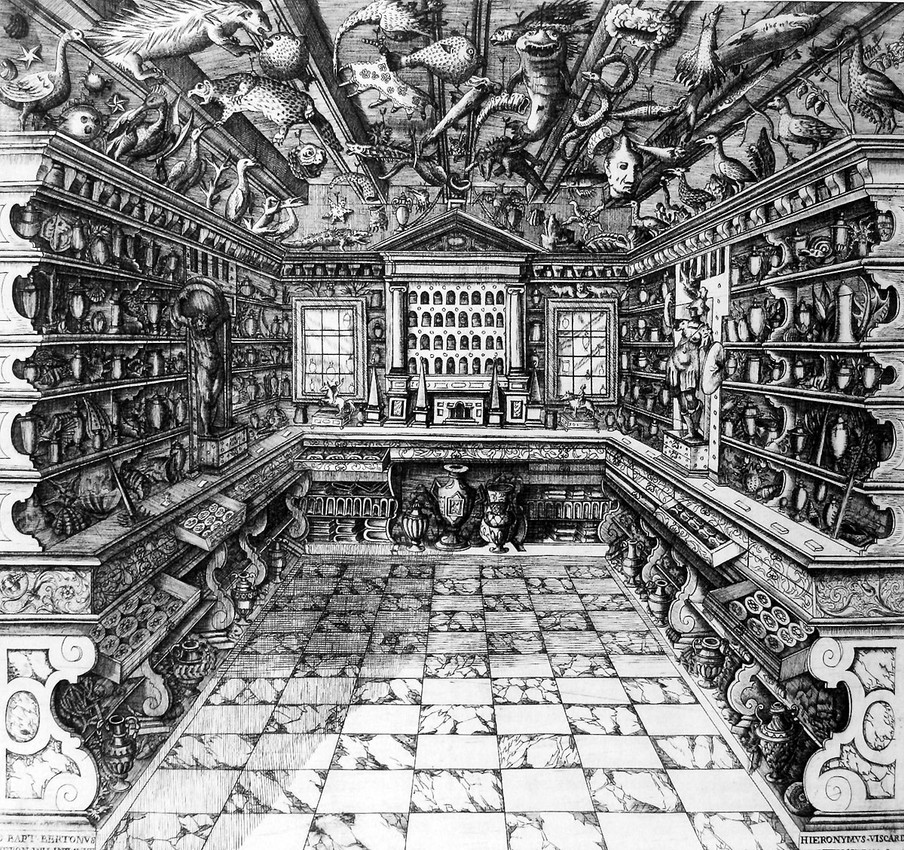
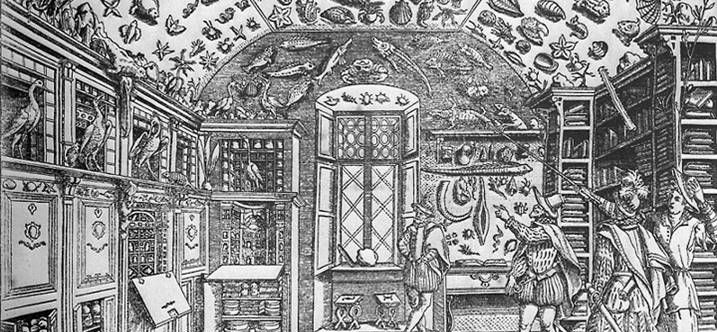
Calzolari was a pharmacist from Verona who managed to bring together an enormous collection of natural objects and a few artistic ones. As we can see in the engraving above, his cabinet was in a state of complete horror vacui, with objects hanging from the ceiling and the drawers full.
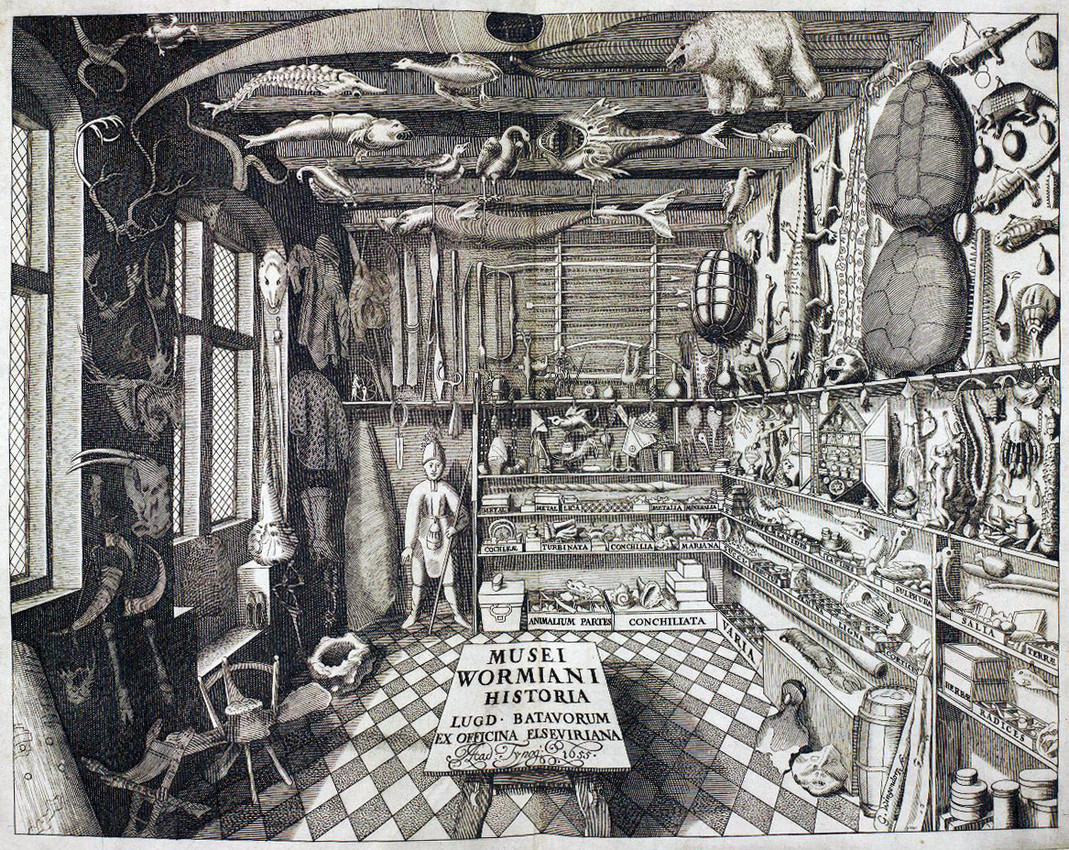
Another of the most spectacular cabinets of the time was that of the Danish doctor Ole Worm. He set about gathering natural objects so that he could round off the classes he taught at the university with a visit to his own cabinet, and a sign of this is that he labelled every one of the objects. The most striking thing was his interest in animals and objects from the Nordic countries. As we can see in the following engraving, Worm had in his cabinet a kayak, a polar bear and a penguin. He was also the first to deny the existence of unicorns and to attribute that horn to the narwhal.
Having now got to know the four collecting spaces par excellence of the 16th century and much of the 17th, the cortile, the gallery, the wunderkammern and the natural history cabinets, we move on to discover the space that will bring this tradition to its peak and precede the great European royal collections and the modern museums: the painting cabinet.
Comments (0)
Log in to leave your comment. Log in