
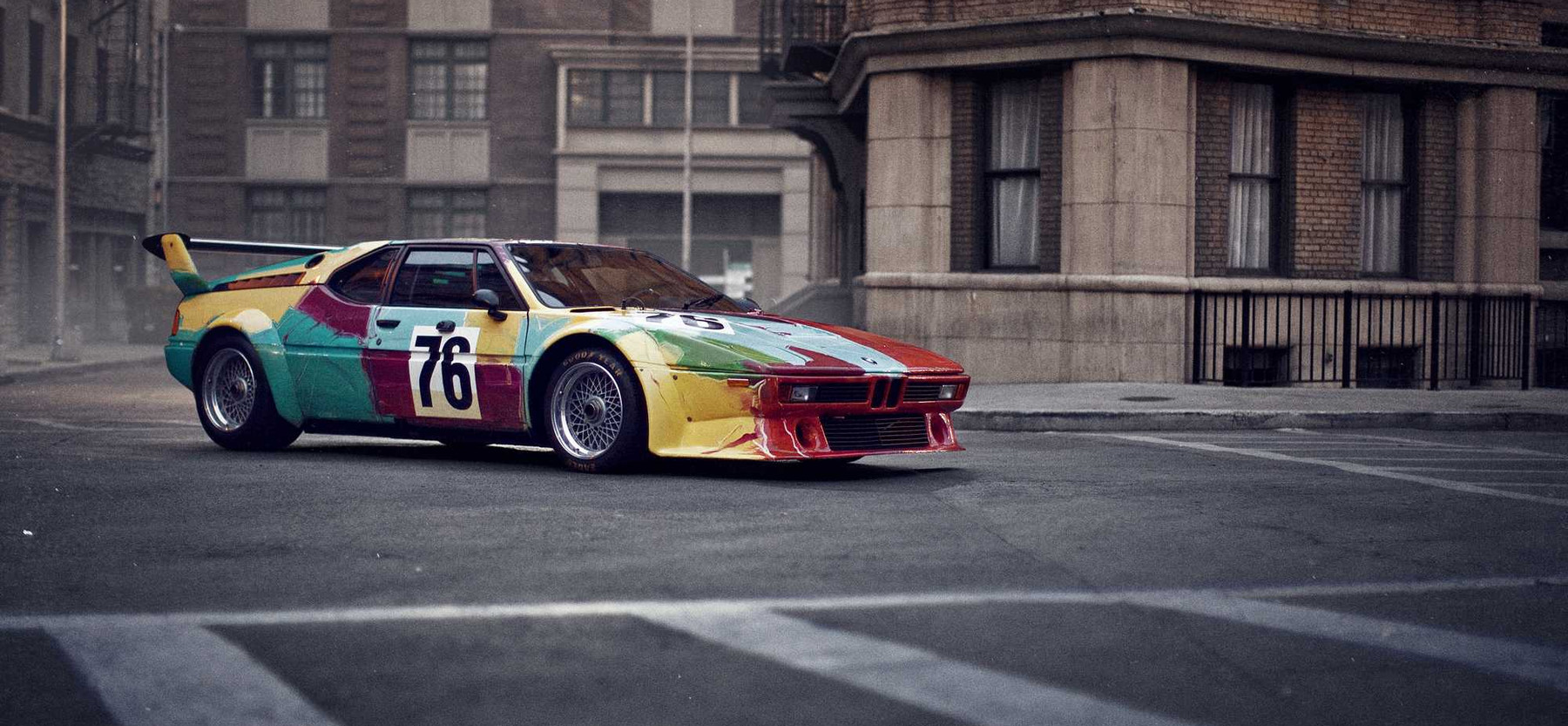
There are cars considered true works of art for their beauty, their singularity and their history, but they're still the result of a process that begins with Design. We could get into the eternal debate about whether Design should be considered Art, but let's leave that for another day, because today we're getting to know the BMW Art Cars, artworks in their own right, since the bodywork of those cars was used by different artists as a support for artistic creation.
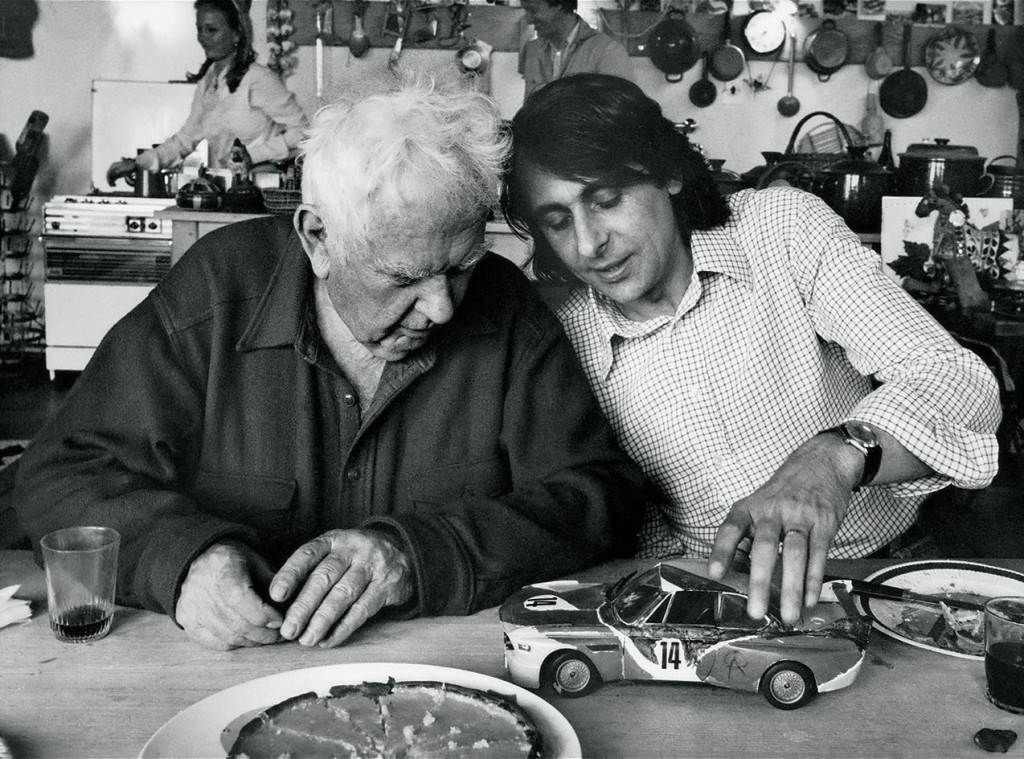
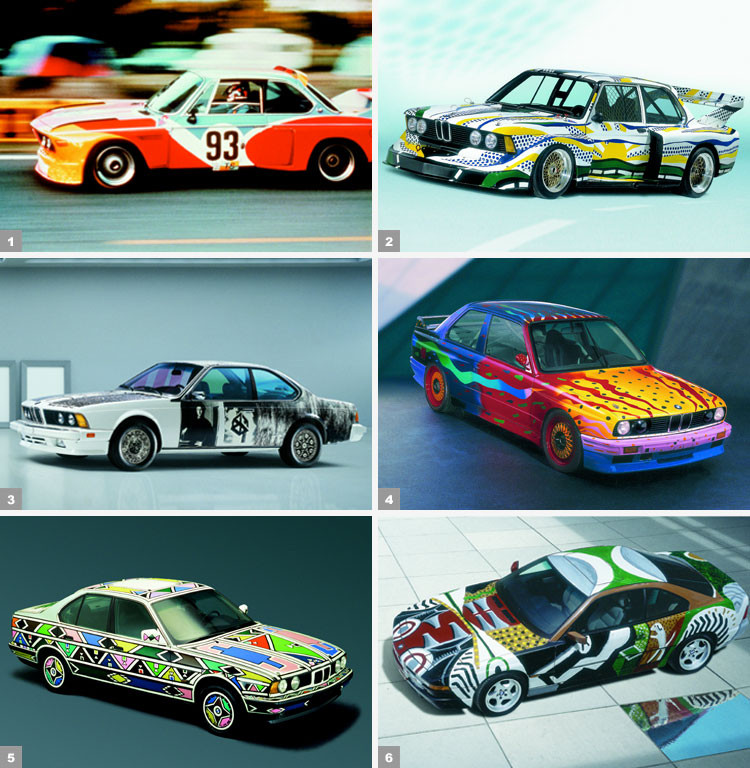
It all started thanks to the Frenchman Hervé Poulain (1940), art auctioneer and racing driver, who asked his friend Alexander Calder (1898 - 1976) to decorate the car he was going to race in the 24 Hours of Le Mans. In 1975, the American sculptor, famous for creating his "mobiles", became the first to use a car as a canvas (BMW 3.0 CSL).
Since then, 17 artists chosen by an international jury have put their work on cars from the Bavarian marque, with very interesting results.
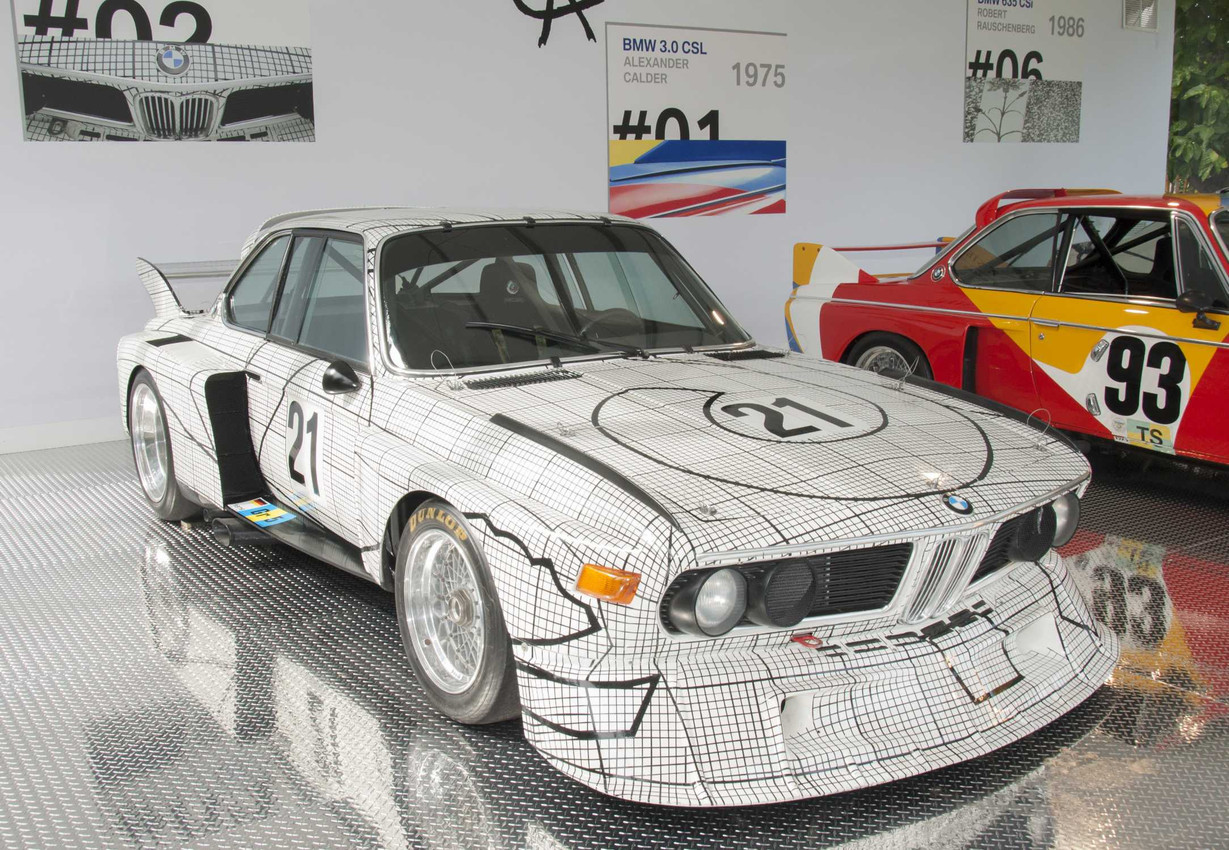
Frank Stella (1936) was the second artist to create a BMW Art Car for Poulain. It was again the same model as the previous year, the BMW 3.0 CSL that had to run in the legendary Le Mans endurance race. Stella applied a pattern to the bodywork representing a sheet of graph paper, reminding us that the car is born of technical drawing. He reduces the car to its essence, to the drawing on paper.
The most famous BMW Art Car is, without a doubt, the one Andy Warhol (1928 - 1987) made in 1979 on the legendary BMW M1. Unlike his predecessors, he applied the paint to the bodywork himself, using thick brushes and his fingers. As the artist himself said, he tried to make a portrait of speed on the bodywork. It seems he pulled it off.
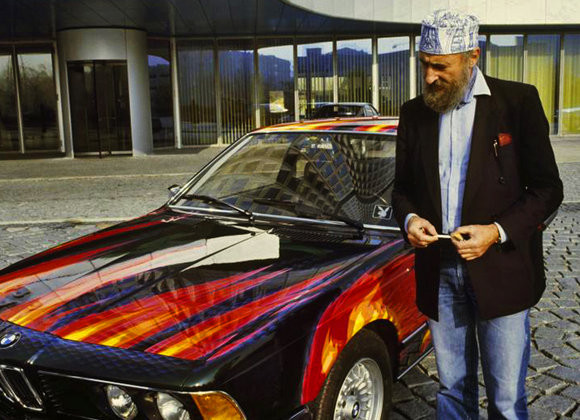
The first Art Car not conceived on a model prepared for racing was the one worked on by the Austrian artist Ernst Fuchs (1930 - 2015), who we already talked about in our post "Ernst Fuchs, el Dalí alemán". The car in question was a BMW 635 CSi, a production car that was never driven on a track or on the road, conceived exclusively to be exhibited and contemplated, like a work of art. The artist named his artwork Zorro de fuego a la caza de la liebre.
Robert Rauschenberg (1925 - 2008) was the next to make his edition of the BMW Art Car, which stands out for the appearance of several classic artworks such as Ingres' Odalisque and antique plates in the design of the wheels. Ken Done (1940) did his own "Australian" style version, capturing the essence of his homeland, with loud colours and exotic animals all over the bodywork. Michael Jagamara Nelson (1949) knew how to bring Aboriginal art (Papunya) to his edition of the Art Car, applying motifs typical of Aboriginal mythology that to the untrained eye can look like pure abstraction. The Spaniard César Manrique (1919 - 1992) was another of those commissioned to make a BMW Art Car. The multidisciplinary artist from the Canary Islands was one of the pioneers of abstract art in Spain and founded the first non-figurative gallery in the country.
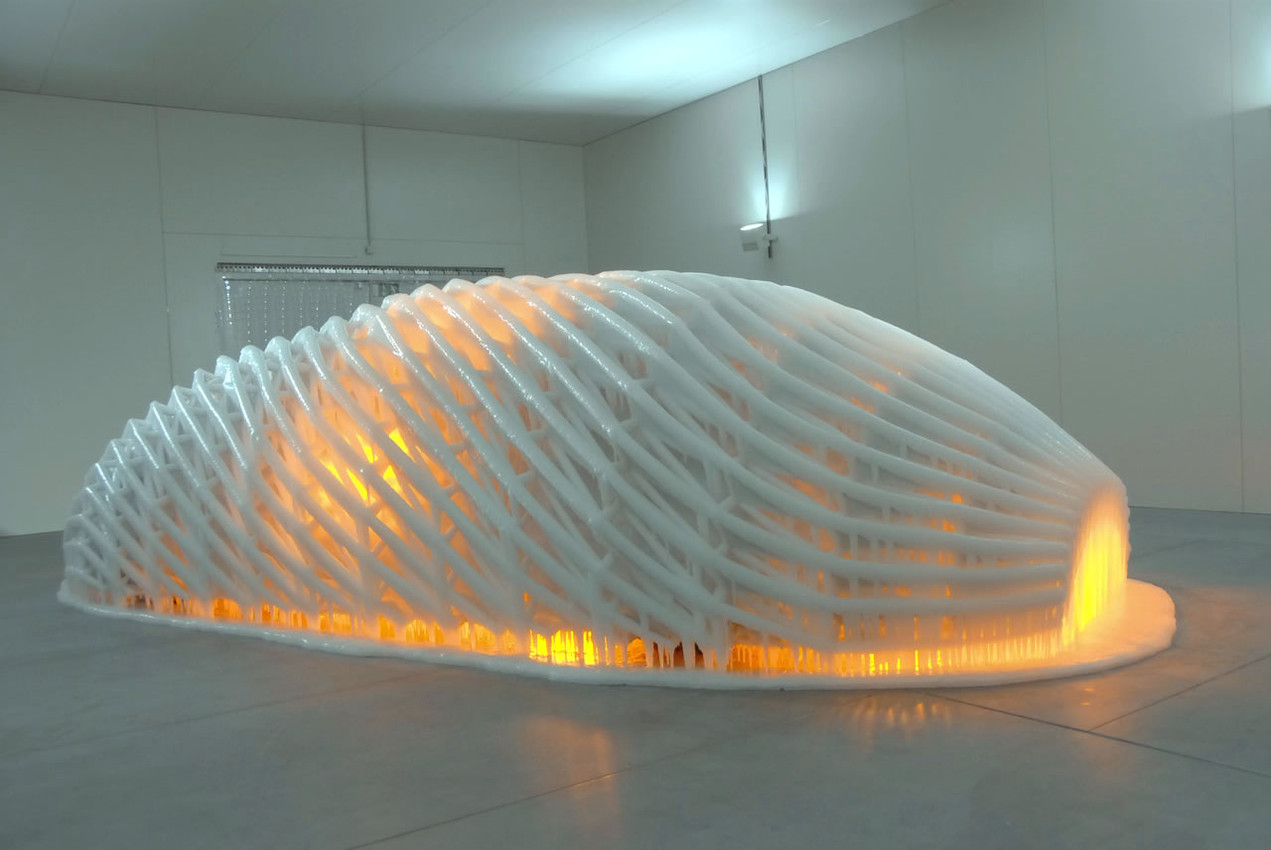
The most conceptual BMW Art Car was the one made in 2007 by Olafur Eliasson (1967). He worked on the BMW H2R, a prototype that runs on hydrogen, and removed its bodywork to apply a metal framework onto which he arranged layers of ice. Large fans then shaped the vehicle's new bodywork, certainly a very poetic way of bringing out the problem between the car industry and climate change.
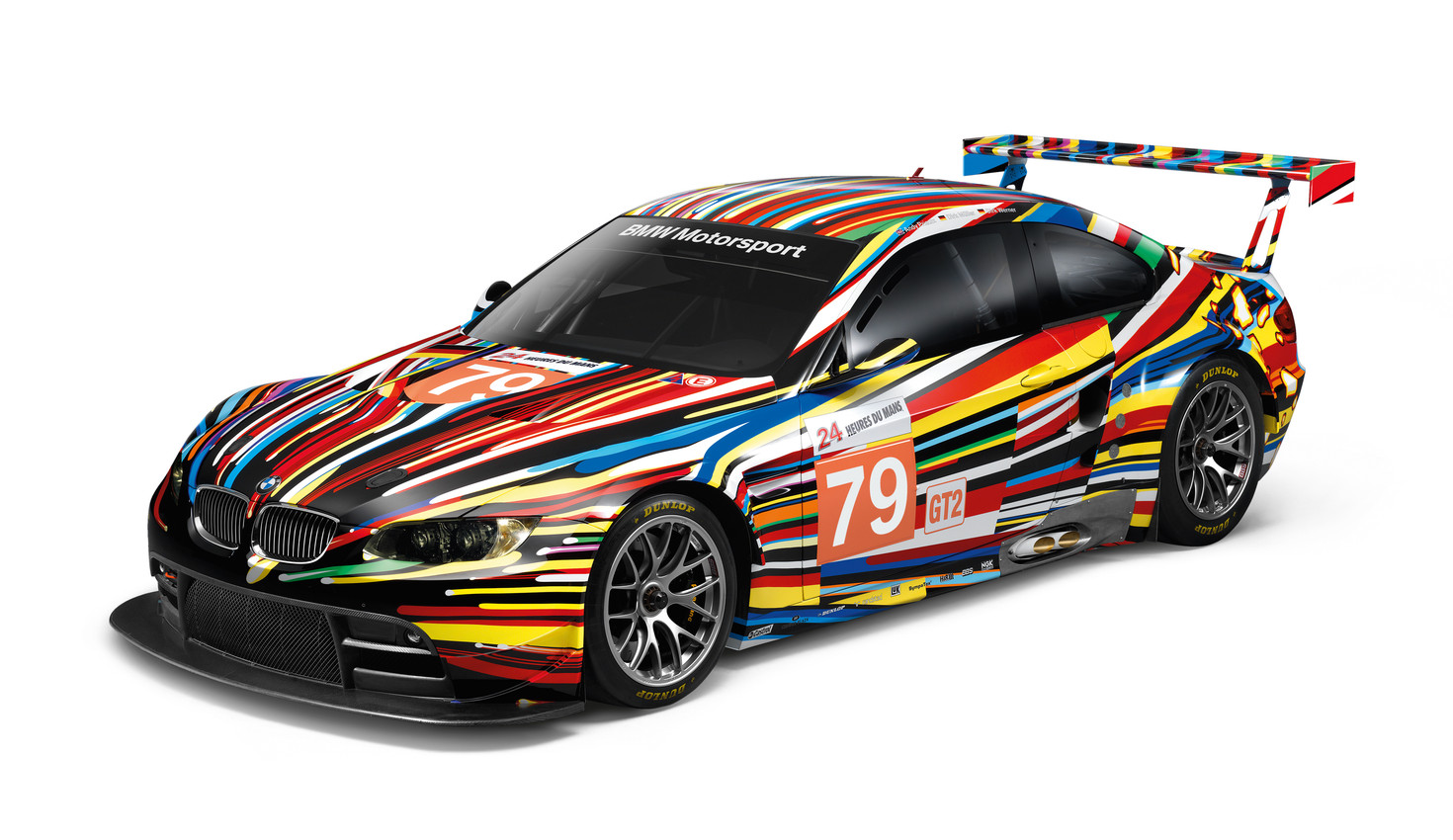
The last BMW Art Car made so far was the one Jeff Koons (1955) presented on the BMW M3 GT2 in 2010. This racer was conceived just as its siblings were at the beginning: for competition. It was presented at the Pompidou Centre in Paris and a few days later it made its debut at the 24 Hours of Le Mans, a race it didn't manage to finish.
The BMW Art Car project never rests and other versions will be presented soon, like Esther Mahlangu's BMW 7 Series and the BMW M6 GT3 by John Baldessari and Cao Fei. We'll be waiting eagerly, but for now we invite you to watch this video for a visual tour of the whole BMW Art Car project.

Comments (0)
Log in to leave your comment. Log in