
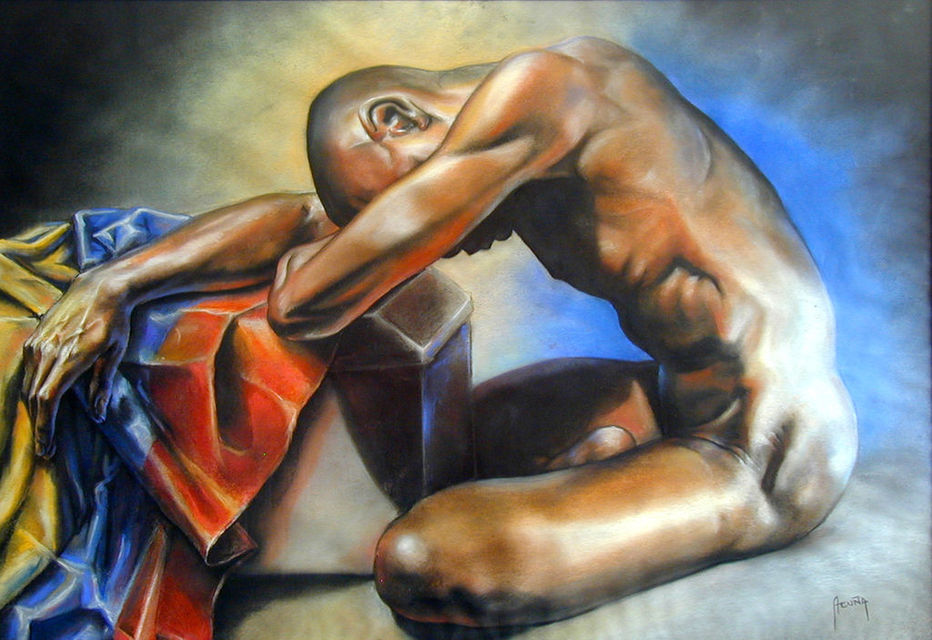
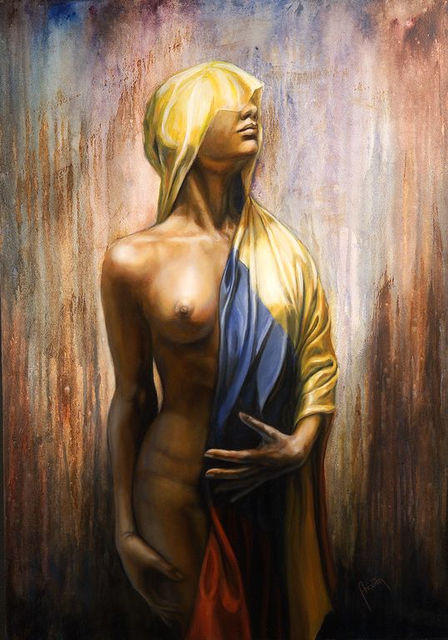
Yellow, blue and red, not just in the flag but in the air surrounding and reflecting off the naked body of a broken man weeping over a coffin. This is Los hijos de la violencia, one of the favourite canvases of its author, José Gabriel Acuña, and one that captures perfectly one of the most forceful strands of his painting: war and its consequences in Colombia.
Is the war over?
These past few weeks have been decisive in Colombia's history. They were the culmination of a peace process that had dragged on for more than four years and never seemed to find an ending both sides could live with, the FARC guerrillas and the Colombian state. Rodrigo Londoño, alias Timochenko, the guerrilla leader, confirmed the final success of the negotiations with a line that will go down in the country's history: «the war is over, let us live together as brothers and sisters».
Colombia is a very particular country, its citizens feel their homeland with a fervour all of its own, one that can look strange from less nationalist latitudes. This September will also be remembered for Nairo Quintana's victory in the Vuelta a España, which filled the streets of Madrid with Colombian flags.
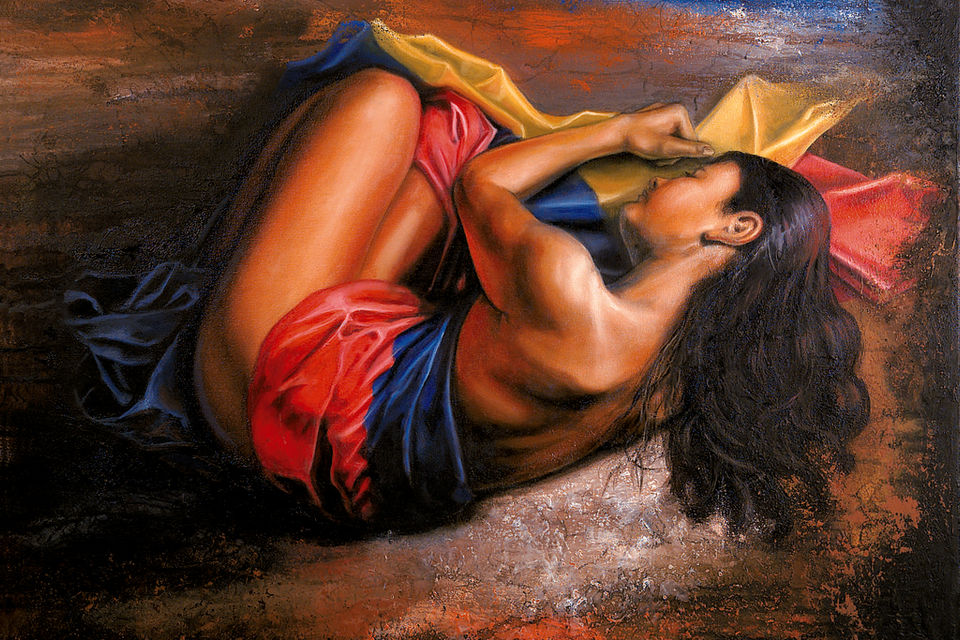
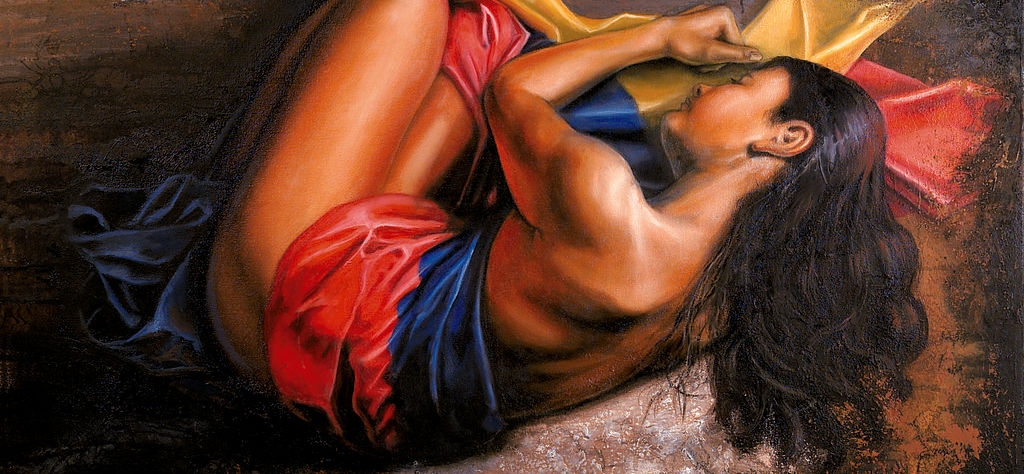
José Gabriel Acuña will surely always remember this summer of 2016, when the pain of so many years seems to be starting to heal. Several decades of conflict, more than 200,000 dead and 6 million victims of war crimes. An atrocity that Acuña has mourned in much of his artwork.
His collection titled «Entre amor y dolor» stands out from the rest of his output for its emotional charge. Artworks such as Colombia de rodillas, Tristeza, Renacer, Salvando a la patria, Colombia ciega or Soñando la paz share a pictorial style, a visual vigour and a compositional arrangement.
José Gabriel Acuña places one figure (two at most) in the foreground, always naked, sometimes partly covered by the country's flag. Its three colours always dominate the composition, including in the reflections on the bodies. Bodies in which the South American painter shows an interest in capturing the sensuality of both men and women.
It comes as no surprise that Acuña has named Michelangelo as one of his references, since few artists in history have managed to convey the inner spiritual energy of the male body with such talent. But the Colombian painter, unlike the Florentine, also bares himself before the female sensuality that takes centre stage in much of his artwork.
The backdrop of this collection is nothing other than the conflict between love and hate, between the violence and the beauty that Colombia's situation stirs in the artist: a young, virginal, beautiful country that has to battle with the pain and hardship of war.
Urban Colombia
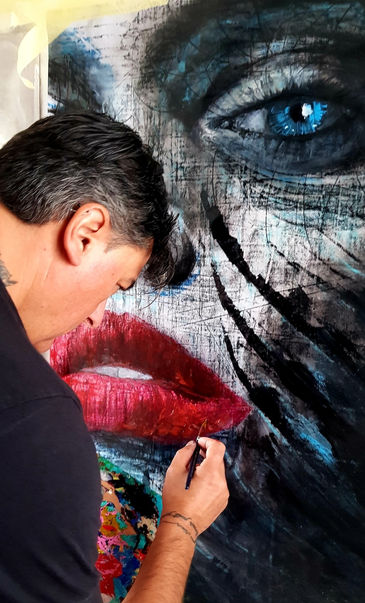
But José Gabriel Acuña's eye also settles on other, more everyday realities. He parks the symbolism and concentrates on depicting the reality of the street, achieving portraits full of life that are among the most acclaimed of his output.
This is his most recent collection, which may well be part of the group shows the painter has taken part in over recent weeks, such as the XII Salón de Arte Fray Angélico at the Colegio Santo Tomás de Aquino in Bogotá or the Exposición Internacional de Tendencias Contemporáneas at the Centro Cultural El Cuartel in Ibarra (Ecuador).
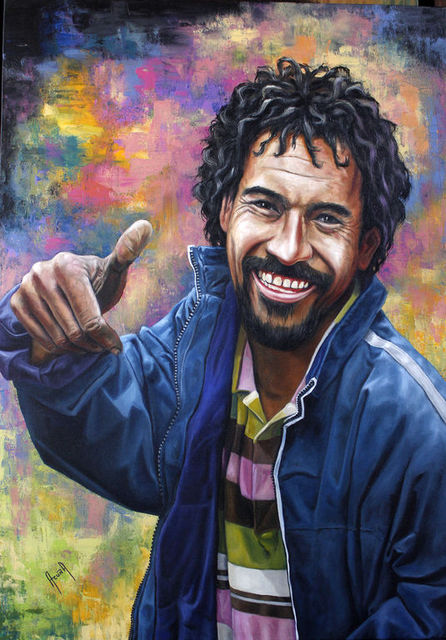
We're talking about José Gabriel Acuña's «ñeros», street characters who come «with their dramas, but also with the smiles that break out when the happiness of freedom shows up». Both Ñero and Ñero II win us over thanks to the skill with which the painter captures their character.
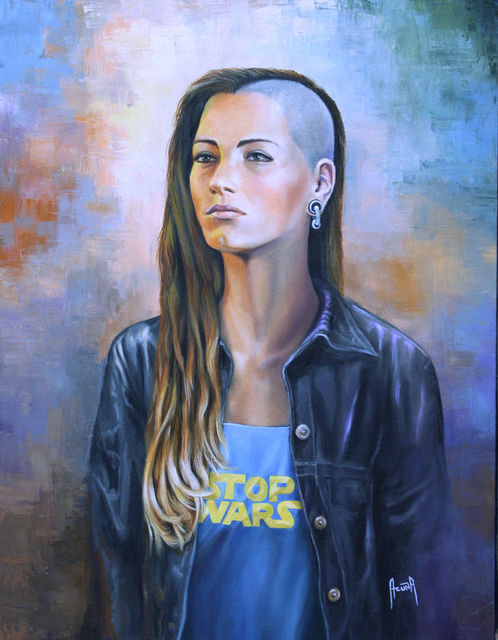
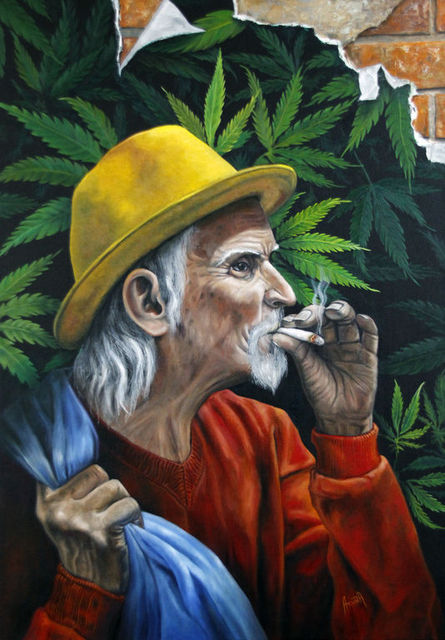
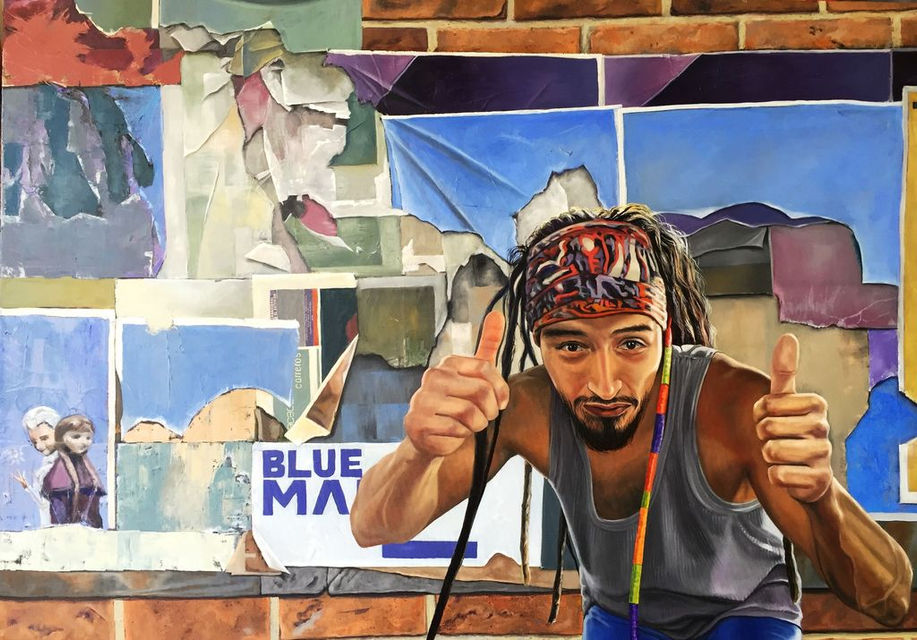
Other urban portraits stand out for that same truthfulness and closeness, like Rasta, Paren la Guerra or Viejo fumador. Don't tell me you haven't seen the man with the cigarette somewhere in a big city! This knack for capturing human types is another of Acuña's virtues.
Myths, landscapes and padlocks
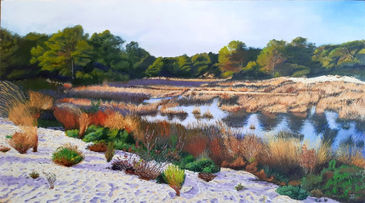
Huitaca and Bachue are the two canvases that represent other interests of the South American painter: Colombian mythology and fantasy painting. José Gabriel Acuña has also found time to try his hand at landscape and to leave us a couple of mysterious paintings of padlocks.
A painter of emotions, Acuña faces a renewed present for his output, marked by a new situation in his country. If the war really is over at last, it's time to face the future with a more optimistic outlook, like the one the painter seems to show in his own Autorretrato.
We invite you to visit José Gabriel Acuña's gallery on Artelista.
Comments (0)
Log in to leave your comment. Log in