
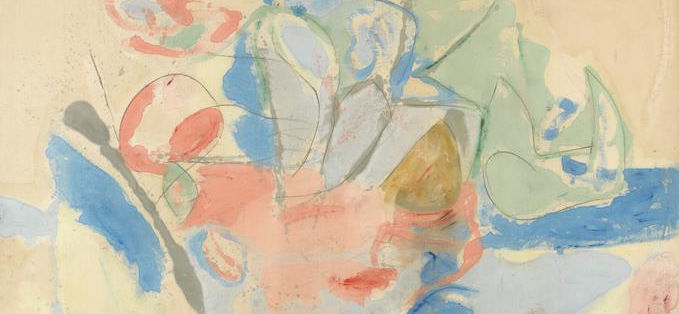
How do you define the indefinable? That's the question Mark Rothko would be asking right now if he were still teaching this sub-movement he created more than five decades ago. This amalgam of anarchic colours, of radical abstract expressionism, makes up what has ended up being defined as Color Field. It is, quite possibly, the result of other avant-garde movements as intense as Dadaism or as figurative as Surrealism. In Color Field the use of colour is the absolute protagonist, and Rothko devoted his entire artistic career to it. Along with him, the so-called Rothko circle set the paradigms around painting that are still alive in the pictorial creations of the 21st century. Welcome to the expression of art in Color Field!
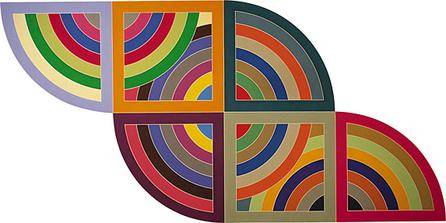
Precedents of the Color Field movement in the 20th century
Although we're not going to dwell too long on this section, which could surely fill pages and pages, we do have to mention two figures who paved the way for the appearance of Color Field as an artistic movement. They are the artists Max Weber, Georges Rouault and Paul Klee.
A painting lives by companionship, expanding and quickening in the eyes of the sensitive observer (M. Rothko)
The influence these three artists had was completely different in each case. While Rouault offered Rothko a "different" pictorial framework, Max Weber and Paul Klee were the ones who brought about the awakening of the search, the basis of the 20th century avant-garde.
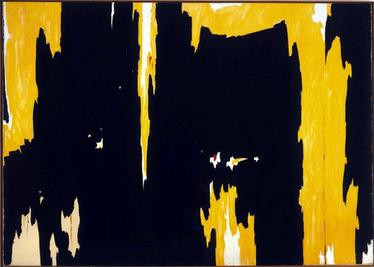
At the same time as his artistic awakening, abstract expressionism was in full swing and surnames like Pollock were keeping their place in the main painting exhibition halls all over the world.
The Rothko circle, or the creation of the Color Field movement
There are countless references to Mark Rothko as an artist and as a historical figure. He left us some of the most controversial works of abstract expressionism and the sharpest, most daring reflections on what art is; "art is an adventure into an unknown world. Our task as artists is to make the spectator see the world our way".
The complete use of colour, or Color Field, was the basis for a number of artworks that stay fixed in the mind of a viewer hungry for new sensory experiences. That's the case with the legendary "Black" or "Green and orange". A serious obstacle the general public ran into when they looked at Rothko's artworks decades ago was that they knew nothing about their author or about what he wanted to express. In fact, even today, a viewer who doesn't know the meaning of Rothko's work "a priori" may well not understand what his contribution to painting was.
If they knew more about Rothko, they'd know he insisted that "there is nothing like a good painting about nothing". Understanding him, you understand his artwork in an instinctive, lived way. Mark Rothko wanted viewers to see the world as he saw it; luminous and murky; clear and grim. No wonder his sad fate was suicide.
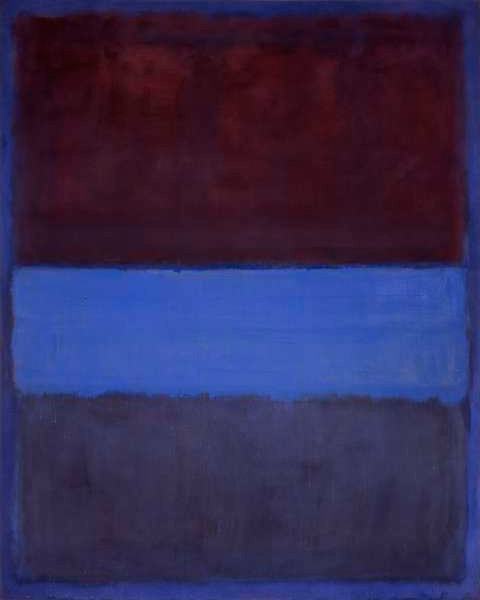
Even today there are those who still believe that Rothko's self-inflicted death was nothing more than the final flourish of his work, a poetic ending for an oeuvre that couldn't be separated from its creator, just as in Zen philosophy the subject can't be separated from the object.
Women artists & Color Field
As always, it's easier to find male artists from the early 20th century catapulted to glory than women. That's why in this section we'll talk about three of the most important artists within the Color Field movement.
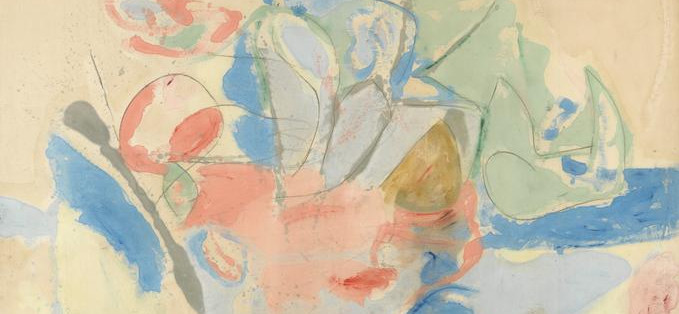
1#Helen Frankenthaler
Strongly influenced by the work of Pollock and Greenberg, she gained recognition from 1952 on, when she released her award-winning artwork "Mountains and Sea". She pioneered a curious style that consisted of thinning oil paint with turpentine and with kerosene. This made the colour of her canvases more intense.
2#Anne Truit
Less well known than the previous one, but with some standout artworks such as "A wall for Apricots" (1968), here we have an artist who went deep into the use of colour and depth of field.
3#Mary Pinchot Meyer Eno
Her work was as enigmatic as her personality. She left us numerous artworks that many would place in the most raw kind of Color Field. Her taste for geometric forms is unquestionable, as are the firm strokes in each of her paintings.
The entourage of the fierce creator of Color Field
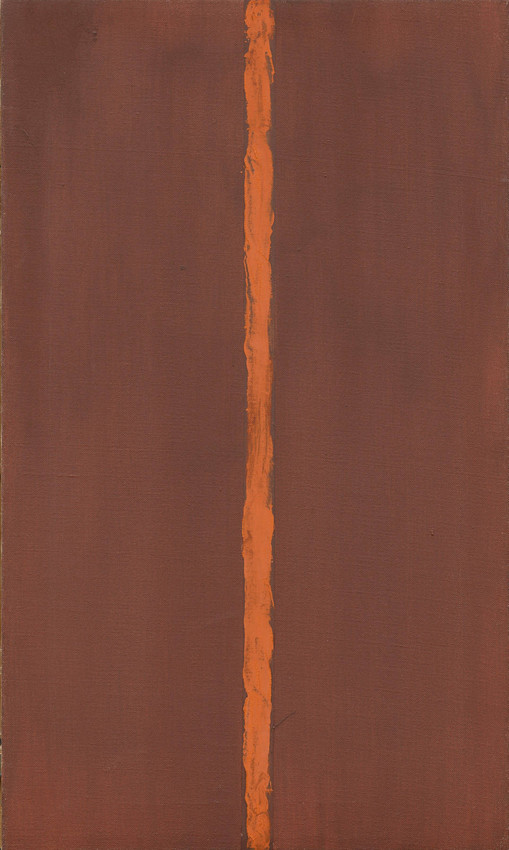
It isn't very fitting to call the procession of great artists who gave Color Field its shape an entourage. Among these figures stands out the great Barnett Newman, who added to history one of the most famous quotes about this artistic style: "I prefer to let the paintings speak for themselves". His artwork "Onement" set a paradigm in the total use of colour and its aesthetic dominance.
To him we can add other great artists such as Adolph Gottlieb, who was also one of the most charismatic artists of the trade. He's the one who marks the line between abstract expressionism and Color Field and, paradoxically, the one who intertwines the paths of the artistic tendency (expressionism) and the pictorial subdivision (Color Field).
Milton Avary was another of the many creators of the period who has often been compared with the Impressionist artist Matisse. His work is a clear example of the pictorial evolution from Impressionism to abstract expressionism and Color Field.
In a way, Color Field has a lot to do with Impressionism because of the dominance both give to colour and light. In fact, both tendencies can be called successors, always bearing in mind that Color Field falls within the abstract expressionist movement.
We invite you to visit this collection of the most interesting Color Field artworks on Artelista.

Comments (0)
Log in to leave your comment. Log in