
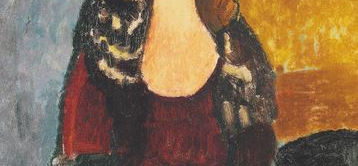
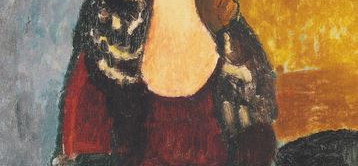
“I'd like to think of myself as an interpreter. Just as you can love Bach through Oistrakh, you can love Modigliani through me”. That was how Elmyr de Hory defended himself in a 1973 interview. By then he had already become one of the greatest, and best, art forgers of all time. He had managed to place more than a thousand fake artworks by top-tier artists in the world's leading museums and collections.
The fascinating life of Elmyr de Hory (Budapest, 1906 - Ibiza, 1976), packed with extravagance and glamour, was uncovered by the writer Clifford Irving and inspired Orson Welles' film F for Fake (1974). He was still alive and got to see himself turn into a legend. With him we begin a series on the most famous cases of forgery, vandalism and theft in the history of art.
The business came about by chance. While he was in Paris, a multimillionaire friend, Lady Campbell, mistook one of his drawings for a Picasso and wanted to buy it. De Hory agreed. At the time he was broke. The Second World War had stripped him of the inheritance of his wealthy Jewish family and cost him years of his youth in hiding in Budapest. This was his chance to live large again. And he took it.
He started out selling Picasso drawings around Europe. In 1947 he decided to move to the United States. There he was an immediate hit with the new oil money and, despite the odd setback, business was going well. His artistic output grew with fake drawings, watercolours and a few oils by Modigliani, Braque, Matisse, Derain, Bonnard, Degas, Vlaminck and Renoir, among others.
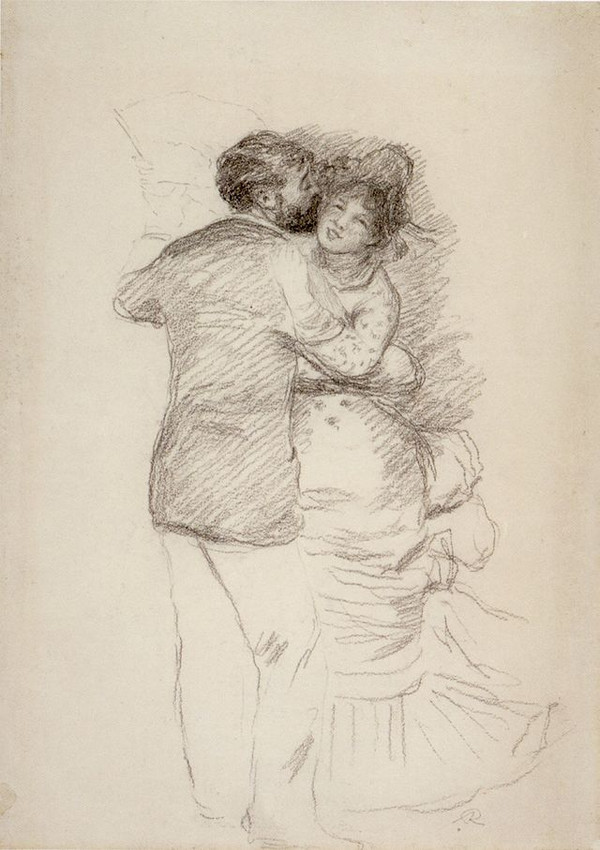
In the fifties he began dealing with modern art museums and galleries all over the country. The vast majority of his forgeries passed the experts' scrutiny without too much trouble. But then what seemed inevitable happened. One day a prominent Chicago collector, Joseph W. Faulkner, lent some of the drawings he had got from De Hory to an exhibition and the fraud was detected. The dealer reported him. Hunted by the FBI, the Hungarian painter fled to Mexico for a while. On his return he carried on with the activity, and successfully so. Until the rumours about the authenticity of his artworks grew too loud again. So he changed strategy and turned to forging lithographs.
In 1959, after a suicide attempt, he left America and settled in Ibiza, where he would spend the last years of his life. The law was on his heels, so he entered Spain under the false identity of Joseph Boutin. He teamed up with two other great swindlers, Fernand Legros and Réal Lessard, who would be with him during his most prolific period. They managed to palm off fifteen Dufys, seven Modiglianis, five Vlamincks, eight Derains, three Matisses, two Bonnards, a Chagall, a Degas, a Laurencin, a Gauguin, a Marquet, a Picasso and perhaps a few more on the American multimillionaire Algur Hurtle Meadows. His two partners' public squabbles, however, exposed the misdeeds they had committed and the Texan eventually realised he had been defrauded. The business was coming to an end, and so was De Hory.
A year before his death he put on an exhibition in Madrid with artworks made “in the manner of” and signed with his own name. With Spanish justice watching him closely and France demanding his extradition to try him for forging paintings and stamps, De Hory feared being thrown out at any moment. That led him to attempt suicide several times. He finally took his own life in December 1976, and his extradition to France came through the following day. It is estimated that in the Legros years alone he made 35 million dollars.
Comments (0)
Log in to leave your comment. Log in