
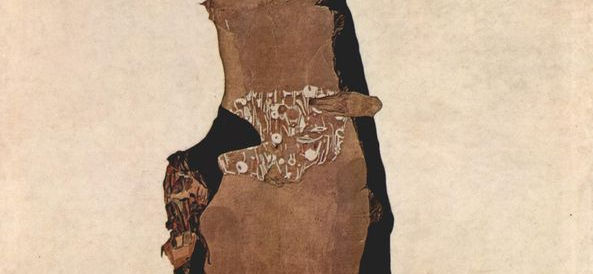
Many art historians and critics still wonder how far Schiele would have gone had he not died at just twenty-eight, when he had already established himself as one of the most prestigious artists in his country. What he did manage to leave on record was his potential to shake up the stiff Viennese society of the early 20th century.
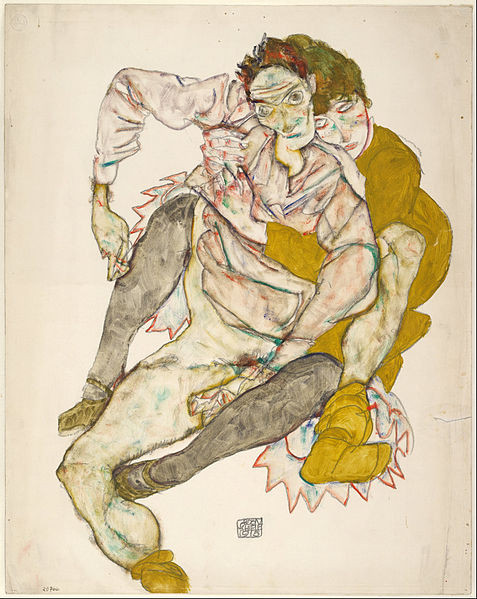
Egon Schiele (Tulln, 1890 - Vienna, 1918), like his teacher and mentor Gustav Klimt, blew away the moral codes of the Austrian bourgeoisie. And he wiped out, on top of that, any preconceived idea or judgement about beauty and expressiveness. He turned the eroticism recorded by Klimt into twisted, unfinished bodies, yellowish in tone and full of tension, bodies that express sexuality in its purest state.
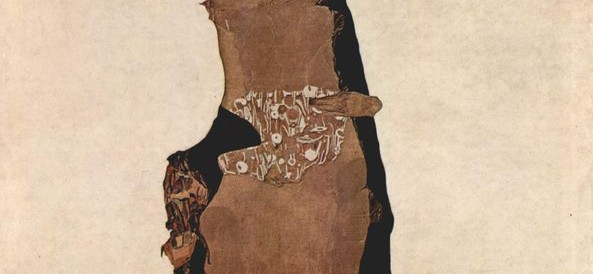
In the same way, the beauty his teacher found only in the female body, Schiele also found in the male one. He put both sexes in the same explicit poses and under the same raw gaze, diving into Freud's theories to discover what drives us. Sex became his way of expressing himself, and through his sexualised figures he managed to give shape to the emotional fracture and the existential emptiness haunting a convulsed, changing society.
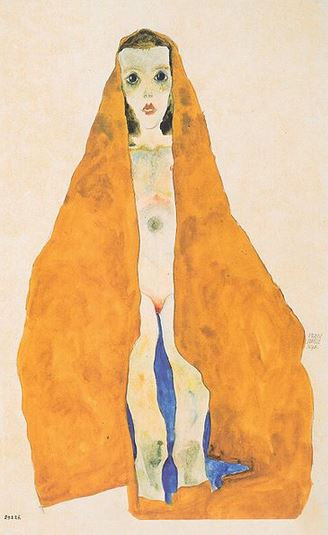
With just as few reservations, he took on the child nude. That episode cost him a prison sentence, because although he was acquitted of the charges of abuse and abduction of minors he had faced, he was convicted of displaying erotic drawings in front of children. Schiele reflected this traumatic experience in twelve harrowing artworks. Before this incident, he had already worked on child portraiture with his sister Gertrude, with whom he had a close relationship that gave rise to all sorts of speculation. But the truth is that modesty was never an obstacle in his artistic creation, nor in his personal life, always keeping himself far from imposed conventions.
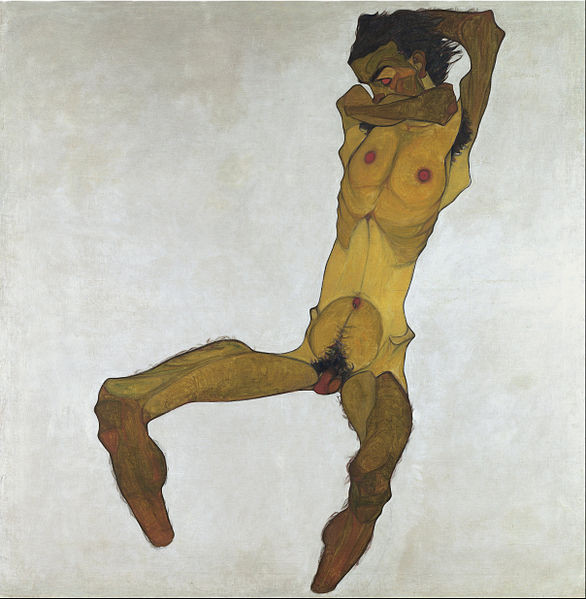
This creative freedom allowed him to develop, across his abundant drawings and paintings, a pioneering study of the human body and an uninhibited, innovative depiction of the individual's sexuality. Qualities he carried over into his portraits, where he painted his models through an extravagant, renewing body language. His self-portraits are precisely another proof of his concern with exploring his own body and personality. In them, almost a hundred, Schiele shows himself to others playing different roles, gesticulating, screaming and even masturbating.
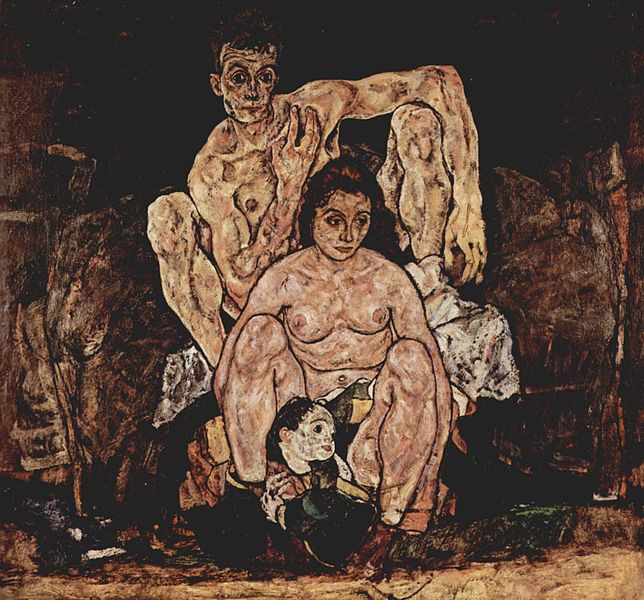
From 1915 on, his expressionist line moved towards a more natural-looking one, and his nudes and portraits took on a more realistic tone. Klimt's death, in early 1918, left him as his heir on the Viennese art scene. However, at the end of October that same year, Schiele also died from the Spanish flu. His wife Edith, pregnant at the time, had died three days earlier of the same illness.

Comments (1)
Carmelo González González Gutiérrez
October 2, 2023Log in to leave your comment. Log in