
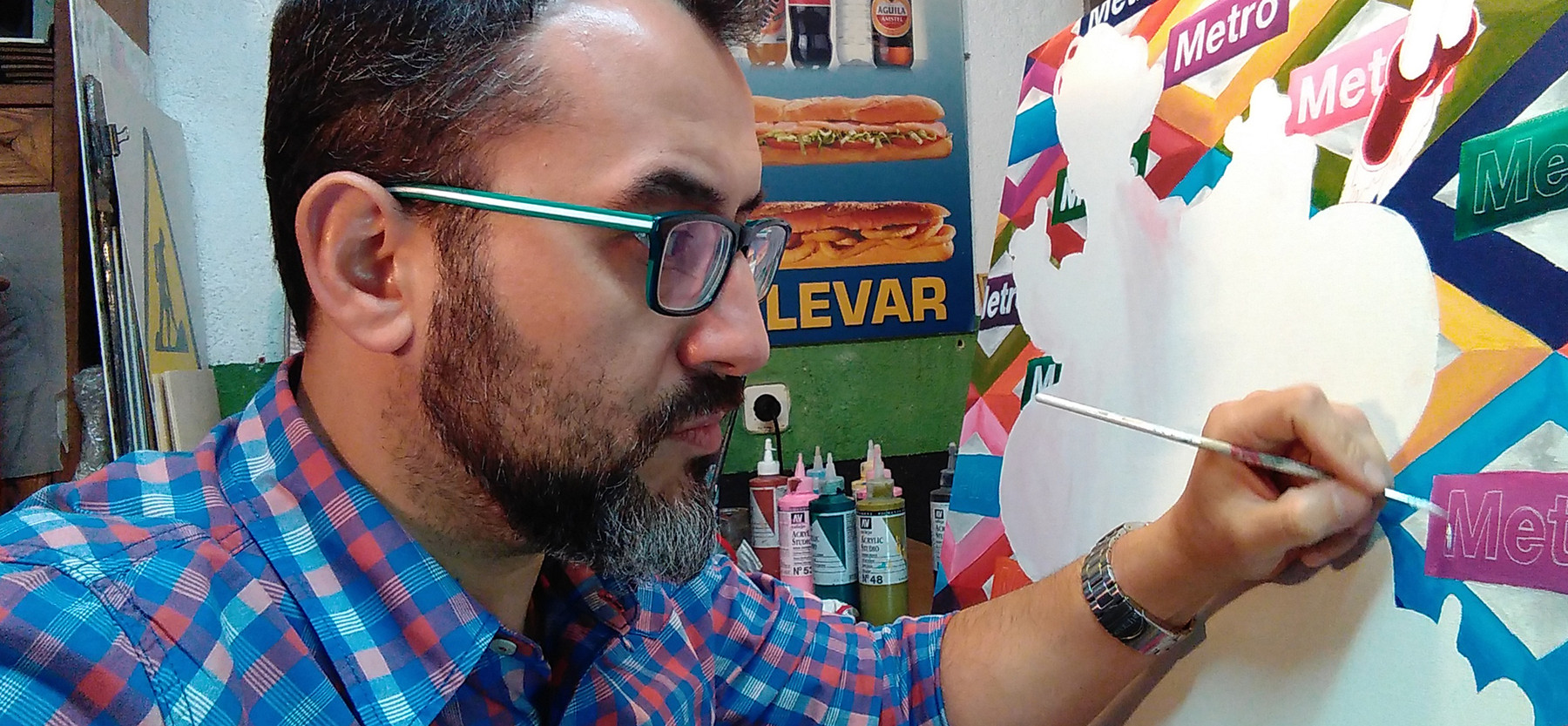
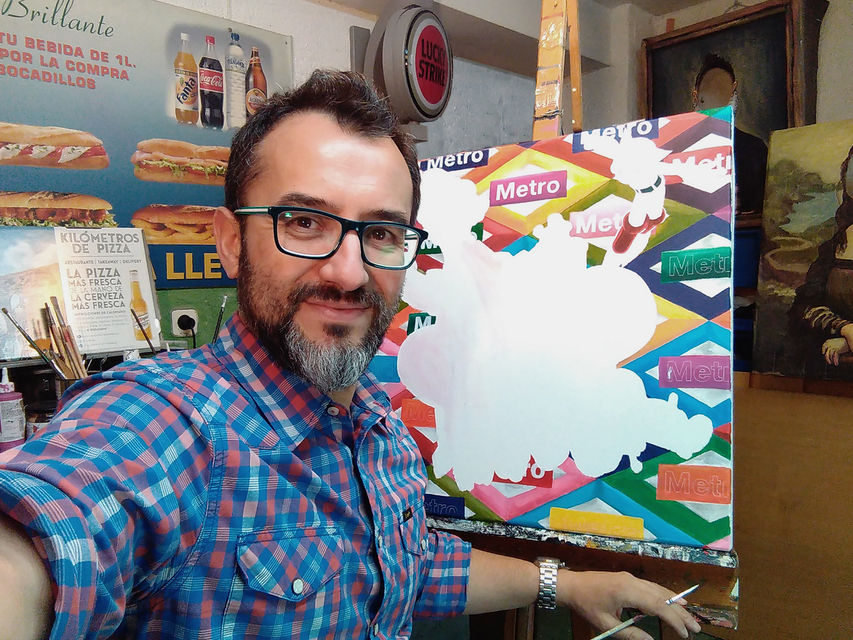
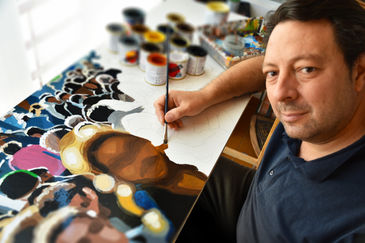
I was born in Madrid and I've always lived in Madrid, though I've made a point of travelling quite a bit, around Spain and around a good part of Europe, and even Thailand. I have a degree in Art History (I always have to add “not Fine Arts”) and while I was at university I took a few courses in Design, Graphic Design, Window Dressing, and even Tourist Guide. When I finished my degree I worked as a tour guide, but I soon moved on to working as a graphic designer specialising in point of sale. That was almost twenty little years ago now, and today I'm still working as a designer. I'm married and I have two children with runaway imaginations.
When and why did you start painting?
I've always painted. As a kid I was on a football team but I preferred staying on the bench drawing to going out to play. At school they told me off because I wouldn't stop drawing everywhere, in my notebooks, in my textbooks, on the desk, on my exams. I went to several drawing academies, but I never lasted long. All that method bored me, I preferred to experiment and let myself go.
How do you think a gallery and its artists should help each other?
They should bet more on unknown names, look at the artwork more than at the name or the CV, take more risks and listen to their instinct. I understand that in the end a gallery is still a business that has to be kept going somehow, but I think the fees for exhibiting are usually very high if you're not an “established” artist. It seems perfectly logical to me that the gallerist should take a commission on sales.
I suppose promoting the exhibitions also falls short quite a lot, generally everything comes down to telling a circle of friends, an opening with a bit of wine and nibbles and not much else. To attract a bigger audience you could put on events alongside the exhibition, talks, master classes, meetings with the artists, concerts, recitals, etc. Something that makes the gallery a living space. These days, with social media and the digital press, promoting these events is very easy and you reach an almost infinite audience.
What advice would you give to artists who are starting to show their artwork?
Exhibit, exhibit, exhibit, wherever you can (I've exhibited in bars, in restaurants, in hairdressers', walking down the street, in shopping centres, in cultural centres, in galleries, in hotels…), but always with judgement, looking for potential customers, and with a well cared for, coherent collection. Be very meticulous with the presentation.
How did you sell your first artwork? Is there one you feel a stronger connection with?
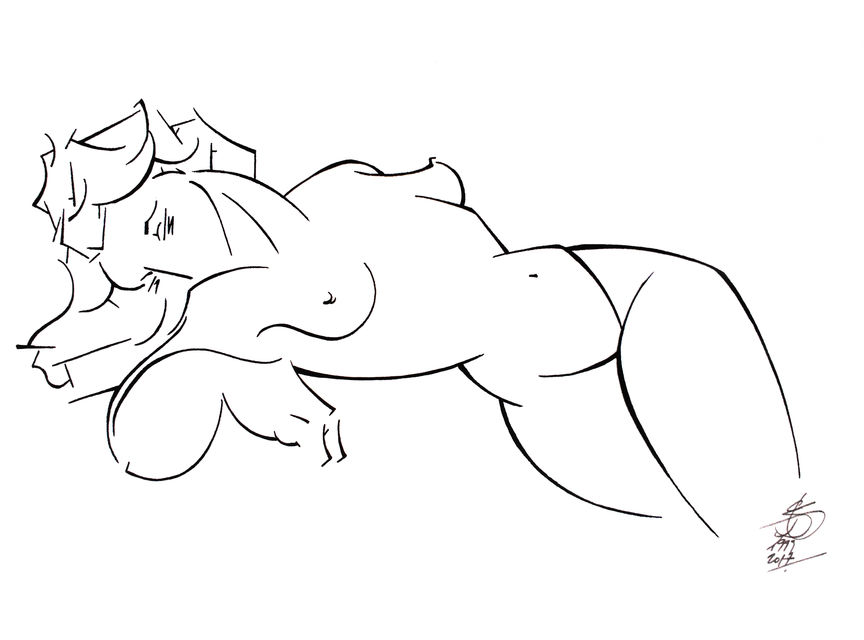
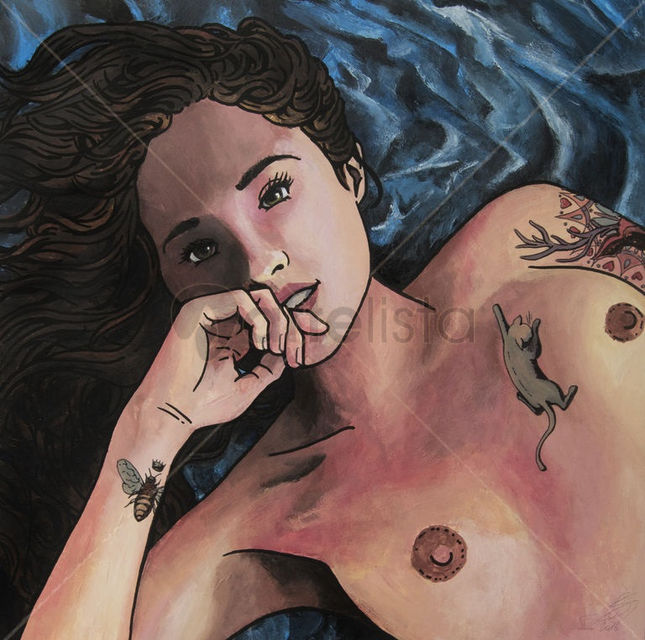
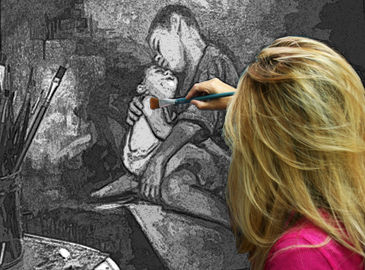
My first exhibition was in a framing and art gift shop, in 1999. It was about forty ink nudes and I sold practically all of them. The other day I found one of the sketches and decided to finish it… eighteen years later.
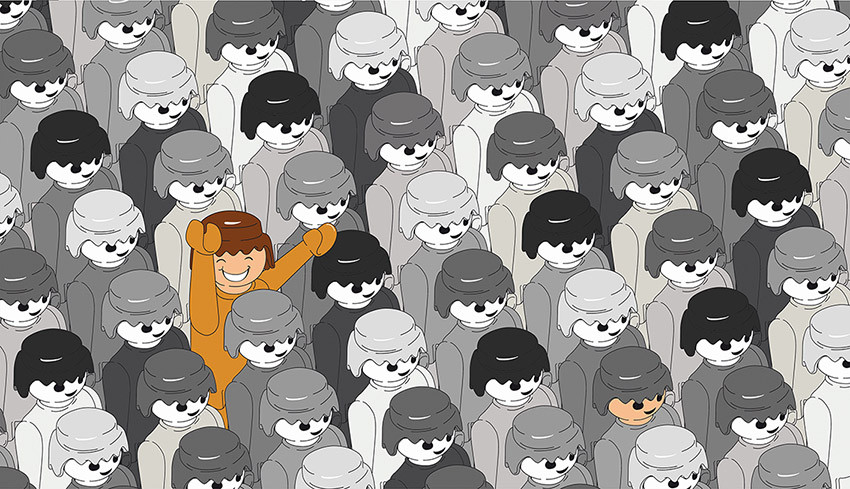
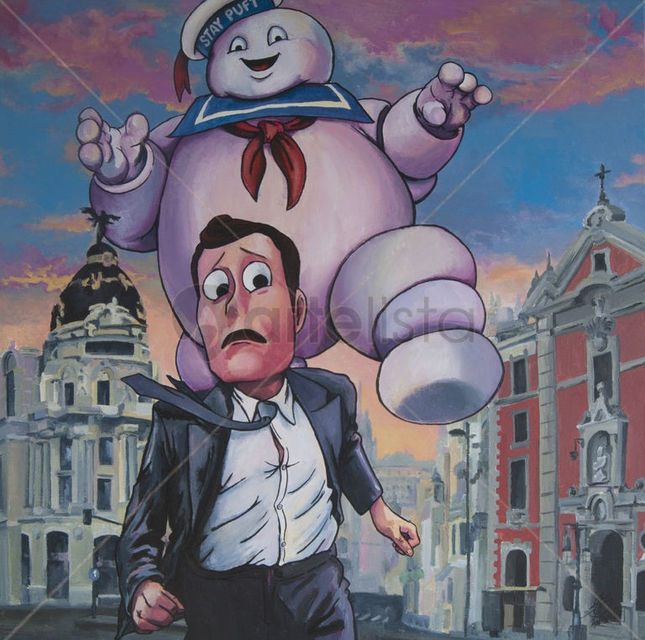
The artwork that “hurt” the most to sell was Uno entre un millón. That one is about how hard it can sometimes be to smile at life in such a grey, apathetic environment. I sold it at a pop-up store a friend organised in a Japanese restaurant. In fact, shortly afterwards I made a digital version printed on photographic paper at a large scale that I have hanging at home.
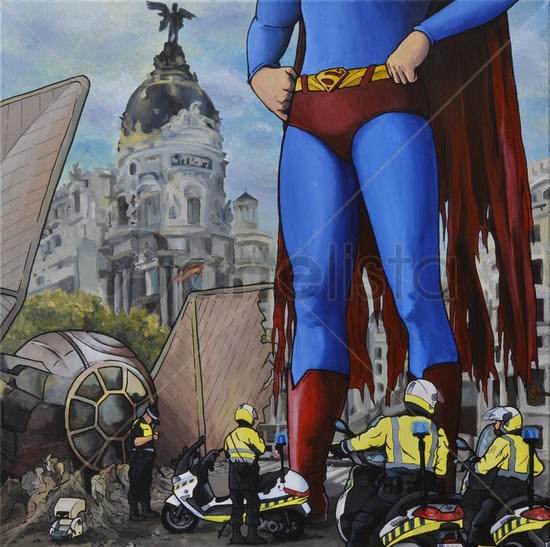
The last artwork I sold was on Artelista, it was called Metrópolis, and it travelled all the way to Baja California (Mexico).
What is art for you? What part does it play in your life? Do you make a living from art?
My paintings are a way for people to really know me, my tastes, my interests, my way of seeing life. They're also my way of switching off, of escaping, of creating a parallel reality.
I studied Art History to give myself a good cultural grounding and be able to apply it day to day, in my work as a designer or in my paintings.
I don't make a living from my paintings (I wish), though at least I do make one from my creativity.
What are your sources of inspiration? Do you identify with any other artist?
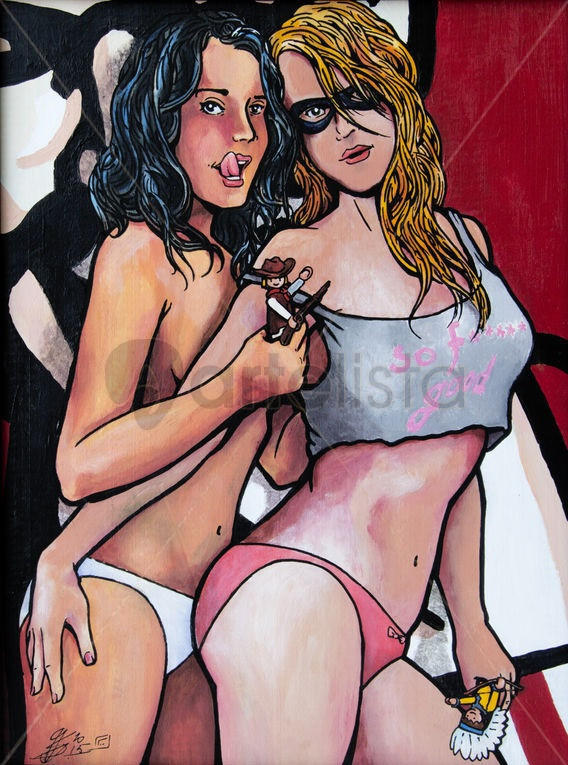
I recently gave a talk to first-year primary school pupils, and faced with that same question I told them I get inspiration from everything that passes through my hands, from a walk around Madrid, from the telly, from cartoons, from cinema, from the Internet, from advertising, from anything I read…
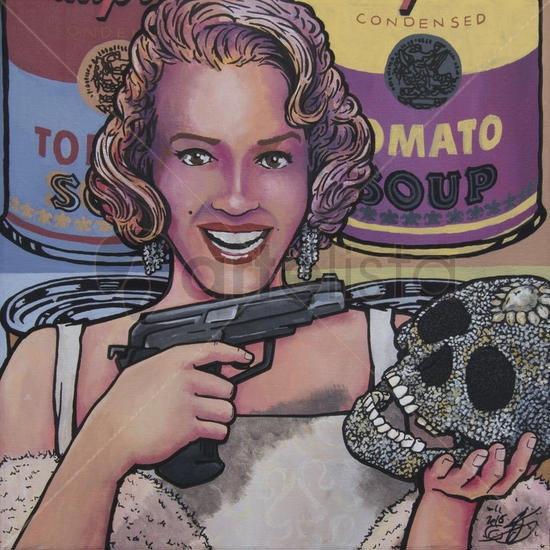
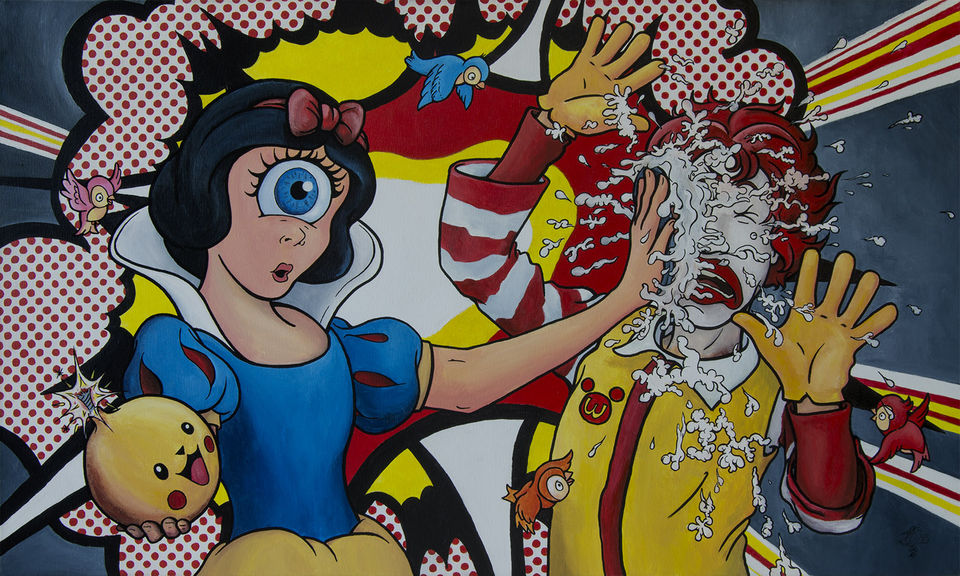
I like diving into the classics, especially the Italian Baroque, Neoclassicism or Romanticism, and of course the early avant-gardes. The influence of Warhol or Lichtenstein is obvious, and not long ago I discovered Yue Minjun.
What is it about your creative process that makes it special?
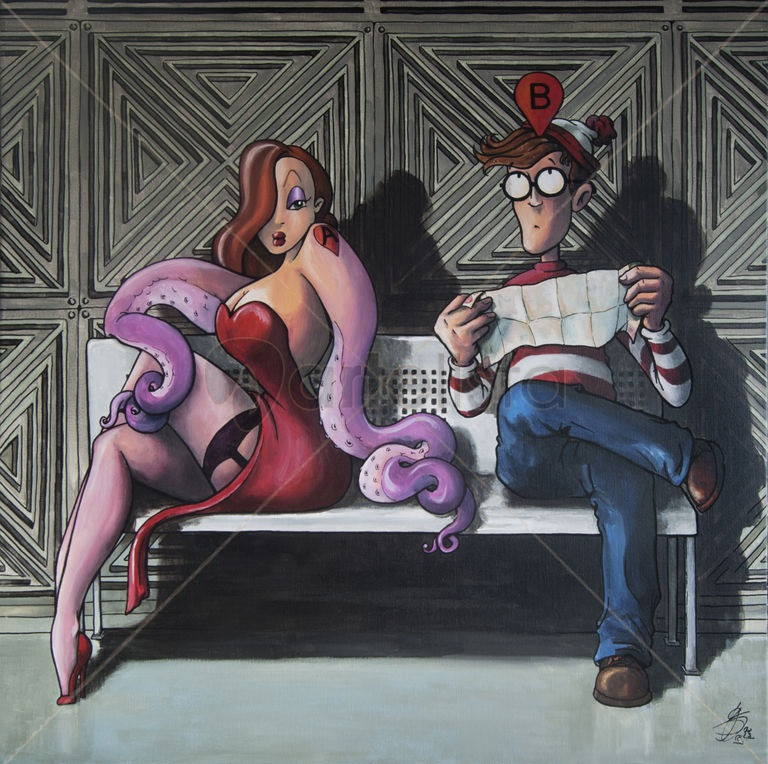
My creative process is essentially based on absurd connections between apparently unrelated ideas, through which I put together an alternative reality that can end up being logical. A friend said that in my artworks I create a magical world we'd sometimes like to live in.
I usually “lay out” a first sketch in Photoshop using images I find on the Internet. I keep modifying and retouching each part until everything fits and takes its final shape. That resulting image is the basis for the final artwork.
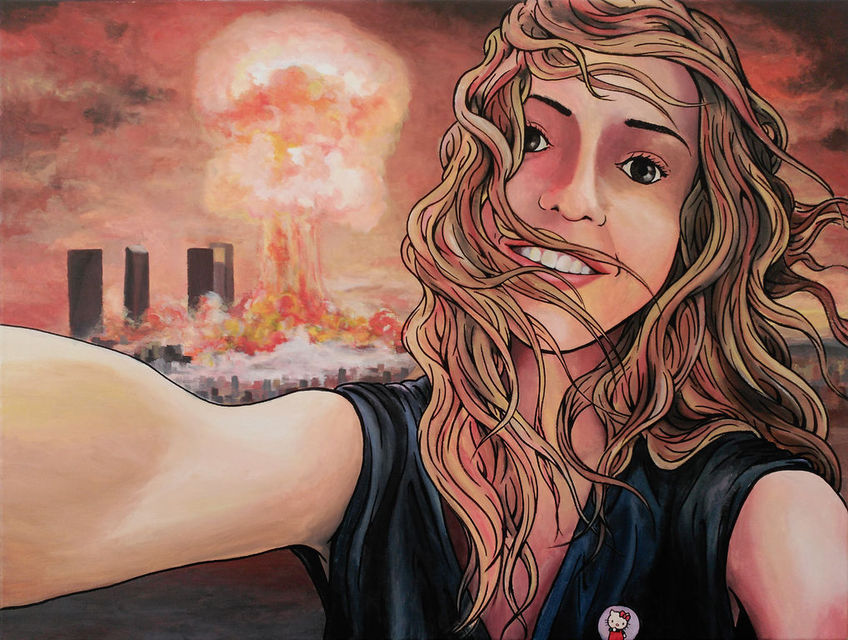
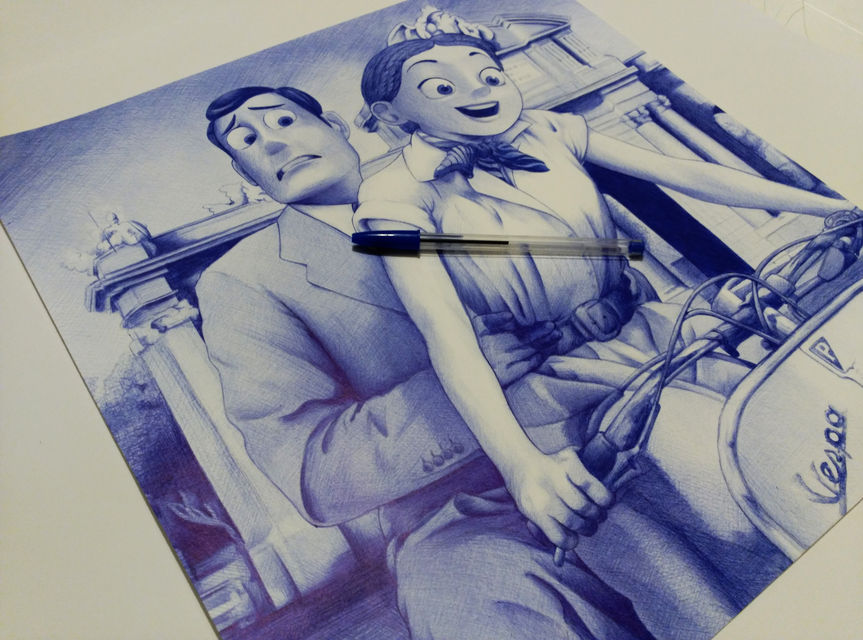
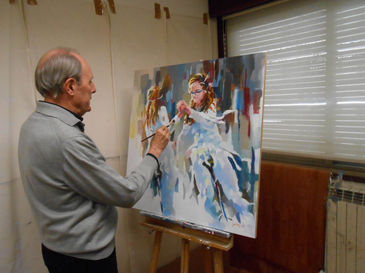
I'm very slow at painting (and very messy). Between work and my children, I'm left with little time to paint, so I make the most of any spare moment at midday or at night. I also tend to work on several artworks at once, usually an acrylic, another in biro on paper, another in ink, and every so often I get new sketches ready. There are paintings that have taken me a couple of years while others I've finished in little more than a week.
Have you had an exhibition recently, what can you tell us? Do you have any project in mind?
I haven't exhibited much lately, small contributions to group shows and not much more. I'm preparing a series of artworks about Madrid, but from a rather particular point of view. I want to put on a solo exhibition with that series. I'm also thinking of doing a group project in the medium to long term, but that's still a secret.
I've exhibited twice at the Muestra de Arte Contemporáneo in Arenas de San Pedro (Ávila), and it was an incredible experience.
My last big solo exhibition was almost 6 years ago now. It was called REINTROPOPSPECTIVA and it took place at the Centro Cultural de Montecarmelo (Madrid), a spectacular space but one that unfortunately gets very little promotion.
Could you recommend us:
An artist: Caravaggio, both his life and his work.
An artwork: The water lilies room (Nymphéas) by Monet, at the Orangerie museum in Paris. The scale of each piece and the way they're arranged transport you to another world.
A book: Farewell America, by James Hepburn (1968). I found it at a second-hand market and it hooked me straight away.
A film: Any of the Monty Python ones. No explanation needed.
Thank you very much.
We invite you to visit Gonzalo Sáez Díaz-Merry's gallery on Artelista.
Comments (0)
Log in to leave your comment. Log in