
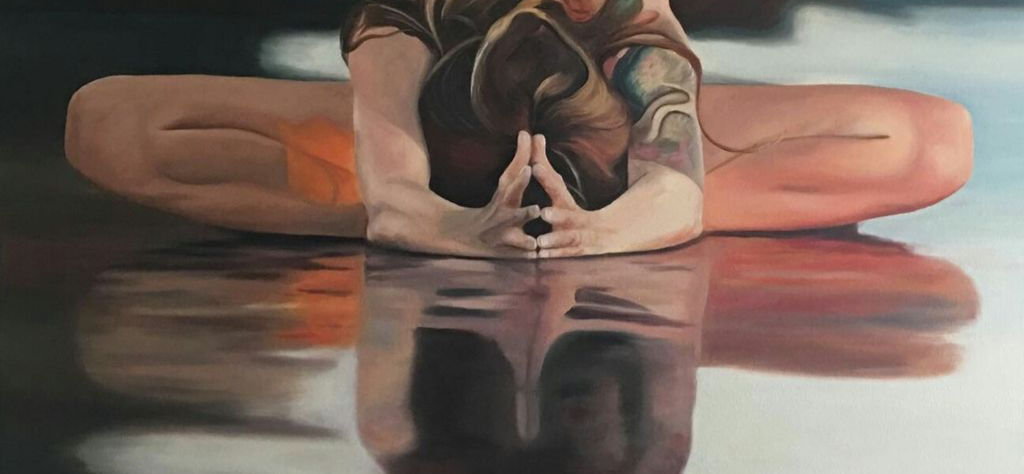
We said in the review of Bet Calderer's artwork that gazes and faces are like a door opening onto the soul. We like to look people in the eye to find out sooner what the person in front of us is hiding. The eyes are the most direct channel of communication, but not the only one… There's also movement and attitude. Fausti Adán's painting looks into female gesture and movement. The face is usually hidden, or it doesn't express anything. In Adán's artwork, it's the detail that does the telling.
The art of movement
De nuevo, la danza: esa disciplina artística orgullosa, a menudo altiva, pero solitaria, melancólica e incomprendida. La danza, como la música, expresa sin señuelos, no necesita palabras bonitas ni imágenes impactantes, va directa al corazón… o no va. La danza, como la música, tiene ese punto de abstracción que requiere en el oyente o en el espectador un poco de actitud, debe abrirse para que el estímulo cumpla su propósito.Danza Roja and NYCDance are two artworks that try to catch the plasticity of a dancer's movement. In one of them the woman has her back to us, in the other the face is all concentration. What hits the viewer is the way that instant of tension is captured, the moment when the dancer reaches the peak of a step. The lightness of a body that expresses itself, with nothing added.
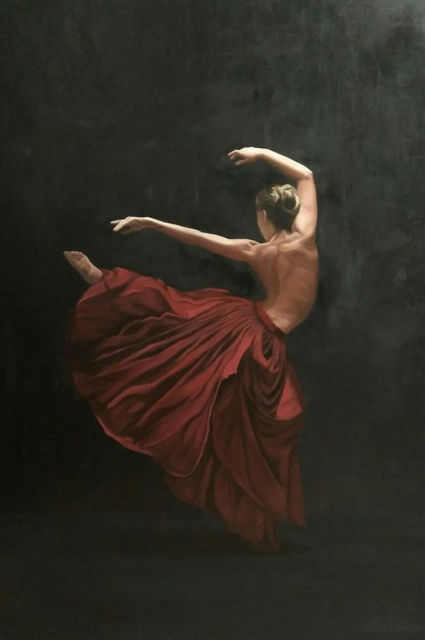
In both oils, Fausti Adán uses the same composition: the body takes up the centre of the painting, the red of the dress and the skin stand out against a neutral background in dark tones. The colour she uses creates a sense of foreshortening that helps the dancer's movement keep pulsing instead of stopping.
Woman in the world, in history
La historia la escriben los que ganan. Y los que han ganado (casi) siempre han sido hombres. La mujer siempre estuvo ahí, pero no ganaba, ni perdía; el juego no era para ellas (según los que hacían las reglas). Pero la historia va a cambiar, como sucede en Invictus: una mujer descansa tras la batalla, con la mirada perdida en la contienda y la sangre de los derrotados en las manos. En el tablero de la guerra, la mujer también juega.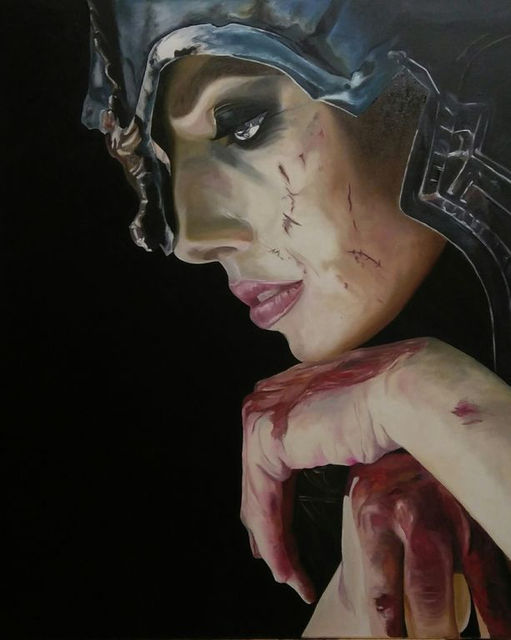
Invictus is a rarity in Fausti Adán's production, since the eyes and the lips are the vanishing point where the message comes together.
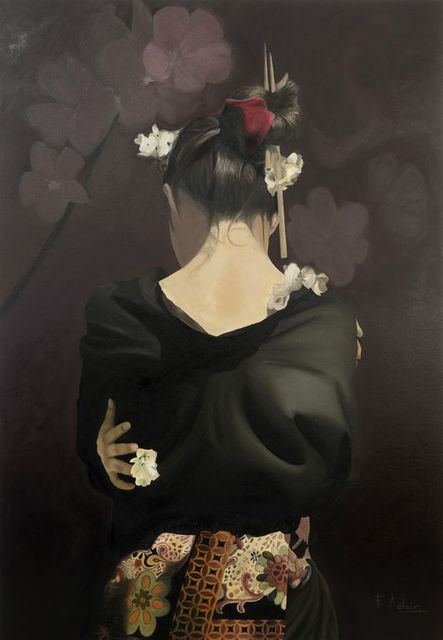
In Japonesa, India or Mantra, the face is hidden again and it's the attitude and the gesture that carry the painting's energy. Japonesa is delicate. A hand and the nape of a neck lay bare a soul that looks down and holds itself, because maybe the embraces it gets aren't warm enough. India, for her part, is support and resolve, she is road and hope.

Mantra is different, because Adán takes her figure outdoors. This instant of spiritual tension is mirrored by the water of the sea, making a painting of shimmering light and immediate impact. A light the painter also studies admirably in artworks such as Tatuaje or Sueño.
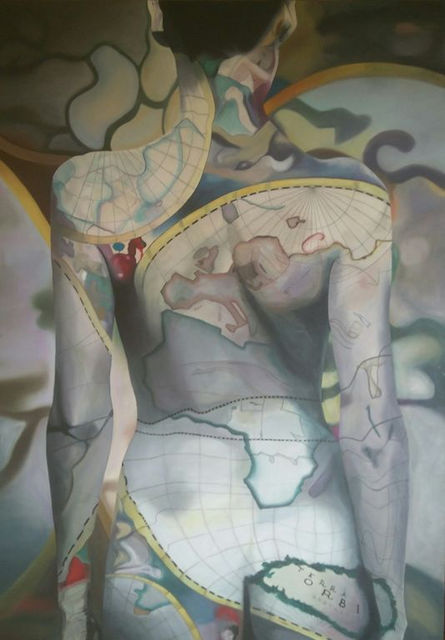
The light of the whole world is what Fausti Adán claims for women. In Terra Orbis, a woman's back is wrapped in the projection of a world map. It is, without a doubt, the projection of a future that at last seems more like the present.
We invite you to visit Fausti Adán's gallery on Artelista.


Comments (0)
Log in to leave your comment. Log in