
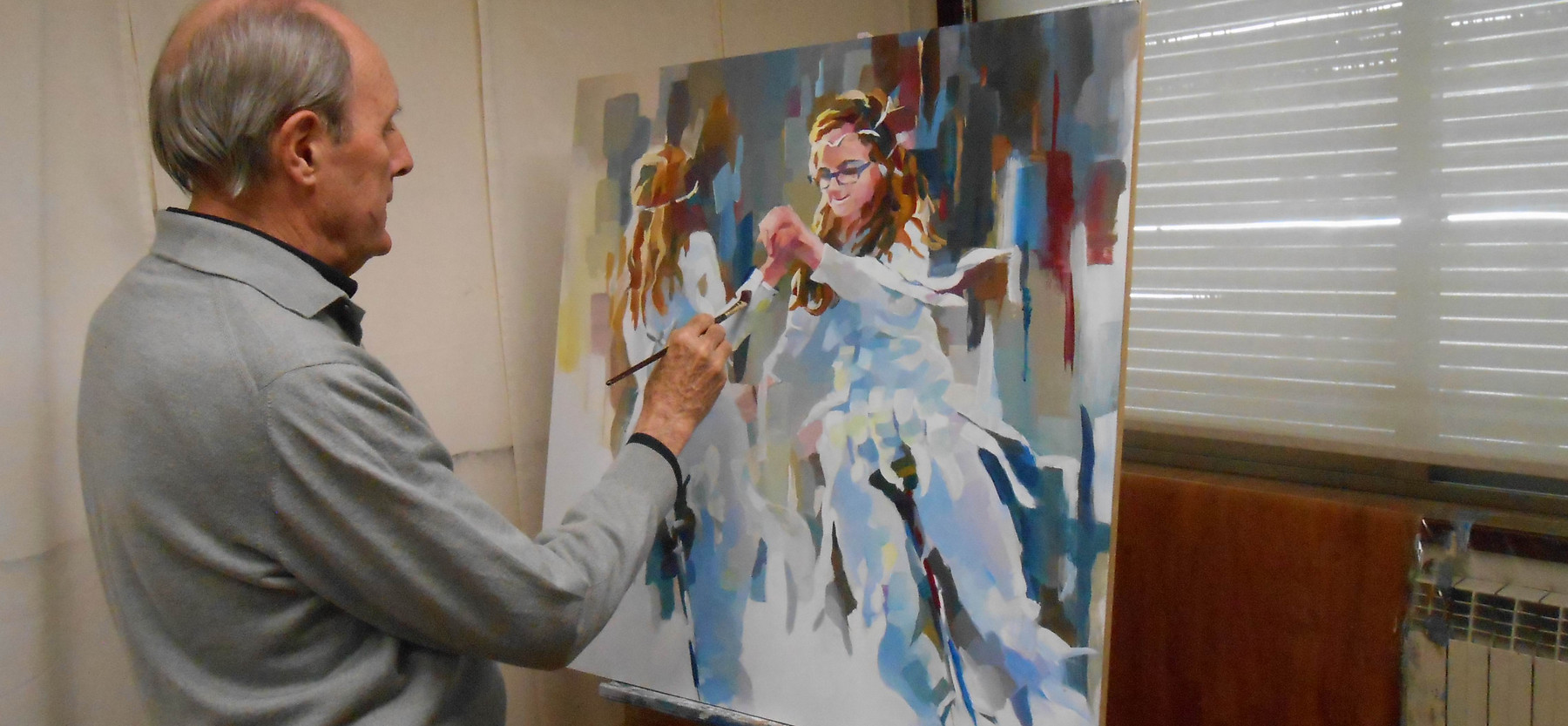
I was born in Valencia sixty-eight years ago. I started studying Fine Arts and then straight away Architecture, but the demands of the second and the need to work made me abandon the first for many years, although I've always kept painting. Since 1988 I've been a professor at the School of Architecture of the University of Navarra. For about five years now I've been throwing myself into painting again.
When and why did you start painting?
I started very young, maybe at 7 or 8. In my defence I'll say I had no idea what I was doing, or whether it was any good, until my parents noticed and, amazed as they were (and I much more so), they encouraged me to take up that profession, but also to get another degree. Later, while I was finishing secondary school and starting Architecture, I sat the entrance exam for Fine Arts and did the old Preparatory year, First and Second. But, as I said before, I couldn't finish.
How do you think a gallery and its artists should help each other?
I think they already help each other from the moment they come to an agreement. Still, since the question has come up, I think there should be sincerity on both sides: honesty, as I read the other day I can't remember where, which would lead, among other things, to really valuing the paintings and not the signatures. I think there should be a real campaign (and here galleries are essential) so that people buy paintings without being obsessed with them going up in value because they're by So-and-so, but because the painting is good in itself. How many excellent paintings I've seen that are worth very little on the market because the artist isn't well known, and, on the other hand, real nonsense priced sky-high because it's by very well-known artists. All of us, good artists and not so good ones, make good things and things that are worth nothing. Valuing the person and not the artwork (in the sense I'm talking about) is a small disaster.
What advice would you give to artists who are starting to show their work?
Well, what I was told: don't be in a hurry and look for perfection within your own line of work. Perfection that, for me, has a lot to do with confidence throughout the creative process: confidence in the idea, in the composition, in the execution and in the stroke. But confidence that is compatible (careful here) with the discoveries that come with any creative act, because an artwork, as Pollock said, has a life of its own. Obviously this doesn't mean you can't show your work before meeting those requirements one hundred per cent, because even the most accomplished artist goes on having doubts and lacking confidence all his life, among other things because he's always trying out new paths. But, for me, the search for perfection is an essential requirement. I'm suspicious of anyone who takes on all sorts of techniques or styles without trying, in each one of them, for something more, something more finished.
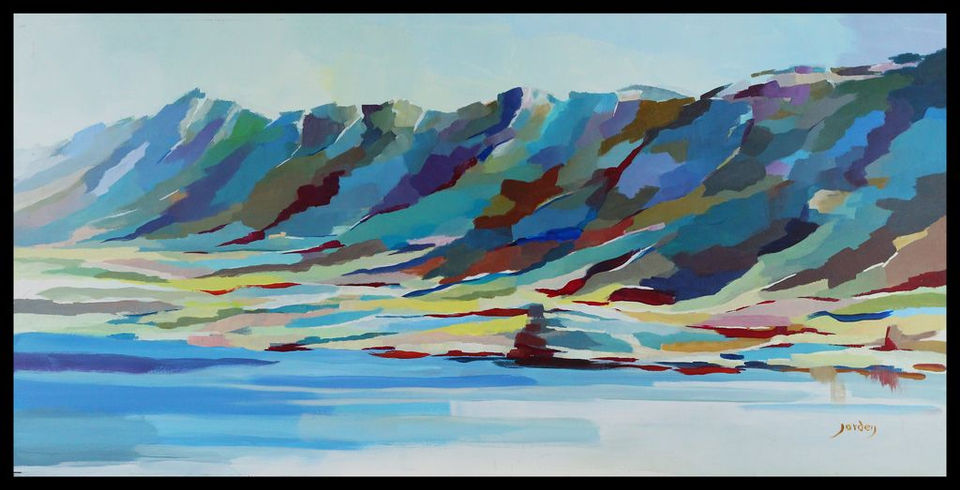
How did you sell your first artwork? Is there one you feel a stronger connection with?
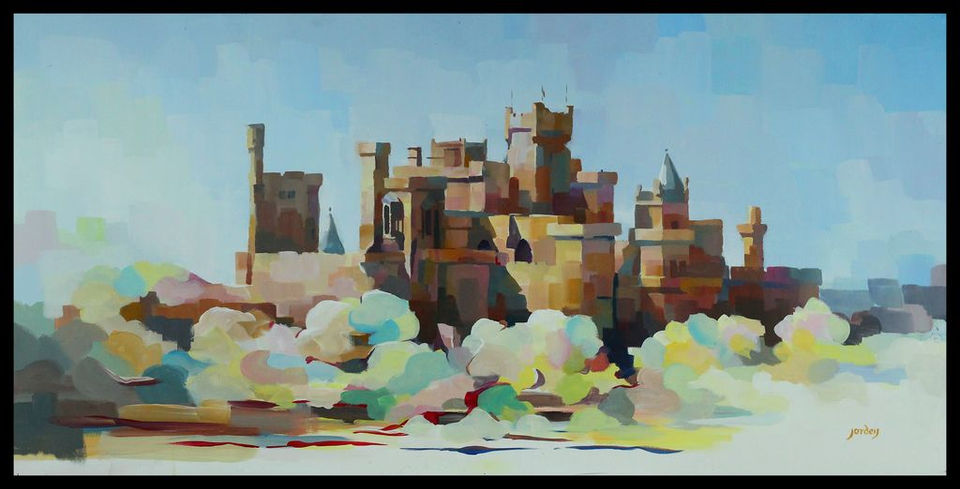
I've given away so many of my paintings that I've lost count. But I think the first one I sold must have been in the eighties: a watercolour of an area of Valencia that I have no copy or photo of (I didn't pay attention to those things back then). The watercolour was taken all the way to the Philippines. I don't know what became of it. In any case, the first one I've sold since I went back to painting more seriously was in the summer of 2015, a medium-sized acrylic whose subject was a town in Alto Aragón.
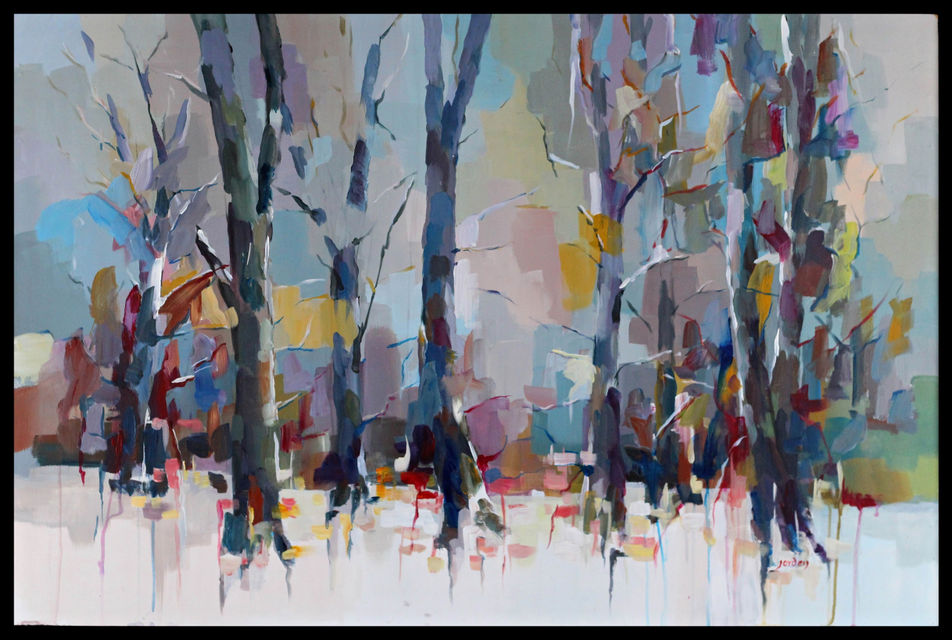
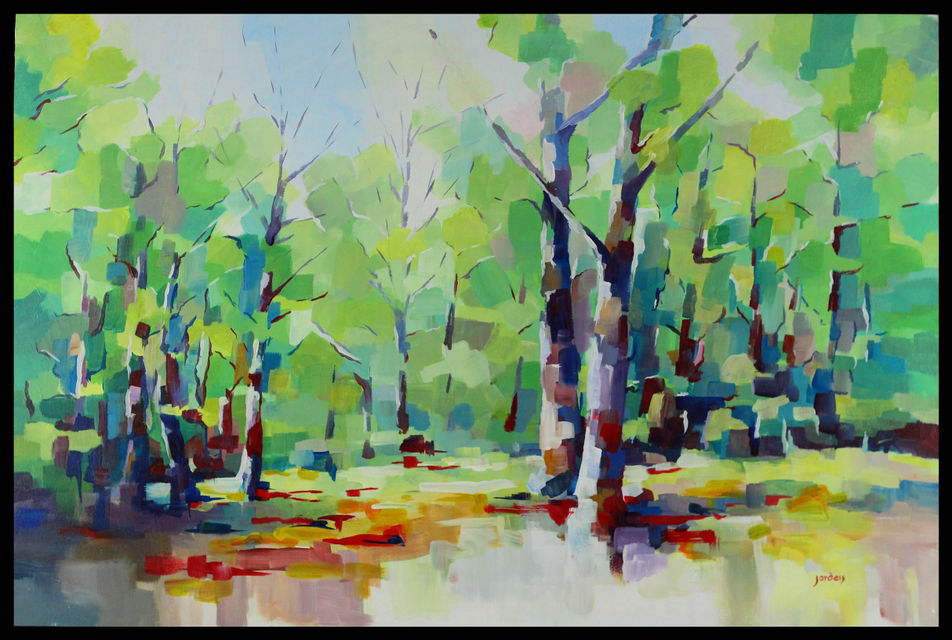
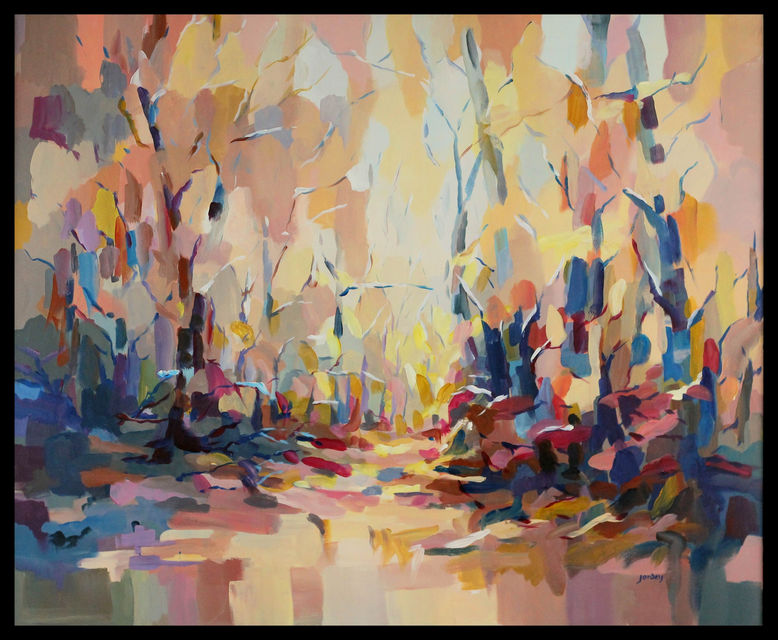
As for what you ask me about an artwork I feel a stronger connection with, the truth is I feel that with all of them, to the point that selling them is really hard for me. It happens above all with the ones where I judge that I've taken a step forward in that search for perfection and confidence I mentioned before. For example, in the series of the seasons in the woods (spring, summer, autumn, winter) I started with winter (which turned out well), then I did autumn (which turned out well, but with less confidence), then spring (the one where I had the most confidence from beginning to end and therefore the one I like best) and, finally, summer (which is fine, but didn't mean a step forward in that confidence).
What is art for you? What role does it play in your life? Do you make a living from art?
No, I don't make a living from art, but I'd like to. In my life art has played what I think is an important role, maybe too important… I mean (and I'm a bit embarrassed to say it) that many times, in technical work and in other more personal situations in life, I've put the categories of beauty above other considerations that perhaps should have been more decisive in that work.
And as for what art is, what comes to mind is what Gombrich said in the first edition of his well-known book The Story of Art: that there is no art, only artists. He meant, as we know, that there are no definitive rules, no limits, since the very concept of art has changed a great deal through history. But even so I do think art exists. That same author would in fact admit years later, in another edition of that same book, that art was in some way the search for perfection.
What are your sources of inspiration? Do you identify with any other artist?
For me, almost anything is a source of inspiration: from a pretty face to a wretched neighbourhood, from a peaceful sunset to seeing the sea in a rage. And also the intellectual power of man, who has developed so many things.
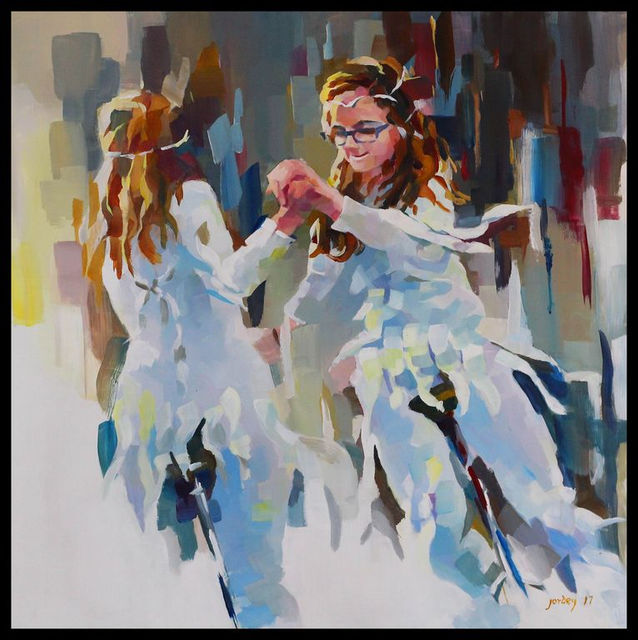
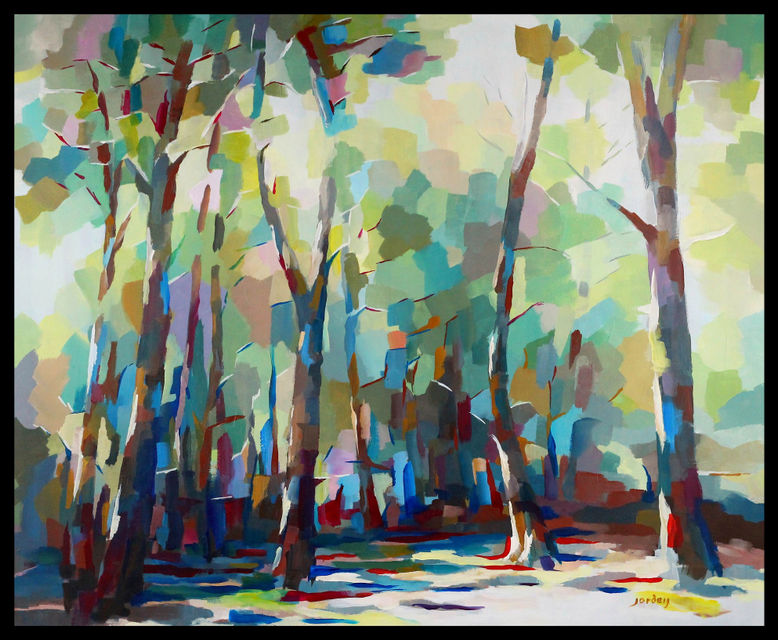
As for the inspiration behind the specific technique I'm trying to achieve, I've always been drawn to the Impressionists and Post-Impressionists, among whom I have to mention my fellow Valencian Sorolla and, of course, Cezanne. In recent years I've rediscovered the little-known American "synchromism" of the 1920s, which moved away from Cubist geometric construction to focus on colour. And, lastly, I have to acknowledge the influence a kind of painting I call "fusion" is having on me: a fusion of the figurative and the abstract, but one that stays clean, luminous, plastic. There are quite a few painters who fit this, but I can point to many of the artworks of Josef Kote, Alex Kanevsky or Joshua Bronaugh as an example.
What is it about your creative process that makes it special?
Nothing. I don't think there's anything special about it. I start by sketching the painting lightly and then the blocking in, which changes method a lot depending on the subject: sometimes I do the detail of the main element first and the rest afterwards, completing the composition, and other times the other way round. What I do need is time ahead of me, even if I finish the painting in an hour or two, keeping an eye on the clock breaks my concentration. And I always work with music on, classical or modern.
Have you had an exhibition recently, what can you tell us about it? Do you have any project in mind?
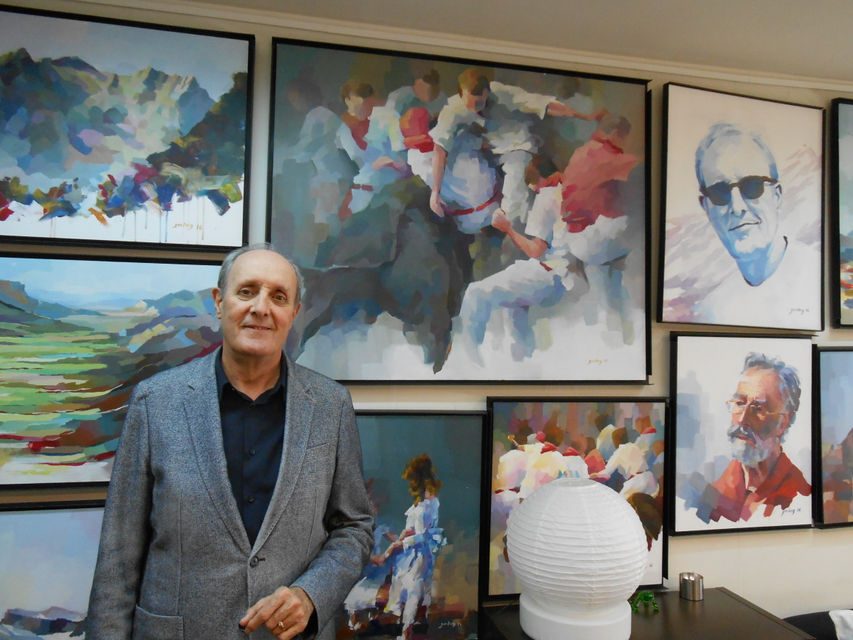
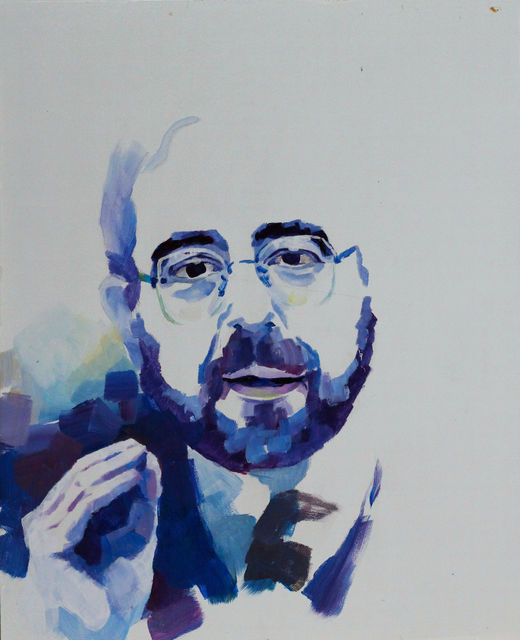
My last exhibition was in November, in Valencia, radio interview included and a few paintings sold. I have two more exhibitions in the works. One consists of portraits of the faculty of the School of Architecture where I teach: you can see a few of those portraits as a sample. They are, as I usually say, the opposite of caricatures. A caricature normally exaggerates features that don't change (or hardly change) with expression: the shape of the nose, the ears, the chin, the forehead. These portraits exaggerate nothing and are based on the features that do change with expression, the eyes and the mouth, so that everything else is in principle superfluous and isn't painted. Even so, according to those who've seen them, they're spot on.
The other exhibition would be in Pamplona, in a well-known venue. But it's still too early to talk about it.
Could you recommend us:
An artist: Stanton Macdonald-Wright (the father of synchromism).
An artwork: La Gare de Saint Lazare, but there are many more: Trigal con cuervos, Y aún dicen que el pescado es caro, etc
A book: Hope and Memory by Todorov.
A film: The Pianist.
Thank you very much.
We invite you to visit José María Ordeig Corsini's gallery on Artelista and the Review we wrote about his work.
Comments (1)
Sissi Zamora Lara
September 29, 2020Log in to leave your comment. Log in