
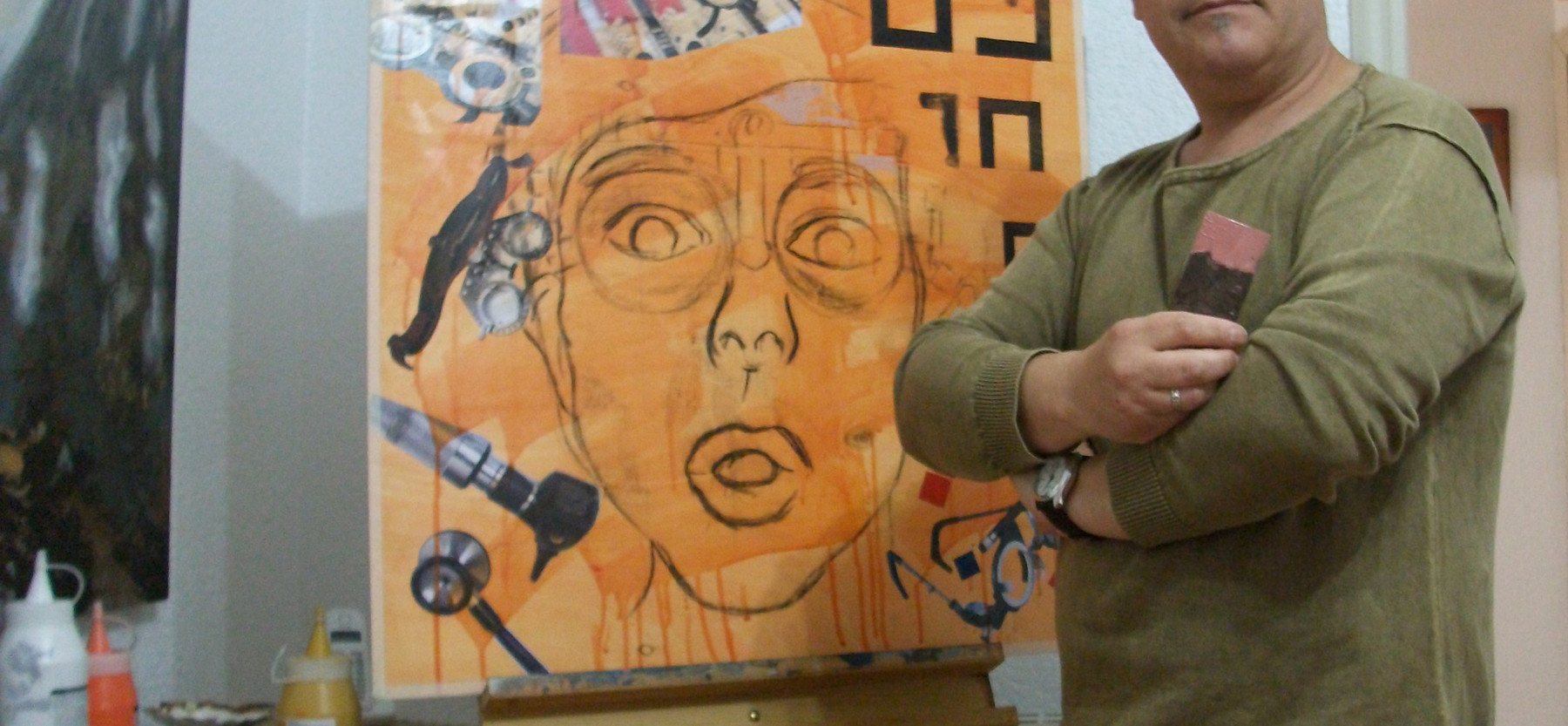
My name is Jose Miguel Alguer Romero, a child of emigration. I was born in Bremen (Germany) on 30 July 1965, to a father from Valencia and a mother from Huelva. At 8 months old I came back to Spain, to Huelva to be precise, and when I was about 3 we settled in Valencia.
As far back as I can remember, I was always a kid who enjoyed drawing and colouring with pencils and crayons. Around the age of eight I discovered toy soldiers and military models, and I would spend hours painting and assembling them so that later, with my brother, we could stage battles on those winter days when the weather kept us from going out to play.
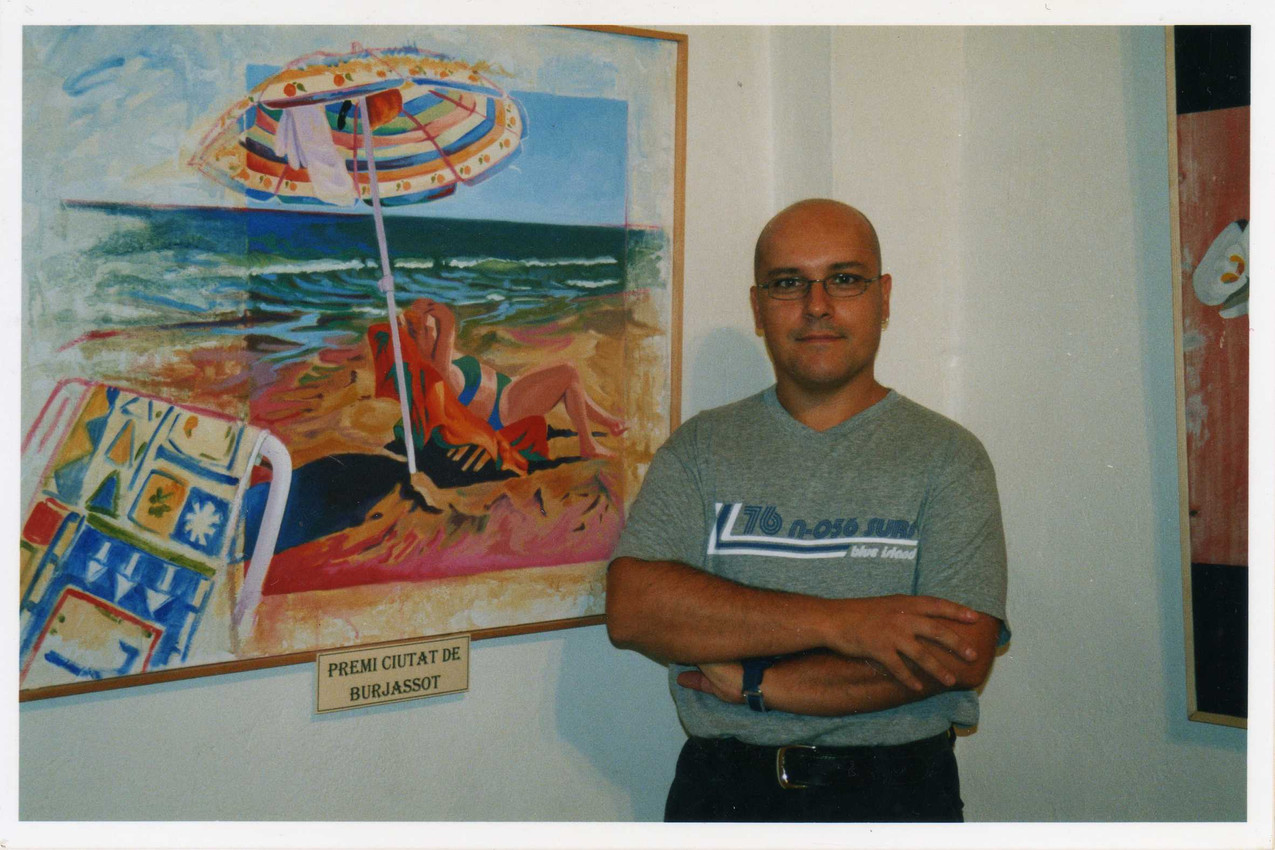
When I finished EGB, a classmate and I went along to the School of Applied Arts and Artistic Crafts in Valencia. My idea was to be a painter and devote myself to making paintings, but back then both painting and sculpture were Fine Arts specialities, so you needed BUP or COU to get in, and I only had my school certificate. And although Arts and Crafts did offer those disciplines, they were courses of about a year, what today we might call a Master's, so I decided to go for the official art education route. Of the trades the School offered, fashion drawing, decoration, illustration, advertising drawing, the last one caught my eye because of its name, without my knowing exactly what it was. Today it's called Graphic Design, and little by little I fell in love with the profession at a time when sketches and jobs were done with ink, gouache, brushes, technical pens and coloured papers, hand-drawn lettering and adhesive letters, all of it manual work that I loved.
Like any good Valencian, before finishing Arts and Crafts I worked with the falla artist Villeta, a great painter whom I loved to watch at work and from whom I learned not only how to handle and solve oil on canvas, but how to paint volume. With my qualification in hand, my professional career bore fruit in sign-making companies, and in between, first poster competitions and later painting ones, computer courses applied to graphic design, photography, layout and web, I did other jobs such as drawings for screen printing, I painted a children's falla and accessories for fairground rides, I worked as a graphic designer for the Youth Department of the Casa de la Cultura in Burjassot, for the magazine Accesos Magazine, I did two jobs for the Youth Information Centre of Valencia City Council, for the company Vigrade Artesania del Vidrio, I did the cover of the book Buscándome by Antonio Lozano, I set up my own business, framing studio and art gallery Mirarte La Botiga de l'Art, I did the graphics for a mobile game, I've belonged to the arteEnred collective since 2010, currently as one of its administrators, I'm part of the roster of artists at Botticelli Art Galleri in Alcoy, and at Micó Vilar in Valencia, and my latest job has been doing the illustrations for En Quixot de la Mancha, translated into Valencian following the Puig rules by Jesús Moya Casado.
When and why did you start painting?
At 11 I won the drawing competition organised by the falla in my neighbourhood, and I think that's when I became more aware that I wasn't bad at this drawing business. Around that age I was given my first box of oils and I started experimenting and practising with the new material, small formats at first and then, little by little, I dared with bigger sizes, mostly landscapes.
How do you think a gallery and its artists should help each other?
I've always understood the gallery to be the bridge between the client and the artist. The artist has to invest his time in creating, and the gallery in promoting its artists and selling their artworks.
In these hard times a lot of galleries have closed, but from the experience I've had over the years in Valencia, what I've seen is that most of those closures were galleries that looked more to survive off the artist than off sales. Let me explain, I started out exhibiting in cultural centres, bars, etc., and after a few years I began taking part in group shows in the odd gallery, usually by paying for the metres you occupied, which worked out cheaper and meant you could afford one a year.
Well-known Valencia galleries would put on group shows at the end of the season with new artists they thought might fit the taste of their clientele, giving artists a chance, and if you worked out you could go on to become part of their roster of artists. In the galleries that ran on renting out the space, you could come across exhibitions of low quality, though not always. The gallery secured the rent on the premises without considering whether the artist about to exhibit might fit the clientele of that space, which for the artist meant a big outlay of money and, more often than not, no sales at all.
Although I haven't stopped exhibiting in cultural centres and wherever I'm offered the chance, as long as it doesn't hurt my pocket, I think the future is in online art galleries, because of their reach, getting your artwork known worldwide, and selling over the Internet gains more followers every year.
What advice would you give to artists who are just starting to show their artwork?
First of all, patience, that they enjoy what they do, that they don't do it thinking about making money or about what people like, that they make what moves them and what their heart tells them.
Exhibitions matter, that's what we create art for, to show it to people and swap impressions. They shouldn't get angry at criticism, they should try to learn and improve with it, especially with the bad kind.
And they should pick their best artworks and start putting them up on art sites on the Internet, it's a good way to get yourself known.
How did you sell your first artwork? Is there one you feel a stronger connection with?
When we artists start making artwork, the first ones to give you a hand or cheer you on tend to be family. I remember my godmother commissioned a painting for her dining room, I must have been 12 or 13, and I dared with a big one, about 65 x 100 cm. I painted her a Valencian landscape, two barracas in the huerta, and my surprise was that when I took it to her she paid me for it.
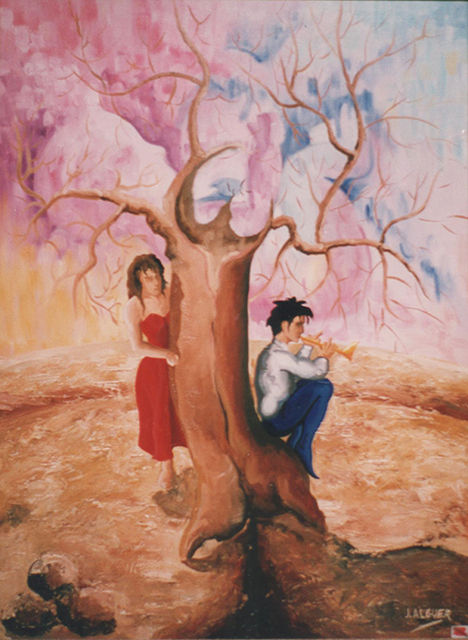
Years later, I sold my first artwork, El árbol de la vida, at the first solo exhibition I held at the Casa de la Cultura in Burjassot (Valencia), back in 1993.
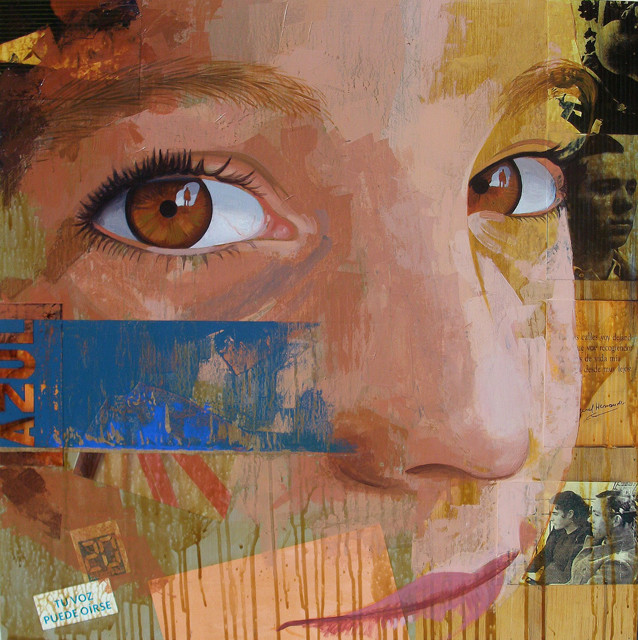
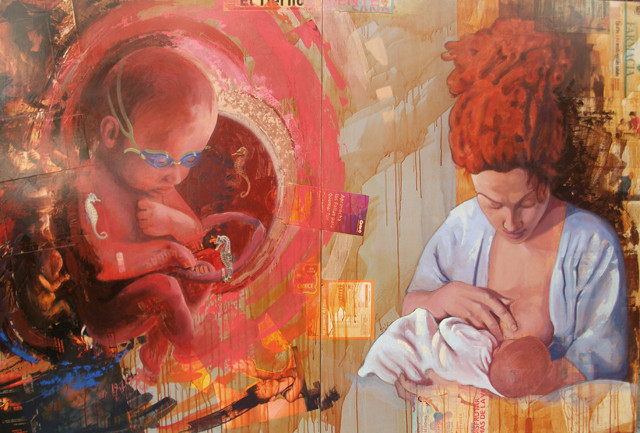
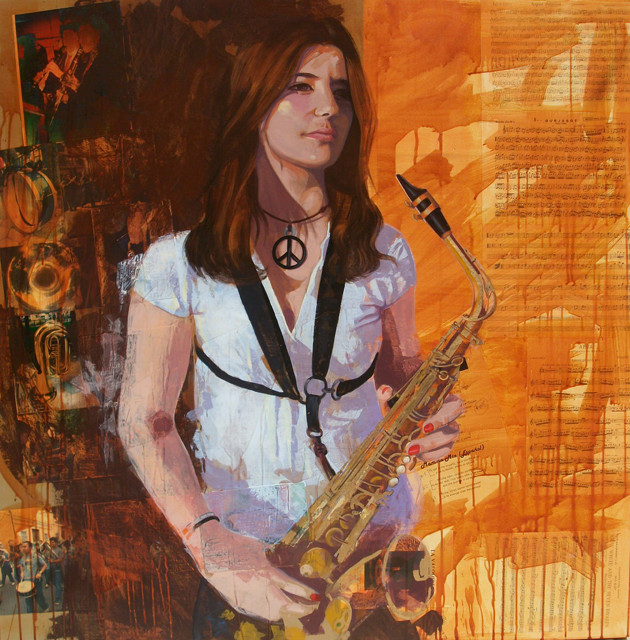
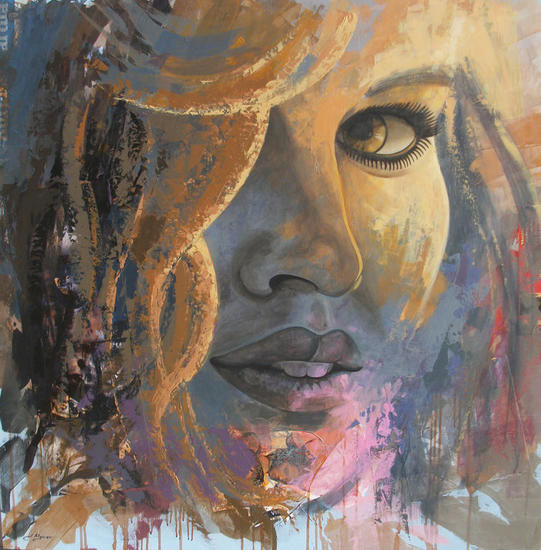
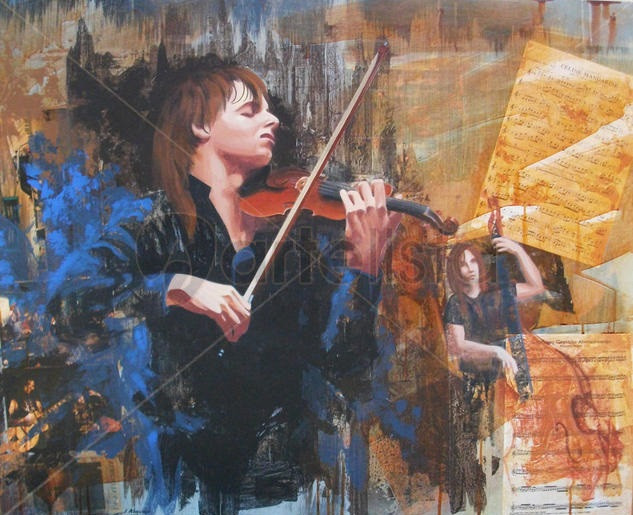
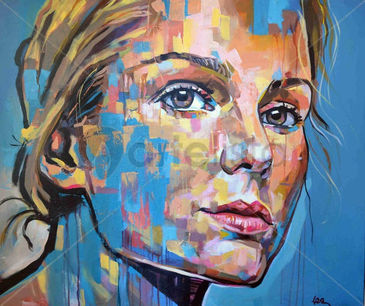
Naming just one artwork would be hard, but from my latest phase of pieces worked with the collage technique, I'm going to name three: Preparándose para la Vida, Buscando la Inspiración, and La mirada Azul. These are a little bit special and perhaps worked with a lot of love, I think it shows in them, since the models and the inspiration for each one are, respectively, my wife, my daughter and my son.
What is art for you? What part does it play in your life? Do you make a living from art?
Whenever I've talked with friends or colleagues I say the same thing, for me art is a need, I can't imagine my life without art, I need to express myself, whether by painting, drawing, designing or writing.
Sadly, I'm one of those artists who don't live off their artworks, having had to work in other professions for some years to get by, and in spite of that, and having some years more productive than others, artistically speaking, I've never stopped making artworks even if there are only a few a year and at the cost of losing hours of sleep to finish them.
What are your sources of inspiration? Do you identify with any other artist?
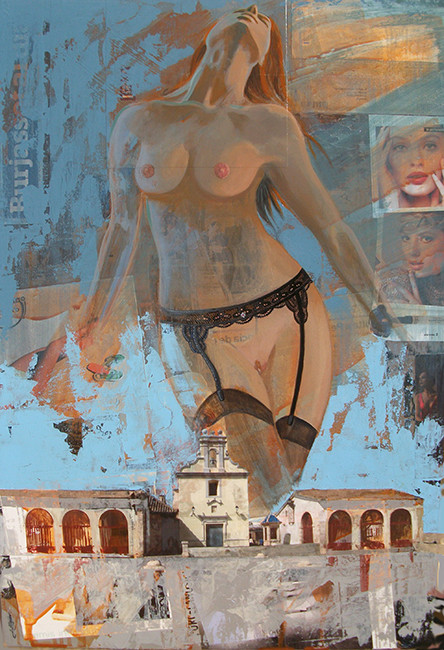
Because of my passion for comics, my first artworks had that surreal air that recalled, in their composition, the posters and illustrations of artists like Jose Segrelles, Milo Manara, Boris Vallejo, or artists like Dalí and Alex Alemany.
But there's one artist who has always impressed me with the force of his patches of colour and the way he handles light, the master Sorolla.
About 9 years ago I started venturing into the open-air painting competitions around the province and I discovered, used by some fellow painters, the collage technique. Present-day artists who have influenced the way I work are Blai Tomas Ibanez, Miguel Mellado and Gonzalo Romero Navarro.
What is it about your creative process that makes it special?
Looking into the collage technique, I use it differently from my fellow artists, using it as a base to give the final result colour and texture.
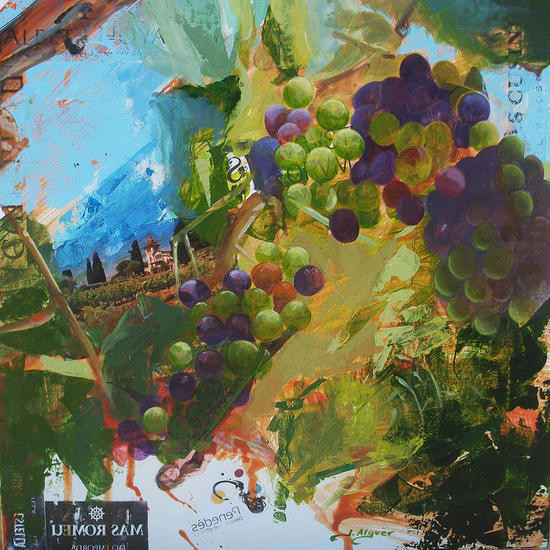
I always sketch first, I look at the model photo or the landscape I'm going to capture, I work out where the colours go and I start gluing down newspaper cuttings, photos, etc. Bearing in mind which colour range will end up more or less on top, I glaze it all, and over that glaze I draw and paint with brush and palette knives, creating in the artwork a very personal atmosphere which, together with the way I paint, means that people who are getting to know me can tell whose artwork it is even if it's new and they've never seen it.
It's work that invites you to look at it from long, medium and short distance, because of all the textures, transparencies and details you can find in it.
Have you held any exhibition lately, what can you tell us? Do you have any project in mind?
The last exhibition I held was in March at the Casa de Cultura in Manises, a town very close to Valencia. I didn't sell a single artwork, but it was very well received, people were surprised by the result of the technique, they asked me about it, and they had their photos taken with me next to their favourite piece.
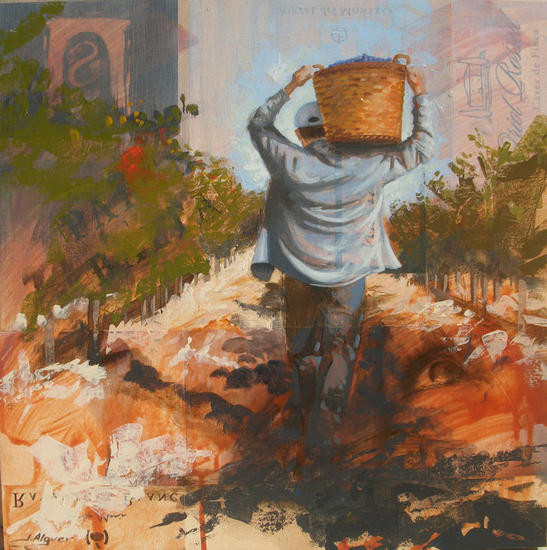
I usually work on several series, Urbana Rustica, about village landscapes, streets, etc.; it's the series that has grown the most thanks to the quick-painting competitions I've done. The Figurativo series, about the figure, both in landscape and giving the artwork a more dreamlike, reverie-like, surreal feel. I started a series of Rostros and another one under the title Buscando la Inspiración, based on jazz musicians, classical musicians, etc. My intention is to keep expanding these series.
Could you recommend us:
An artist: Daniel Parra.
An artwork: Aún dicen que el pescado es caro, Joaquín Sorolla.
A book: The Kybalion.
A film: Avatar.
Thank you very much.
We invite you to visit Jose Miguel Alguer Romero's gallery on Artelista.
Comments (0)
Log in to leave your comment. Log in