
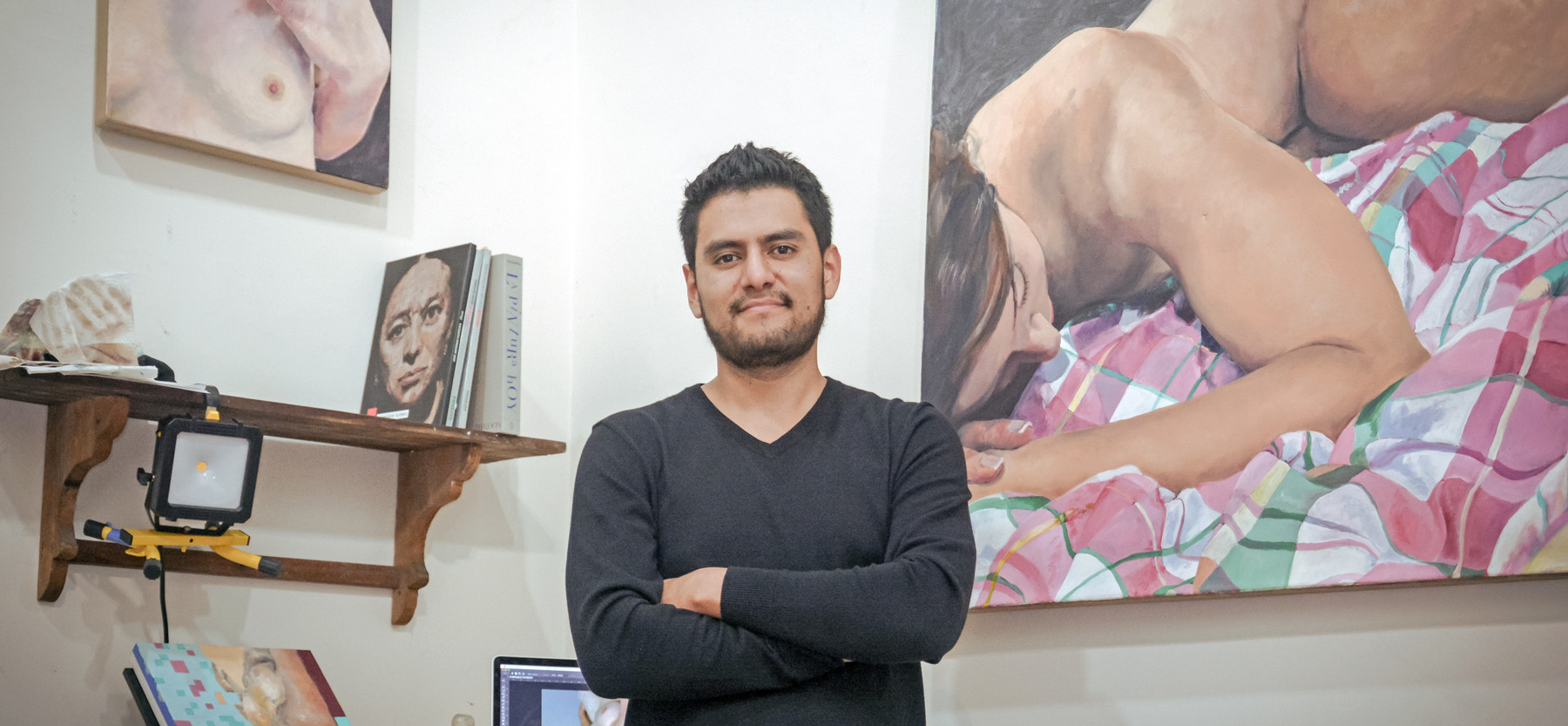
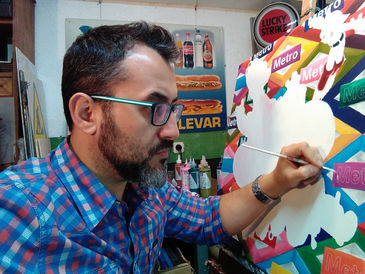
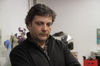
Hi, I'm Miguel Ángel Casco. I studied a degree in Fine Arts and a master's in Information Design at the Universidad de las Américas Puebla, and I managed to graduate with honours in both.
My painting has earned me invitations to exhibit both in Mexico and abroad, taking part in more than twenty solo and group exhibitions, among them those held at El Museo Latino in Nebraska (United States), the Centro Cultural Universitario Bicentenario in San Luis Potosí (Mexico), and the Galerías del Palacio Municipal and Capilla del Arte in Puebla (Mexico).
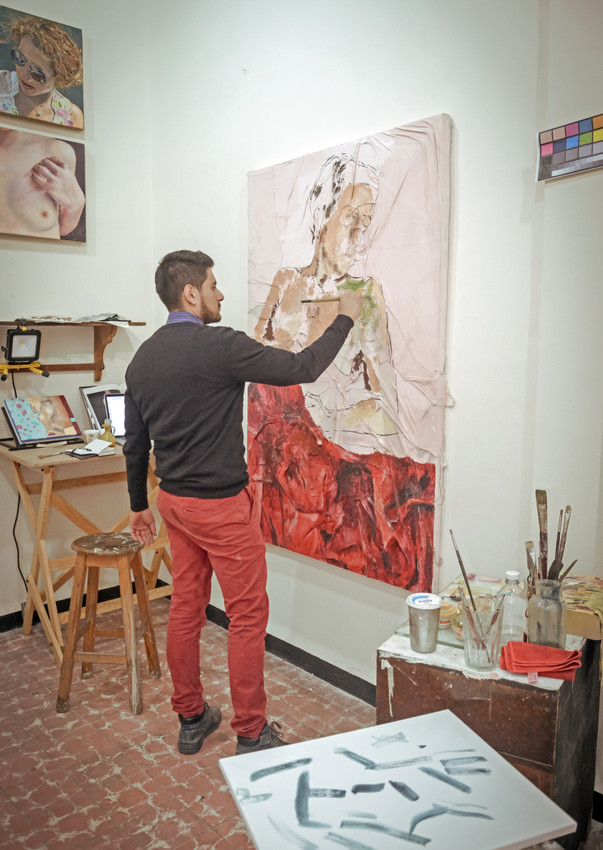
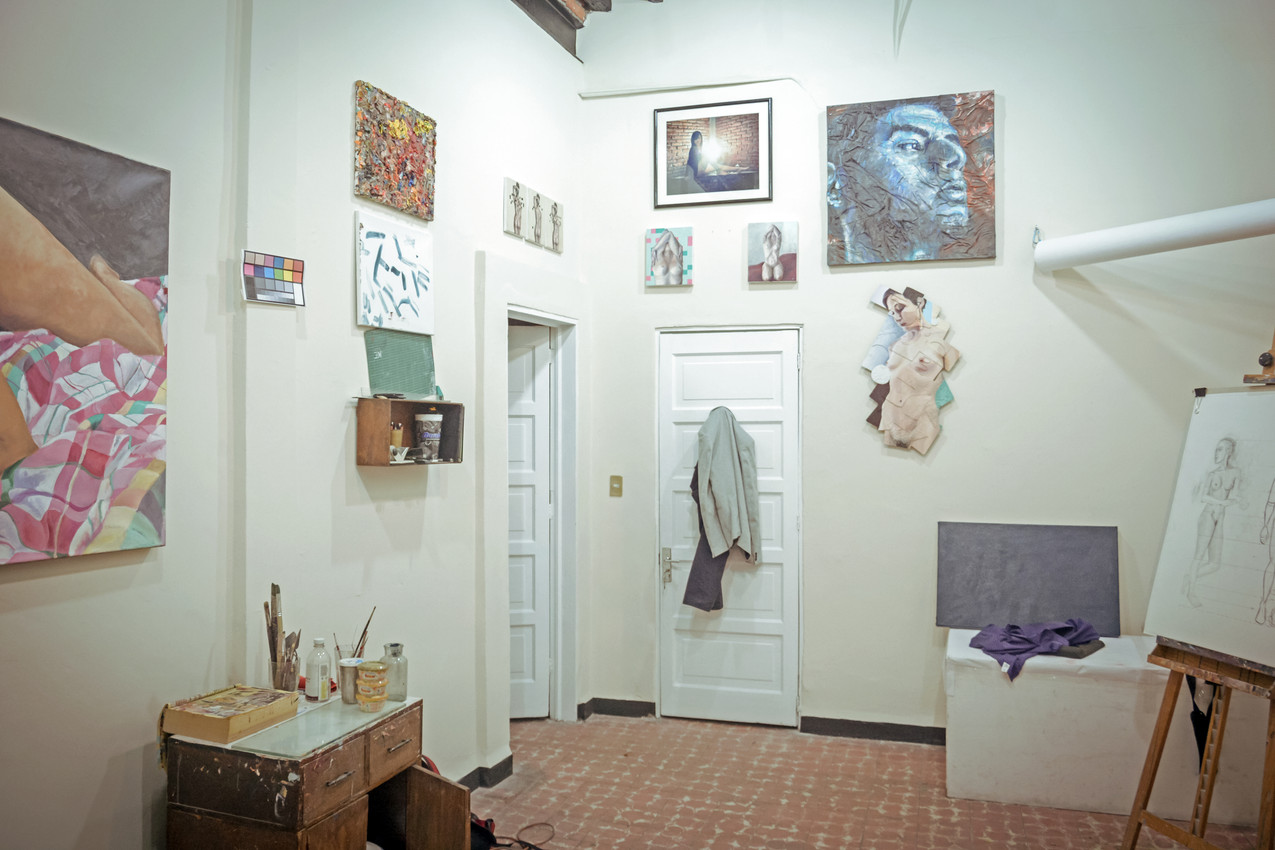
I currently work at the Museo de la Cancillería in Mexico City, in the Design, Administration and Museography area.
When and why did you start painting?
My father is a sculptor and he was always asking me to help him out in his studio, though sculpture wasn't what caught my attention. I liked drawing with charcoal and coloured pencils. I did portraits, cartoon figures and the odd perspective study. At twelve I looked for a way to enrol in my first painting studio, with Mtro. José Arnulfo Munive, where I discovered how drawn I was to the almost alchemical atmosphere of the studio where I learned to paint. The materials, their plasticity and the textures that came out of oil painting delighted me, and it was also there that I discovered that images work as a means of communication and that through art you can take on the world in another way.
How do you think a gallery and its artists should help each other?
The market has taught us that as long as an object sells as art, it's art. From that point of view it's worth stressing how important galleries are for artists as agents of legitimation. The artist does have to be capable of building a well structured artwork, one that engages in dialogue, that invites you to read it and not only that, but that questions, that disturbs… The gallery would have the responsibility of placing it in the market.
The strategies used by sites like Artelista are pretty spot on, because they generate a dialogue between the artwork and the viewer. I had only just signed up to the site and I remember they wrote a short essay about the artworks I had submitted, which amazed me because it means they believe in the work. This time, through the interview, I know more people will be reading my artistic proposal. What I mean is that the link between gallery and artist is hugely important, since the gallery is, in a way, what catapults the work of whoever it takes on.
What advice would you give to artists who are starting to show their artwork?
Essentially, to work as honestly as possible and, beyond whatever confidence you might have in yourself, to lean on solid references and to know you're not the only one working in that field, at least that's how I see myself. I also recommend structuring projects by answering the questions what?, how? and what for?, so as to generate a dialogue and not just an ornamental object. And well, keeping up with the news, trying to stay informed and aware of what's going on around you.
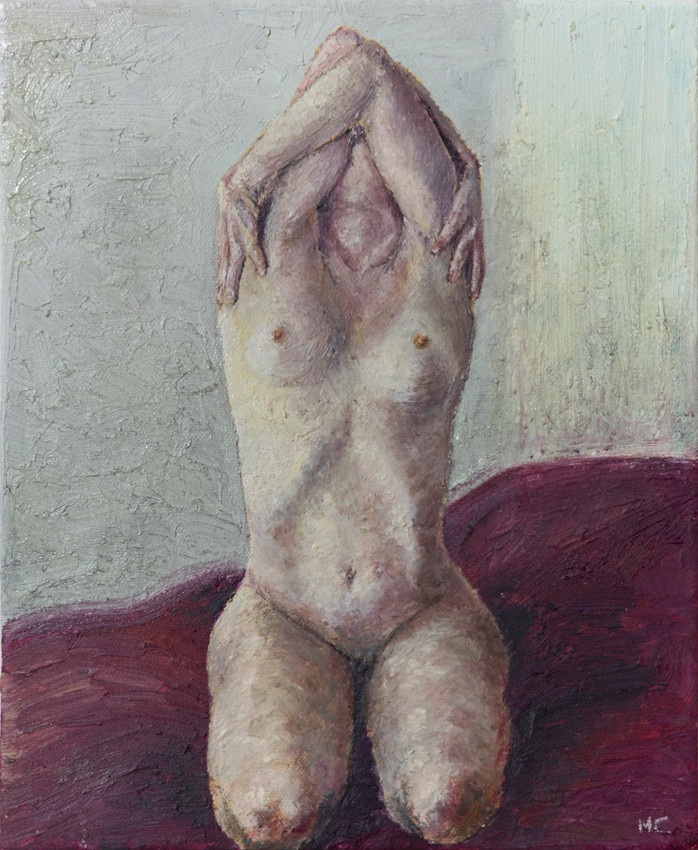
How did you sell your first artwork? Is there one you feel a stronger connection with?
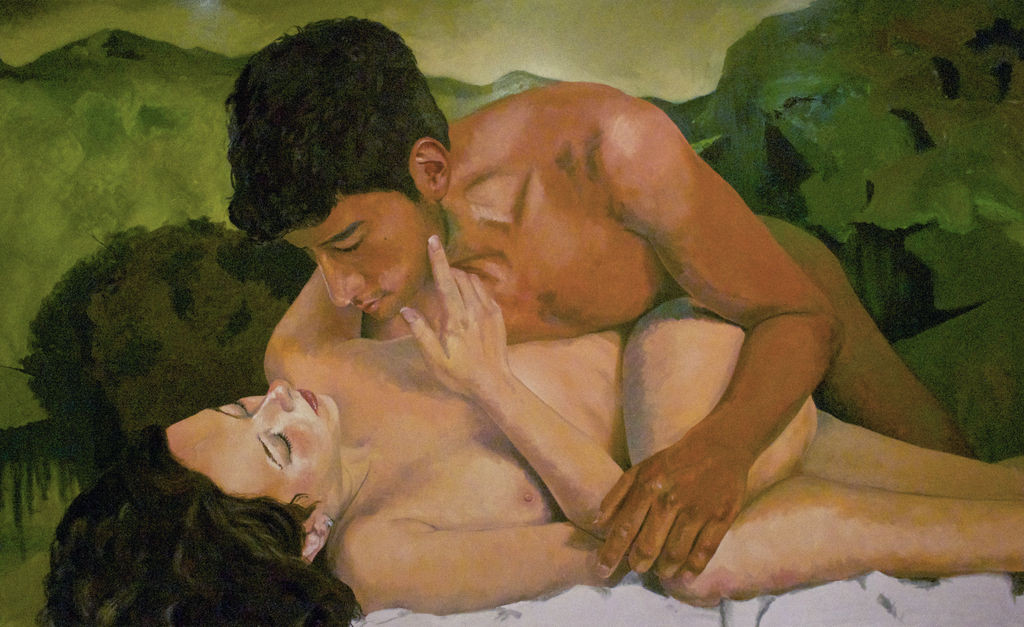
I remember the first artwork I sold went to a friend, but it was a school thing, in fact it was a copy of a painting, though that's where I decided this was what I wanted to do. Later on, when I was already at the Faculty of Arts, I remember that in 2011 I was invited to exhibit at the Galerías del Palacio Municipal in Puebla, Mexico. The Shining was the artwork they selected and the one I've built a peculiar connection with, since my whole discourse has been built out of that piece.
The exhibition (titled La imaginación de lo real) was visited by several figures from the cultural scene, among them the then head of the Ministry of Economic Development, Tourism and Competitiveness, Lic. Pedro Ocejo, who, taken with the artwork, invited me to take part in making some paintings for the Hotel Andante, a project that was being set up at the time.
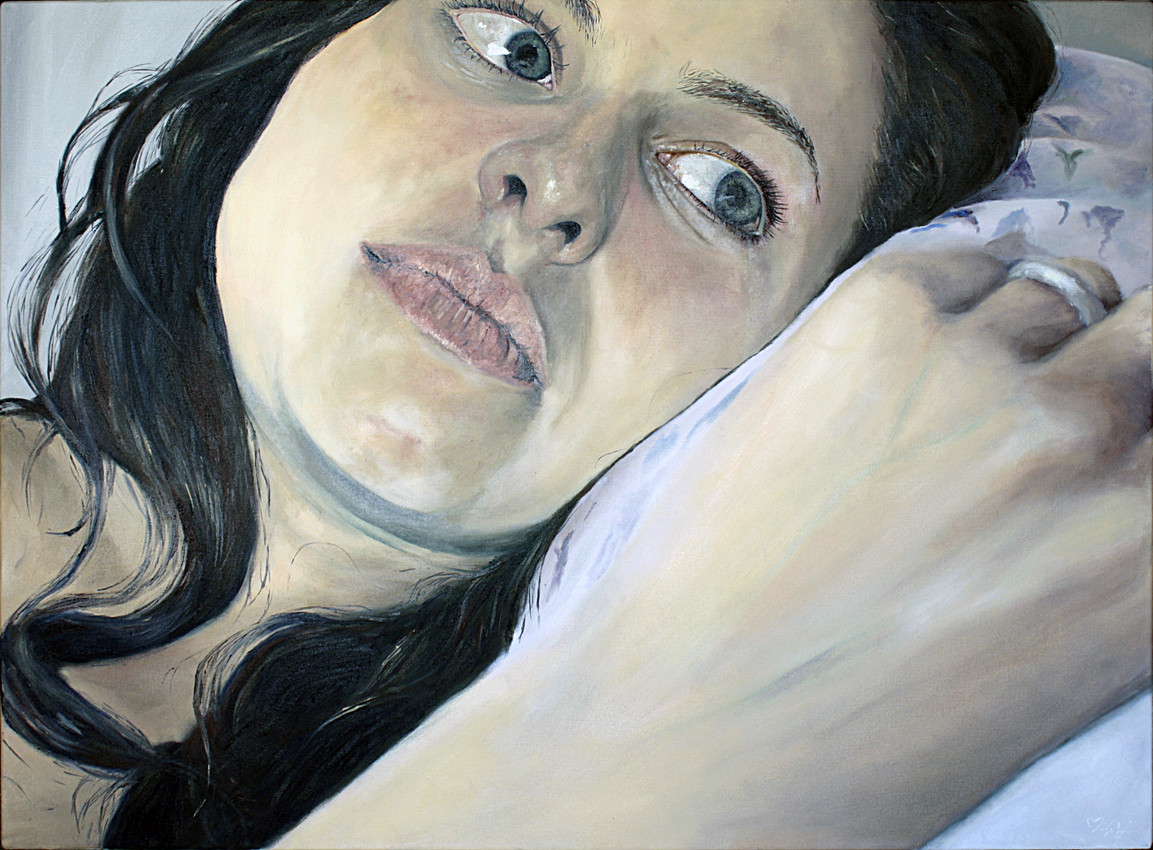
Later, The Shining was selected and acquired by Grupo Reforma for the 5th edition of Muestra Arte Grupo Reforma. Thanks to that I got the first catalogue containing one of my artworks, and one with a global reach, according to Grupo Reforma's own distribution project.
http://blog.udlap.mx/blog/2011/08/artistasudlappresentansuobraenlaexposicionlaimaginaciondeloreal/
What is art for you? What part does it play in your life? Do you make a living from art?
Defining a concept as complex as art involves all kinds of questions, though I always try to answer from a context, so rather than settling the question what is art?, I try to ask where or how something is art. And then I'd venture to define it as a strategy for dialogue, one that discusses, stirs things up, debates, a tool for knowledge.
For me, art and culture are fundamental because of how far they reach. They cross different lines of thought and systems of representation to tackle multiple situations. In other words, they have widened my view of the world, from a sensory level to a rational one.
I don't make a living from art, although I currently work in a museum and I've had the chance to get to know different aspects of artistic practice. Could that count as making a living from art? I know there's a long way to go and that I'm still not in a position to support myself on what I earn from what I produce, but it goes beyond placing myself in the world like anyone else who studies a degree with better job prospects, that is, a diploma or a degree doesn't guarantee a place for those who invested and gambled on fulfilling themselves as art graduates, which is why Luis Camnitzer calls the teaching of art in universities fraudulent. Still, beyond questioning the education system we could ask ourselves why we keep producing, or what living from art actually means. It would be worth going back to question two of this interview and working it out on a macro level, in terms of art and society.
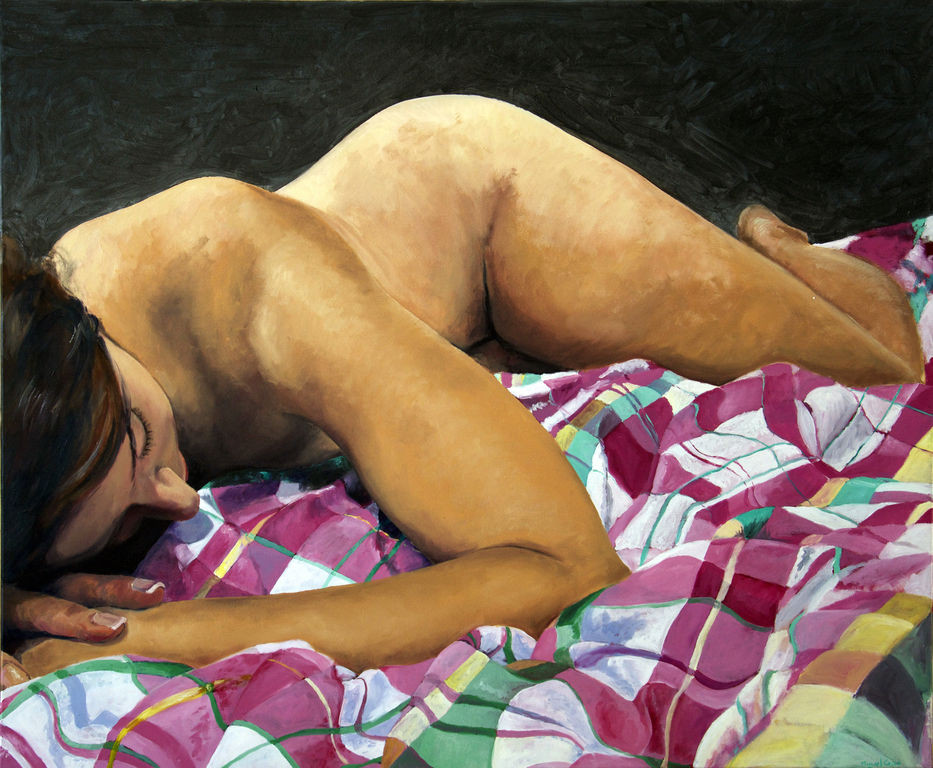
What are your sources of inspiration? Do you identify with any other artist?
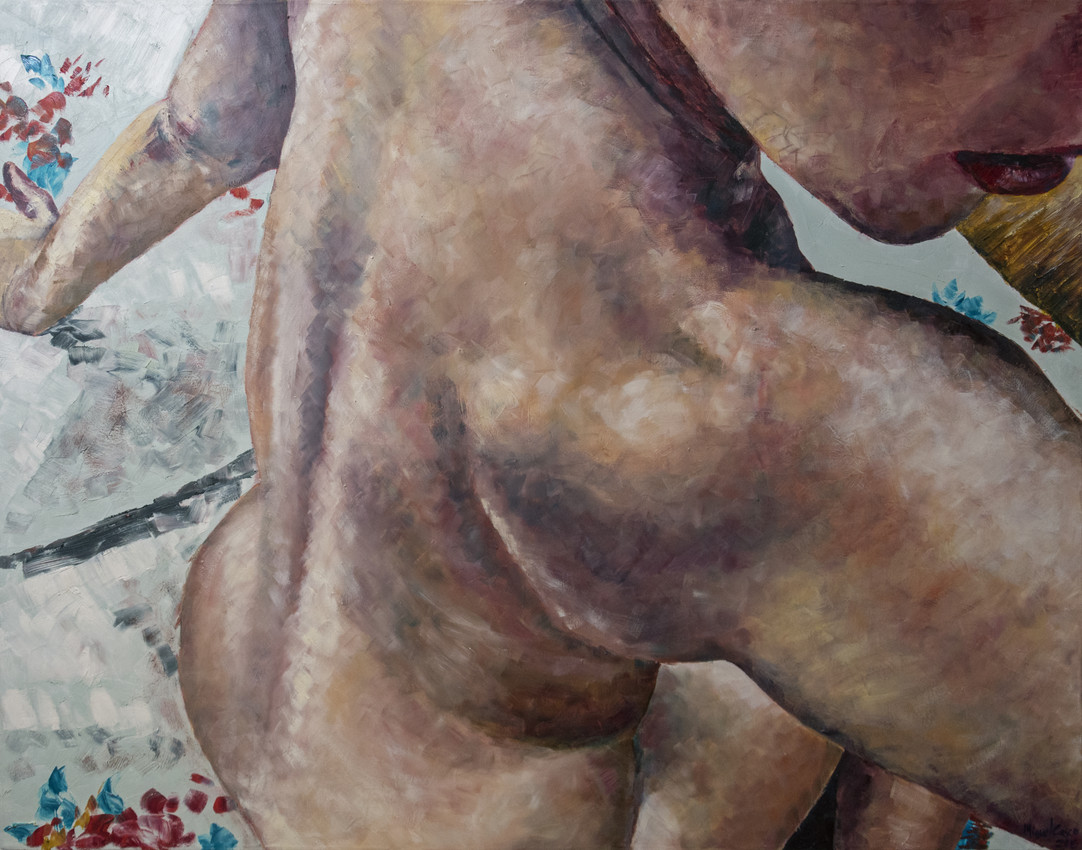
As a source of inspiration I enjoy visiting museums, listening to music, walking through the Alameda Central in Mexico City at night, reading and even watching films. As a subject or a need, I've always gone back to the human body and to representing the personality that inhabits each body.
I use the erotic/pornographic imaginary as a vehicle for information. I think pornography plays an important part in society, since it works as a system that has controlled not only our society's sexual practices but also our thinking around inclusion and gender equality. Naief Yehya (2012) says on this subject that “a society that eradicated decency would also annihilate pornography”, that is, changing the paradigms about what should and shouldn't be censored increases or reduces the possibility of acceptance. Prohibition stigmatises and invites you into what's forbidden.
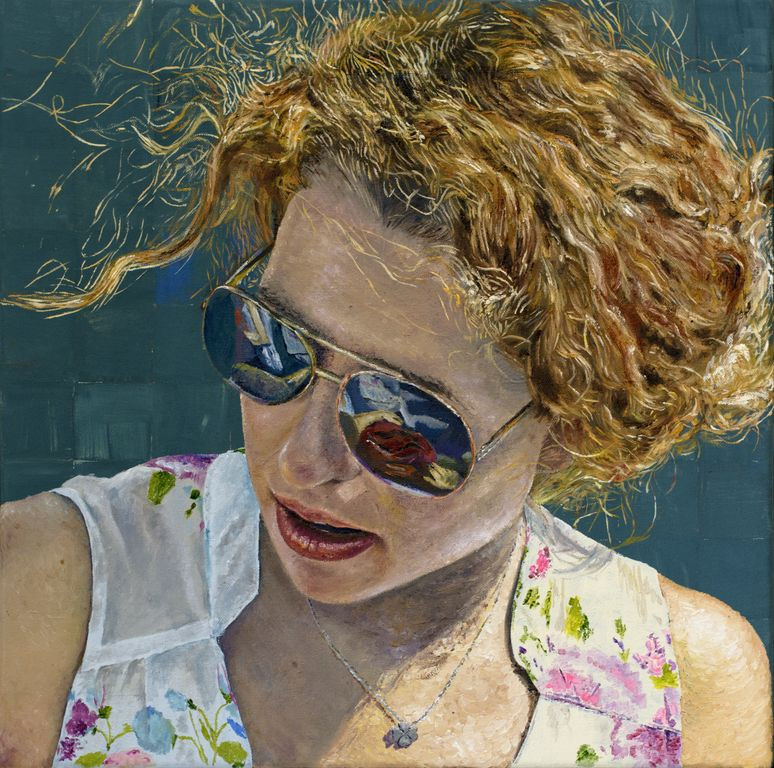
What is it about your creative process that makes it special?
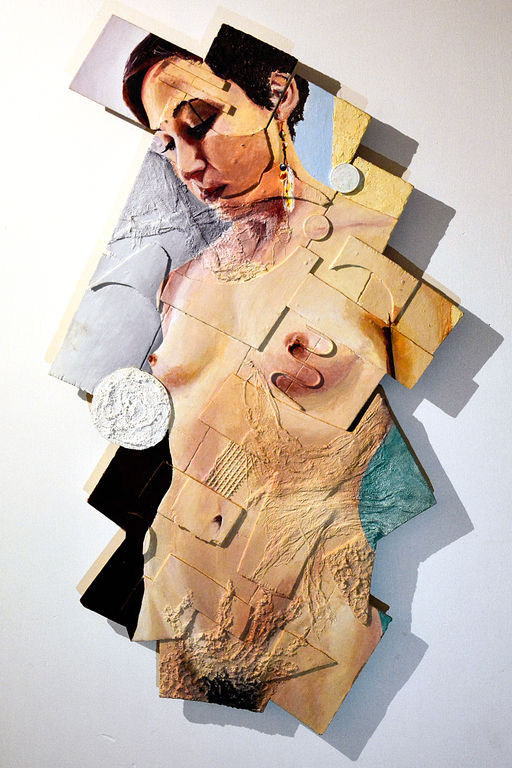
From a technical perspective, I've developed my own recipe for encaustic, it's more flexible. I like using it in glazes, so it has a creamy consistency that, when mixed with the pigments, seems to encapsulate and suspend them.
On a conceptual level I've worked with the representation of the people around me, from photographs I take myself. Intimate, somewhat erotic scenes build the fiction that makes them who they are. Right now I'm inviting people from my circle to send me a photograph of themselves naked so I can paint it afterwards, in order to break with the idea of the traditional model and work from the perspective of each person who accepts the invitation.
Moving a digital image into a pictorial medium amounts to a glaze over that same image, that is, its purpose shifts into an artwork that questions intimacy, the ownership of images and the limits between pornography and art.
Have you had any exhibition recently, what can you tell us? Do you have a project in mind?
The last exhibition I took part in was in January 2017, it was titled Quimeras citadinas and it was held at Galería Aguafuerte, Mexico City.
At the moment I'm working on a solo exhibition, with plans to hold it in October this year. The series is titled Embodied and it starts from the representation of the body understood as feminine by mass culture, interpreted through the digital scene. It began with images my partner sent while we were apart and later turned towards what we conceive of as a woman's body, heightening those features considered erogenous.
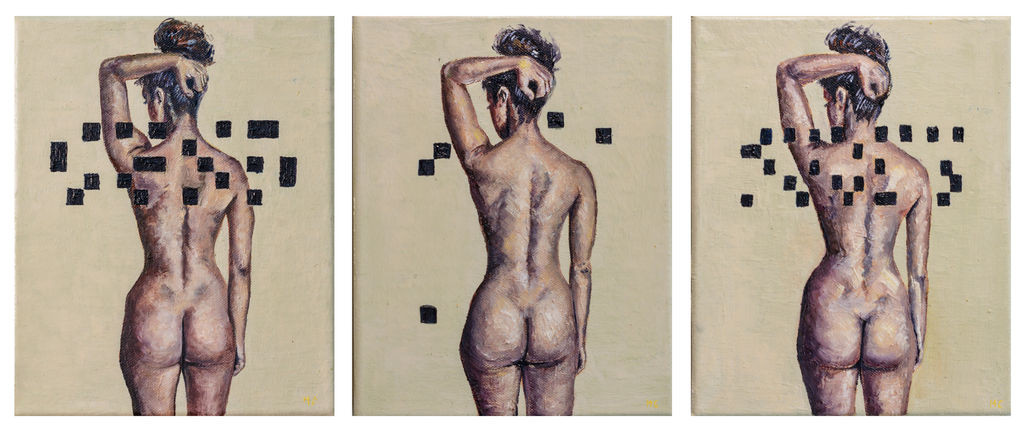
I'm also cooking up a project that involves, as I mentioned earlier, the possibility of anyone sending me a photo of themselves naked. You'll hear more about it later on.
Could you recommend us:
An artist: It's impossible to think of just one. I'll mention Lucian Freud for the way he portrays the body and not the figure; Chuck Close for his methodology of building an image; Maurizio Cattelan's relational aesthetics, as well as Romina Ressia's neo-Warholian perspective.
An artwork: The Raft of the Medusa by the Canadian artist Addad Hannah, where he appropriates the reality represented by art, where the object of study isn't the image but the representation, taking shape as a video about an installation that evokes Théodore Géricault's painting.
A book: The Map and the Territory by Michel Houellebecq and Pornografía: Obsesión sexual y tecnología by Naeif Yehya.
A film: Fight club by David Fincher, American Beauty by Sam Mendes and It’s only the end of the world by Xavier Dolán.
Thank you very much.
We invite you to visit Miguel Ángel Casco's gallery on Artelista.
Comments (0)
Log in to leave your comment. Log in