
«Find a motif that steals your soul and your senses, and work it without blushing». This could be the basis of any artistic activity. The risk? Falling into repetition. The reward? Finding a style of your own, a unique one. The reward, then, is too big not to take the risk. Elena Bissinger took the risk and found her reward.
Born in Beius (Romania) in 1964, Bissinger showed an early interest in painting, no doubt encouraged by her father, who was a painter. But her artistic career was slow to take off. It isn't easy to devote your life to art when you belong to a large, modest family in the Romania of the 70s and 80s. The Romanian painter married, started her own family and spent a decade working in a furniture factory. Her first solo exhibition came in 1997. Elena Bissinger focuses on her art, on her flowers.
The flowers of good
Many tend to think of art as a selfless activity, born out of a spiritual need, an appetite for expression. It must certainly be that way. If the artist doesn't have that appetite, if he isn't seized by a spiritual rapture, his output will suffer. But the artist also eats and pays bills, even if we sometimes forget it.
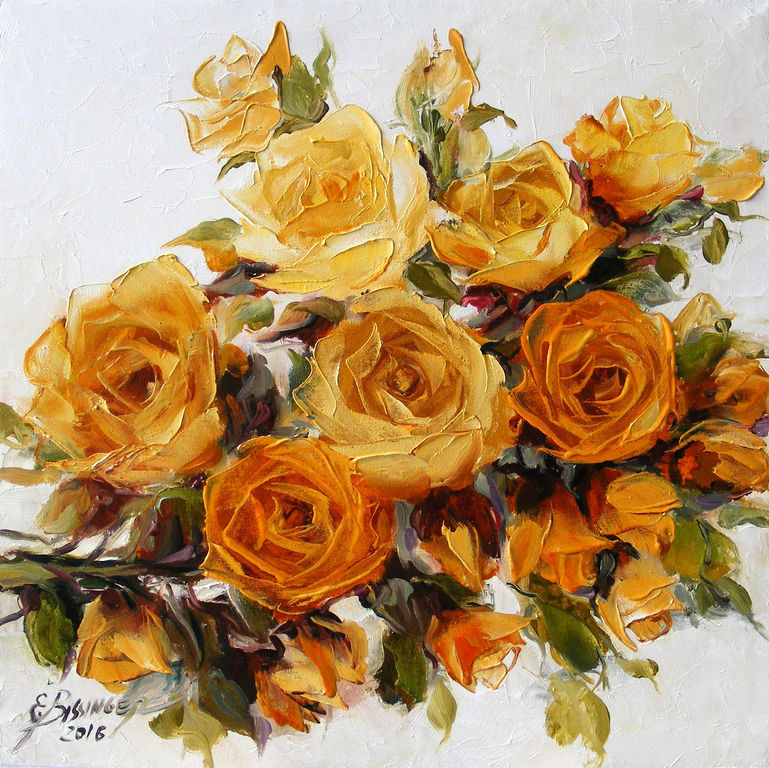
Finding a motif for artistic expression, a subject, isn't just a good creative strategy, it's also a good one commercially. If you put on an exhibition with very varied paintings and very different pictorial styles, you'll create confusion. On the contrary, if you focus your output on a single motif, you'll have a better chance of success.
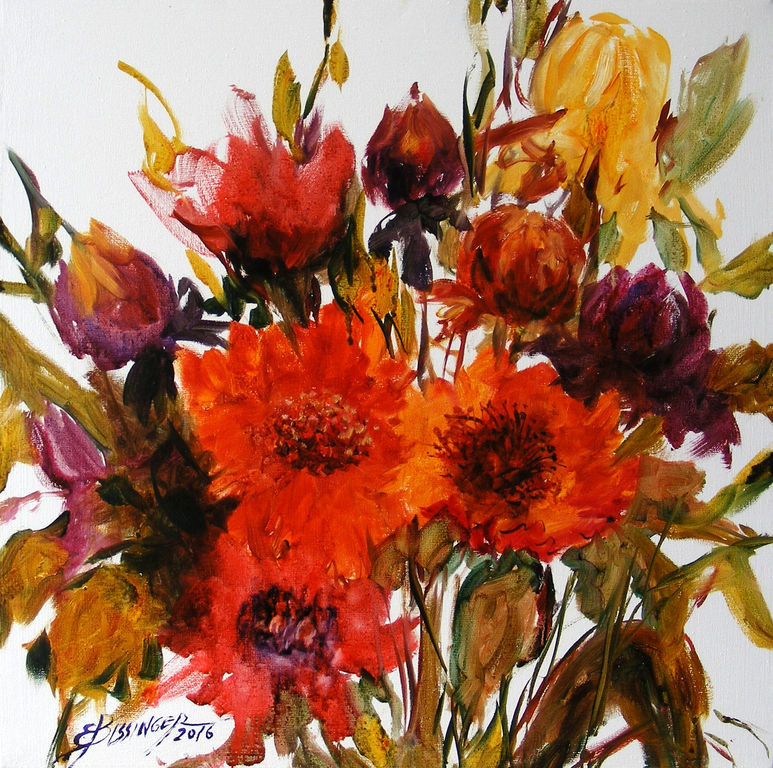
Elena Bissinger concentrates her efforts on flowers, that motif that steals her soul as it has done with so many painters in history. Yes, Van Gogh is the most famous. But we can also name Berthe Morisot or Georgia O'Keefe.
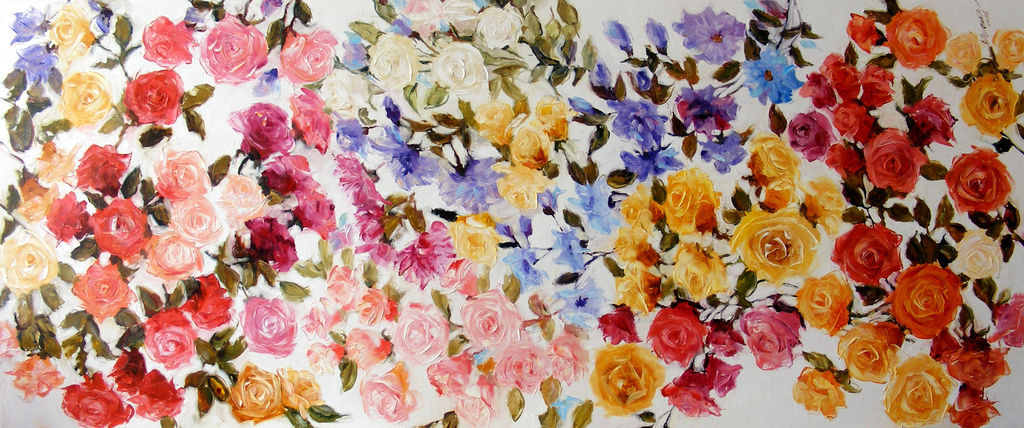
Why flowers? To begin with, because of colour: «in a composition, colours are there to convey warmth, love, deep feelings and sensitivity. The viewer receives them through the painting». Of course, flowers also carry different metaphorical values. And smell, they remind us of smells, and there's nothing like a smell to bring back past situations and emotions.
The use of the palette knife is another of Bissinger's signatures, and she prefers not to talk about the word «obsession», at least not in the Van Gogh sense. The Romanian artist «uses» flowers as an artistic motif. And it works for her. She has painted more than 400 artworks with the flower as the main motif and many have been sold to private collections, above all in her home country.
Kandinsky and Pollock: abstract lyricism
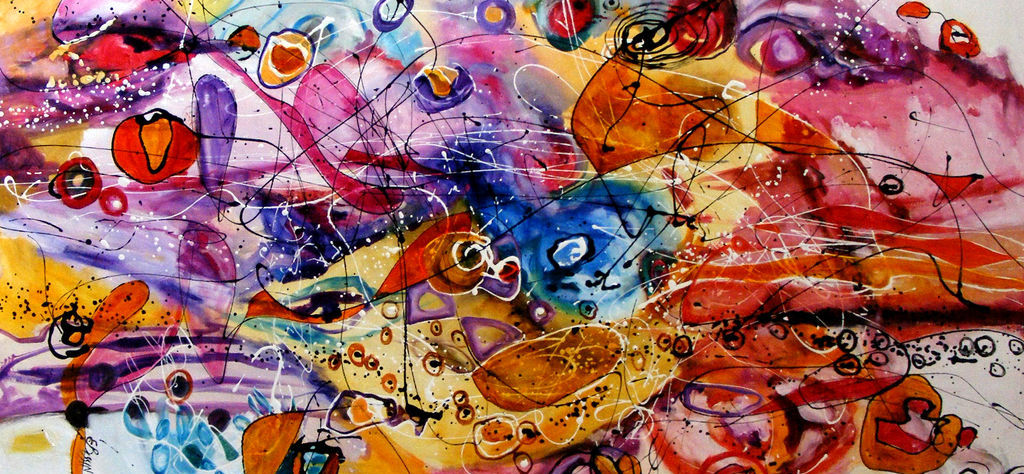
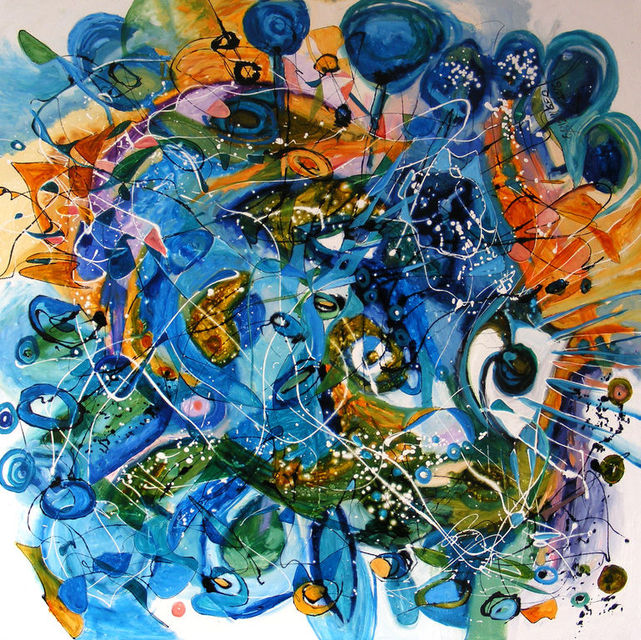
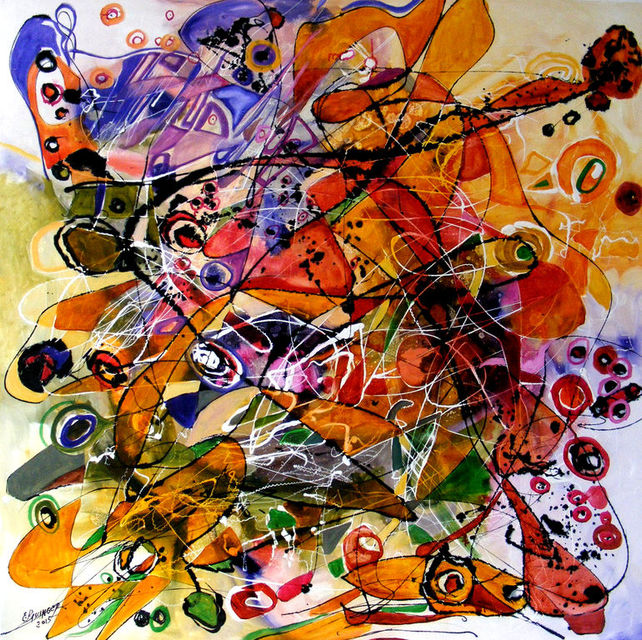
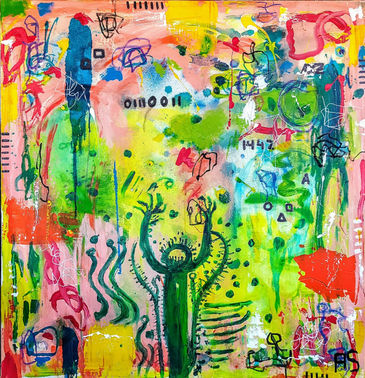
Between 2002 and 2004, Bissinger turned her output towards abstraction, experimenting with the dripping technique following Jackson Pollock's trials. That period is the source of her interest in spontaneity and the subconscious applied to painting, which leads to a kind of abstract lyricism rather than expressionism. Although there's no doubt that Pollock has influenced her abstract work, we sense more of Kandinsky in it. And that's because her paintings rock the spirit rather than strike it.
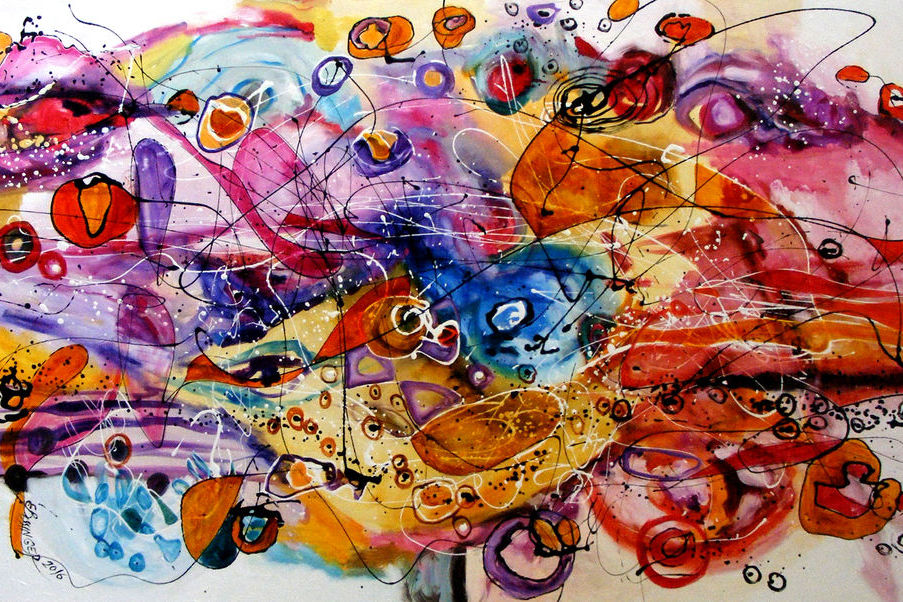
They say pictorial abstraction is in charge of capturing the vibrations of the soul. In that sense, the way Bissinger handles this side of her work is admirable. Looking at her abstract canvases our heart beats steadily, serene, flowing through the arabesques of her lines, smiling thanks to the combination of colours, always alive, radiant.
Landscapes and figures
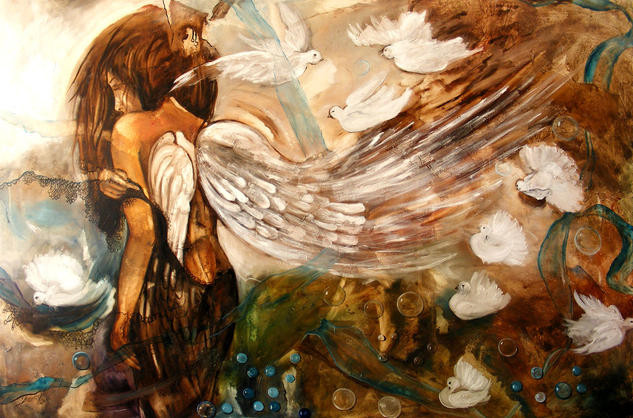
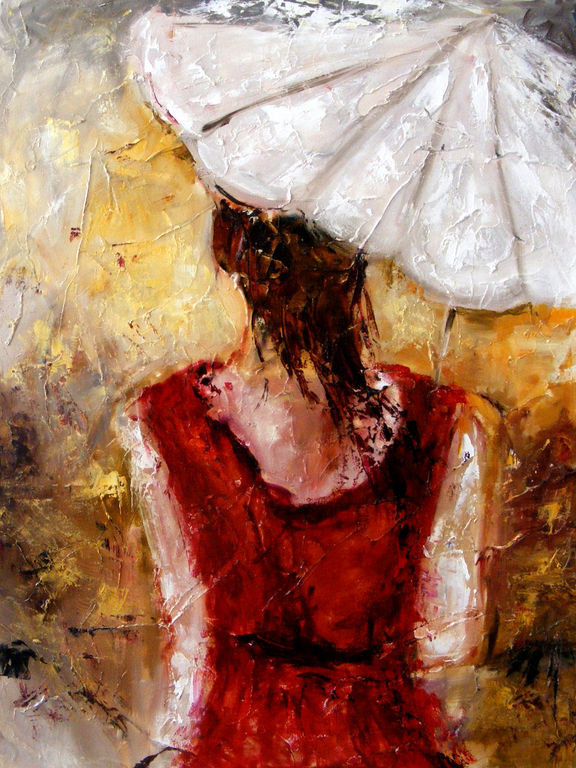
Elena Bissinger has said in an interview that «she was always tempted to paint in an impressionist style». Something of that remains in her flower paintings, but also in the female figures, as in Doamna cu umbrela, a striking canvas of great material weight and fantastic colour harmony.
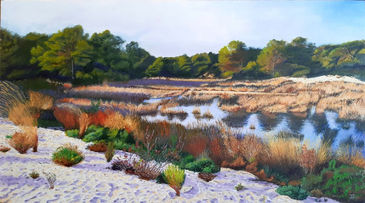
Other artworks move away from impressionism to show the Romanian's skill at drawing, as we see in I Lost My Heart. And we can't forget her third artistic strand: landscape (La mare) which, even so, seems to interest her less at this stage of her output.
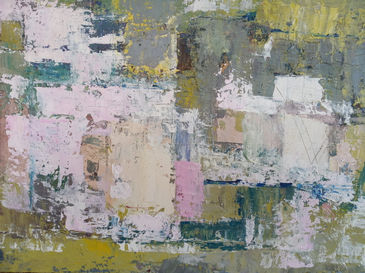
To finish, a mention of a couple of surprisingly different artworks within her career, in which she seems to be trying out a new avenue of expression, a new abstraction, more personal, less colourful, where she experiments with tactile sensations, relief and the inclusion of real stones forming a gloomy but delightful collage. (Lacrima Pesterii, Peisaij din pestera). These caves of Bissinger's confirm that her painting never stops looking for a new motif.
We invite you to visit Elena Bissinger's gallery on Artelista.

Comments (0)
Log in to leave your comment. Log in