
Have you ever heard that line about how «everything's already been invented» in this or that activity? It usually gets trotted out to justify a lack of novelty in a given field. Is everything already invented in painting? Of course not. Whoever uses that line forgets that human beings are creative by nature and enjoy breaking the rules. But to break them, you first have to know them…
Joan Barceló Guillén is on an upward stretch of his artwork, shuffling influences until he hits the winning card, the bet that breaks the bank. Because the road that leads an artist to find his own voice is packed with ancestries. In the case of this Balearic painter, Impressionism and the early avant-gardes exert a powerful pull on his artwork.
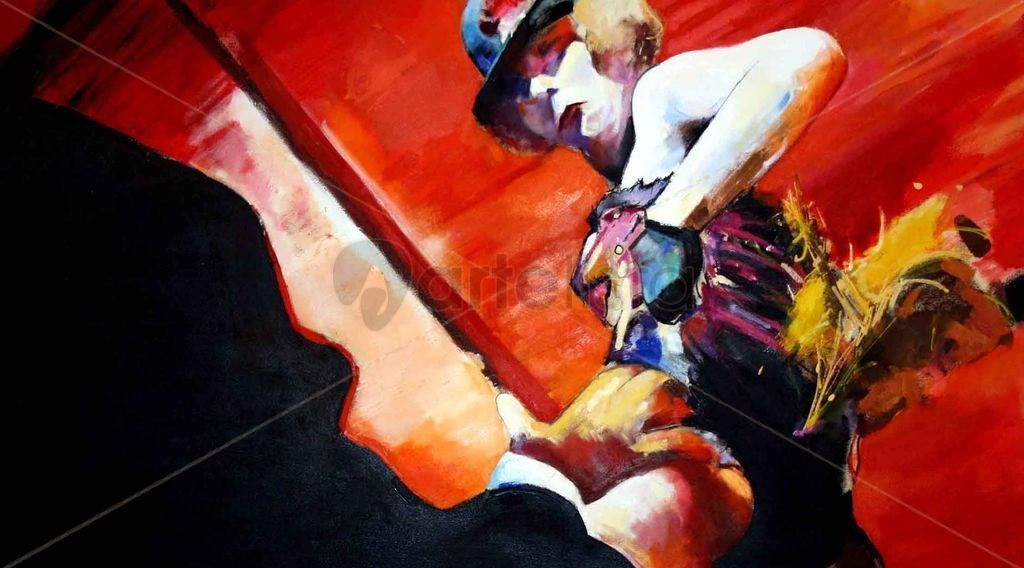
How can you not think of Toulouse-Lautrec or Degas in paintings like Cabaret I? The low-angle framing and the woman's position create an instability that conveys perfectly that sense of the roar of a party in a nightspot.
In Barceló's series of cabaret-themed paintings he tries out a chromatic variation on the same motif. The Balearic painter lets loose his expressionist streak and unhooks colour from physical reality in order to explore the spirit, in this case a spirit infected with music, alcohol and wild dancing. In Mujeres en una escena, the young painter born in Ciutadella turns again to a photographic framing from a very low angle to generate that sense of instability.
Joan Barceló's women
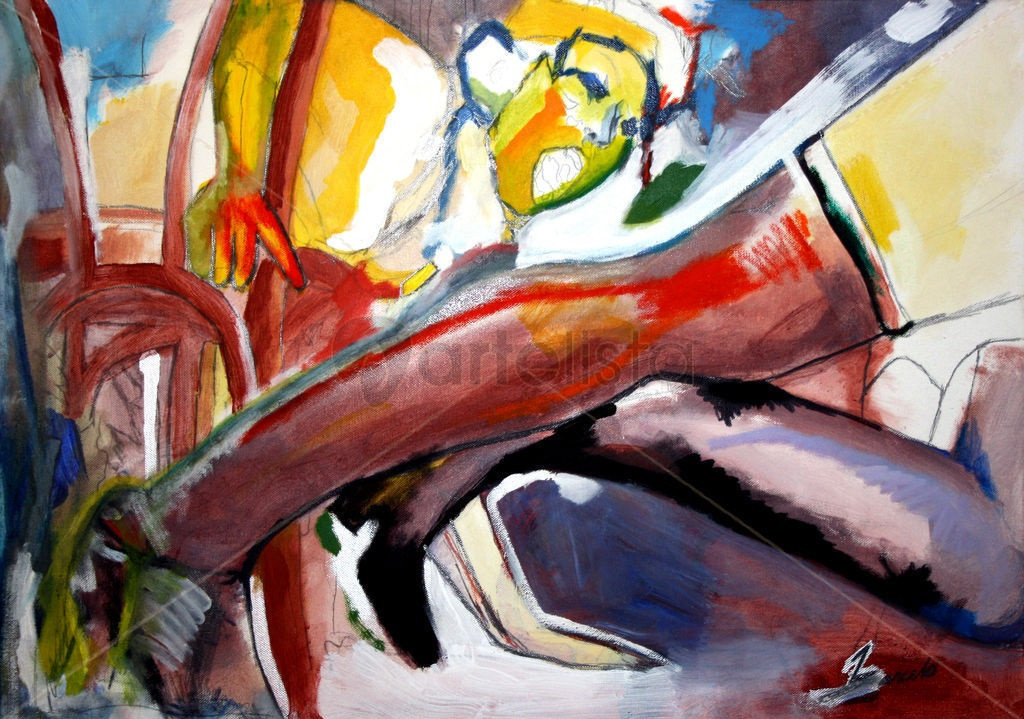
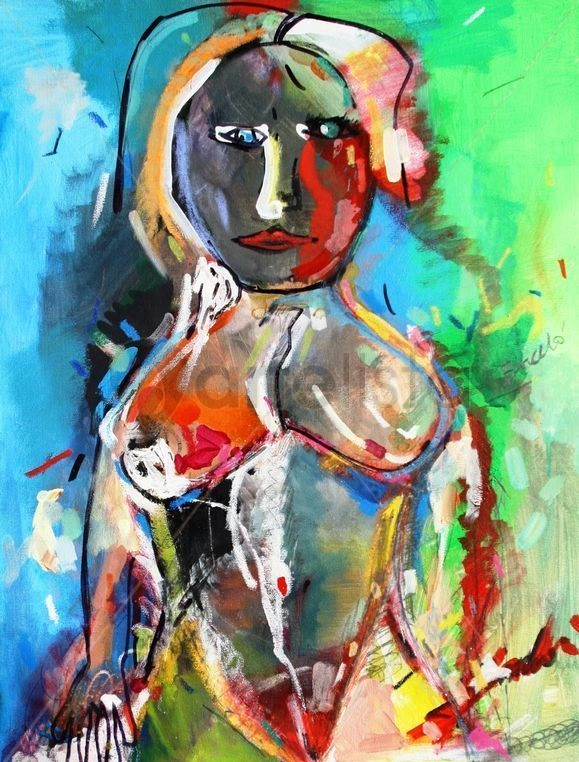
The female body has always been a prime object of interest for painters. Barceló is no exception. The nude female body becomes the axis around which the painting's compositional research turns.
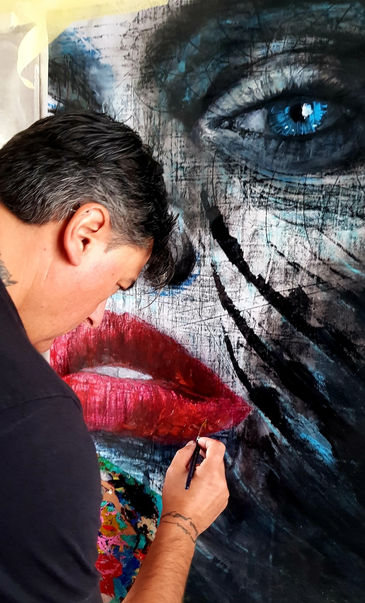
Barceló's women vary in their conception, from the expressionism of paintings like Model to the full-blown eroticism of figures such as Cloe. In other cases, as in Mujer, you can see the Balearic painter's extraordinary skill as a draughtsman in a painting that goes for a more demure style, though it's just as expressive and seductive.
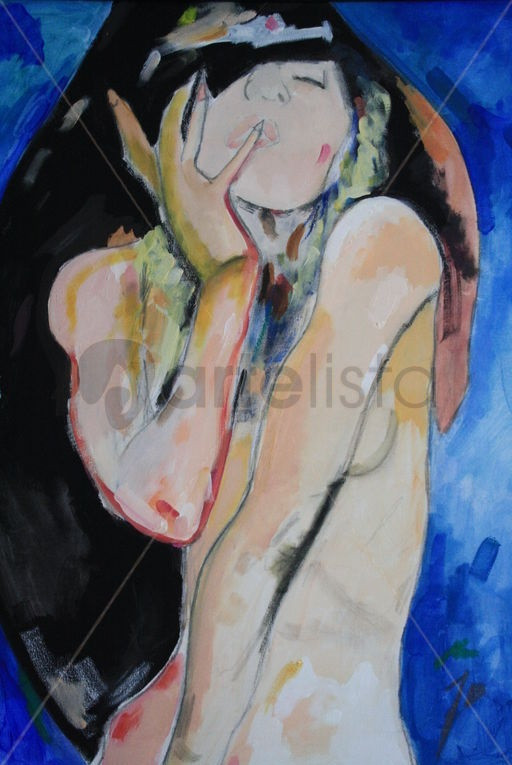
There's no doubt that Barceló uses the female nude with two different aims: to explore different compositional strategies and to try out several pictorial styles.
And Barceló's artwork has a component that sets it apart from other artists: stylistic variety. Like that Picasso who devoured styles (his own, but above all other people's) to take them to a new level, Barceló takes the risk of not settling on a single avenue of expression.
Is he feeling his way or is it a deliberate decision? Either way, as long as he keeps showing paintings as appealing as Mujeres bebiendo horchata, with the delicacy of its chromatic combinations, the non finito that's usual in part of his output and the careful positioning of his figures, praise be to the risk of stylistic indefinition.
Landscapes
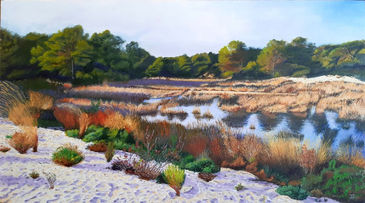
If the Balearic painter shies away from labels on the stylistic front, you can't say he concentrates his efforts on a single motif either. Barceló also enjoys the classic landscape tinged with expressionist colour and thick brushwork that in some cases brings him close to the artwork of the Nabis, as happens in Palau.
Coming from where he comes from, it's only natural that the sea and the beach should be one of the basic elements of some of his landscapes, as happens in Cala Mitjana, Playa or Barca. More striking, though, are artworks like Far, for their sensorial play of colour.
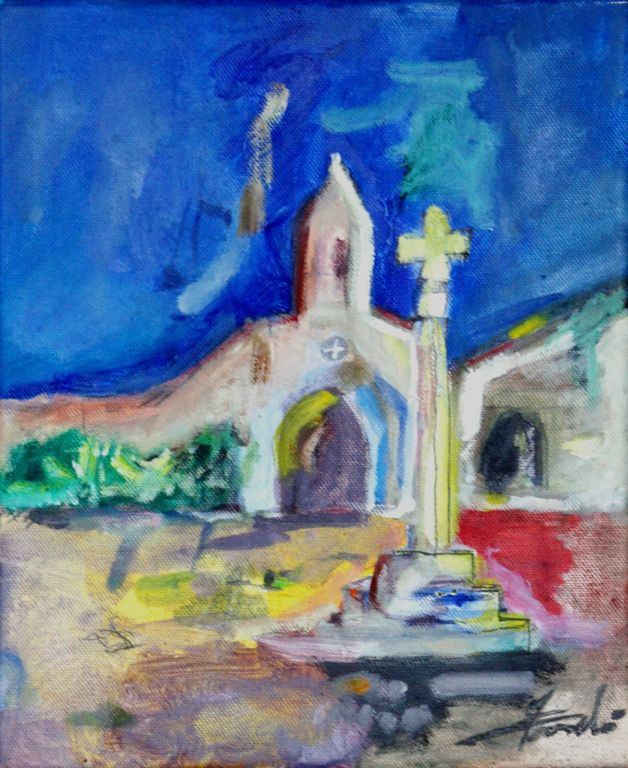
Of course, he also finds time to pay tribute to his homeland in paintings like San Juan, which depicts a hermitage in Ciutadella de Menorca.
Abstraction, the sea floor and the sons of rock and roll
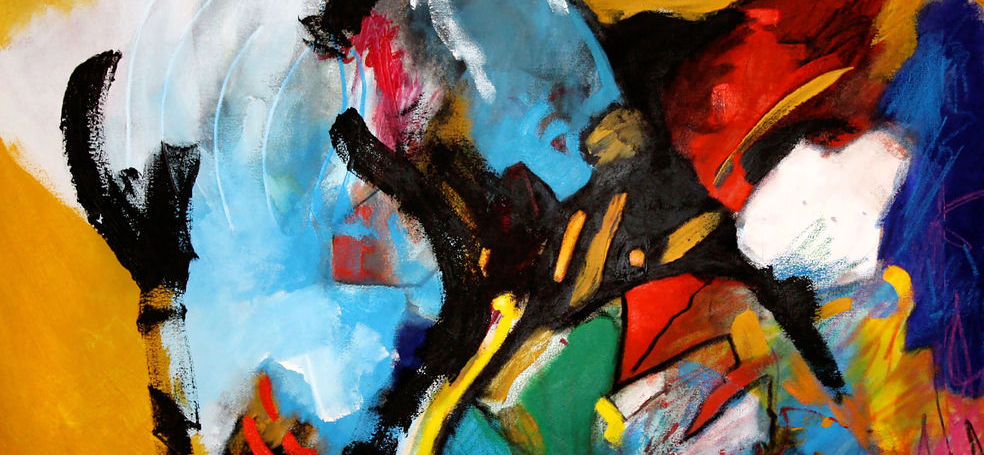
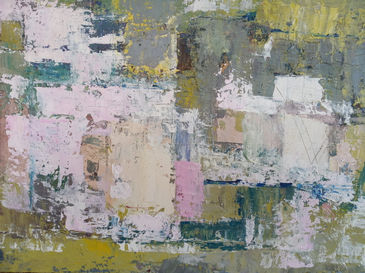
We finish this trip around Joan Barceló's creative universe with a triple reference. First, to the abstraction that also forms part of his stylistic experiments in paintings like Café en el espacio, in which he comes close to the early Kandinsky.
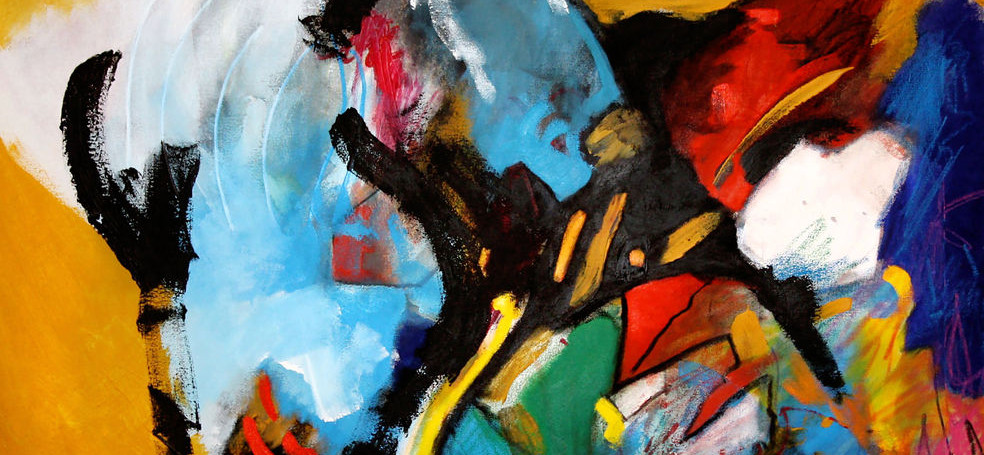
Second, we can't forget his painting Fons Mari, one of the most beautiful from the point of view of colour and also close to abstraction.
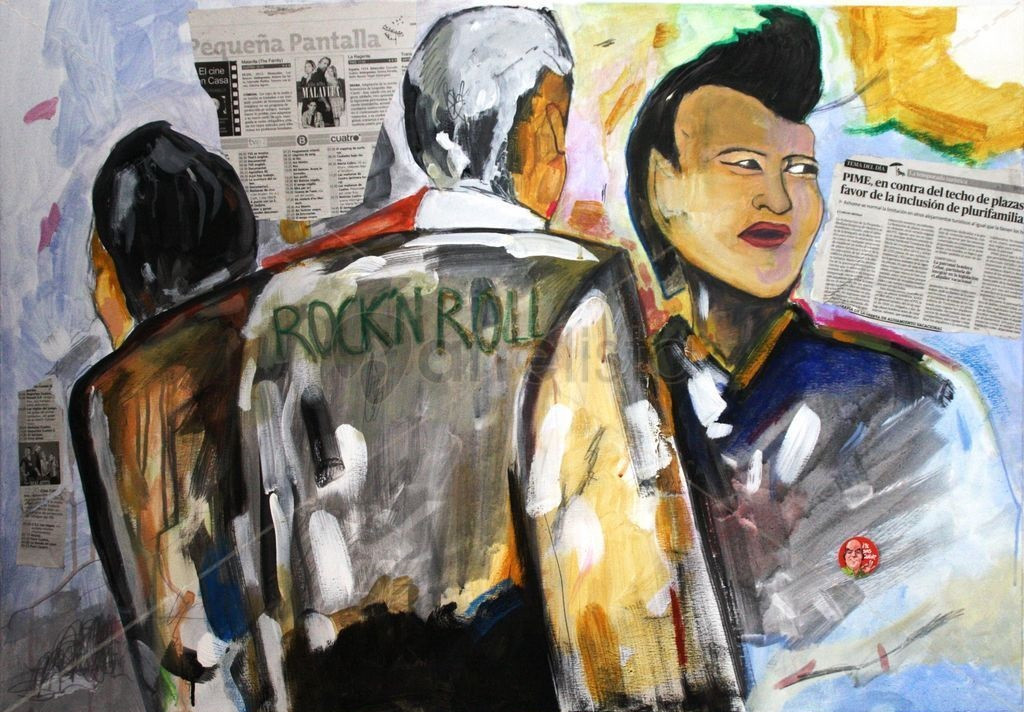
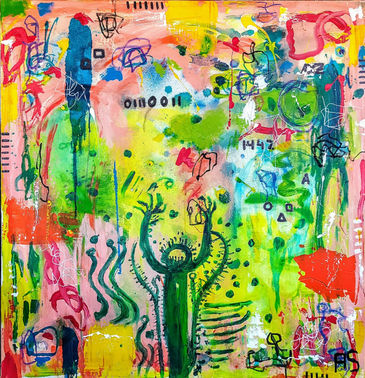
And lastly, we want to mention the curiosity of Hijos del Rock and Roll, a painting unlike the rest of his output, in which the Balearic artist brings in collage as a resource.
In his biography on Artelista, the painter introduces himself like this: «My name is Joan Barceló Guillén and I paint paintings». Well, there you go, why say any more?
Comments (0)
Log in to leave your comment. Log in