
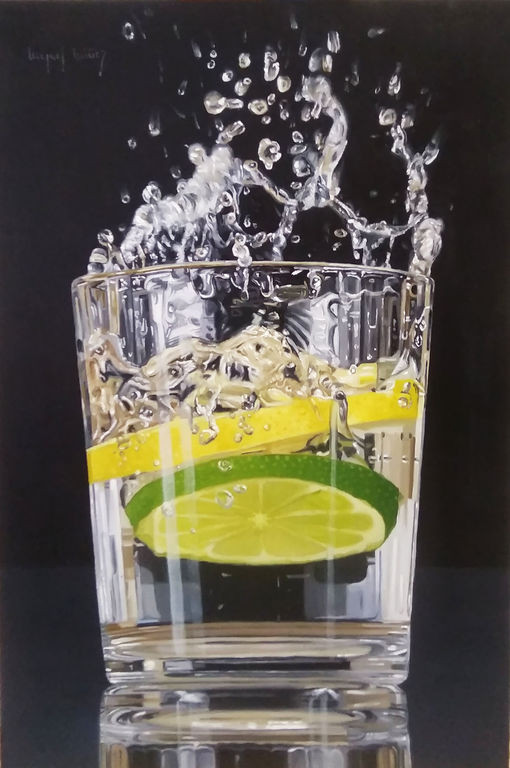
Two slices of fruit falling into the liquid in a glass, sending up bubbles and droplets. The reflection on a simple glass surface and an opaque background. And up in the left corner, the signature of Miguel Ángel Núñez, one of the great still life painters of our time. The artwork is called Gin-tonic III. It's neither more nor less than that: a cocktail. But the sensations the artwork gives off, beyond the exquisite capture of a real object, are effervescent: this is the celebration of life's small pleasures, this is the miracle of the still life.
Just as miraculous is Copa I, another small stroke of genius from the Uruguayan painter, another very much alive still life. Why do some of Núñez's still lifes stir us so much? To begin with, because of a device that looks simple but makes the composition harder: catching the object in motion.
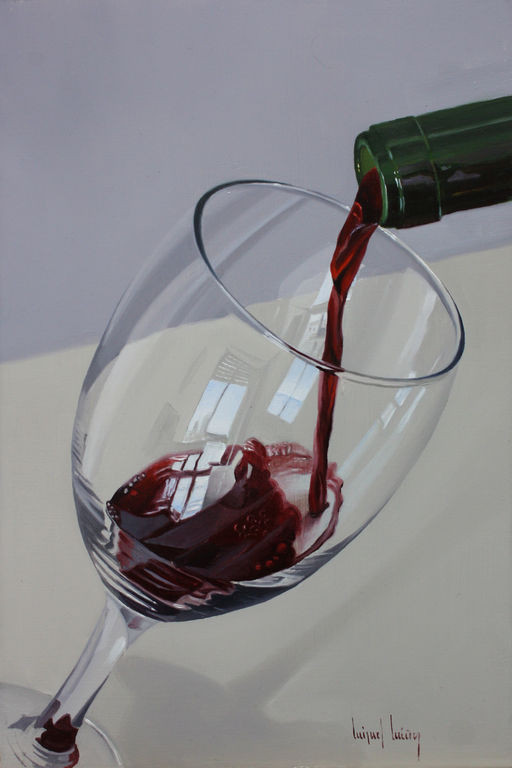
Here the wine falls from the bottle into the glass, which is miraculously tilted. The wine hitting the glass sets off a whole series of sensations in the viewer, who needs neither taste nor smell to savour that glass: it's the physical shiver that comes right before a pleasure is fulfilled. That's exactly what an artwork like Copa I achieves: a shiver by the fast route, skipping the brain and appealing straight to our desire.
But an artwork like Copa I, as with most of Miguel Ángel Núñez's output, has a second level of enjoyment. After the first, immediate sensory hit comes a second effect, shyer but longer lasting: the aesthetic one. When the viewer's eye moves more calmly over all the elements that make up the artwork, it discovers, for instance, the reflection of some windows in the glass. It's a clear, radiant day, and there are even those who see the sea in the background.
Miguel Ángel Núñez's technical precision, along with his knack for choosing appetising motifs for most of his still lifes, is his great virtue. Behind it are many years of learning alongside several great masters of Uruguayan painting whom he met in his native Maldonado. Manolo Lima, Carlos María Tonelli and Gustavo Alamón sparked in the young Miguel Ángel a love for the painter's craft and for the object as the essential motif of his artworks.
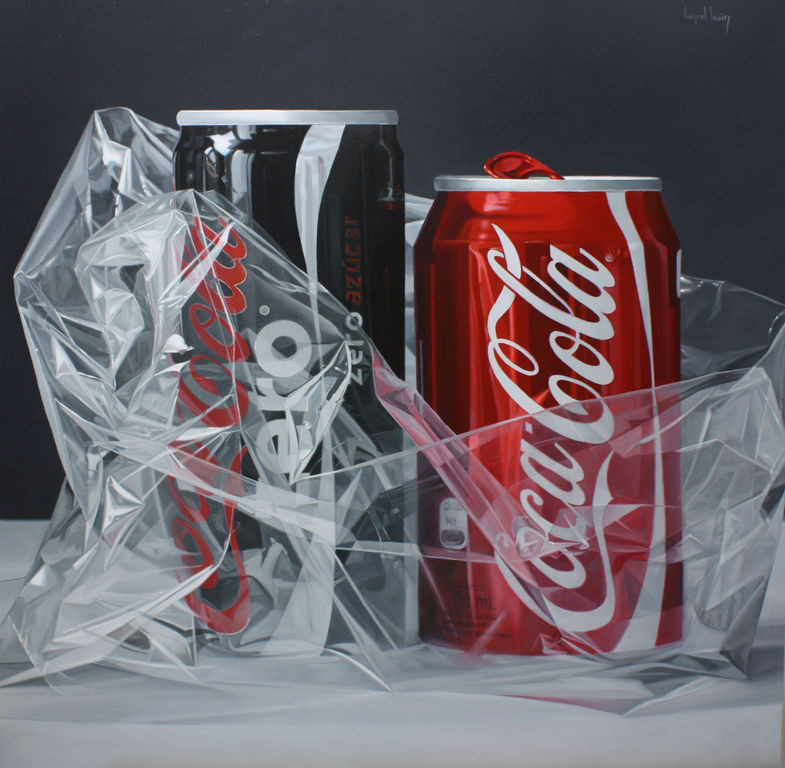
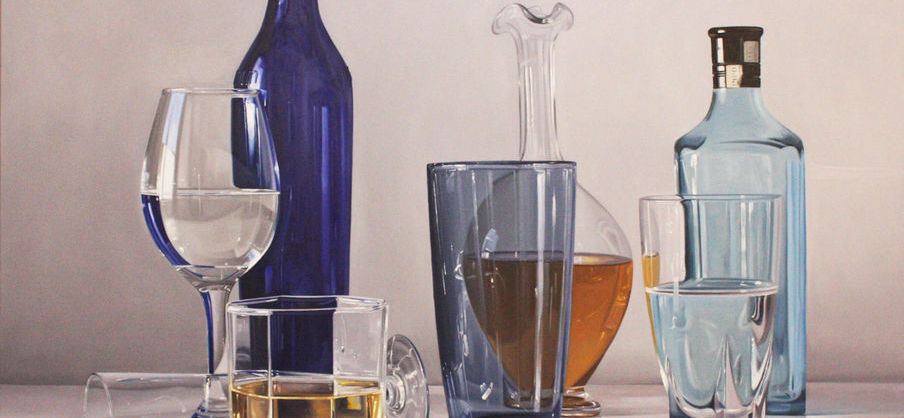
Although in Núñez's output we find artworks of different genres, from portraits to a surrealist revival, the artist born in Maldonado in 1966 embraced the still life as his definitive form of expression. Today his still lifes hang in museums and private collections across three continents, having reached countries such as China and Japan.
And why the blessed still life? For centuries it was considered a minor genre, suited to artists in training, a way of putting into practice what you'd learned about copying from life. And there's no doubt the still life is good training. After becoming a genre of some standing during the Baroque (in Spain, artists like Velázquez and Zurbarán took it to another dimension) it was pushed aside once again by other genres considered more intellectual.
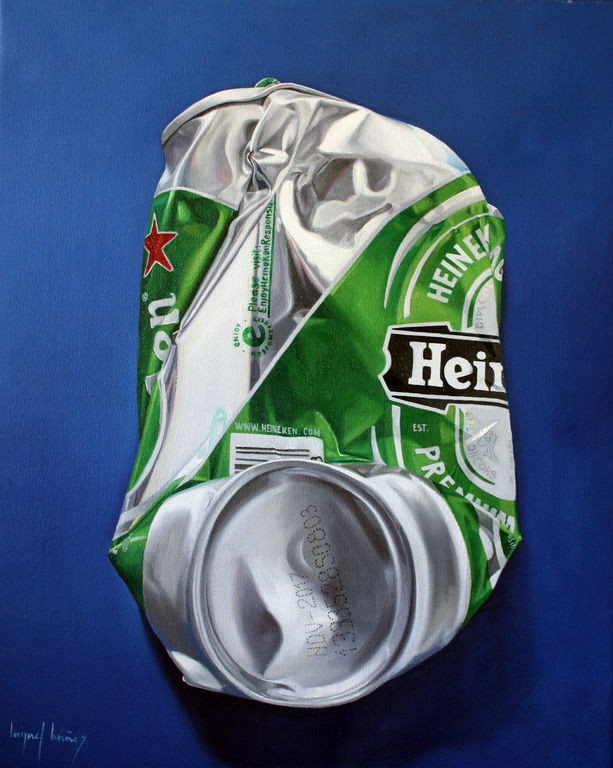
But well into the 21st century these debates about minor and major arts hardly matter. Ever since Warhol became a millionaire painting Campbell's soup cans, any doubt about the artistic validity of a still life has been offside. A crushed Heineken can may not be artistic... until it makes it onto Miguel Ángel Núñez's canvas. And although the can that served as the Uruguayan painter's model expires in November 2017, the canvas has no expiry date as long as there's a viewer shivering before the artist's technical genius.
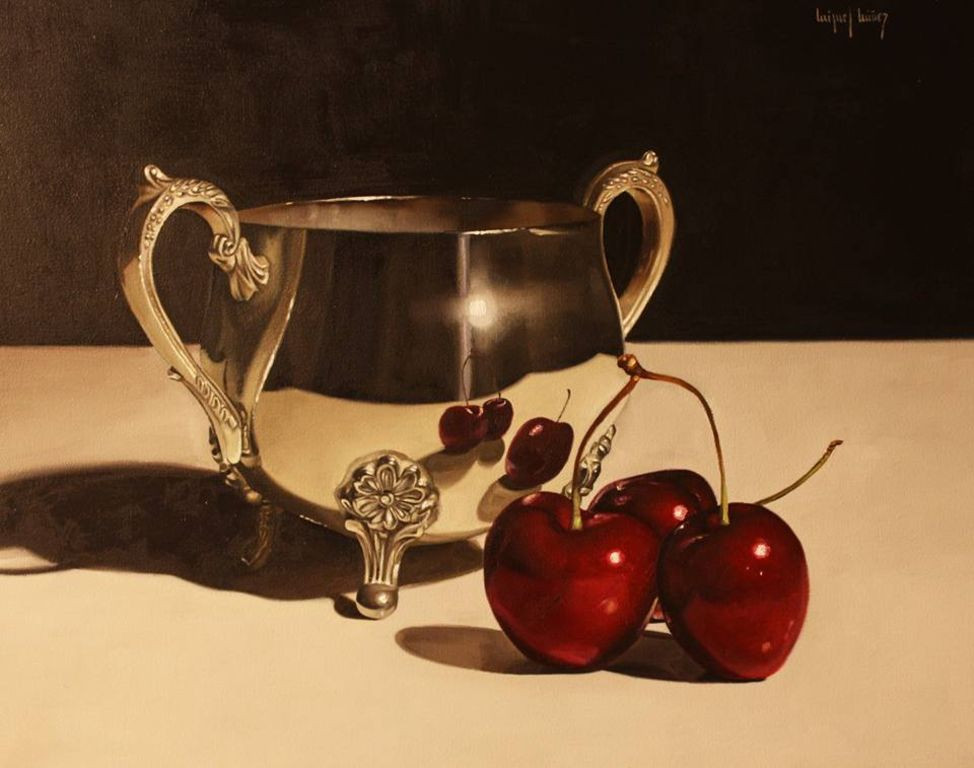
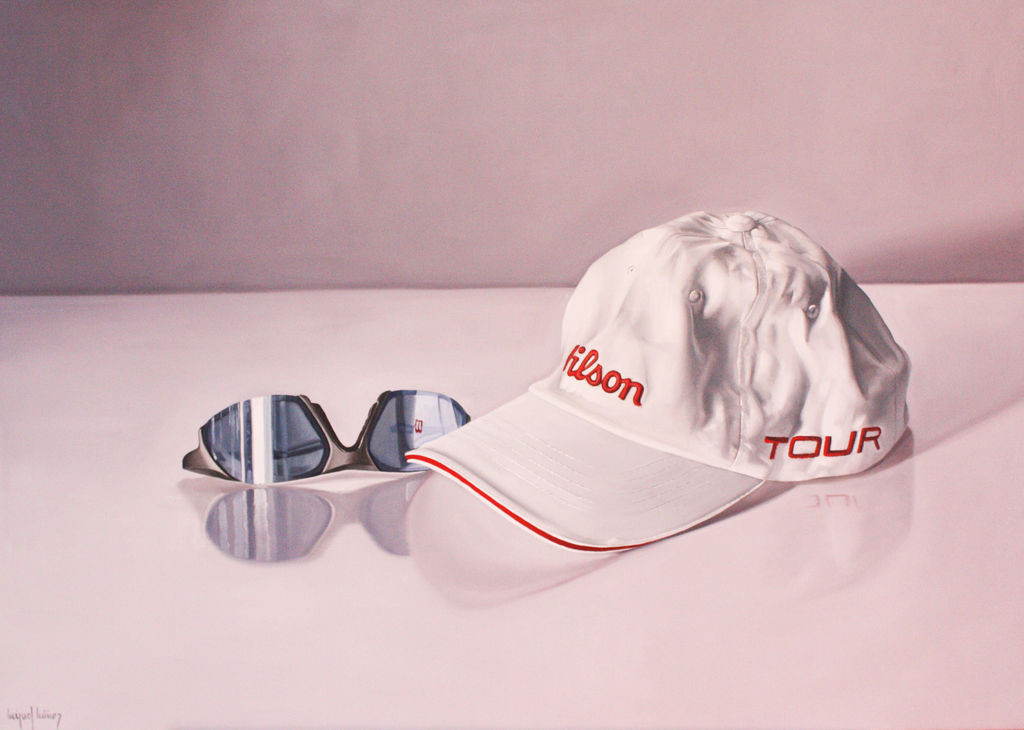
If Composición con tres cerezas has a Baroque air to it thanks to the background and the choice of a warmer light, Wilson brings us back to the present: the shadows in the faint folds of the tennis cap are deliciously captured, while the reflections in the sunglasses once again confirm the artist's mastery.
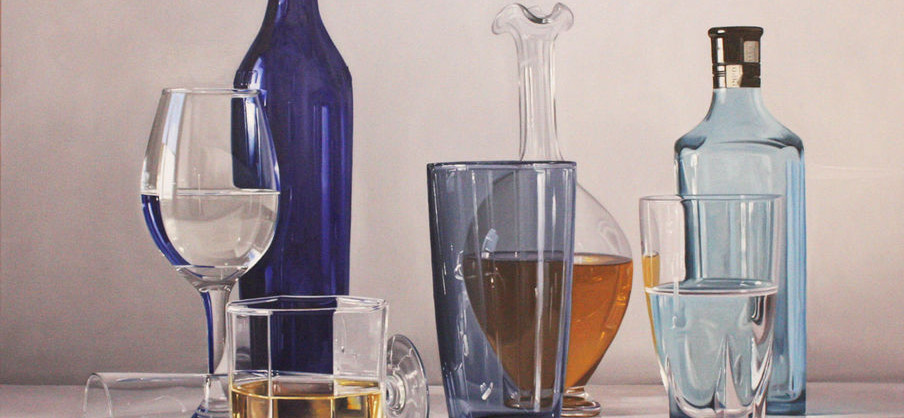
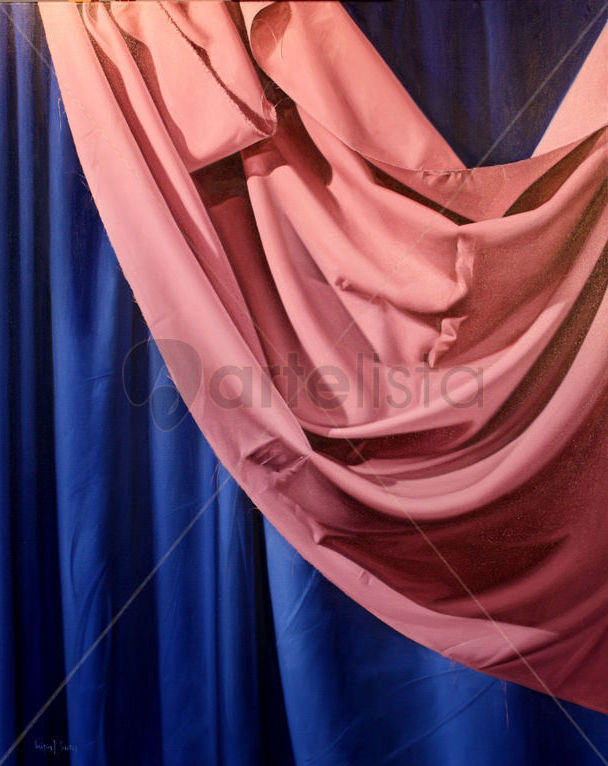
Even though we've never much believed in the symbols attributed to the elements that make up still lifes, Miguel Ángel Núñez allows himself a metaphorical homage in his lovely Composición en Azul y Rosa. Without losing an ounce of his style, Núñez pays tribute to two of Picasso's most significant periods in a more than original way.
We invite you to visit the gallery of Miguel Ángel Núñez on Artelista.
Comments (0)
Log in to leave your comment. Log in