
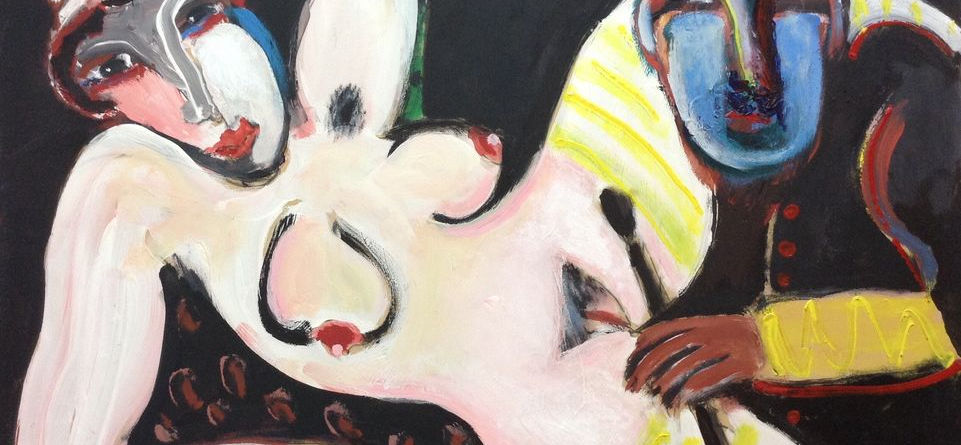
Oscar Capeche has been painting for almost 50 years now. Five decades of exploring plastic expression and of the creation of "a complementary universe" in which to reflect on reality and beauty. Beauty, a word that goes with art the way breakfast goes with coffee. But how many beauties are there? One per artist?
In Oscar Capeche's artwork we find so many beauties that we reach a different conclusion about the word: beauty, in fact, is not the goal, it's not an ideal: beauty is the road, it's the procedure, it's the substance secreted by the very act of searching for a prototype that only exists in our nostalgia. We're no longer sure that painting or art is beautiful, it doesn't even have to be: but the act of painting, the act of putting a combination of lines and colours on a canvas to broadcast our spirit, will always be beautiful.
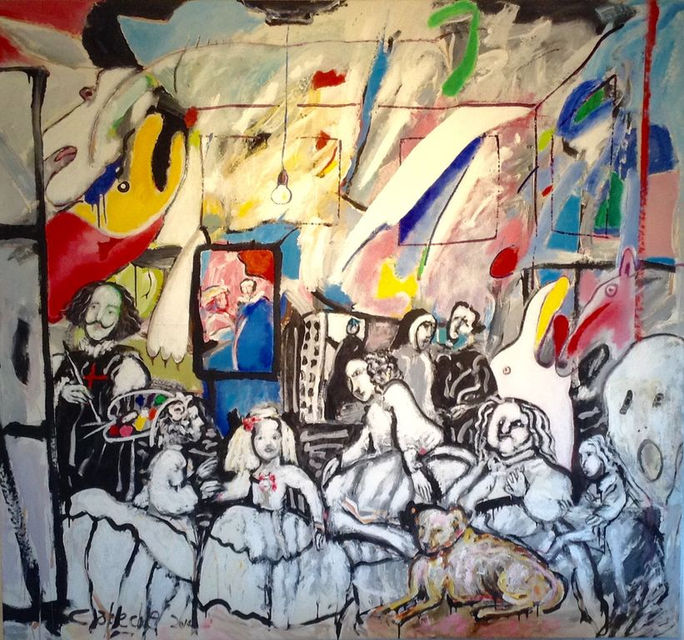
These beautiful acts by Oscar Capeche turn on a wide variety of subjects. The revisiting of the great masters of painting lets this Argentine painter based in Chile examine great artworks such as Las meninas. In Las meninas y sus fantasmas we find not only Velázquez, but also Miró and Munch. As the artist himself says, he has looked in the corners for "those ghosts" that abound in any house… let alone in a royal residence.
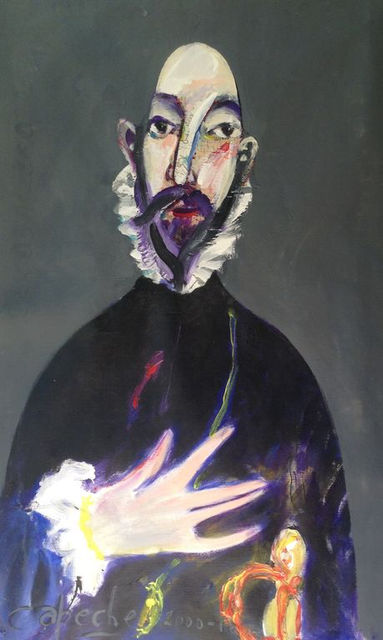
Capeche also turns to another of those masters who marked the history of art to make his own version of Caballero con la mano en el pecho. The Argentine artist makes the model's figure flicker like a flame, as perhaps El Greco himself would have done had it not been a commission for a patron. And Frida, another regular figure in the Argentine artist's work.
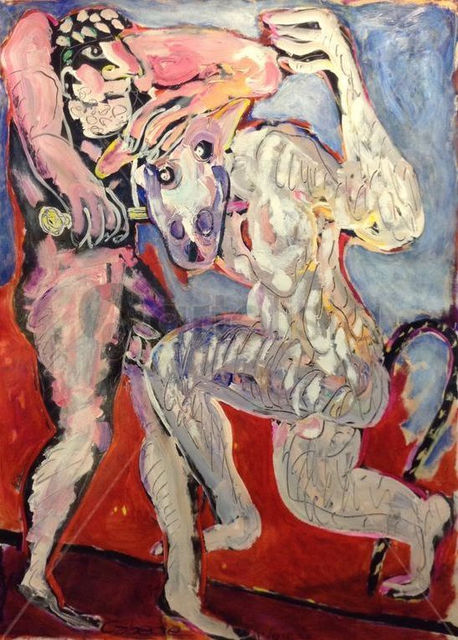
Classical mythology is a world that "provides infinite material". Two thousand years later we still see ourselves reflected in Hércules y el Minotauro or in Leda y el cisne. And that's because the world moves on, but the human soul doesn't. In both canvases we can appreciate some of the most common traits of the Argentine painter's style, which, although it has evolved in different directions over these years, keeps a recognisable base that also has to do with his artistic technique: Capeche starts out from an "outburst" that is always kept in check by a "compositional plan", and finishes off with a later revision after a "truce", so that the artist can face his artwork as if "seeing it for the first time".
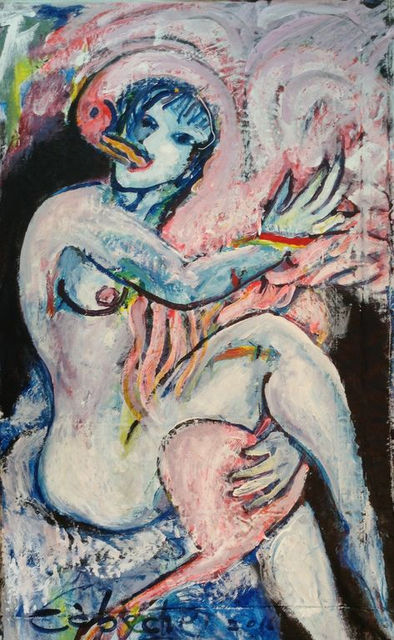
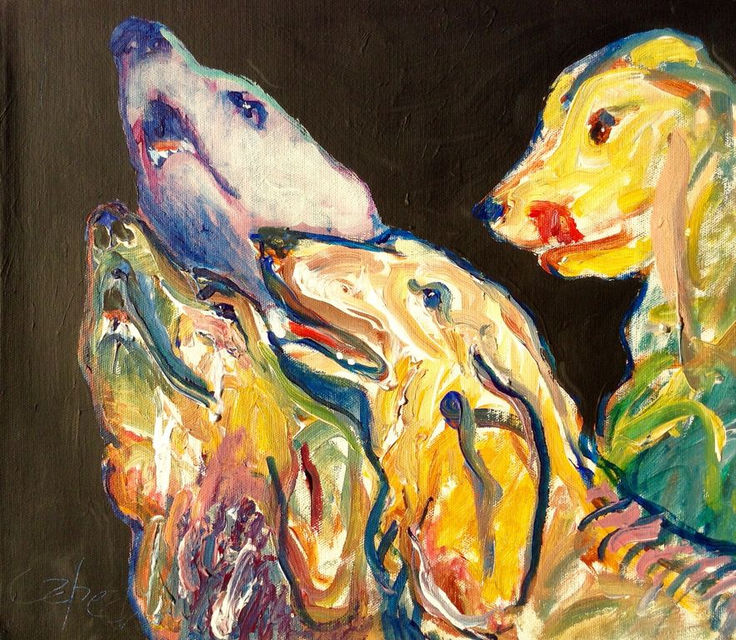
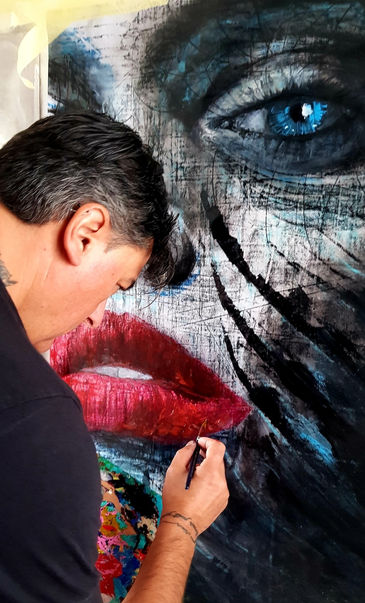
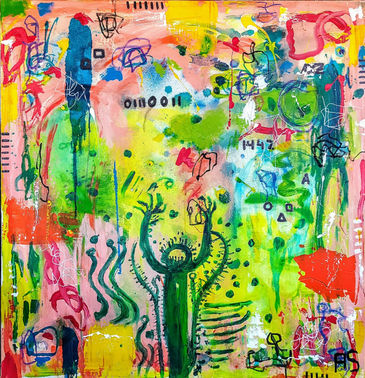
As for his style, Oscar Capeche usually enjoys himself within the terms of figurative expressionism. He combines a nervous handwriting with thick lines that clearly mark the outlines, while his colours are bright and vehement. In much of his work the canvas hardly rests and the viewer has only two options: look away or give in to the expressive blast in front of them.
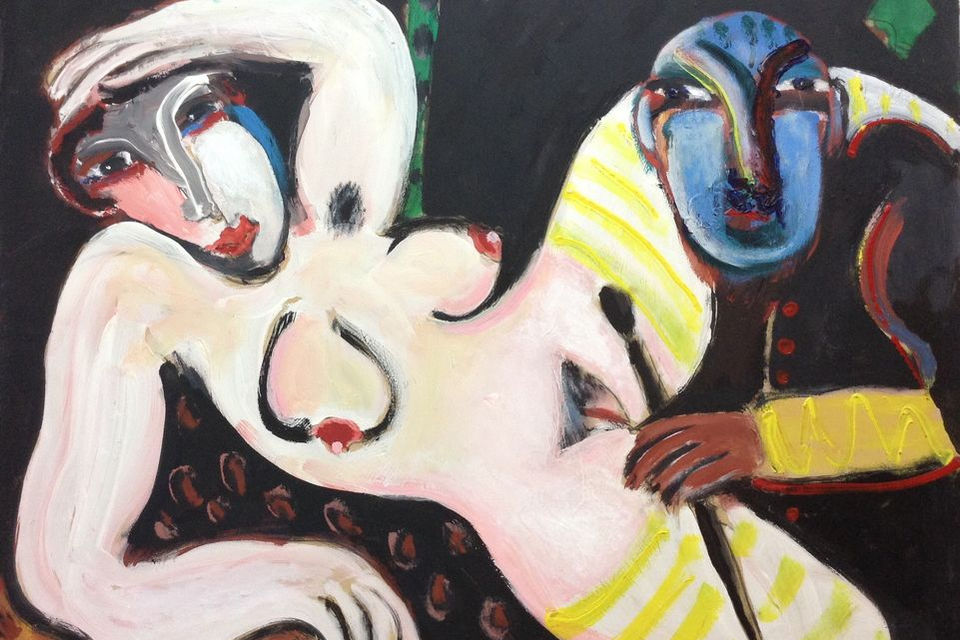
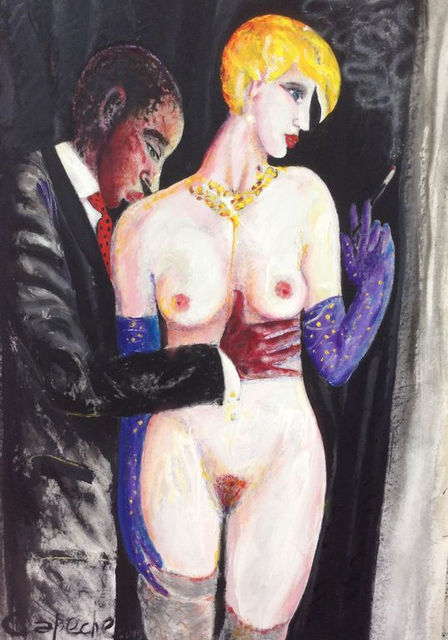
One of the subjects Capeche feels most at ease with is eroticism. In fact, the artist, who lives in Valparaíso, took part in the exhibitions of the AVE collective (Artistas Visuales del Erotismo) alongside 60 other colleagues. In Ella y el gato we appreciate his skill at drawing, while in Pintor y la modelo 11, Fetiche or La Rusa we come across artworks with different techniques, indebted to various avant-garde movements of the early 20th century, but which deliver the same sensual, rhythmic and mocking effect.
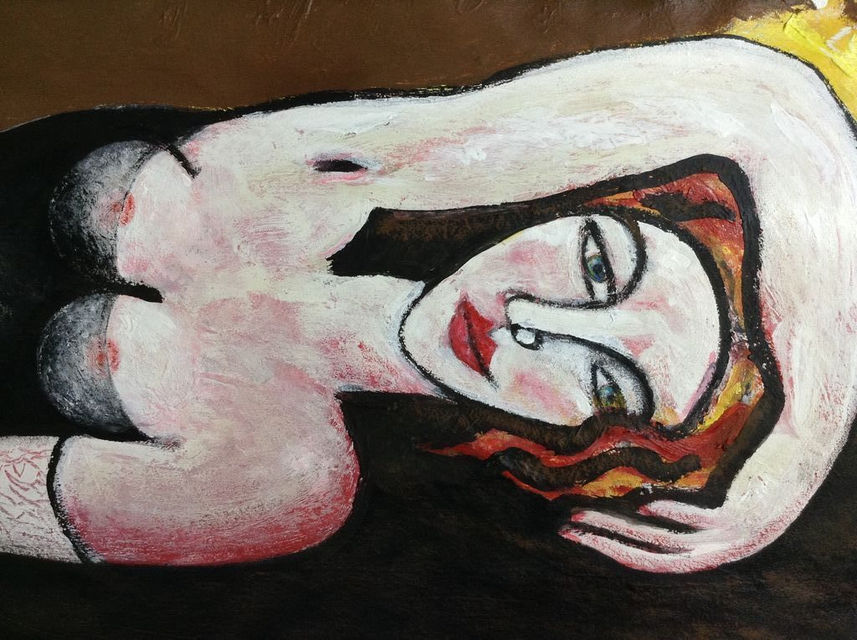
Two artworks representing another side of Oscar Capeche are also worth pointing out: irony. Subte línea E, 15.30 hs is an almost monochromatic painting, heavy and sober: the perfect style for depicting a scene that all of us who live in a big city are part of. And El poeta devorador? Isn't it a stab at one of the totems of Chilean poetry of all time?
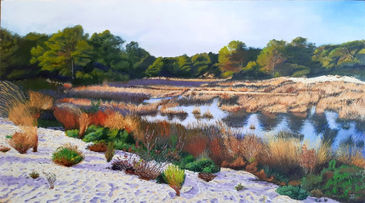
Finally, Oscar Capeche's broad catalogue is rounded off with interesting animal paintings, some of them of great beauty, as in the case of Sabuesos, which stands out for its yellow touches, dense impasto and thick brushwork, or Caballito blanco, with a mixed technique that gives the artwork a very attractive glow and roughness. And although Oscar Capeche feels more at home painting figures, he also takes on the urban landscape of Valparaíso, where he has been living for some time, exploring different techniques always within the expressionist manner.
We invite you to visit Oscar Capeche's gallery on Artelista.


Comments (2)
Sissi Zamora Lara
September 28, 2020enelia
June 1, 2020Log in to leave your comment. Log in