
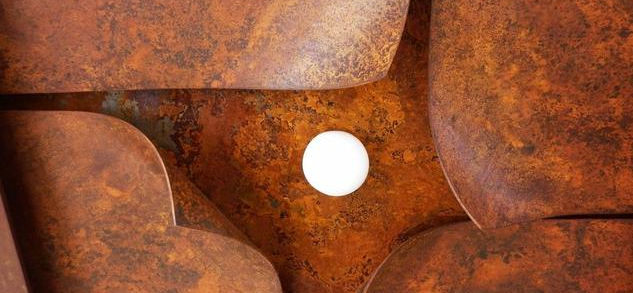
A piece over a metre and a half tall, slightly warped and rough, with circles turning all the way around it. It looks like a trunk, without a crown or leaves, rising out of a pedestal of polished stone cut to perfection. It's Reforma de ley, an artwork by the sculptor Víctor Manuel Delgado (Burgos, 1970), and we can place it on the virtual threshold of the door through which we enter his rich sculptural output.
Outdoors
Sculpture has always tried to shake off its label as painting's self-conscious sister. Generally, the creative process in sculpture is more expensive, longer and not always more satisfying. A mistake costs far more than it does on a canvas.
For most of the history of art, the viewer only had eyes for painting, to the point that sculpture always seemed to look to it in order to win the approval of the wider public. Sculpture struggled to leave behind its manual condition and earn respect as an intellectual activity, painters reached the status of philosophers while sculptors were still considered craftsmen (with a few exceptions, of course).
The 20th century, luckily, tore classicism and its conventions to shreds and forced the viewer to look at sculpture with different eyes. The cult of the sculptural material, the relationships between space and time, between void and mass, the integration with landscape and nature and the development of abstraction were the key points of the sculptural revolution of the last century, whose effects are still felt today. The work of Víctor Manuel Delgado is founded on that sculptural revolution.
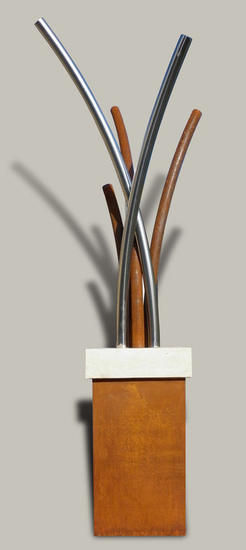
Looking at some of his outdoor artworks, like Brote de Almendro, we doubt any viewer will be up in arms these days. Abstraction is fully accepted. The reference to the figurative in this artwork is obvious, but its value lies, of course, not in mimesis but in the tactile qualities and the sensations stirred by the combination of materials, corten steel, stainless steel and natural stone.
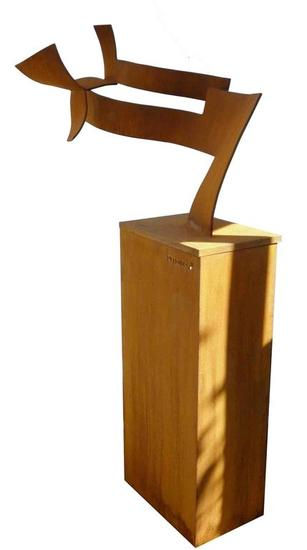
In other cases, Delgado uses corten steel alone, as in Raíces, where we can see the influence of Chillida, a fundamental reference in the work of the Burgos sculptor. Indeed, Delgado approaches many of his artworks, above all the outdoor ones, with that totemic character of the Basque artist.
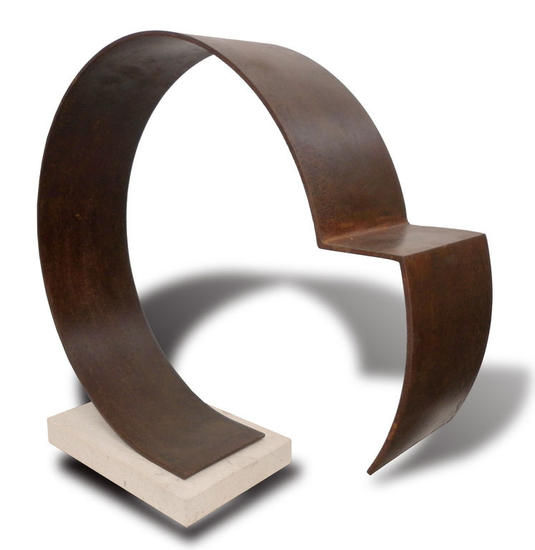
While in Trazo Delgado goes for minimalism, for the mismatch between the weight of the chosen material and its slender, almost flickering form, in La Unidad he brings a greater dose of originality with an interesting symbolic sense, a piece, by the way, made together with Marta Vallejo.
Indoors
In the smaller pieces, the Burgos artist sometimes keeps to the line of his bigger artworks, as in Trigo (fairly close to the aforementioned Trazo) or Rebrote, which relates to his Almendros series.
But Delgado also experiments with the relationship between mass and space. He picks up the gauntlet thrown down by Oteiza, among others, to create sculptures of great fluidity such as Síntesis del espacio or Origen.
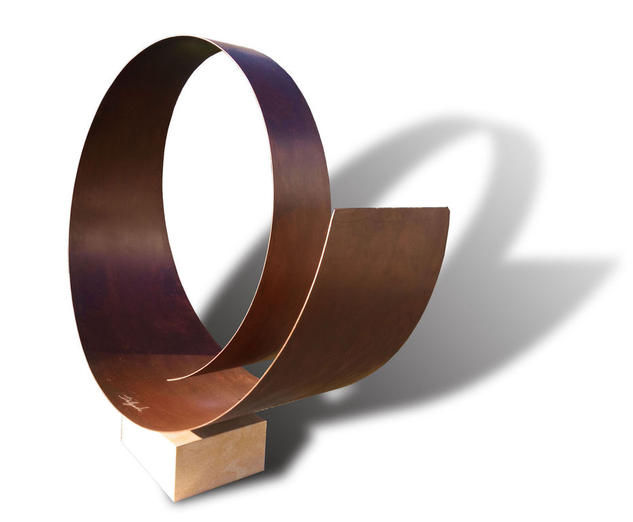
Abstraction allowed art to break free from mimesis, but it has never forgotten the human being. Less polished skin, fewer ringlets in the hair and more soul, that's what a good part of avant-garde sculpture worked on and what Delgado develops too. Latido is a good example of this tendency, an artwork that also brings an undeniable aesthetic value.
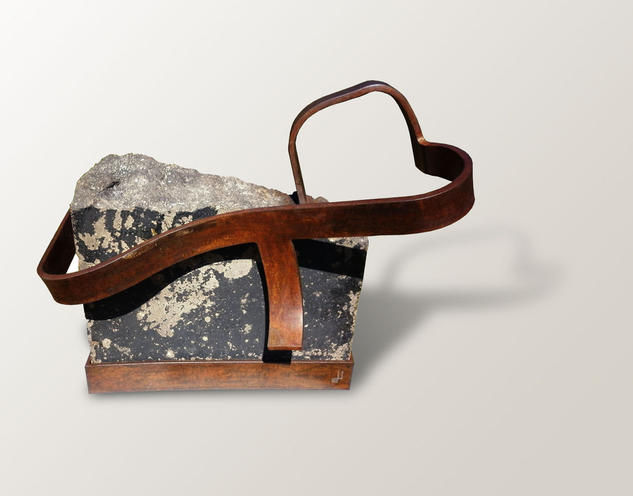
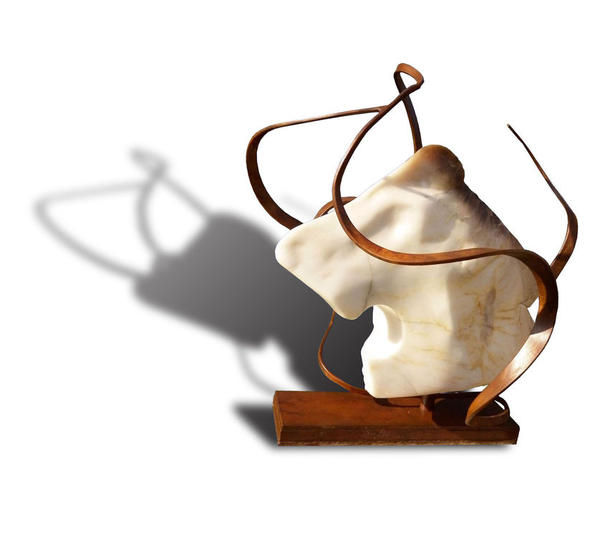
And going further into this more aesthetic tendency, Víctor Manuel Delgado introduces different materials to create sculptures that are very powerful despite their small format, like La Renegá or Érase una vez.
Murals
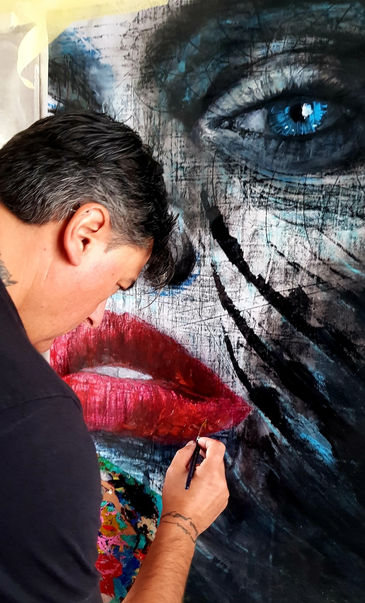
Finally, we also want to stop at his mural pieces, rich in textures and flavours. Once again, Delgado focuses his efforts on mixing materials to produce aesthetic impacts on the viewer, always starting from sobriety and an economy of means. Nacimiento de vida, Sus botones or Mi segunda patria have that ancestral air that connects our sensibility with a remote time.
Close to painting now, these murals by Delgado feed nonetheless on «the culture of materials», as the constructivist Tatlin would say, on an experience of the physical object that draws a link with our aesthetic unconscious. Or, to put it another way: look, touch and feel.

Comments (0)
Log in to leave your comment. Log in