
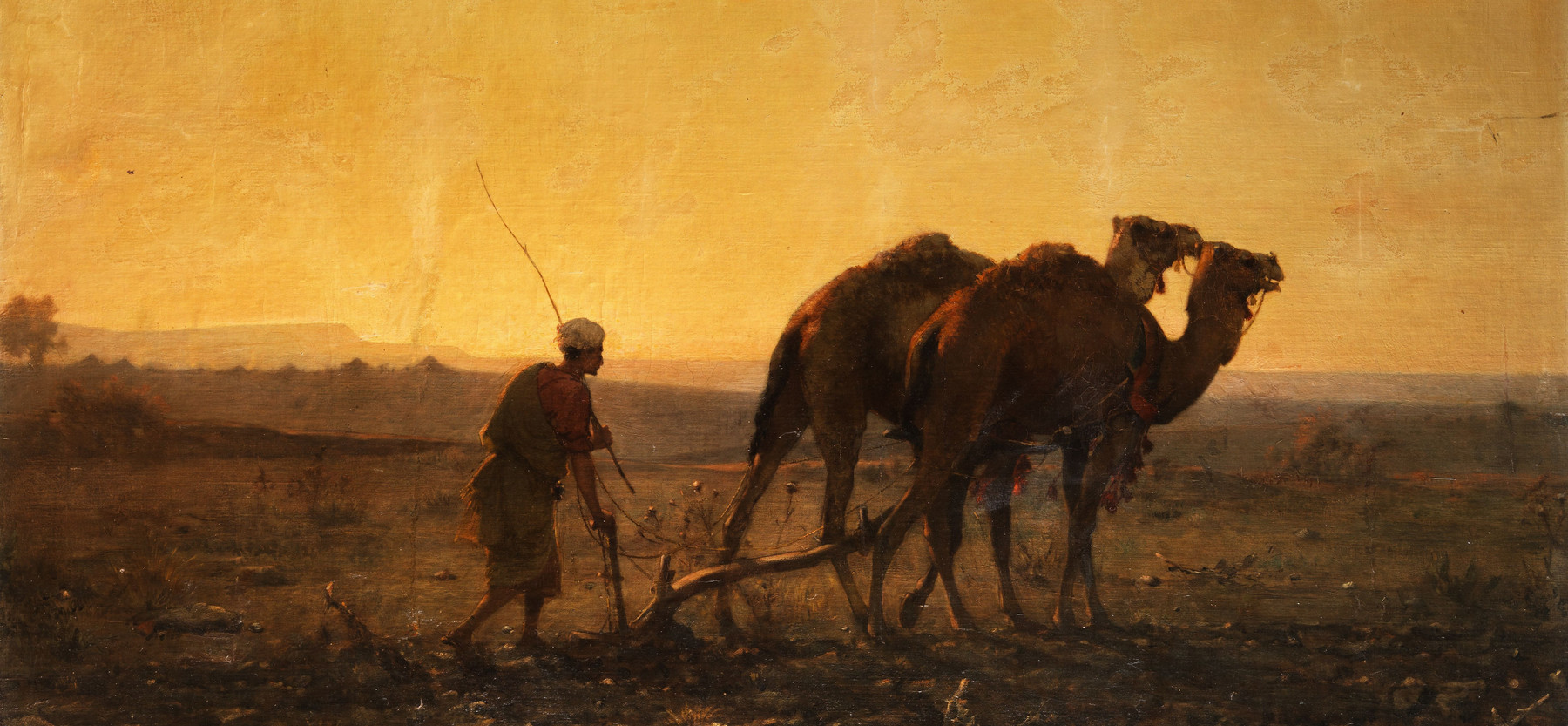
Some people fall in love with the sea and stay trapped in it forever. Something similar happened to the painter Guillaumet with the desert. He immortalised the Sahara on his canvases like no one else. This French academic painter lived in the middle of the 19th century. His legacy is the painting of emotions. Were it not so, the sight of his artworks might well be purely decorative, in keeping with the pictorial current he belonged to. But Guillaumet went beyond the barrier of the politically beautiful to make the viewer feel the loneliness and the absolute emptiness of the desert. This artist manages to create a synaesthetic effect in the observer that carries them into a new reality, into another universe, the desert, as sensory as it is fascinating. Come with us to the Sahara.
Guillaumet and his time: the 19th-century French academic school
Gustave was not like his colleagues. And he was. It really is hard to measure an artist without tying them to a context. Mid-century 19th-century art was suffering a hangover from the preceding Romanticism, which had taken root in French society. Thanks to artists like Delacroix, the beloved French liberty and the lofty republican ideals had been set down on canvases that displayed the moral values of Gallic society in the century of the French Revolution.
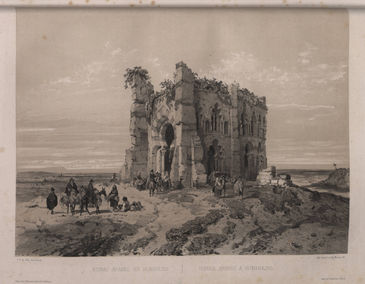
The first Orientalists lived only a few decades before Guillaumet. In the manner of Benjamin Constant, they tried to project the idyllic image and the exoticism of an Arabia they barely knew. Guillaumet was one of the great standard-bearers of the second Orientalism, far more involved and sensory. The current he belonged to was not only a break with theoretical Westernism, it also dared to travel beyond Europe's limits.
His heritage and that of contemporaries like Belly is not just pictorial, it is intellectual. The idealised idea Europe held about exotic, faraway corners of the world lasted until the arrival of the communication era. Guillaumet was the informative painter, the photojournalist of the 19th century.
Guillaumet and his trips to Algeria
Although he was an outstanding painter in technical terms, Guillaumet was immortalised for another reason; he brought North Africa closer to 19th-century French society, its fiery sunsets, the testimony of its people and the exuberant emptiness of a land as hostile as it is fascinating. Who wouldn't be seduced by that silence writhing in pain? Guillaumet was a documentary maker more than a painter. He had the technical ability and the artistic sensibility to convey the rootlessness and the loneliness of the desert.
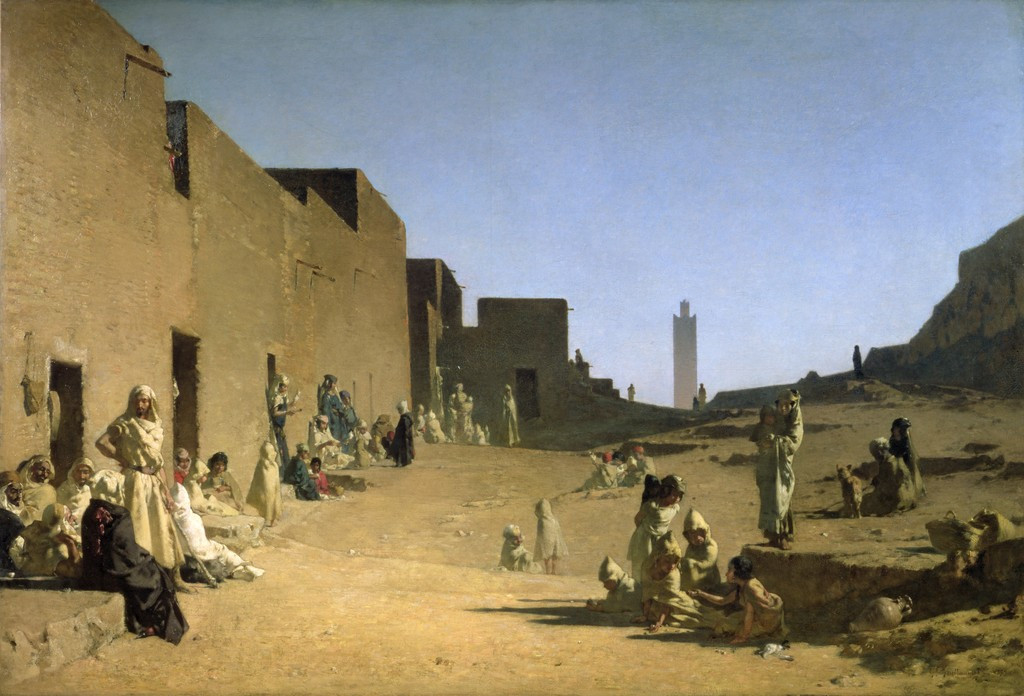
He was able to touch the very guts of Algeria and to address it with no urge to Westernise. Just showing a beauty that doesn't have to compete with the beauty we know, but coexists at other latitudes. Gustave Guillaumet (1840 - 1887) will not go down in history as the best painter of the 19th century, but it would be fair to consider him the first graphic documentary maker of his time and a pioneer in the art of photojournalism, which would come into its own years later with the arrival of photography.
The technique and the subject matter of the painter of the desert
Coming from the School of Fine Arts in Paris, Guillaumet's technique was closely tied to the academic world. That standardised method is why the artist knew how to portray the reality of his travels without allowing himself too many liberties. He did transgress on a few points that clashed with academic technique; the perception of painters at the time was very much bound to the earlier Romanticism and to idealisation. The academics steered clear of showing the ugly and the sordid, of naturalist realism.
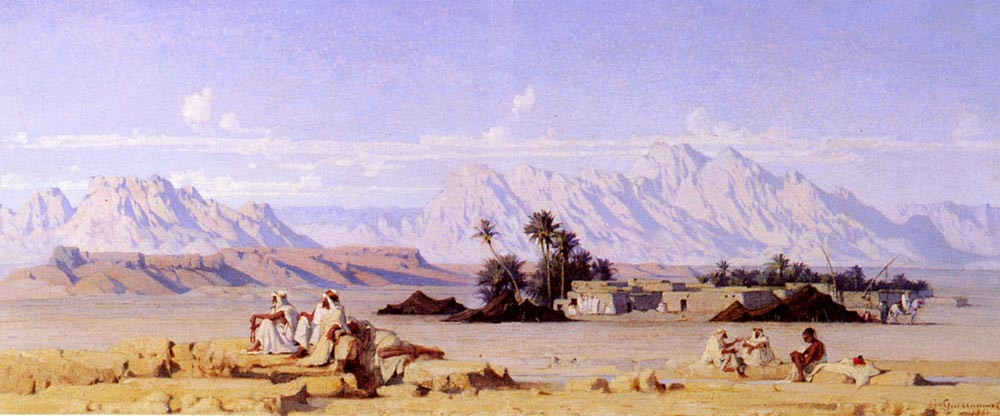
Guillaumet wouldn't break entirely with that Romantic and idealist tendency, but he did show certain emotions in his paintings, such as abandonment and death. On this point the painter is considered unique because, without moving away from the perception his school had instilled in him, he achieves an ambivalent effect on the viewer, going deep into the dark beauty of the desert. It should be added that Guillaumet's intention is uncertain, since he does manage to impress the observer but, to what extent was the painter aware that he had moved beyond the purely aesthetic into the sensory?
Le Sahara, a subjective view of Guillaumet's great painting
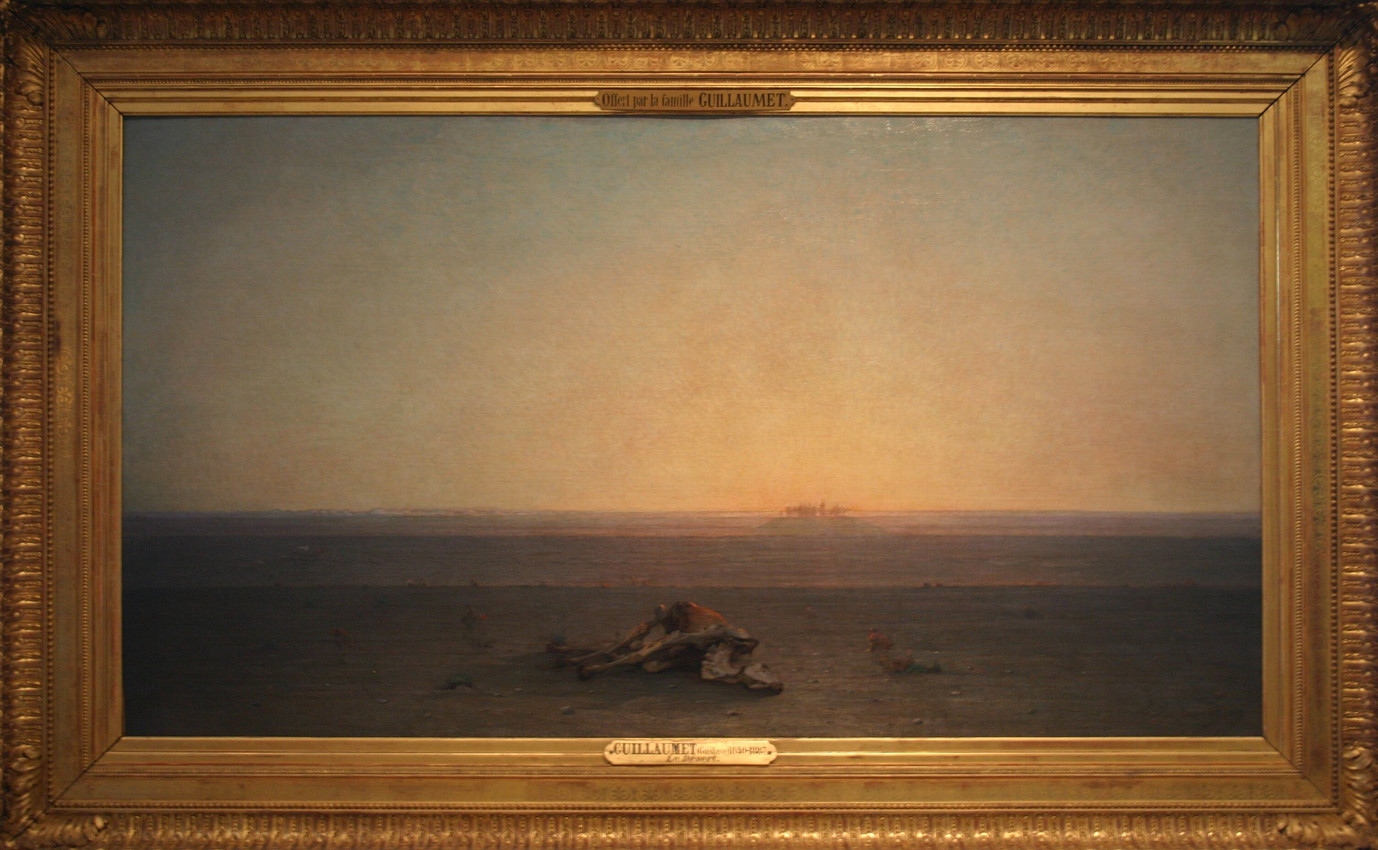
The canvas Le Sahara catches the eye of this observer as she makes her way, overwhelmed, along the corridors of the Orsay. Used to contemplating the paintings of geniuses on a sheet of paper in some manual, it's no wonder I get pleasant surprises and bitter disappointments from the artworks of the great artists. Guillaumet wasn't famous in my inventory of favourite painters but, when I stood before that enormous horizontal artwork, for a few minutes I felt the icy breeze of the desert at dusk. I could sense the sun's last caress as it takes its leave on the immense plain of the desert.
That infinite horizon on a finite canvas. The most surprising thing was that loneliness, that rootlessness, the intensity within the simplicity. The emotion distilled from a painting that had hardly any content, yet whose texture filled the eye of whoever looked at it. It was like taking in sunset and sunrise at the same time, like running off on an adventure in the middle of the Sahara. When I stopped looking at Le Sahara, Algeria was still in my memory. And so was Guillaumet.
The academic school was the cradle of Guillaumet and of many other great painters who lit up the world with their decorative art. That's the case of the painter William-Adolphe Bouguereau. His mythological paintings impress for the foreshortening of their protagonists. And also for how carefully the light is handled. Do you want to know more about academic painting? In that case, get into everything that was never told about academic painting and live art in all its splendour.

Comments (0)
Log in to leave your comment. Log in