
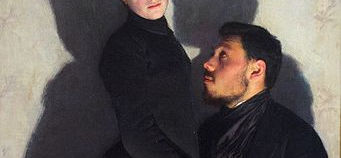
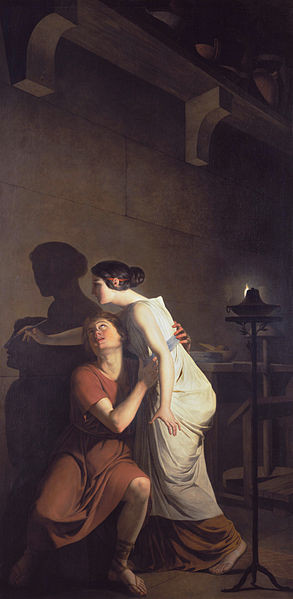
According to an old fable by Pliny the Elder dating back to the 7th century BC, a young girl from Corinth, daughter of the potter Butades of Sicyon, faced with her lover's imminent departure decided to trace, by candlelight, the outline of his figure projected on the wall. Her father later applied clay to the drawing, giving it relief and creating the first pictorial artwork. This is one of the many myths that link the origin of painting with the projection of a shadow or with the reflected image, in the case of Narcissus. The truth is that shadow has played a starring role in the history of painting and, if we look at how it evolved, we'll discover the fascinating path darkness has taken.
Shadow has been part of art from very early on. The first examples we find date from the 4th century BC, linked to theatrical sets and to the shading of objects put in relief. Shadow in painting, however, really took centre stage in the Renaissance. That was when a scientific approach appeared, and out of it came an essential element tied to the great achievements of the age: perspective and naturalism. No wonder Leonardo da Vinci devoted a good part of his efforts to studying it and placed it as the second principle of painting.
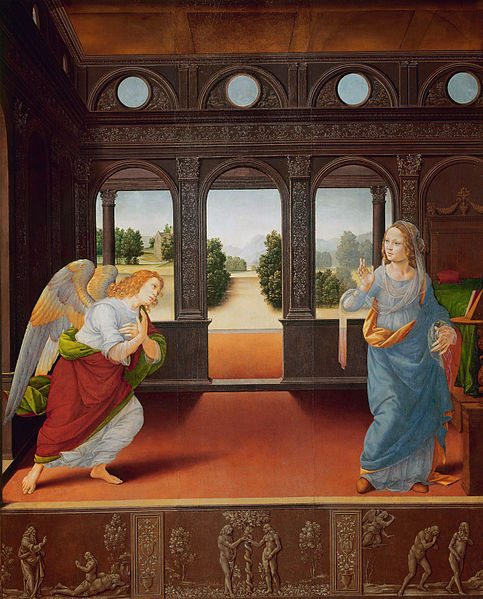
It also began to be used with a symbolic meaning. A positive one on this occasion, since it was tied to the subject of the Annunciation. So the shadow of the angel Gabriel or of the Virgin alludes to the shadow of God and to the miracle of the Incarnation. Even so, its use in the Renaissance would remain limited to avoid losing clarity in the composition.
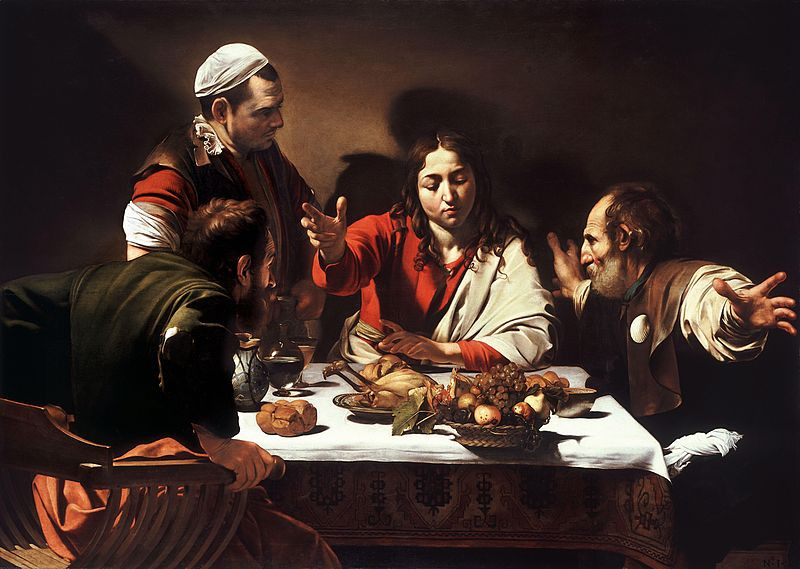
Exactly the opposite happened with the artists of the Baroque, especially the tenebrists, who exploited its dramatic possibilities like nobody else. In religious scenes, shadow heightens the sacred presence and its arrival into everyday life. In artists like Rembrandt, it also helps to build the composition spatially and to hint at the time of day of the scene. In others, like Caravaggio, what stands out is how he uses it to wrap his figures in intense meanings. That is what happens in La cena de Emaús (1601), where the shadow suggests a halo, though not a conventional one but a dark stain that seems to recall the betrayal and the crucifixion of Christ.
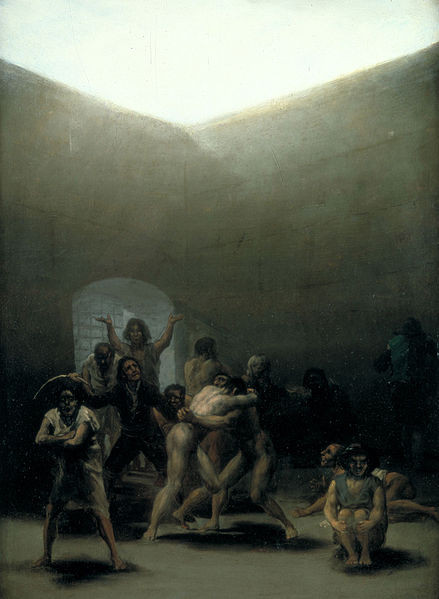
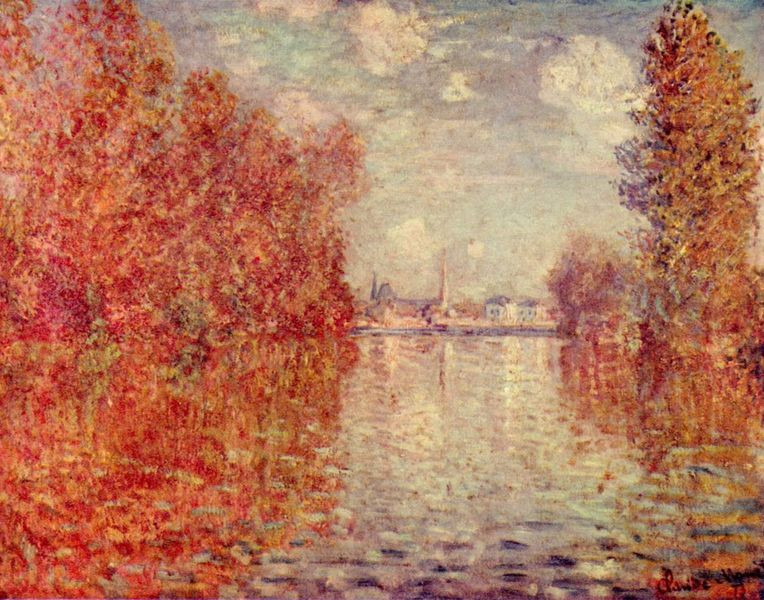
We had to wait until the 18th century for artists to look into its more pernicious narrative qualities. They carried out that exploration under the shelter of the Romantic concept of the sublime and the search for an aesthetic of the uncanny. Here shadow evokes evil, anguish and death, as in Goya's Corral de locos (1794), where it imitates the abyss its owners are condemned to. Along the same lines, a century later, the Symbolists went on wanting to reflect the mysterious through its darkness. The arrival of Impressionism swapped this tragic idea for light and colour. So Monet painted the shadow of the trees reflected in the water in a reddish tone in Efecto de otoño en Argenteuil (1873).
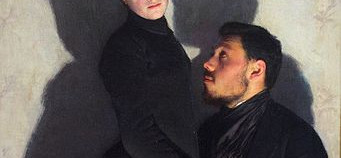
At the beginning of the 20th century it was practically cancelled out, as Cubism and the abstract movements tried to do without it. Giorgio de Chirico was the one who rescued it and gave it a new push, one that would greatly influence later currents, by embracing naturalistic verisimilitude and nightmare. In the same way, the influence of cinema, above all German Expressionist cinema, brought pseudo-cinematic shadows into painting. These dig into an enigmatic reality in which shadow and body behaved independently, playing with the identity of the projection and its owner.
But its most splendid period came with the Surrealists, who found in shadow the perfect weapon for giving dreams a truthfulness even greater than that of reality itself. Dalí, moreover, used it to recompose contradictory images based on his paranoiac-critical method. Shadow also inspired other currents in the second half of the 20th century. In particular movements like pop art, which kept altering its traditional role as a way to explore and express those aspects of the individual and of society that were still unknown.
Comments (2)
Libardo
May 28, 2015Salvador Barroso
May 28, 2015Gracias.
Salvador
Log in to leave your comment. Log in