
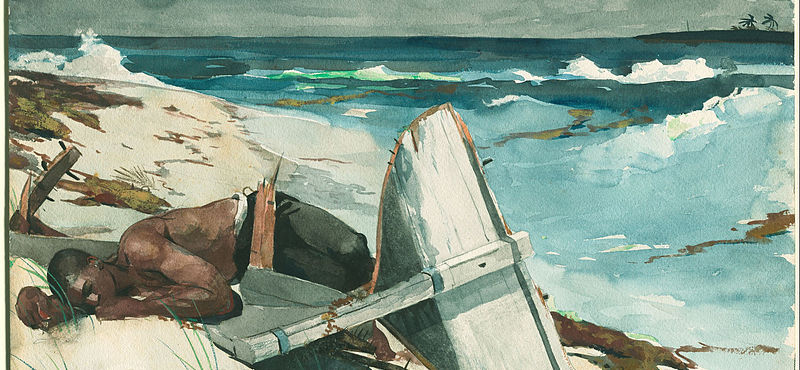
One of the most outstanding American painters of the 19th century is Winslow Homer. A master at capturing the fury of the sea and the life bound up with it in vivid compositions to which he applied his ever more sophisticated understanding of light and colour.
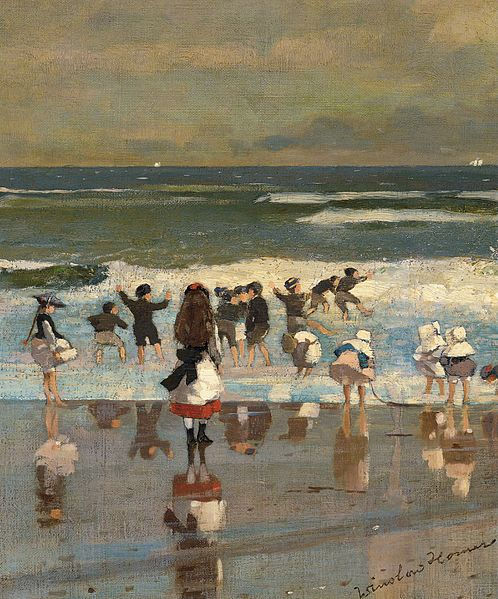
Winslow Homer (Boston, 1836 - Prouts Neck, 1910) began his artistic career as an illustrator. In 1859 he started contributing to the illustrated magazine Harper's Weekly, for which he would work as a correspondent in Virginia during the Civil War. A self-taught artist, his training as a painter was limited to a few life painting classes at the National Academy of Design and to whatever he could learn during the months he spent in Paris, at the end of 1866. A trip he had surely made because two of his war works were on show at the Universal Exhibition. There he took an interest in the French art of the moment, bringing natural light and a freer brushstroke into his artworks. He also took on a certain Japanese influence in the simplicity of planes and forms.
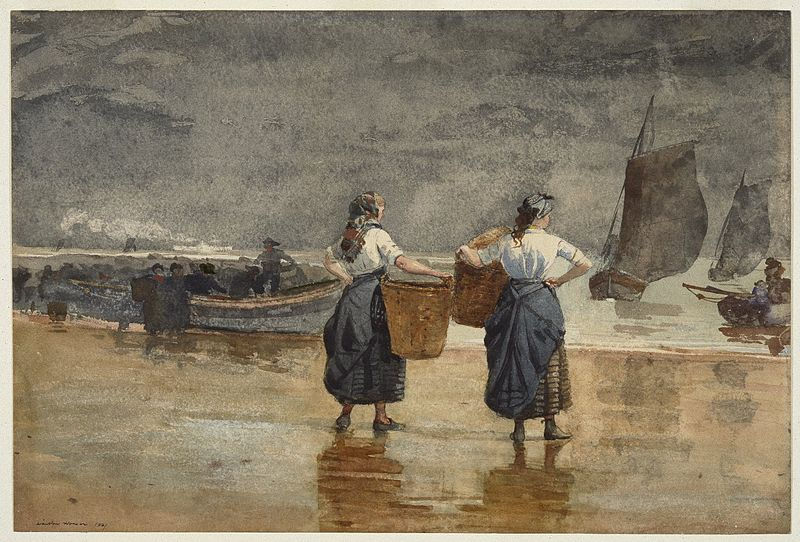
His canvases from this period deal above all with leisure scenes from American popular culture. Nothing like the transcendent painting, meditating on nature and its relationship with man, that would turn him into one of the most remarkable American artists of the 19th century. During that first stage he lived in New York. The city's frantic pace of life, however, was not for him. He longed for solitude and, to get away, he would often visit the Adirondack mountains, out of town.
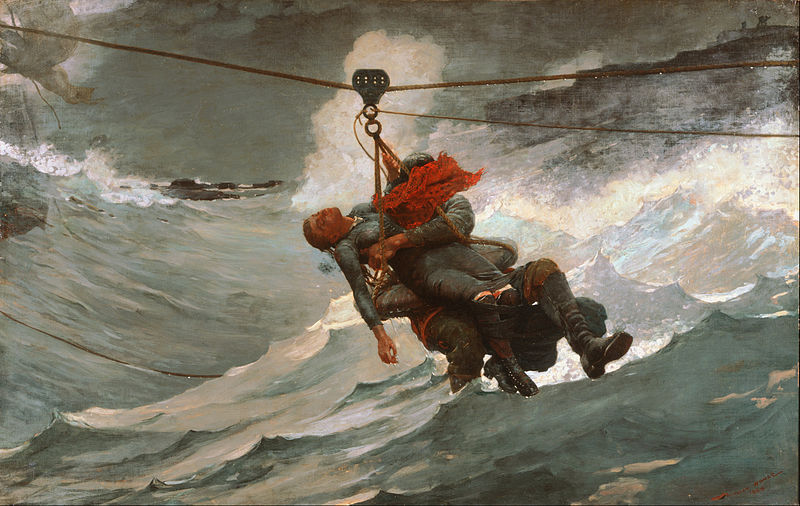
In 1881 he returned to the Old Continent. This time his destination was Cullercoats, a fishing village on the North Sea coast, in England, where he stayed until the end of 1882. The exhausting life and the brave character of its inhabitants captivated him, and that is what he reflected in his painting. Above all its women, whom he depicted carrying and cleaning fish, mending nets and, in a more moving vein, standing on the shore waiting for the men to come back.
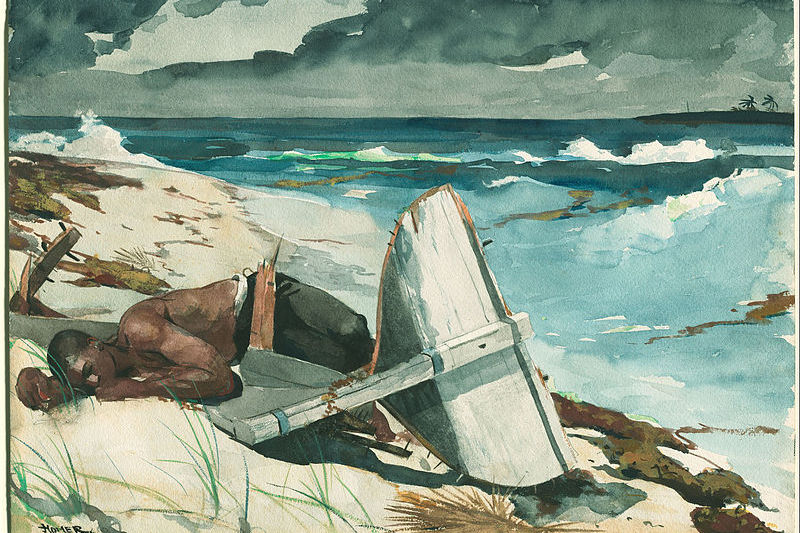
When he went back to the United States nothing would be the same. The English experience had given a new intensity to his art. More than ever, his virtuoso brushstroke filled with feeling and touches of abstraction that aimed to express the depth of the ocean. He settled for good near the sea, in Prouts Neck, Maine, a peninsula ten miles south of Portland, and made many trips to Canada, Florida and the Caribbean.
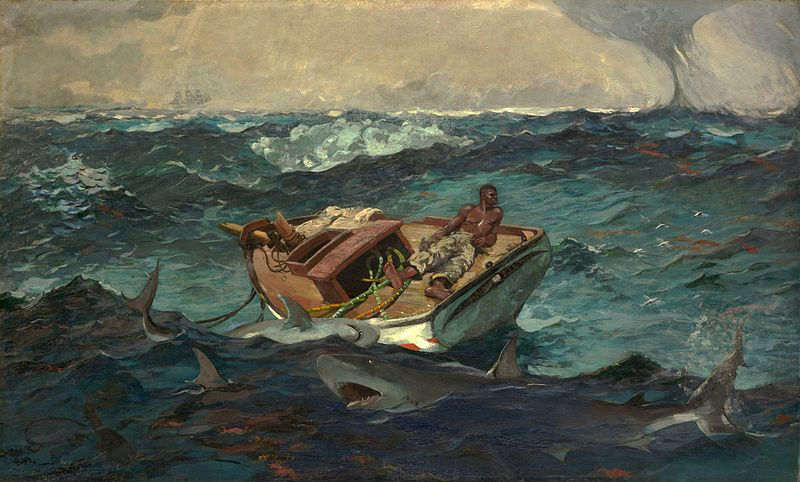
He enjoyed the privacy and the silence to paint the great themes of his artwork, based on the struggle of the human being with nature. With particular attention to the danger and violence of hostile weather, which held a real fascination for him. He mastered both oil and watercolour, which he worked with charcoal, graphite and ivory black to achieve greater liveliness.
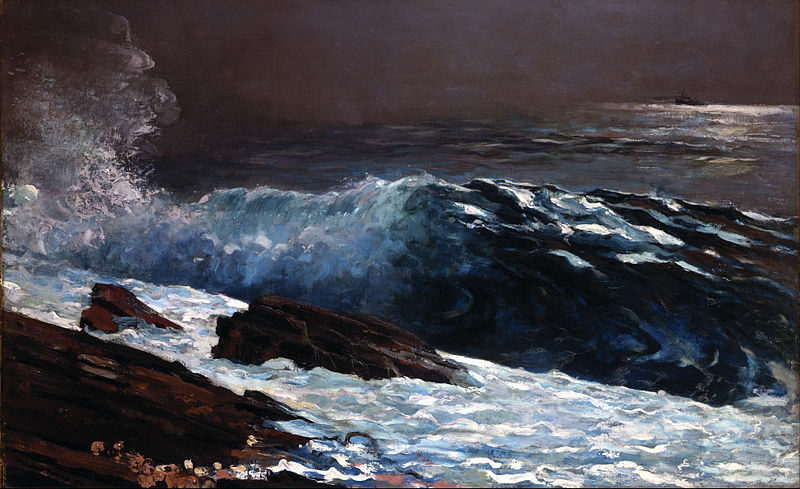
His most ambitious creations came from the 1880s on, and in them he gives himself over to the force, the drama and the beauty of the sea. In them, man challenges the ocean's power with his intelligence and with the help of technology. But he did not always win the battle and then came those tragic rescue scenes that so appealed to him. As his legacy, Winslow Homer left extraordinary seascapes, rich in textures and action, that capture the look, and even suggest the sound, of masses of water as they break and pull back.



Comments (0)
Log in to leave your comment. Log in