
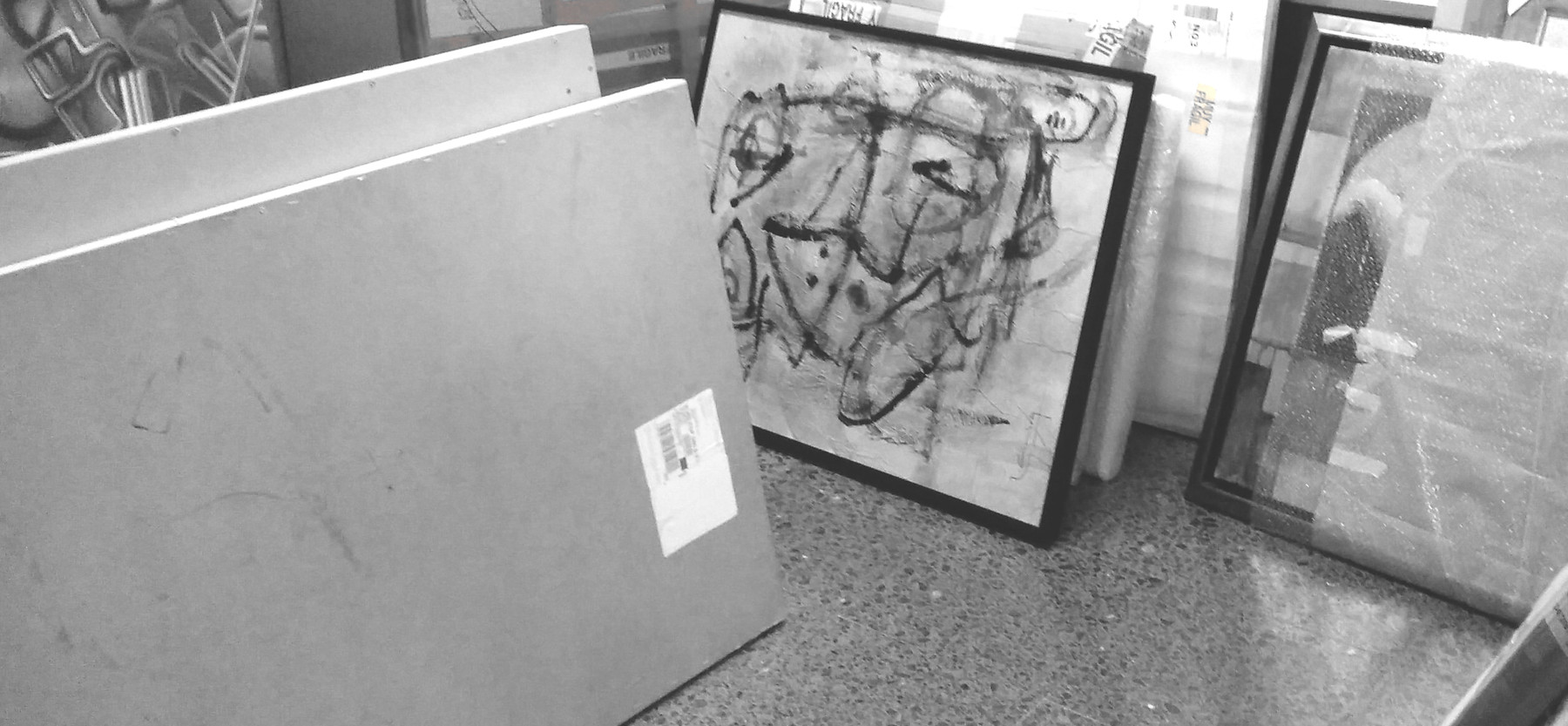
Packing an artwork so that it doesn't get damaged in transit is very important, and a task that takes care, since it's an original, one of a kind artwork and it can't be replaced. In this tutorial we give you some tips for packing paintings, photographs and sculptures, both in a box and in a tube, and we also explain a few things to bear in mind if it's a domestic or an international shipment.
As we always say, you know your artwork better than anyone and you've made other shipments, so take this tutorial as an extra bit of help.
Checklist: what you need before packing
Got the artwork ready to pack? Go through the following list and get together everything you need to send it.
Certificate of authenticity (COA). When you sell an artwork on Artelista, a certificate of authenticity is generated for you to include in the package. Make sure you sign it and put it inside an envelope or taped to the back of the artwork so it doesn't get damaged.
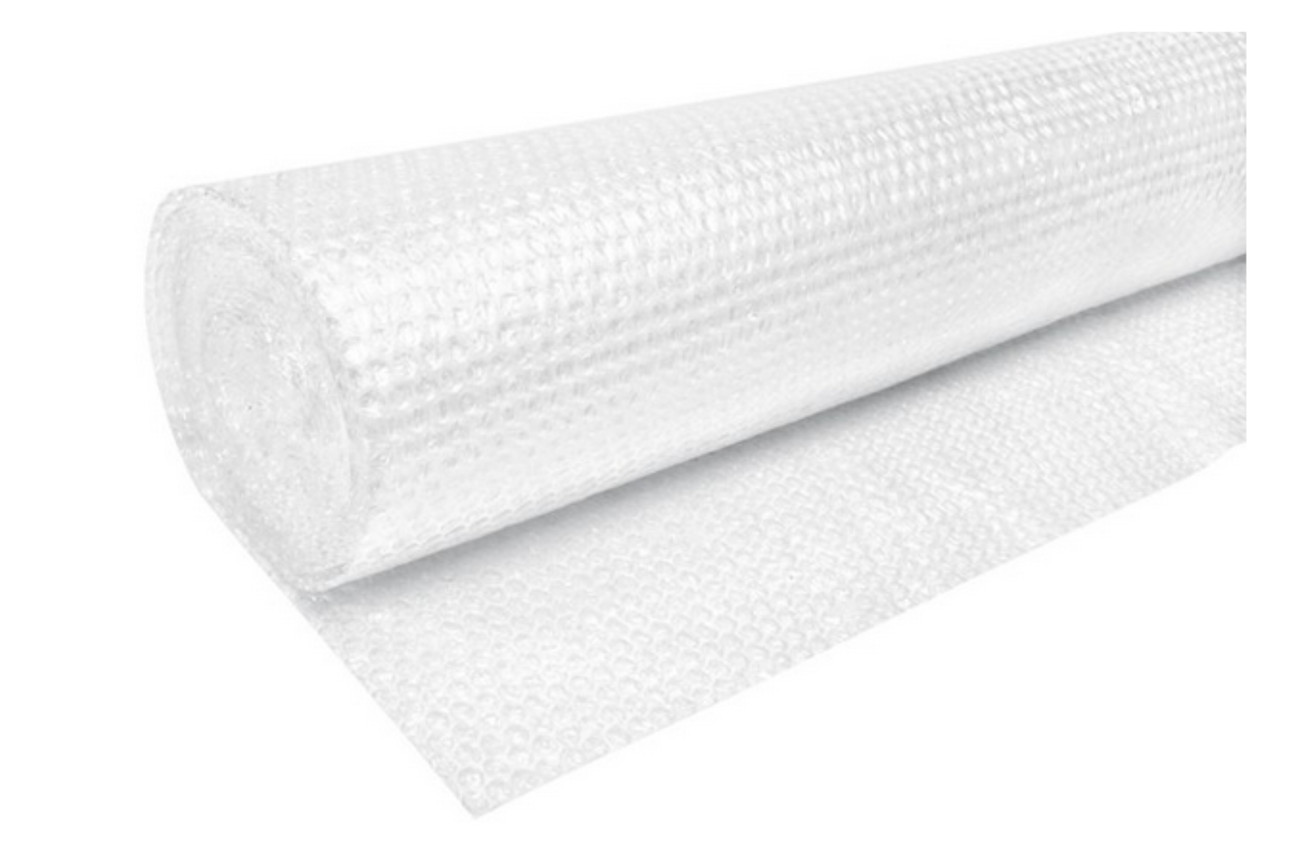
Bubble wrap. You'll need enough to wrap the artwork with at least one layer and to protect the corners well.
Packaging. Get a cardboard or wooden box the size of the artwork, or adapt one you already have, fitting it as closely as possible to the measurements of the artwork wrapped in bubble wrap. If it isn't mounted on a stretcher or it's safer to send it in a tube, the tube has to fit the artwork as snugly as possible so it can't move around and get damaged.
Corner protectors. You can buy them (there are cardboard, foam and PVC ones) or make them yourself so they fit the thickness of the stretcher perfectly.
Adhesive tape. Essential for sealing the bubble wrap and the corner protectors properly, and stopping the artwork from rattling around inside the packaging.
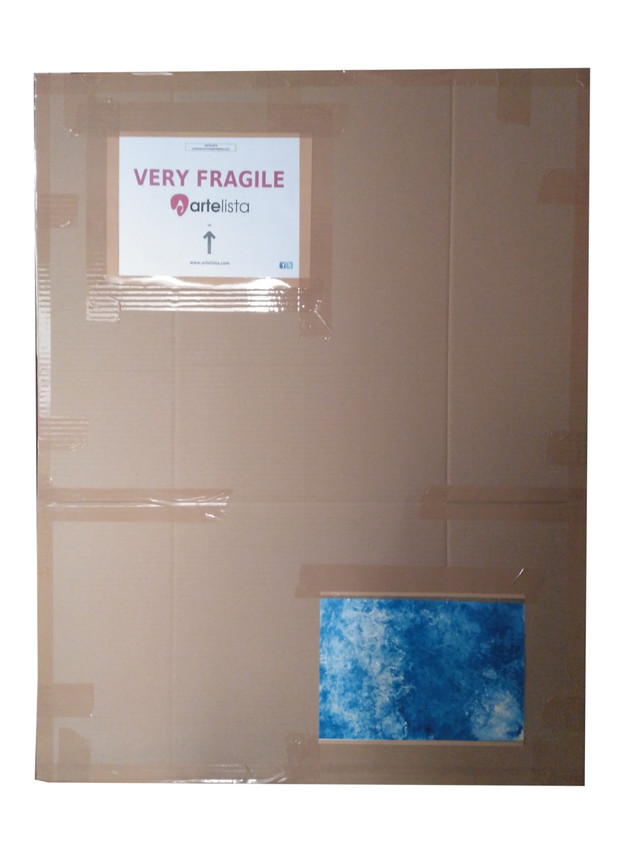
Outer label. The artwork has to be marked as a fragile package and show which side goes up. You can download the Artelista label as a PDF, which already includes both indications, print it and stick it on the outside of the package. You can also use a label you've bought or write it by hand.
Don't forget to sign the certificate of authenticity and send it along with the artwork.
How to pack an artwork
Get all the materials from the checklist ready and follow the instructions for the way you're going to send it.
Shipping in a cardboard or wooden box
Protect the artwork by wrapping it in bubble wrap, going round twice. The bigger the bubbles, the better protected the artwork will be. Wrap it with the bubbles facing outwards, so they don't touch the painted surface, and secure it with adhesive tape. Artworks with a glass frame can't be shipped.
Protect the corners by putting a protective angle on each one: knocks to the corners are the most common thing in transit.
Put the wrapped artwork into a cardboard box that fits its measurements. Ideally, use rigid triple layer cardboard 1 cm thick; if you can't find that, make sure it's rigid and at least 0.6 cm. You can also put two sheets of MDF or another rigid material on the sides so nothing can go through the canvas. Another option is telescopic boxes with adjustable height.
Close the box with adhesive tape, going round at least 3 times at the top, middle and bottom ends and over all the openings. Make sure no area is left open.
The box shouldn't be more than 3-4 cm bigger than the artwork: the closer the fit, the less the artwork will move and the lower the shipping cost. Don't put anything else inside as filling (feathers, paper, fabric), because it can damage the artwork.
Shipping in a tube
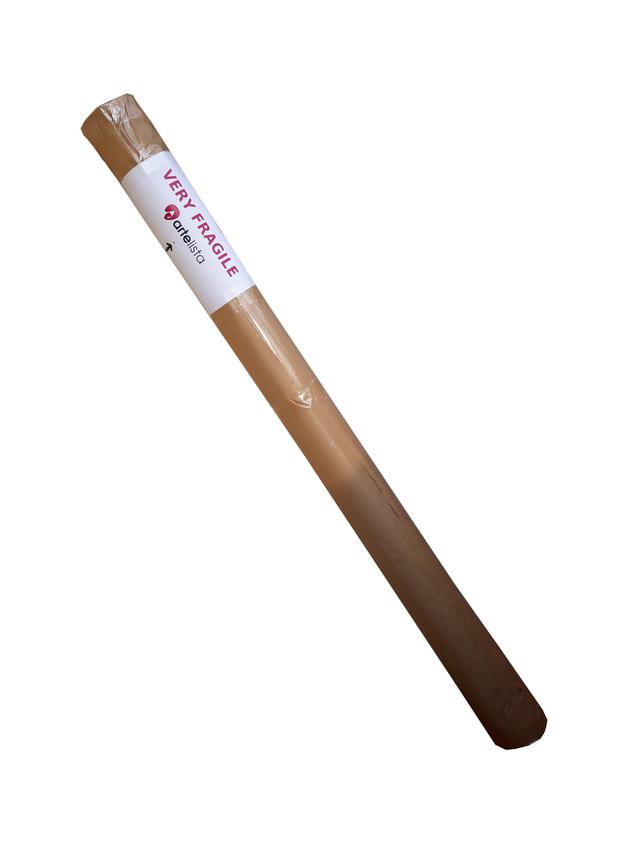
Choose a rigid cardboard tube or cylinder.
Roll the canvas along the longer side, so that the tube is slightly longer than the shorter side: a 100 × 50 cm canvas is rolled along the 100 cm side and you use a 52-53 cm tube. If it's mounted on a stretcher and it's safer to send it in a tube, take it off very carefully.
Wrap the artwork in bubble wrap and carefully slide it into the tube.
Seal the tube well with adhesive tape so it can't come open by accident.
You can put a layer of cling film, fabric or cardboard paper over the painting before rolling it up so the painted part is better protected.
Shipping sculptures
Wrap the sculpture in bubble wrap so it's well protected.
Choose a completely rigid wooden box and place the sculpture in it upright. The box has to fit the piece so it can't move inside.
Fill the inside with bubble wrap to hold it still.
Close the box with adhesive tape, going round at least 3 times at the top, middle and bottom ends and over all the openings.
The box can't be more than 3-4 cm bigger than the sculpture. Depending on the weight, it may have to go on a pallet.

Paperwork
Domestic shipping or within the European Union
Certificate of authenticity. Signed and inside the package, along with the artwork.
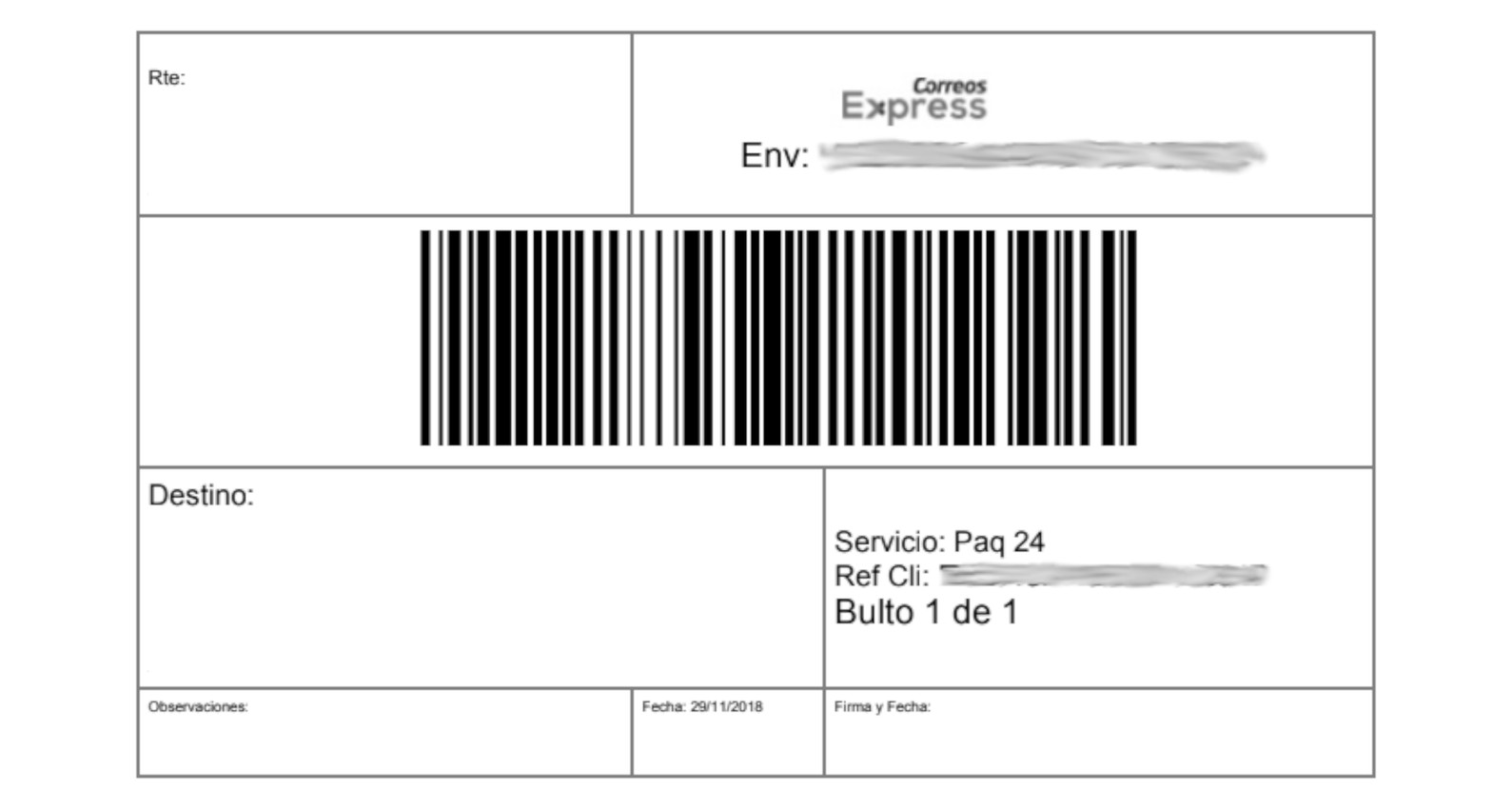
Carrier label. Once you send us the photograph of the artwork and the dimensions of the package, we'll send you the shipping label for you to stick on. You may need to print it, because not all companies bring it with them at pickup.
International shipping
Certificate of authenticity. Signed and inside the package, along with the artwork.
Carrier label. Same as with domestic shipping. Depending on the country of origin and destination we may not be able to arrange it, in which case we'll coordinate the shipment with you.
Photograph of the artwork. You'll have to print it out and stick it on a corner of the package.
Photocopy of your ID card or identification document.
Invoice.
Customs paperwork. This varies depending on the country of origin and destination. If any document or declaration is needed to export the artwork, we'll let you know.
If you'd rather have it to hand or look it up offline, you can download the tutorial as a PDF.



Comments (1)
Libertedm
February 25, 2025Log in to leave your comment. Log in