
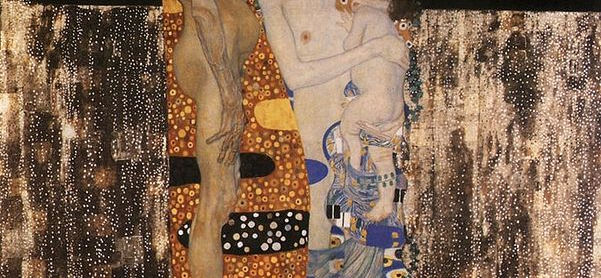
If we take a look back through the history of painting we'll find a sizeable group of images that capture the effects of the passing of time, that is, that take up the popular theme of the three ages of the human being: childhood, youth and old age. A subject that has let us into the thinking of many masters of art about how fleeting life is and how inexorable its end. Below, the version of four of them.
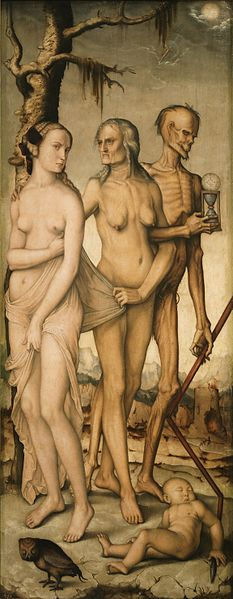
Las edades y la muerte by Hans Baldung (1541- 1544)
Back in the 16th century, the German Hans Baldung used a sinister landscape, built on the foundations of a bleak expressionist language, to interpret this theme. Death, with its hourglass and broken spear, grabs hold of an old woman who, in turn, wants to take a beautiful young woman with her. On the ground, a baby's innocent sleep goes undisturbed. This oil and its companion, Las Tres Gracias (1541- 1544), present, in the manner of a vanitas, a moralising allegory on the brevity of human existence, highlighting in particular the destruction of beauty.
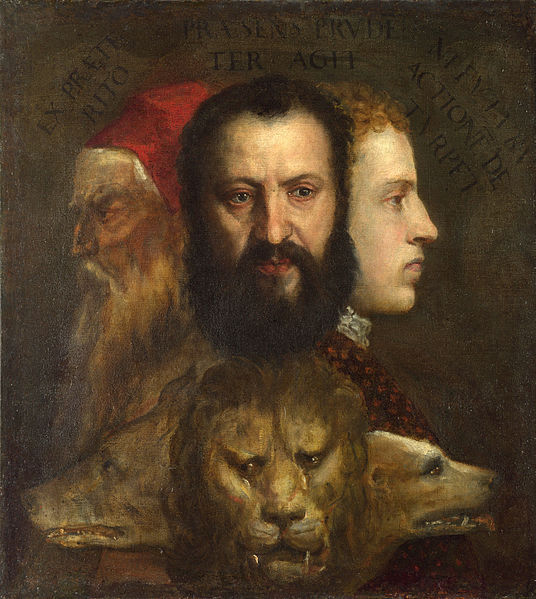
Alegoría del tiempo gobernado por la prudencia by Titian (1561)
Titian, for his part, put together a complex allegorical painting expressing the balance that must exist between the three ages, held up by prudence. The canvas also alludes to other virtues, such as memory and intelligence, which are to guide the individual at each stage of life, by means of the animal heads escorting the three human figures. These have been identified as his cousin Marco, on the right; in the centre, his son Orazio, and on the left, the painter himself. His aim, however, is to insist on the need for the continuity of prudence. He does it through the light, which falls directly on the young man and grows fainter as it moves towards the old man's face, and he clinches it with the inscription: "From the past, the present must act with prudence so as not to ruin future action".
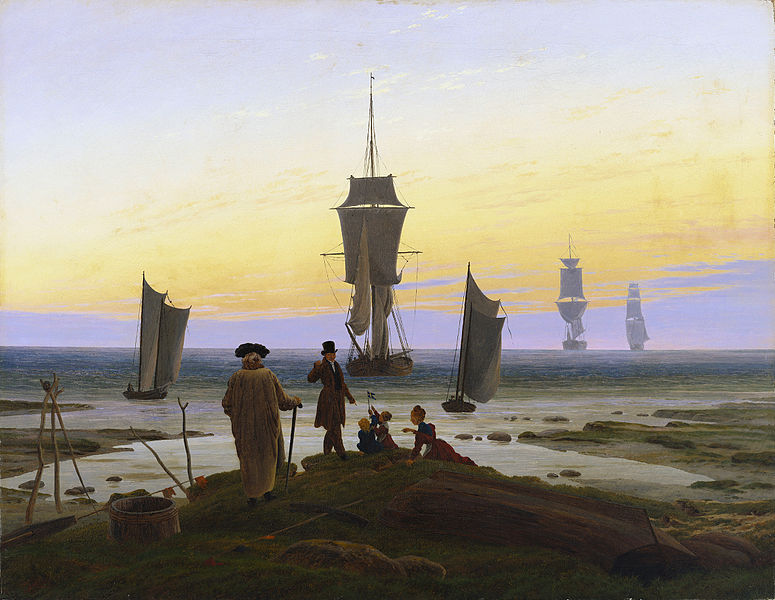
Las tres edades de la vida by Friedrich (1835)
In keeping with Romantic aesthetics, Friedrich painted an astonishing natural landscape in which he meditates on the passing of time. The landscape brings together five figures and the same number of vessels. It is an allegory of the journey of life which, like all his artworks, holds a clear spiritual content. In the foreground there is some fishing tackle, nets and an upturned boat pointing to the old man seen from behind, dressed in a long coat and a cap and leaning on a stick. The elderly man is Friedrich and the rest are members of his family, who by contrast are wearing summer clothes. The artist seems to be saying goodbye to them and getting ready to board his sailing boat to face the fate that comes with existence itself.
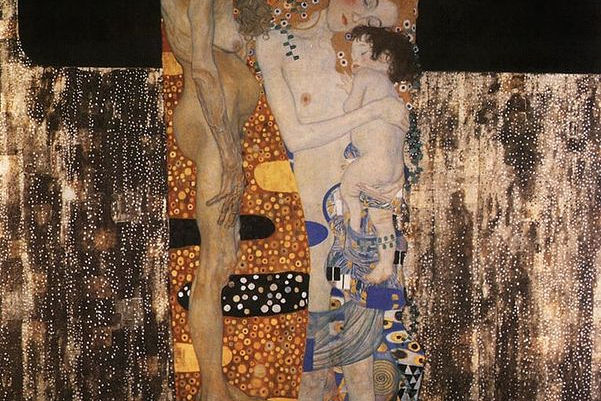
Las tres edades de la mujer by Klimt (1905)
Klimt's symbolist painting reproduces the three ages of life through three female figures, connecting childhood and youth with motherhood. A mother stands out, facing us with her eyes closed and her daughter in her arms. There is a pleasurable harmony between the two, and the mother's gesture of resting her head on her daughter's conveys enormous tenderness. Her face and the light falling on it also give her an aura of fulfilment. The third woman is elderly. She, however, is shown in profile, her face covered by her hand and by her greying hair, evoking in this way the decline and the loneliness that go with death.

Comments (0)
Log in to leave your comment. Log in