
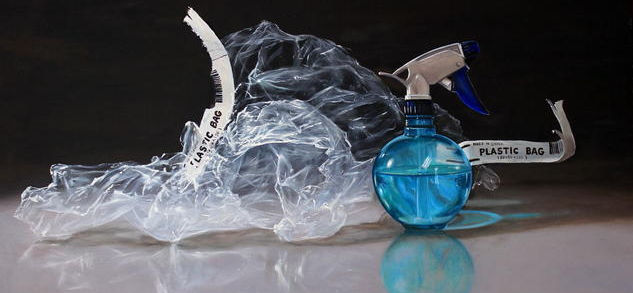
The hyperrealist school appears in the 60s with a hidden goal, which is none other than competing with photography. After it turned up in the middle of the 19th century, realist painting was gradually pushed into the background. After all, what could be more realistic than an instant captured exactly as it happened? Hyperrealism was led by artists of the stature of Antonio López, who designed a new art of painting that consisted of projecting the photograph onto the canvas without having to "trace" an image. All of them shared one thing in common; the hyperrealists dreamed of getting the eye to be unable to tell a photograph from one of their paintings, without them ceasing to be exactly that; paintings. Of course, as you already know, they pulled it off! Photorealism would show up in those first exhibitions, since the differences between the two (which we set out further down) wouldn't be clearly drawn until some time later. We'll also tell you about the reasons why some artists like Richard Estes would appear as hyperrealists when they were in fact photorealists.
Differences between hyperrealism and photorealism
Hyperrealism means a more traditional artwork in the sense that it isn't so influenced by the need to capture exactly what the camera has captured on the slides. Antonio López is one example of hyperrealism.
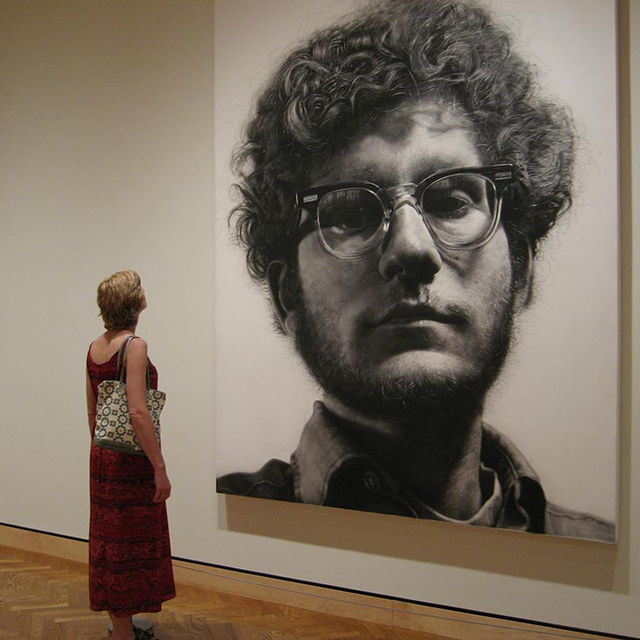
Hyperrealist photorealism is influenced by artists like Chuck Close, Nancy Graves, Alissa Monks or Richard Estes. As you can see above these lines, the difference between photorealism and hyperrealism is enormously noticeable, since the former looks far more like a photograph.
Antonio López and the first hyperrealists and photorealists
In the sixties, New York hosted the exhibition that would officially welcome the hyperrealists. It was The Photographic Image, which would coexist with its "little sister" 22 Realists. Taking part in both were some of the most important hyperrealist artists in the art of creating a realist painting on a canvas, to the point where it was almost impossible to tell whether or not it was a photograph.
For many hyperrealist painters working today, Close may well be the inspiration that brought this school into being. In fact, his style was so personal that it was obvious he would stand out. Chuck Close (1940) moves towards the poster-like, towards the cinematic. His technique of snapshots at no distance marked a before and after for other hyperrealist creators, and putting the paintings together went through so many stages that we can't help mentioning the procedure; thin layers of paint had to be spread over the canvas. It was normally done with a spray gun and a brush. Afterwards, the surface was scraped with a blade to keep it from being left with any relief.
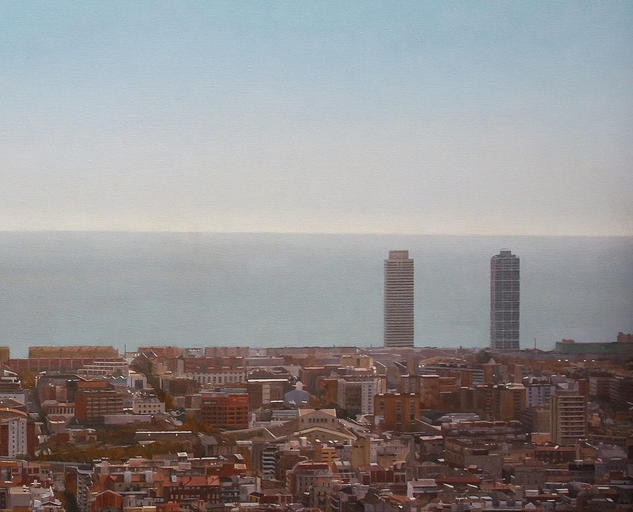
Antonio López's style is completely authentic. He would add particular touches of his own to the development of his art. Among these quirks are urban subject matter and his attraction to deserted public places. By the way, López would lay down one of the bases for telling hyperrealism apart from photorealism; if it can be distinguished from photorealism by its painterly authenticity, it's hyperrealism. It should be added that Antonio López created his paintings using several slides of the same object as well as observation "in situ".
Without a doubt one of the most curious cases of hyperrealism is the art of Jean Olivier Hucleux (born in 1929) with his macabre subject matter; cemeteries. Car graveyards too, mind you. One of the things that brought Hucleux close to his fellow hyperrealists was his taste for repetition. In every hyperrealist artist you can detect an eagerness for repetition, surely influenced by the arrival of cinema, which was nothing other than a series of frames or slides.
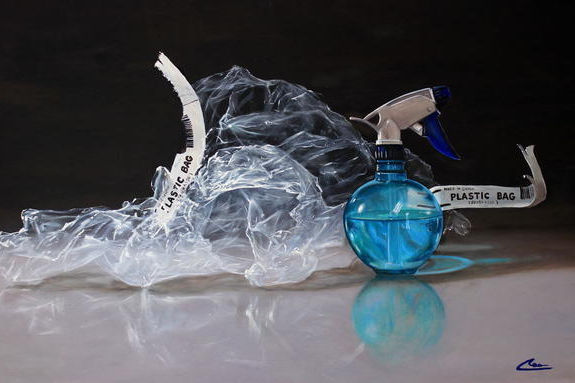
If you want to see a selection of our most outstanding hyperrealist artists, don't miss our Hyperrealism collection. You can also see more artworks like Plastic bag by Daniel Martin CEA by visiting the hyperrealist still lifes collection.
Nancy Graves and the women of hyperrealism
If there is one female figure who stands out in hyperrealist painting, it's Nancy Graves. Born in 1939 in Massachusetts, she would be the first woman to have a solo retrospective at the Whitney Museum thanks to her professional achievements. Although her vast output includes sculpture and painting, the hyperrealist pictures she composed stand out for the human, mysterious perspective of an instant captured over hours of work. As happens across the whole hyperrealist current, she managed to make a practically photographic reproduction of reality, and her fame lives on to this day thanks to her artistic and social foundation.
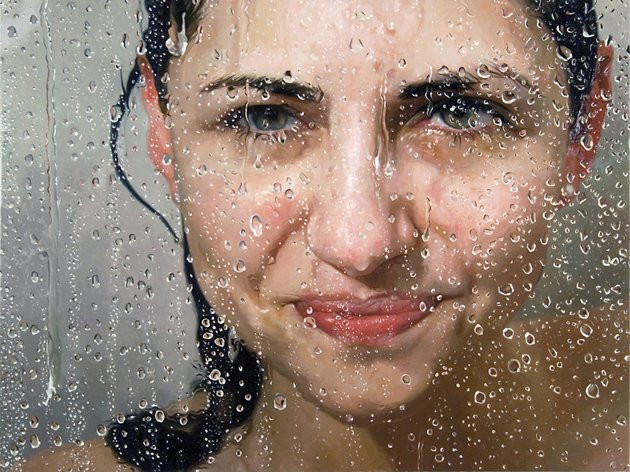
Alissa Monks is another of our examples of a hyperrealist artist with human subject matter. Her attraction to portraits in situations like the one described in the image above these lines gives us some interesting information about one of the reasons why hyperrealism took such hold between the 70s and the 80s and lives on into our own times. Unlike photorealism, hyperrealism seems to hold up across the decades largely because it is, after all, a technique less focused on resembling photography. Alissa is a clear example of a 21st century artist who manages to plant the seed of hyperrealism in each of her paintings. Her artworks are created with the originality of the first hyperrealist and the freshness of the photography of this new millennium.
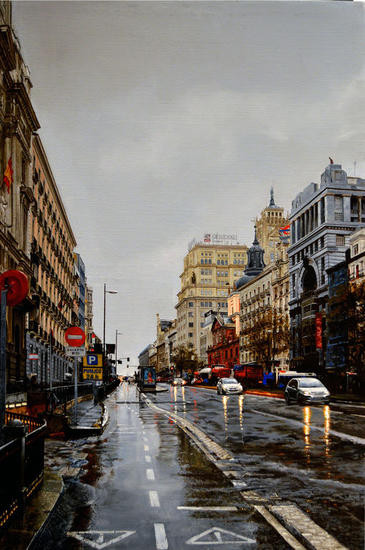
Día de lluvia en Alcalá by Jesús Monge Cebolla is part of our Hyperrealist Urban collection.
Where does hyperrealism end and photorealism begin?
Comments (1)
eduardo zoteranis
December 13, 2019Log in to leave your comment. Log in