
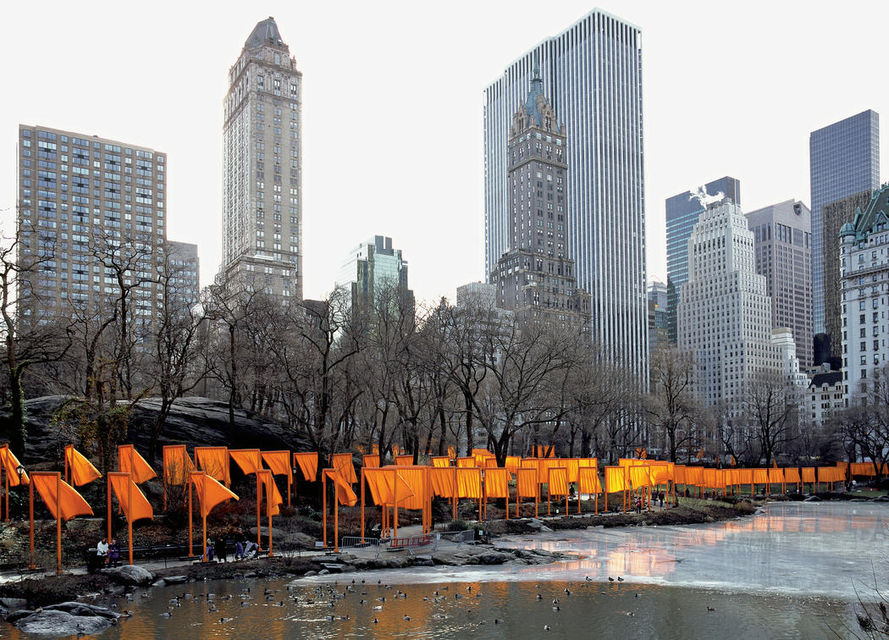
In 2005 the unusual couple made up of artists Christo and Jeanne-Claude surprised the world with The Gates, in which they installed 7,503 metal frames in New York's Central Park. Back in 1973 they had already turned heads with Running Fence, a curtain 39 kilometres long in the French commune of Marin in 1973. And in 1985 they did it again by wrapping the Pont Neuf in Paris, and in 1995 by covering the Reichstag building in Germany. Multicoloured fabrics and large-scale, short-lived projects that the unusual couple has never stopped dreaming up and carrying out since the day they met. "Our work has an aesthetic dimension: it is dynamic. A dynamic action is always very fragile, like the nomad who lives in the desert for a week and then leaves. There is a physical dynamic. And connected to it is the main material we use, fabric, because it is vulnerable, it moves with the wind, and it is iridescent. It is not static," Christo explained in an interview with Letras Libres.
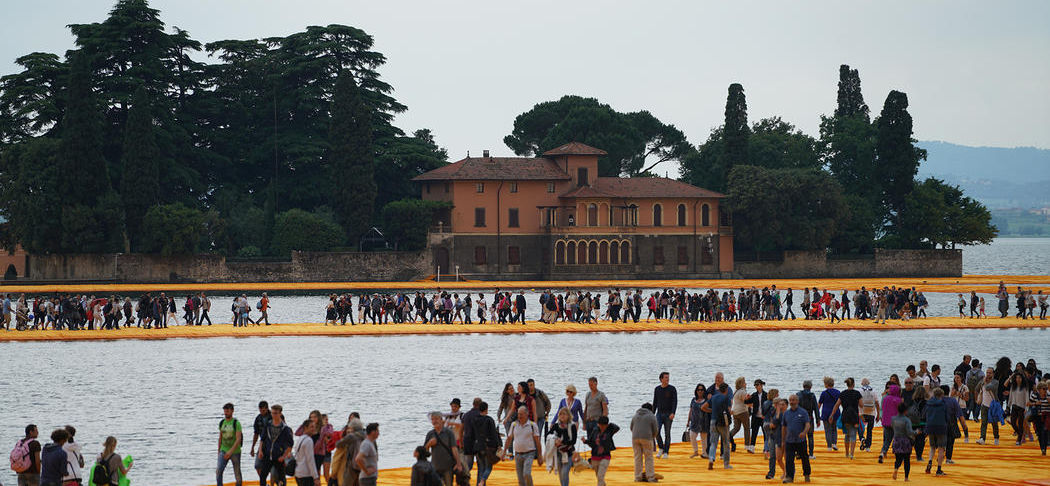
From 18 June to 3 July of this year, 2016, their admirers have been able to enjoy their latest creation on Italy's Lake Iseo, where with 100,000 square metres of bright yellow fabric they created a modular floating dock system of 220,000 high-density polyethylene cubes. Those who visited it got to experience walking on the yellow fabric from Sulzano to Monte Isola and on to the island of San Paolo. The spectacle was rounded off by the panoramic view of the floating piers from the mountains around the lake.
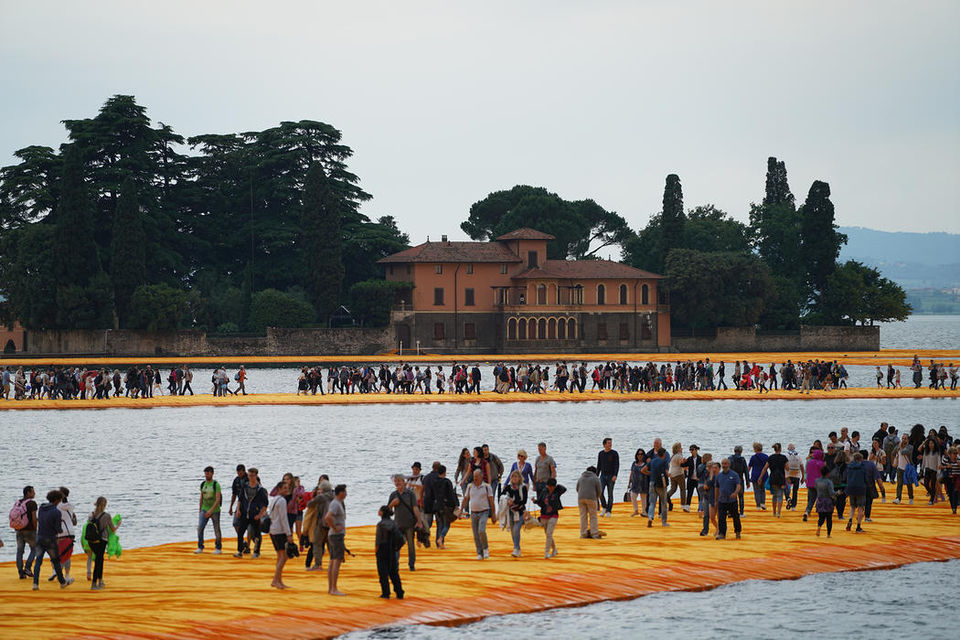
For Christo, who since Jeanne-Claude's death in 2009 has faced these projects dreamed up by the couple on his own, the point was to give visitors a unique experience: to make them feel they were walking on water or "maybe on the back of a whale". He also wanted to see whether light and water could transform the bright yellow fabric with shades of red and gold over those 16 days. The Floating Piers was first conceived by Christo and Jeanne-Claude in 1970 and has been Christo's first large-scale project since Jeanne-Claude died in 2009.
A singular couple
Both were born on the same day, 13 June 1935, and formed one of the most stable couples in the art world. Christo was born in Bulgaria but left his country as a young man and lived in various cities such as Vienna, Geneva and Paris. The couple met in Paris in November 1958, when Christo was commissioned to paint a portrait of her mother, Précilda de Guillebon. Jeanne-Claude was engaged to Philippe Plachon and married him. But Jeanne-Claude's marriage did not end well, and the couple married on 28 November 1962 and had a son, Cyril.
Their artistic work began when Christo had the idea of making his first piece of "wrapped art" in 1958. Christo covered an empty paint can with a canvas soaked in acrylic, tied it up and coloured it with glue, sand and car paint. A different technique that caught the eye of a German businessman, Dieter Rosenkranz, who bought several of these small "wrapped" artworks. In 1959, Christo shifted his focus to wrapped objects, and instead of decorating the wrapping material with glue and sand, he left it untouched.
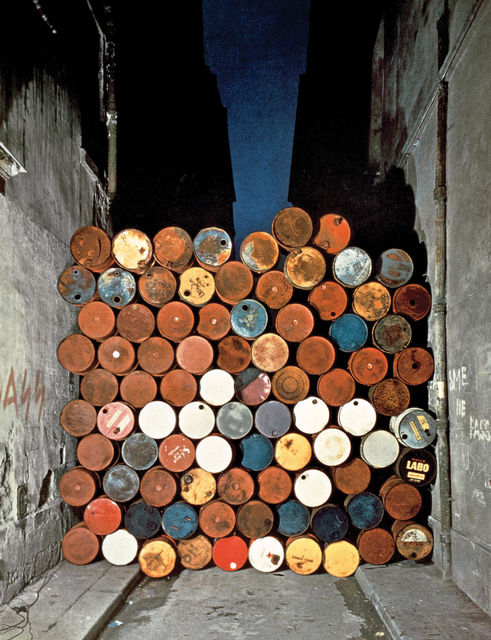
From small objects he would jump to large scale, and in 1961 he wrapped barrels in the German river port of Cologne. But it was not until 1962 that he took on his first monumental project, Rideau de Fer. The project was highly controversial because they did not ask the authorities, and as a protest against the Berlin Wall they blocked Rue Visconti, a small street off the Seine, with oil barrels. Jeanne-Claude talked the police round and they let the artwork stay where it was for a few hours, and although he had already had his first gallery exhibition, it was the Visconti project that made him known in Paris.
New York, land of opportunity for the couple
In September 1964 Christo and Jeanne-Claude settled in New York and Christo showed his work in various galleries, including the Leo Castelli Gallery in New York and the Schmela Gallery in Düsseldorf, Germany.
Christo started wrapping shop windows, which helped him pay off debts and think about other art projects. In early 1968, Christo and Jeanne-Claude left the Leo Castelli Gallery to keep their independence. That was the year they got the chance to take part in Documenta 4 in the German city of Kassel, where the couple wanted to build a 5,600 cubic metre tube that would hang from cranes and be visible from 25 kilometres away. The first attempts failed when the polyethylene surface was damaged as it was being lifted. After successive repairs and using the two largest cranes in Europe, the project finally became a reality. The tubular package stayed there for two months but cost more than 70,000 dollars, which Christo and Jeanne-Claude could barely scrape together.
At the end of 1969 Jeanne-Claude and Christo wrapped the Little Bay coast in Sydney with the help of 130 assistants who put in 17,000 hours of work. The project needed 92,900 square metres of synthetic fabric and 56.3 km of rope. Although at first there were plenty of negative reactions from the authorities and the public, in the end they were mostly positive.
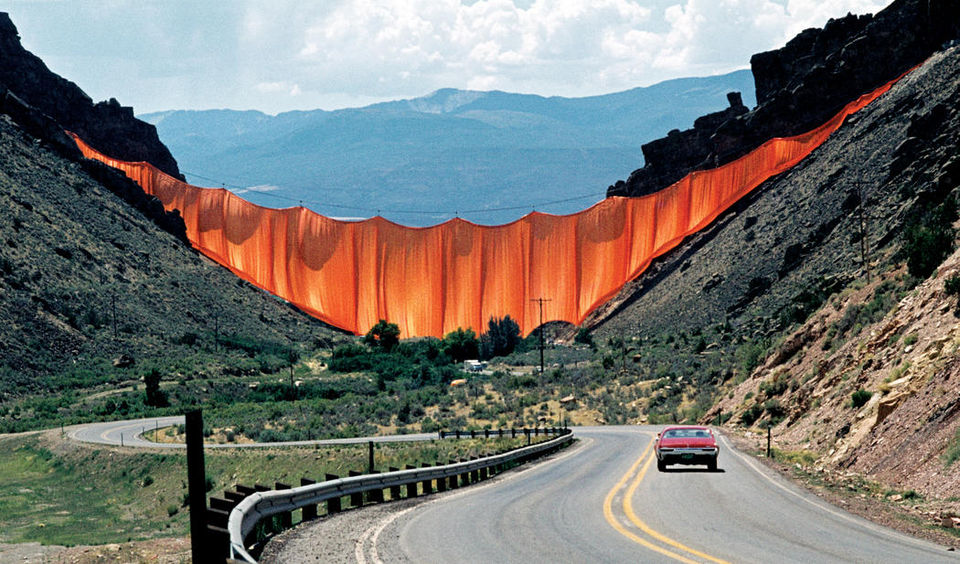
Their projects got a big boost when, at the end of 1970, Christo and Jeanne-Claude started the Valley Curtain project, in which a 400-metre-long cloth would be stretched across Rifle Gap, a valley in the Rocky Mountains in Colorado. They needed 230,000 dollars for this artwork and had to deal with protests from environmental groups. In the end the project outgrew itself and they needed 14,000 square metres of cloth to hang from a steel cable fastened to metal bars fixed into each hillside. The budget rose to 400,000 dollars and they had to sell more art pieces to raise the money. On 10 October 1971 the orange curtain was ready to be hung, but it tore because of the wind and the rocks. While a second curtain was being made, Christo received a reply from a Berlin architect about the possibility of wrapping the Reichstag building. On 10 August the following year, the second attempt at hanging the curtain was a success, although it had to be taken down 28 hours later because a storm was closing in.
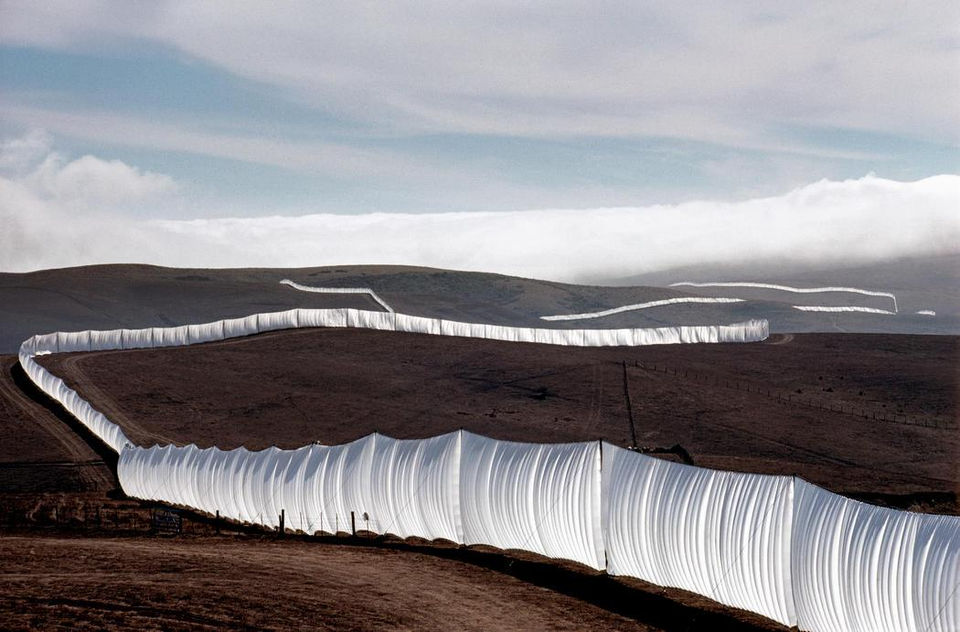
In 1973 Christo became a US citizen and began planning another of his great works, Running Fence, which involved making a fence 5.5 metres high and 40 kilometres long with steel posts and cables covered by a veil that ran across the landscape down to the sea. On 19 April 1976, the project finally got under way after a long battle with bureaucracy, but they needed 20 hectares of nylon, 2,050 steel posts and 145 km of steel cable. On 10 September 1976 the artwork was finished, but they had to pay a 60,000 dollar fine for not having permission from the authorities.
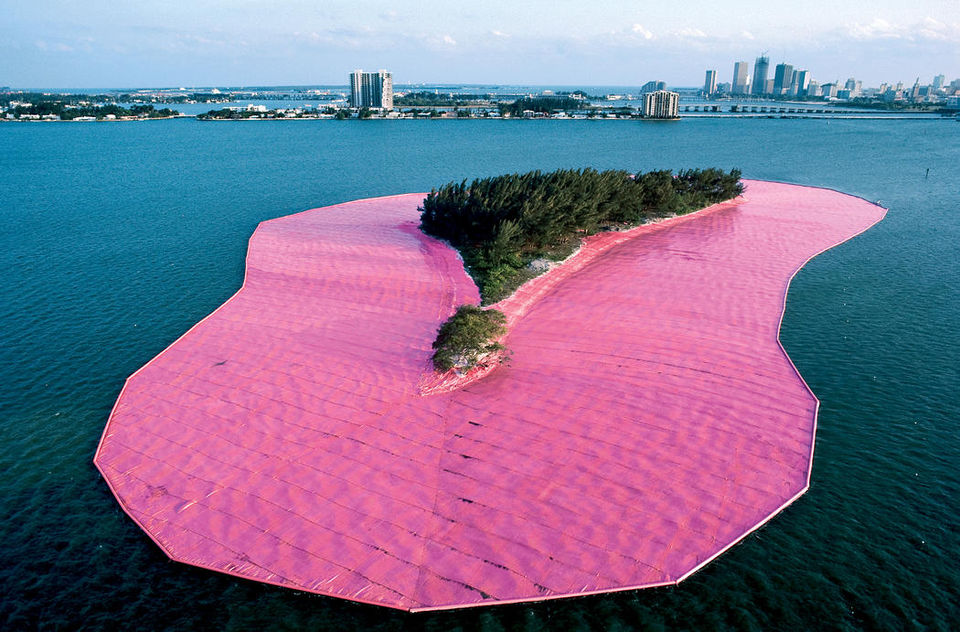
Although they were weighed down by the loans from their previous artwork, they carried on with other projects such as Wrapped Walk Ways, in which they covered 4.5 kilometres of paths in Loose Park in Kansas City, Missouri. When they finished they started their project based on Jeanne-Claude's idea of surrounding eleven islands in Miami's Biscayne Bay with 603,850 square metres of pink polypropylene. The artwork was completed on 4 May 1983 with the help of 430 assistants and could be seen for two weeks. The islands were watched day and night by monitors in inflatable boats.
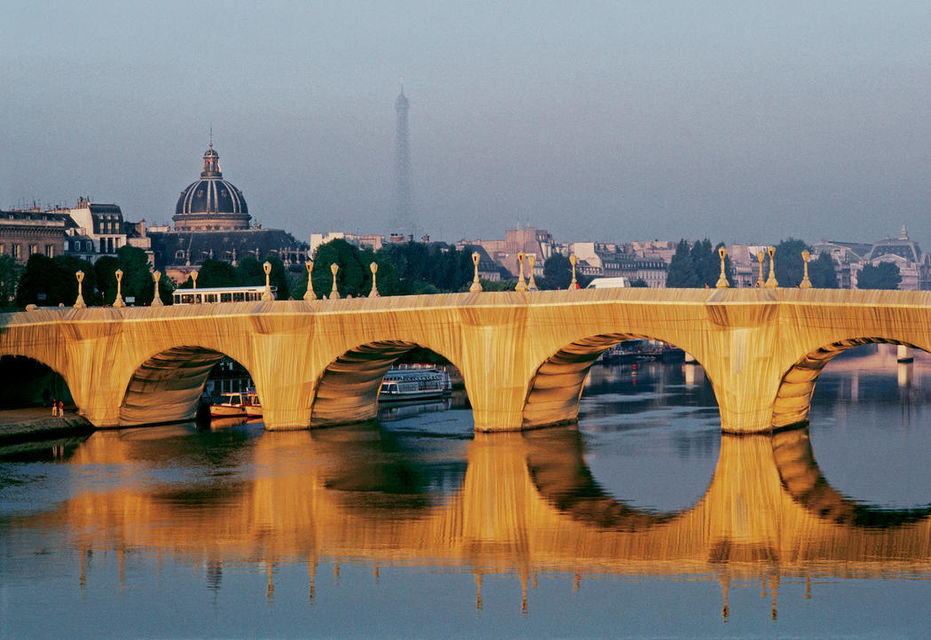
In August 1984 the couple obtained permission to cover the Pont Neuf in Paris, after nine years of negotiations with the mayor of Paris, Jacques Chirac. Wrapping the structure took 40,000 square metres of sand-coloured polyamide fabric. Over two weeks more than three million people came to see the artwork.
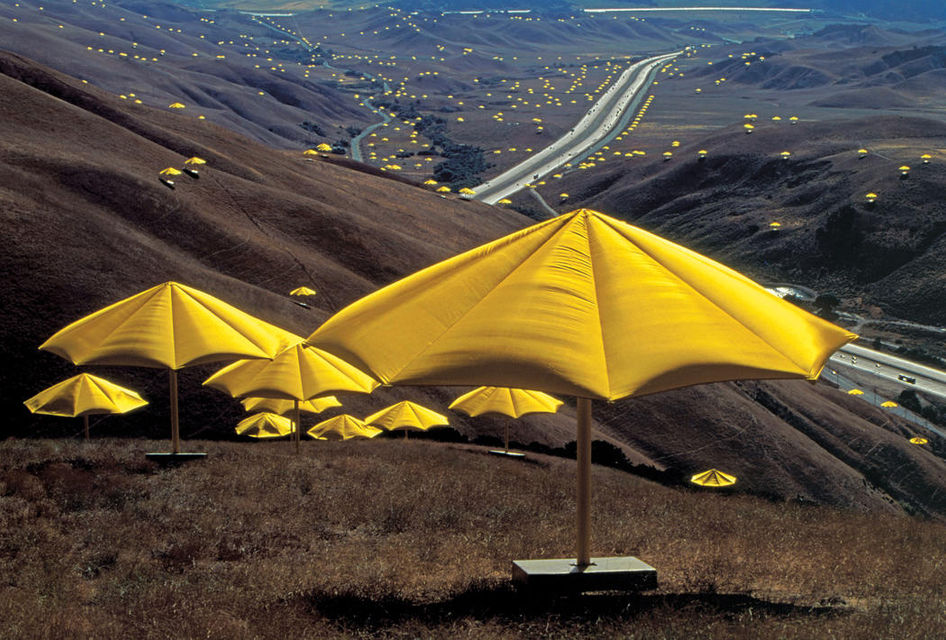
One of their most original works was Umbrellas, which involved installing blue and yellow umbrellas in California and in Ibaraki, Japan, at the same time. In December 1990 the bases for the umbrellas were laid and the 8-decimetre pedestals were anchored to the ground with tie rods. In September the following year, the umbrellas were carried to their places by 2,000 workers. To protect the landscape, the bases were flown to their sites by helicopter. The colours of the umbrellas were chosen to match the landscape: the yellow was meant to bring out the amber grass of the California hills and the blue to set off the landscape around a river in Japan.
By 7 September 1991, 1,340 blue umbrellas were up in Ibaraki and 1,760 yellow ones at the Tejon Ranch in California. A total of 3 million people came to see the umbrellas, each of which was 6 m high and 8.66 m in diameter.
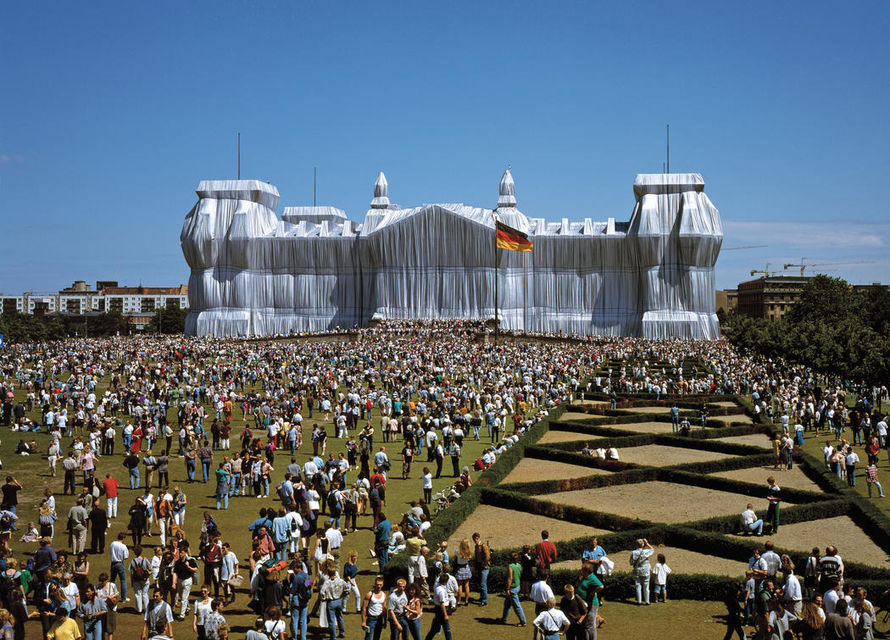
Their next goal was to wrap the Reichstag building in Germany. After lengthy contacts with the members of parliament, on 25 February 1995 the project was authorised. For it they used more than 10 hectares of fire-resistant polypropylene covered with a layer of aluminium, plus 15.6 km of rope. The wrapping of the building began on 17 June 1995 and a week later it was ready. The spectacle was seen by 5 million visitors before it was removed on 7 July that same year. As Christo explained in Letras Libres: "We wanted to turn a public building into a work of art, and the options were either a parliament or a prison. I come from communist Bulgaria, which I escaped from in 1957, and I wanted to do something between East and West. Berlin is the only city in the world where the two points come together so dramatically. In 1961, when the wall went up, the Reichstag, which was the old German Parliament, was left divided; technically it was in the British military zone, but fourteen metres of the building were in the Soviet military zone. That's why we decided to wrap the Reichstag. If I had been born in Nebraska the Reichstag probably wouldn't have meant anything to us."
The couple carried on with their projects, among them one from 1998, when they wrapped 178 trees in Berower Park at the Beyeler Foundation in Riehen, north of Basel, and another from 3 January 2005, when the installation began of the couple's most ambitious project, The Gates, in New York's Central Park. Christo and Jeanne-Claude also named the artwork "The Gates, Central Park, New York City, 1979-2005", a reference to the time that had passed from the first time they asked the authorities for permission until the project was approved by the city's mayor. It opened on 12 February 2005 and closed two weeks later. A total of 7,053 "gates" were made from saffron yellow material and installed along the park's paths. The project was valued at 21 million dollars, raised entirely by Christo and Jeanne-Claude. To finance the artwork, the couple had to sell art pieces from the 1950s and 1960s, studies, drawings, collages and original photographs of their earlier works.
Despite all this activity, some of the couple's ideas have never come off, mostly for lack of permits, such as the Puerta de Alcalá in Madrid, the statue of Christopher Columbus in Barcelona, the Arc de Triomphe in Paris, the Wall of Ten Million Oil Barrels for the Suez Canal or the Museum of Modern Art in New York. They have also not yet been able to carry out projects such as Over The River on the Arkansas River near Cañon City in Colorado, which involves suspending more than 10 km of translucent reflective fabric held by steel cables anchored to the riverbank, or the project The Mastaba, which would consist of building this type of structure 150 metres high with 390,500 stacked oil barrels in different colours so that it looks like a mosaic.
A singular couple who, with their creativity and their search for freedom, have managed to turn their dreams into fleeting realities.
Comments (0)
Log in to leave your comment. Log in