
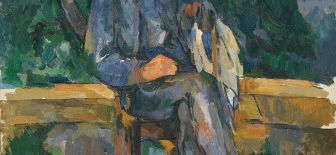
At the Cézanne exhibition at the Museo Thyssen in Madrid, the first thing visitors come across is a mysterious oil painting: Retrato de un campesino. One of the last the painter worked on before he died. The figure is as gnarled as a tree trunk and slightly twisted in on himself. But the strangest thing is his blurred face. Cézanne usually finished them. Why not this time?
Cézanne would turn to his own reflection in the mirror to finish composing a scene when he ran out of models. Perhaps this is a self-portrait of the painter. Perhaps a question he could not answer: how will history remember me?
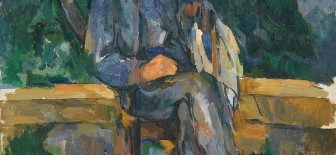
Retrato de un campesino, 1905, Museo Thyssen-Bornemisza, Madrid.
El más “torpe y excéntrico” del grupo de los impresionistas –así le tachó la crítica tras la primera exposición del movimiento, en 1874– realizó en el aislamiento de Provenza gran parte de su obra. Su única compañía fueron los árboles de sus paisajes.The critics' scornful words about his painting (brutal, crude, childish and primitive) would soon become the praise of modern art.
Pero el pintor siguió prefiriendo los caminos intrincados del bosque a las carreteras del reconocimiento oficial. Pintaba al aire libre. Es el prototipo de artista en este sentido. Aunque al volver cada recodo de estos senderos pintados el observador vaya a darse con la pared del estudio. Imposible ver dónde terminan.This tension between painting outdoors and indoors is a constant in Cézanne, who died of pneumonia after holding out for hours painting in a downpour. And the Thyssen exhibition revolves around that tension, bringing together the landscapes he painted outside with the still lifes and bather scenes he composed in his studio.
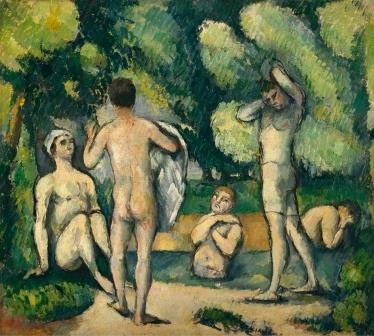
Bañistas, 1880, Detroit Institute of Arts.
Son 58 pinturas en total –49 óleos y 9 acuarelas– y esta, la primera retrospectiva de Cézanne en España en treinta años, comisariada por el director artístico del museo Guillermo Solana. Cézanne site/non site se inaugura el 4 de febrero y se podrá visitar hasta el 18 de mayo.Cézanne brought nature inside the four walls of the studio and even within the four edges of his still lifes there was room for a mountain. Saint-Victoire, in Aix, lent its geological build to Cézanne's still lifes.
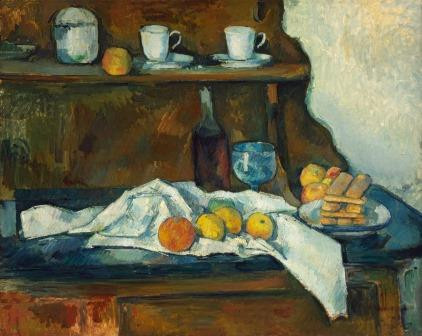
El aparador, 1877, Szépművészeti Múzeum, Budapest.
Así, las formas geométricas de la montaña se contagiaron al mantel de sus bodegones y de ahí a las telas de los cubistas Picasso y Braque.Maybe Cézanne really was the peasant in the portrait that opens the exhibition. Maybe the painter who from dawn tirelessly walked the roads in search of inspiration, the old master the young came to for advice, the solitary creator fed on the substrate of the earth, ended up like his figures, turning into a tree.
It's worth going to the Thyssen to take shelter in Cézanne's shade. We don't know if it's a cypress, but it's certainly just as long.
And don't miss the chance to buy a Cezanne print in the Artelista shop: https://www.artelista.com/grandes-maestros/autor/paul-cezanne.html

Comments (0)
Log in to leave your comment. Log in