
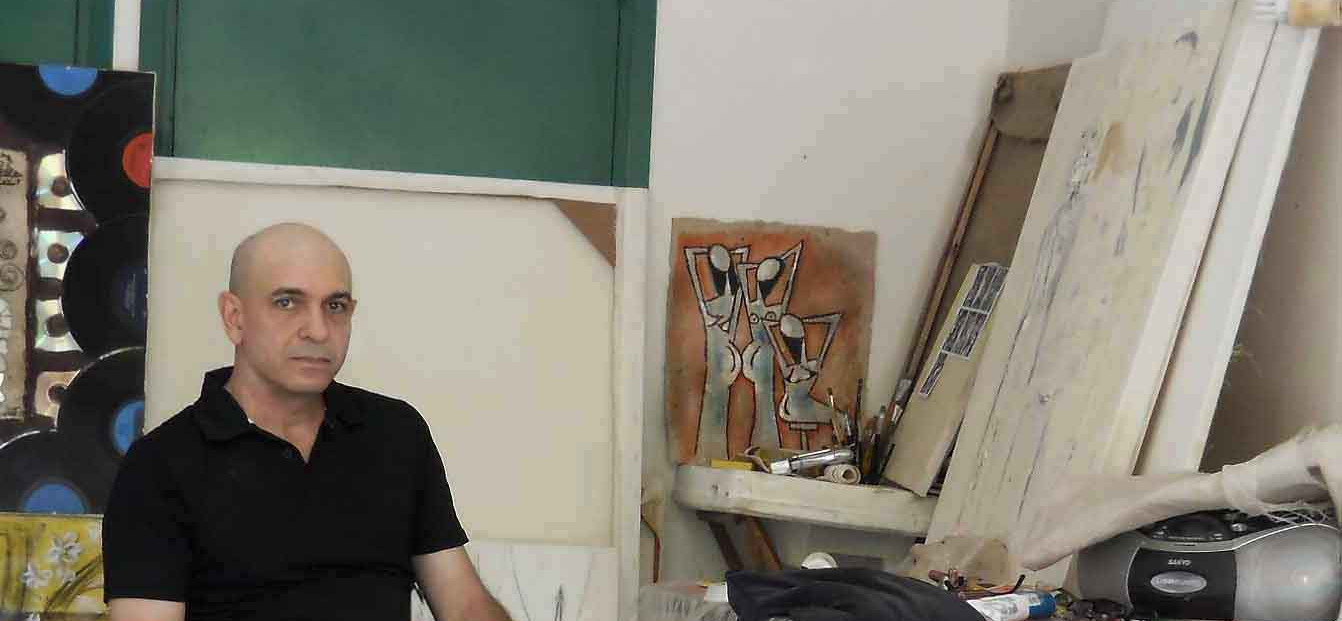
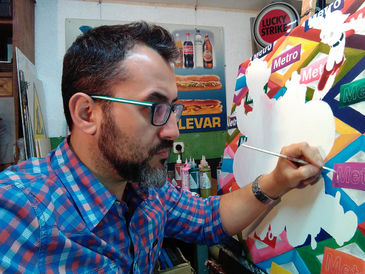
My name is Antonio Pérez Bornot and I was born in Santiago de Cuba in March 1964. As a child I was taken to live in Havana, where I still live and work today. I tried my hand at professions that had nothing to do with art, but I always felt drawn to painting and in the end I decided that was the road to follow. In Cuba being a painter is perhaps more complicated than in other places because the art market is so small, and that includes getting hold of the materials to make an artwork. For more than 20 years I have worked with dedication, learning everything about the craft and looking for the inspiration to make my artworks and to make them sincere. Over time I have had ups and downs like most people, but art has been a constant in my life and I am sure it will go on being one. That is why every day I try to see the world through art, from this beautiful Caribbean island where I am with my family, my paintings and my dreams.
When and why did you start painting?
I started painting at 15. Before that I had felt an interest in painting from visiting museums and exhibitions and from reading, from the biographies of famous painters. All of this led me to look for a way to learn the technique, and little by little I took my first steps in the art world as an amateur. I made reproductions, still lifes and Cuban landscapes that I gave away to family and friends. I soon discovered that I felt better painting than doing anything else, and so at 20 I decided to devote myself to art full time.
How do you think a gallery and its artists should help each other?
The relationship between the gallery and the artists has to be built on trust and commitment, the way I see it, with the interests of all parties complementing each other. The artists should do their best to create a solid body of work that can be supported and promoted, and the gallery, with its resources and its knowledge of the market, should get that work known and sold, like a good marriage.
What advice would you give to artists who are just starting to show their work?
I think it is very important to have confidence in what you create and to be persistent, not to be afraid of criticism or of failure, because this is a long, hard career with no guarantee of any kind. Otherwise, if what we want is to be rich and famous, better change trade for a more lucrative and stable one, because it is well known that a painter's future is fairly unpredictable, and it is precisely that risk that gives the artwork an extra value.
How did you sell your first artwork? Is there one you feel a stronger connection with?
The first artwork I sold, once I was already painting professionally, was in 1988, when a friend turned up at my studio with an American couple. After looking at some artworks and asking about them, they decided to buy one. As for having a special relationship with a particular artwork, it is a hard choice because I have painted a lot over these years, but there is one painting I remember in a special way because of the circumstances in which it was made.
What is art to you? What part does it play in your life? Do you make a living from art?
Art is when we give more weight to the spiritual world in what we do, it is a path and a need for thought, it is food for the soul and it is very important in my life, because I believe in the power of art, in the fact that it can make us better people and help solve many problems.
Making a living from art is another matter. In my case it has worked in cycles. Naturally, in times of crisis it is very hard to live from art, and that makes sense, because art belongs to a part of the spiritual life that is considered a luxury when money is not plentiful. But when the economy improves, sales go up and with them the income is enough to live on. At the moment I can cover my expenses with what I earn from my artistic work.
What are your sources of inspiration? Do you identify with any other artist?
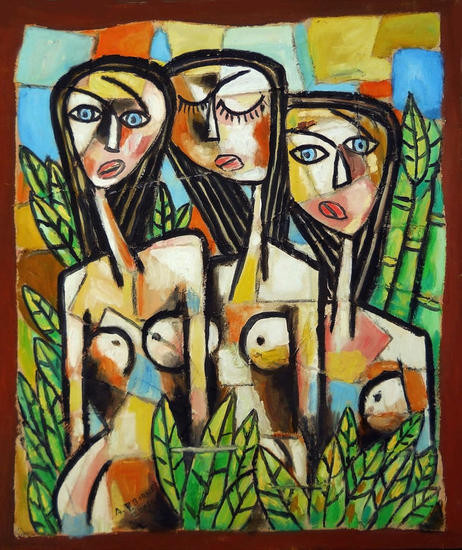
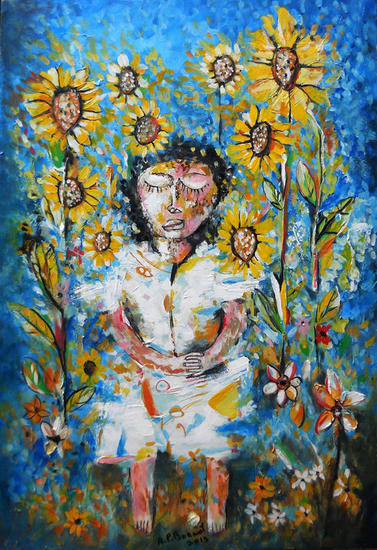
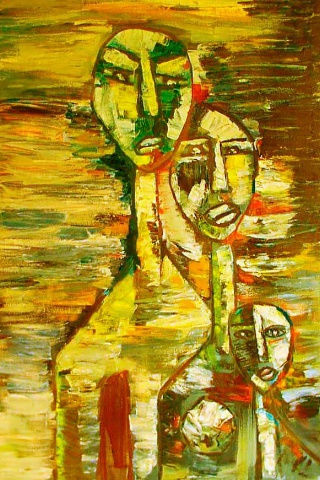
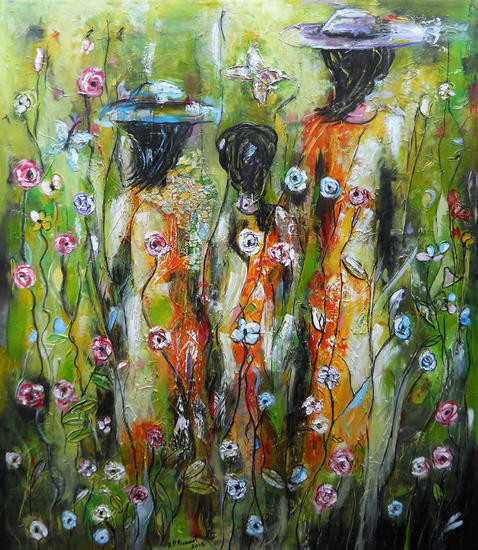
The best way to find inspiration is to be focused on the work. Every day I find time to draw and to play with lines and shapes, and that is how the ideas and the visions for some of my artworks come to me. Other fantasies come through the influence of the great masters, but above all from the experiences we accumulate in our lives. Looking back at my beginnings as a painter, I find that I went through several stages and made artworks with very different characteristics, searching for my own expressive form and learning the technique. In time I built up a body of work that better reflected my artistic intentions, with more personal elements, where my ideas, feelings and visions are caught in the painting, with defined elements in which I can recognise myself, while at the same time the influences I have taken in over more than 20 years of work are visible. My subjects tend to be recurring over time, but I am constantly varying the form and the technique, because I usually get bored quickly of doing things always in the same way. That is why you can see a lot of variety in the ways I handle a subject, and it is something people ask me about fairly often.
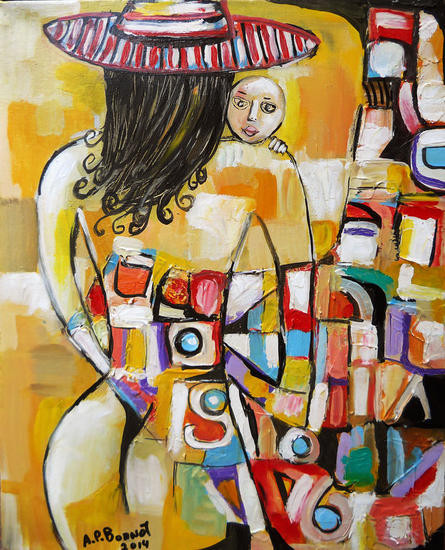
First of all, I feel I have a great influence from Picasso. Another artist who has marked my work is the Cuban Wifredo Lam. The French Impressionists also influence my work, especially Seurat with his pointillism, and there is the odd debt to Renoir. The work of the Austrian Gustav Klimt has also caught my attention and has taught me that every artwork fulfils a decorative function in a certain way, which is not in conflict with the validity of what it proposes.
What is there in your creative process that might make it different?
Every painter has a personal way of turning ideas into a real artwork. Generally the working method takes shape over the years, until it settles in as an important part of the creative process. When I am in a working phase, painting a series of paintings, I already have the general idea of the subject and of how to represent it, but what largely determines what the future artwork will be are the preliminary sketches. For me it is important to use drawings and sketches, for their spontaneity, because in them ideas can take shape in a simple way.
Have you had an exhibition lately, what can you tell us? Do you have a project in mind?
I have not taken part in solo exhibitions since 2004, since preparing them took up a lot of time and resources. The last one I did was in the city of Savannah in the United States and for the moment I have no project in preparation, just carrying on working. Maybe next summer I will take part in an exhibition with other artists here in Havana. I do not want to miss the chance to thank the whole Artelista team for being so kind and so professional, I am very happy to be able to show my artworks on this magnificent site. Thank you very much.
Could you recommend us:
An artist: Wifredo Lam.
An artwork: La jungla by Wifredo Lam.
A book: Don Quixote by Cervantes.
A film: Pollock.
Thank you very much, Antonio.
We invite you to visit Antonio P. Bornot's gallery and the review we wrote about him on Artelista.
Comments (1)
Lucero de MORA
January 30, 2016Felicitaciones y continúa alegrándonos con tu pintura.
Log in to leave your comment. Log in