
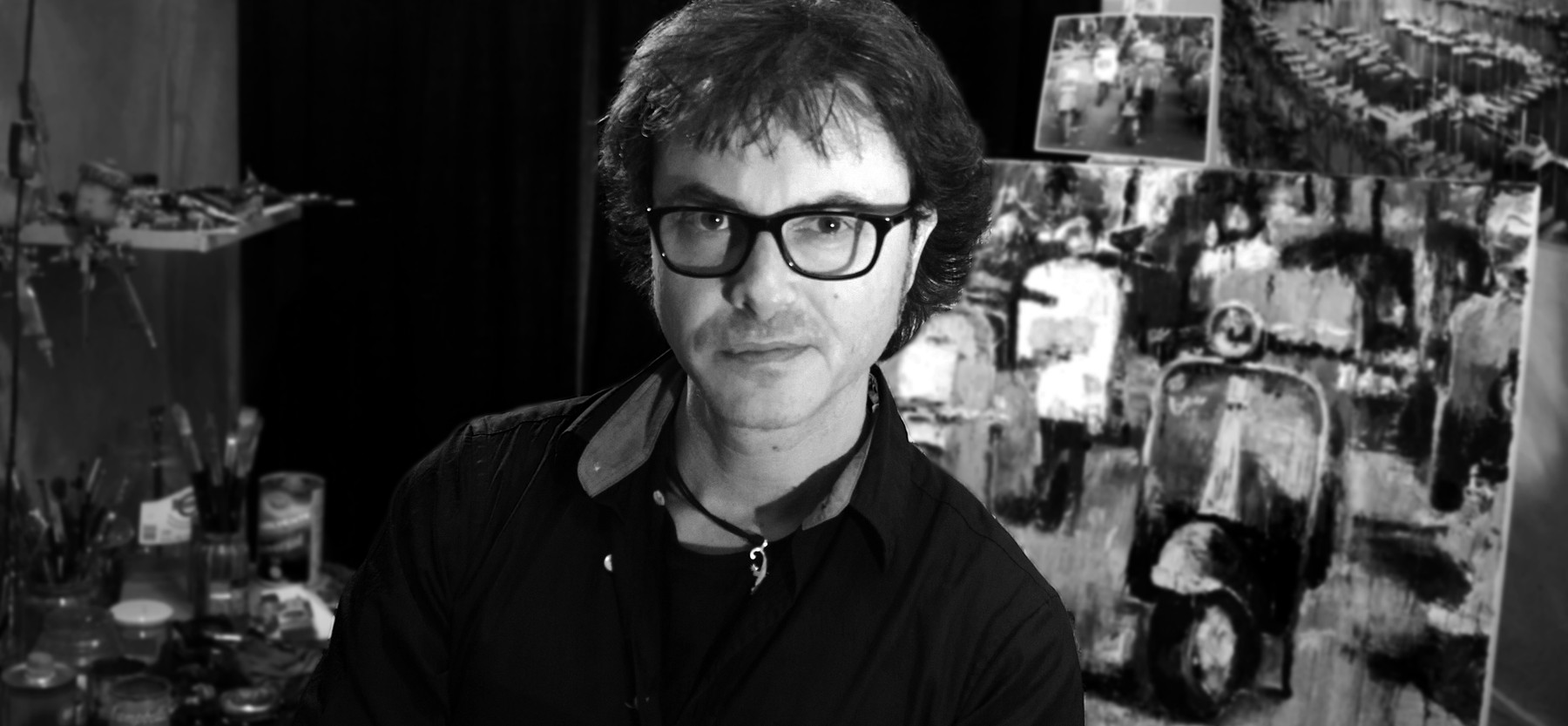
I was born in Palma de Mallorca on 19 August 1973, to a father from Gibraltar and a mother from Córdoba, who gave birth to me at around 11 in the morning. Maybe that's why getting up early sits so badly with me and I work better at night. Even so, I get up early during the week, just to impose a bit of professional discipline on myself, which is why I'm drinking coffee all day long, I never say no to a cup at any hour. I'm one of those people who only read the instruction manual when there's no other option, self-taught by nature and by stubbornness. I think inspiration exists, but it comes when it feels like it, and if it happens to turn up while I'm painting a picture or doing anything else, so much the better.
I've worked in graphic arts workshops, in an advertising agency, in a set design workshop and in a television channel designing and building sets. Now I do nothing but paint.
When and why did you start painting?
For as long as I can remember, my father would make drawings for me to colour in or try to copy, and I'd spend hours trying to get them to look at least a bit like his, but they were the drawings any kid of that age would make, 4 or 5 years old. The thing is they told me they were very good and I believed it so much that I kept at it. I loved the Mortadelo y Filemón comics and I started copying characters and then creating my own, but inspired by those of the master Ibáñez, who marked me for life with his drawings and his way of reading the world. I remember that practically all my school books were full of drawings and cartoon strips, I loved drawing anywhere. I grew up next door to the house of the painter and sculptor Miguel Aguiló. I was good friends with his children and we often played in his studio, which was packed with paintings, sculptures, easels, tubes of oil paint and so on. That's where I knew that one way or another, for better or worse, I'd end up being a painter.
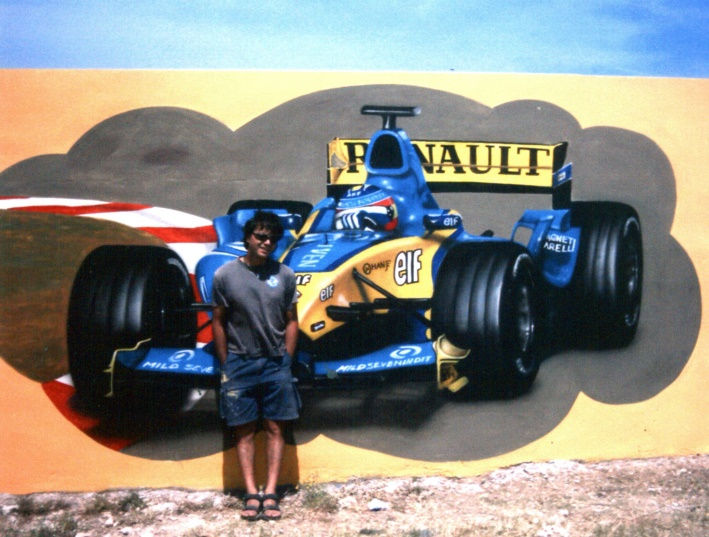
I went on to study at a polytechnic school of draughtsmanship and architecture, which was nowhere near what I really liked, but I learned to draw industrial parts, houses and buildings. It let me be creative and it helped me enormously with perspective and proportion. I had the chance to work in a sign-painting workshop where, besides signs, we made murals and drawings. There I learned to mix colours and to use brushes, and the techniques I picked up served me years later in a set design workshop, where we painted murals and large-scale figures.
All my doubts about drawing, painting, materials and how to apply them started to clear up, and on a grand scale. We worked with huge murals, and although at first there was a period of adapting and learning, in the end it was a job and not an art school. So I learned as I went along and they even paid me for it.
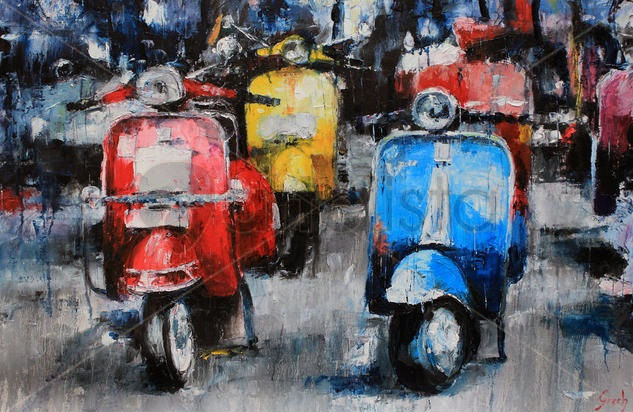
Having learned to paint in formats of up to 12 x 5 metres made things much easier when it came to painting canvases, which are far smaller and more manageable, but neither the materials nor the tools I used for murals worked for canvas, at least not the way I expected. Even so, I painted my first picture with screen-printing ink and a brush, and held my first exhibition at a yacht club, where, to everyone's surprise, mine included, I sold practically all the paintings. I kept trying materials and techniques until I hit on oil and the palette knife. I remembered one of Miguel Aguiló's paintings, done with a knife and thick impastos of oil, that I'd seen as a child. Up close all I could see were meaningless blobs of paint, but from a certain distance you could take in a stunning Mallorcan landscape, one of the many he painted. I'd finally found a material and a technique I liked, and I haven't stopped painting since.
How do you think a gallery and its artists should help each other?
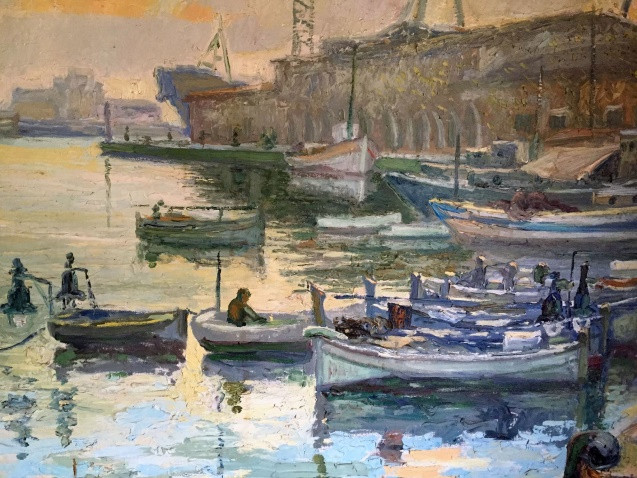
I think conventional galleries, at least the ones I've shown in, need to bring themselves up to date. Exhibiting in a physical gallery isn't within everyone's reach given the rental prices for the rooms and/or the commission on sales, plus they have far more limited opening hours than online art galleries and the chances of your artwork being seen anywhere in the world are very small. I'm backing online galleries. You may lose the direct contact with people, but in exchange they're open 24 hours a day, 365 days a year, you set the price of the artwork yourself and change it whenever you see fit, they don't ask for exclusivity and you can put an artwork up or take it down whenever you want, and they also handle shipping with every guarantee. They organise auctions, group shows and so on too.
What advice would you give to artists who are starting to show their work?
That they should enjoy it. I still do, and that comes across. I still get butterflies every time I hang a new painting and see the impression it's made, I read the reviews and the comments, and if it sells I'm as happy as I was the first time. I think the day I stop feeling like that I'll have to start looking for another trade.
How did you sell your first artwork? Is there one you feel a stronger connection with?
The first artwork I sold was to my sister. I have two sisters and a brother, I'm the youngest, and my parents, my siblings and my girlfriend have always helped me, motivated me and encouraged me to take up painting as a profession, and I'll always be very grateful to them for that. The painting was a reproduction of an artwork by Pep Girbent that I copied from the catalogue of his exhibition.
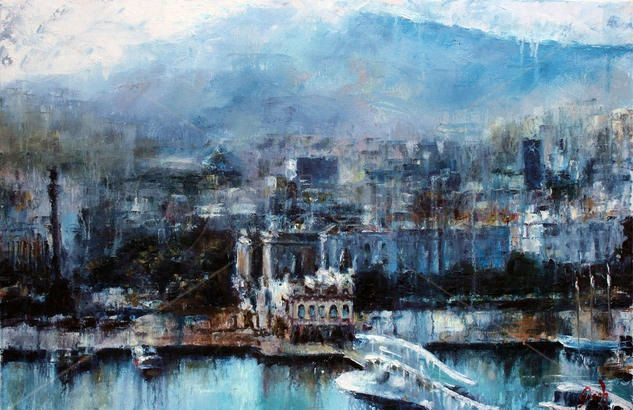
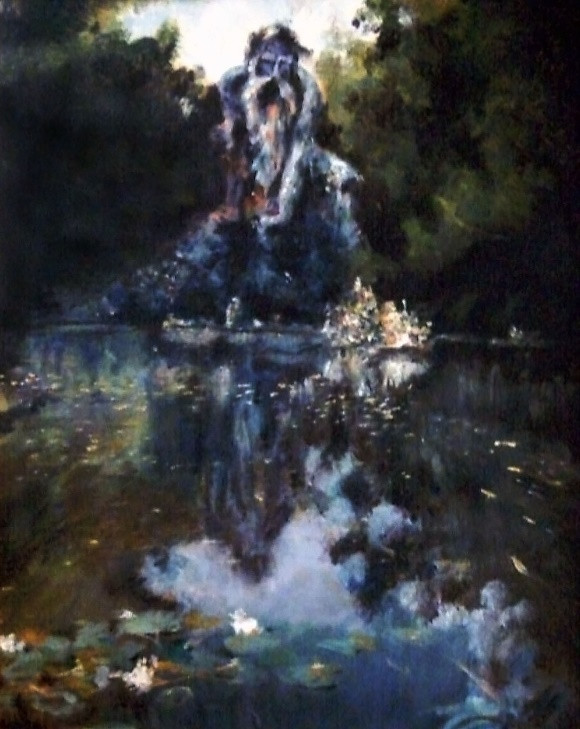
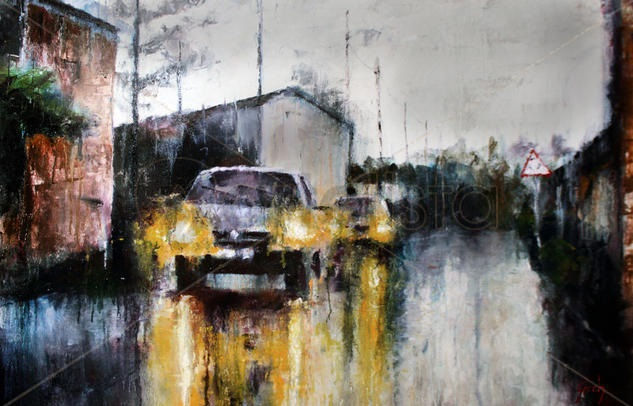
The artwork Puerto 44 brings back very good memories. The scene in the painting is one of those I saw every day during the eleven years I lived on a sailing boat in the harbour where I held my first exhibition. Living that close to the sea was incredible, I saw images that were burned into my retina forever.
What is art to you? What part does it play in your life? Do you make a living from art?
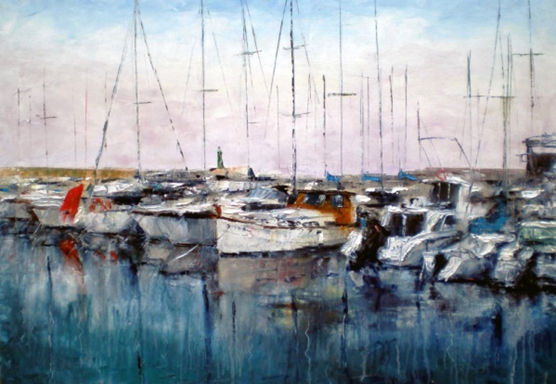
Art is a way of doing things. There are artists everywhere and in every facet of life, but only some things have artistic value as such, or an economic value. For me the secret is doing what you like for as long as possible. "Work at what you love and you'll never work a day in your life", the master Vicente Vila told me when I was his assistant. Art is everywhere, you just have to know how to look for it.
Right now I only paint, with some ups and downs, but it gives me enough to live off art.
What are your sources of inspiration? Do you identify with any other artist?
My sources of inspiration have been Miguel Aguiló, Pep Girbent and Luís Maraver. They're painters I admire and they've had a big influence on how I arrived at my own way of painting. I try to get my paintings to have the strength and the brilliance that they manage to put into theirs.
What is it about your creative process that makes it special?
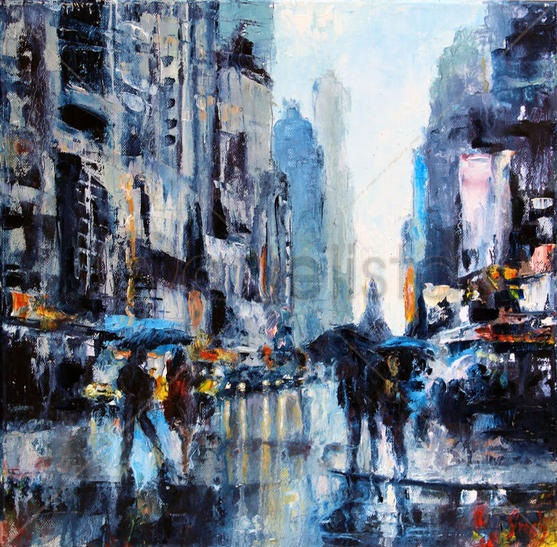
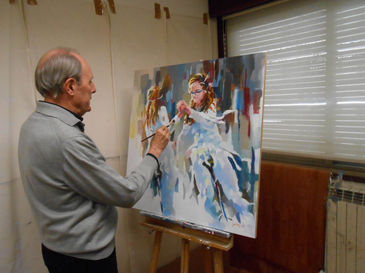
My aim is for them to convey some emotion, not to be mere decorative objects. Painting with a palette knife, I want them to have strength and movement, sometimes mixing the colours directly on the canvas. I almost always paint with a knife, the first one I bought back in 2003, and although I have quite a few other knives, it's the only one I use. I lose all sense of time when I paint and sometimes I have the feeling that my hand and the knife are off on their own and I'm just an observer of the painting coming into being.
Have you had an exhibition recently, what can you tell us? Do you have any project in mind?
Apart from one painting I sent to take part in a group show at an art gallery in Barcelona, I exhibit all my paintings in online art galleries. I'd like to make sculptures, I've already made a few and I enjoyed the experience, but for now the project is on hold for lack of funding, since I'd like to find a material that's hard-wearing but easy to model.
Could you recommend us:
An artist: Luís Maraver.
An artwork: Museo by Luís Maraver.
A book: Los Navegantes by Edward Rosset.
A film: Life of Brian by Monty Python.
Thank you very much.
We invite you to visit Grech Santos' gallery on Artelista.
Comments (1)
Cristina Santos
April 18, 2016¿Tienen previsto algún otro método para proteger la obra de ésto? Gracias.
Log in to leave your comment. Log in