
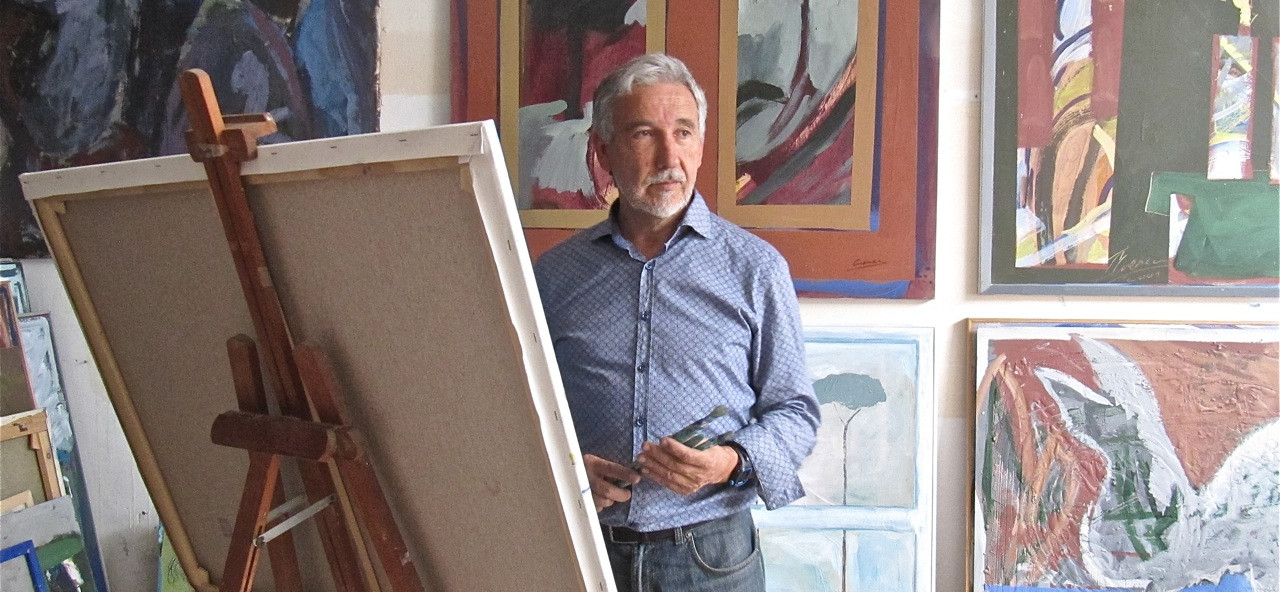
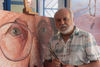
My name is Jesús Cuenca and I was born in a village in Cuenca. My parents came to Barcelona in 1963, I was 11. The first joy of arriving in Barcelona was that there were newsstands and therefore comics, which I loved so much. The second was that the city had a sea and I had never seen one before.
My father had a carpentry studio and I helped him on plenty of occasions. Contact with wood and the tools used to work it were familiar to me, back in the village I was always making myself swords, bows or any sort of contraption.
In Barcelona I started at the new school and found my first classmates with interests similar to mine: astronomy, music, hikes in the mountains, photography and painting. I started working very young, at 18, at the Hospital del Vall d'Hebrón, but in the afternoons I kept helping at the studio and afterwards I did secondary school at night. Back then you had to do military service and mine fell here in Catalunya. Then came years of work, study and painting, which I practised now and then. Despite everything I had on, I found time to get married and move out on my own.
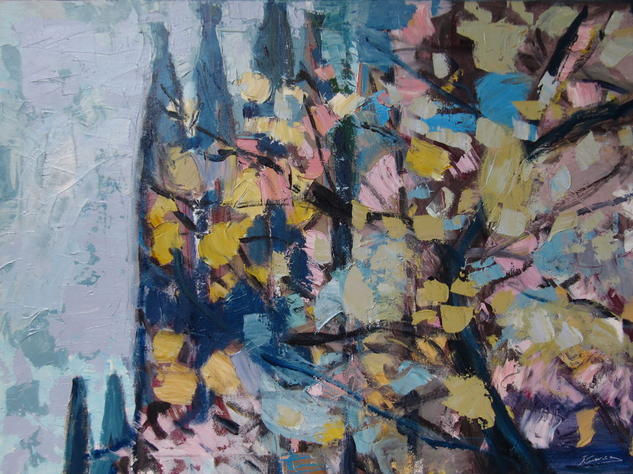
One of my goals was to study art at the “Escola Massana” and I did, fitting it around my “permanent” job at the hospital. I saw it as a necessity since I had come to art self-taught and La Massana was like a door to a deeper knowledge of painting. When I finished my studies in Applied Arts, specialising in painting, I entered a few art competitions and was selected in some of them.
I had a dilemma between painting in the afternoons or carrying on studying art, this time at university. I decided to do Fine Arts, already 38 years old. I graduated specialising in restoration, since with painting I reckoned I already knew enough. I thought that with that CV doors would open for me, but the galleries I explored already had their artists, and those artists had either been to New York already or were painting full time.
Just as there is a first division in football, there is also a second and a third. I use this football comparison because many of us artists get by playing a decent game in the second division. I did a lot of group exhibitions and the odd solo show in unconventional places, which as it turns out are conventional now, like a hospital, an embassy or a hotel. Also in an art space on the coast.
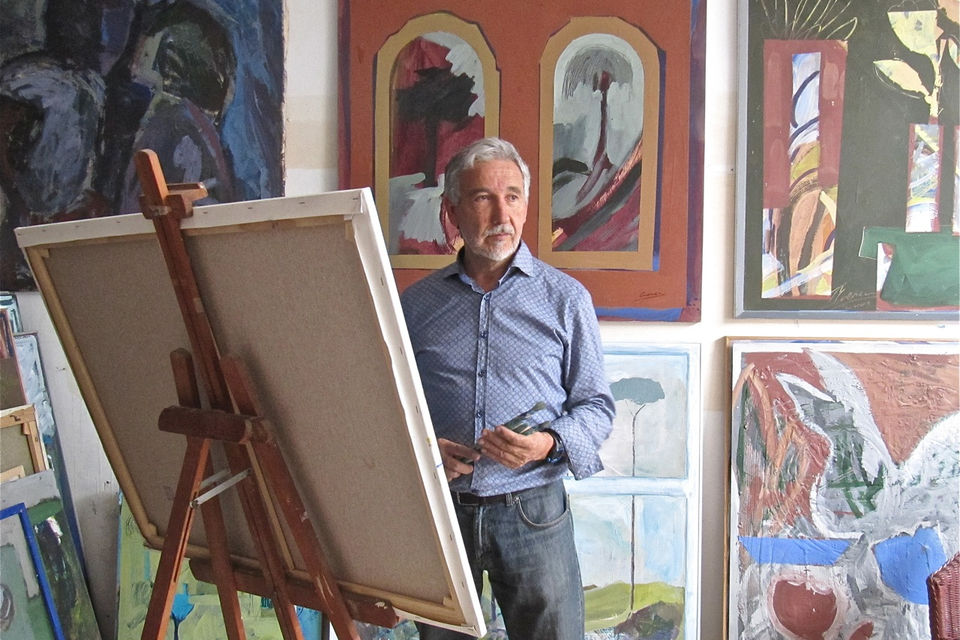
The internet has also been a door for making the artworks visible, I made a couple of blogs that I still update, as well as being on Artelista, on Twitter, etc. Now I have much more time and I paint regularly.
When and why did you start painting?
I started painting very early. In the village, at 8 or 9, a teacher who knew about my hobby would give me the last 20 minutes of class to make drawings that he then kept. Of all of them I remember a very good Don Quixote on horseback and a Christ on the cross that came out rather misshapen. I carried on making copies of the drawings I liked or of the heroes from the comics I read, el Jabato, el Capitán Trueno, at home or in Madrid when I visited my aunt, I drew at any moment.
Once in Barcelona, at the studio, a piece of wood served as the support for my first painting, and on it I applied earth, pigments and carpenter's glue. I remember it was a river between mountains and it must have measured about 80 x 60 cm. For a boy of 12 or 13 it seemed a big format compared to drawings on paper.
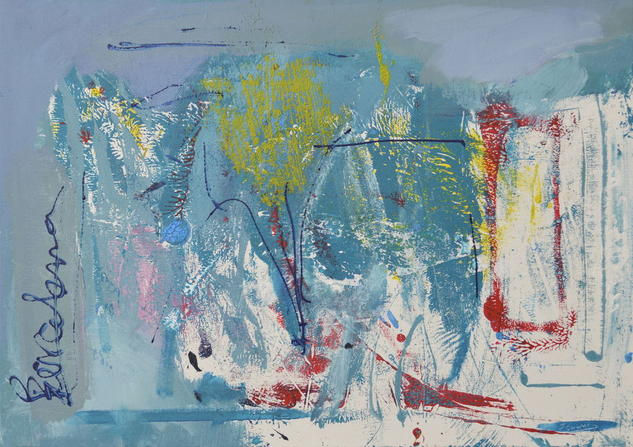
Those were my first beginnings and I carried on making drawings, watercolours and paintings. The time I spent on it was special for me, everything was the present moment, everything going on around me was in the background. Painting on paper, canvas or wood gave me great satisfaction. And the process of creating is an experience of self-knowledge.
How do you think a gallery and its artists should help each other?
The role of galleries has been to put on exhibitions to promote their artists. Soledad Lorenzo, an important gallerist now retired, used to say that the gallerist is “a bridge between art and society” and that “in art there are no truths, there is emotion”.
Galleries have opened up to the latest trends, but in recent years many have closed because of the crisis, though I think it is also because many galleries have bet on an art where painting and emotion have been pushed into the background, with the rational and the hermetic prevailing. That way a distance has grown with the public and the rooms have been emptying of visitors.
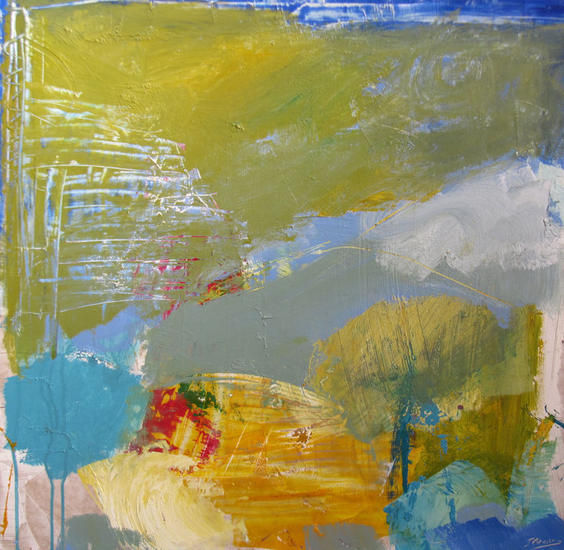
I think it would be interesting to bring the public back to galleries and have them enjoy new creations. That schools would schedule gallery visits with their pupils, that people would be taught to look. That universities would strengthen the humanities instead of eliminating them. That in the gallery, alongside the artworks, there would be videos of the artist showing the creative process. The artist can also help the gallery, by spreading the word about their artwork in the media.
What advice would you give to artists who are starting to show their artwork?
Artworks are made to be seen and for that there need to be venues, bars, exhibition rooms and cultural centres to show the work. That means direct contact between the public and the artwork, which is the best way to appreciate how it is made, and I don't mean the price but the way it is put together. There are other means such as the internet with a multitude of sites to show it. The more active they are, the more people will get to know them. I would advise them to select what they consider their best and show it, but not to become obsessed with exhibiting. It is important to be consistent and they mustn't forget that they are their own best promoters.
How did you sell your first artwork? Is there one you feel a stronger connection with?
A lady who was a client of my father's carpentry studio, who knew about my love of painting, commissioned me to paint two pictures evoking her homeland, Andalusia. A landscape and a square with a fountain. I experimented with marble dust, gouache and acrylic and those were my first two sales, a long time ago now, I must have been about 20.
Among the artworks there is always one you feel more drawn to, I could mention Maggiore, Libro con luz, Costa Azul 2, Cisne y nebulosa and a few more, among them the last two that have been bought from me, Julio 9 and Julio 10.
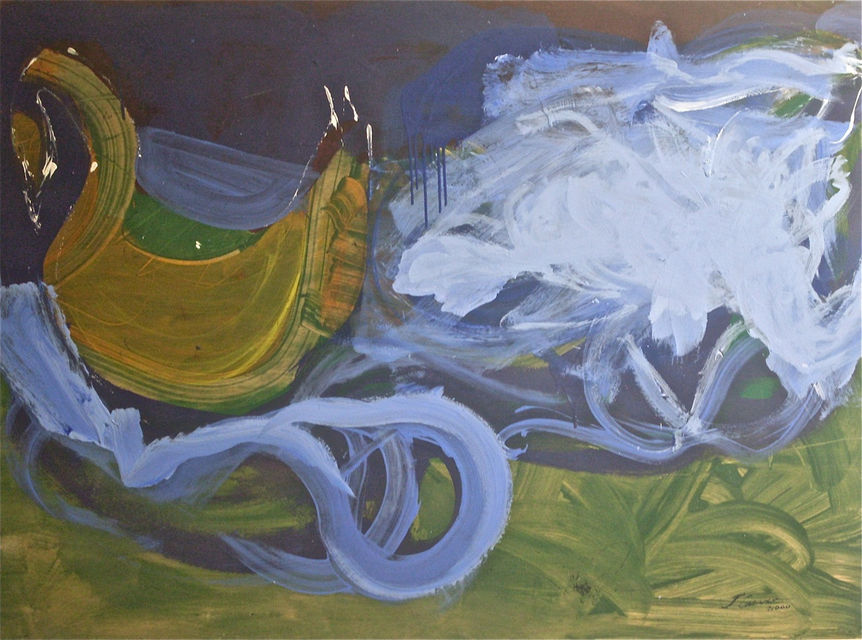
What is art for you? What role does it play in your life? Do you live from art?
For me, art is a way of expressing inner feelings or other kinds of unconscious knowledge that accumulate with our experience. Art is diversity, a kaleidoscope that shows the many faces that make up reality and helps us understand the world. So it widens our concept of reality. For me art is not limited to contemplating artworks in a museum or a gallery. There is art everywhere, in the peeling paint on a wall, in the white clouds of a blue sky, in a painted door, in the branches of a tree, in the wave breaking against a rock, in a ploughed field. So we can enjoy aesthetic experiences at any moment and by ourselves. They try to dazzle us when they tell us that at an auction an artwork sold for millions of euros, implying that if the price is that high it must be very good. Art, like many things, is used to create trends and manipulate our judgement.
Art has played an important part in my life, because apart from the aesthetic pleasure of creating, it works as a kind of therapy that lets you disconnect from a sort of single way of thinking that is being imposed on us. It seems that because we dress differently and have different hobbies we enjoy a multicultural world. We are far from that, the slogans of the media make us believe we have our own opinions, when in fact we are only repeating what those media say.
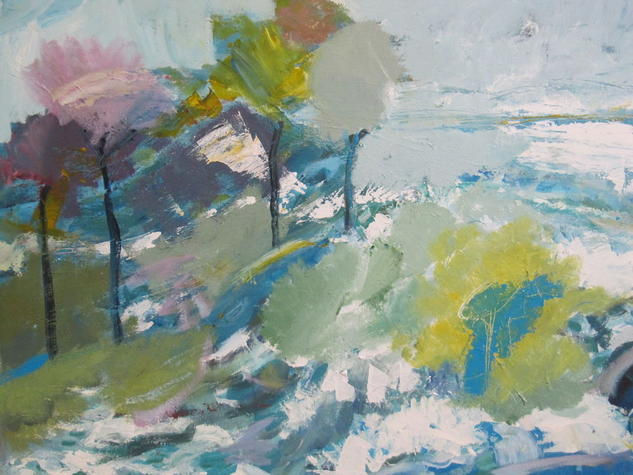
In the art world there have been revolutionary figures, forgotten artists with immense biographies, that those who hold the strings of power have not valued and never will. The other day, walking along, I saw a sentence on a wall that said “the artist is the engineer of the soul”, that's what I aspire to.
As for whether I live from art, I would have liked that to be the case. My income came mainly from my job as staff at the public hospital. But that gave me the freedom to search and experiment in different genres.
What are your sources of inspiration? Do you identify with any other artist?
I'm passionate about classical painting, my spiritual masters being Da Vinci, Bosch, Velázquez, Corot and Patinir. When I travelled to Cuenca I would visit the Museum of Abstract Art and I liked the abstraction of Zobel, Canogar, Millares and the gestural work of Saura. I admired foreign painters like Twombly, Kirkeby, Schnabel, Staël and a long etcetera. In the 80s here in Barcelona I was a regular gallery-goer, looking at their paintings. On Consell de Cent street there were quite a few clustered together and I saw artworks by Tapies, Ràfols-Casamada, Barceló, Sicilia, Hernández Pijuan... and many more. So the influences are varied but they come mainly from Catalan artists.
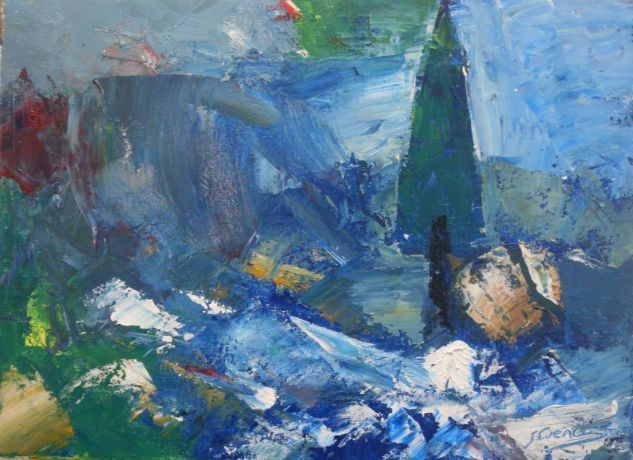
Seeing painting stimulates me to paint, with nature as my source of inspiration. Formally I don't imitate it (mimesis isn't for me), I feel it, and I'm in tune with Aristotle when he said “the aim of art is to give body to the secret essence of things, not to copy their appearance”.
What is it about your creative process that makes it special?
My paintings usually start from a stain or a stroke that, playing with chance, draws forms full of surprises, and so a dialogue begins between the accidental and what I decide, until an artwork takes shape that has formal connections with landscape.
The process has to do with experimentation, searching and observation. The experimentation that satisfies me is checking how colours interact, how they relate to one another. Seeing how the transparency or opacity of colour (along with the material and the gesture of the brushstrokes) gradually shapes a reality that is close, recognisable and steeped in subjectivity.
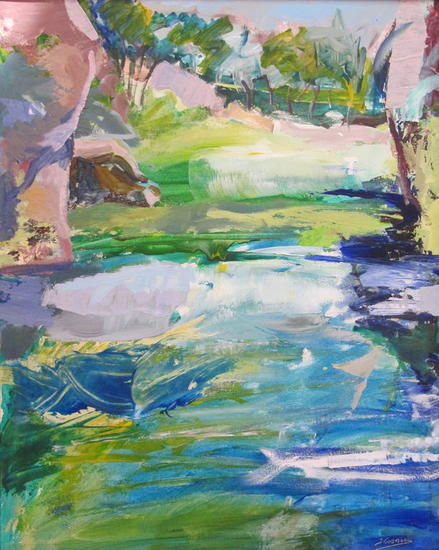
The search. I look for a figuration that alludes to the surroundings and reminds us of landscapes, characters, objects and atmospheres. Not a reality that is mimetic in form, but a reality felt emotionally.
The process of this creation brings me knowledge, since it is based on the observation of the elements and their surroundings, on the passing of time and on the variations you notice.
The result is paintings with a predominance of expressionist figuration, sliding towards abstraction on supports of varied formats. Acrylic paint is one of my most recurrent materials.
Have you had any exhibitions lately, what can you tell us? Do you have any project in mind?
This past year I have done two group shows, one at Bulevard dels Antiquaris in Barcelona and the other at Nauart, also in Barcelona. Exhibiting is a way of staying up to date.
One of my projects, ÁRBOLES DE LA MEMORIA, is on the blog. It is a dialogue, as people say now, between the artworks I have created in different periods that have the tree as a common element.
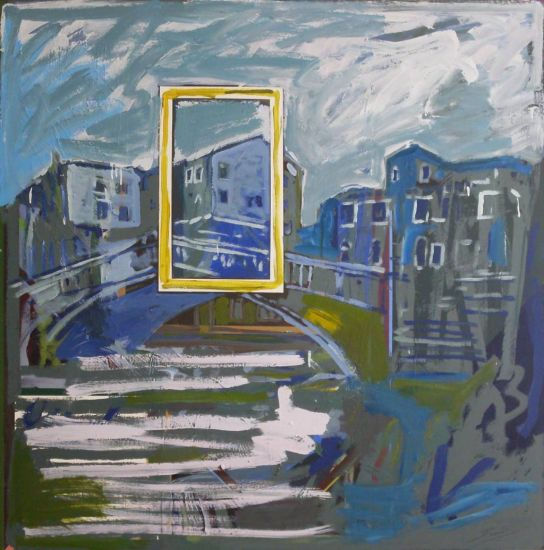
Another project I'm working on is series of paintings on canvas and paper. One of them is ENLACES, another PAISAJES PRIMORDIALES and another the ÁRBOL DE LA CIENCIA, each one has its own path and its own encounters, so that they will lead me to select a number of artworks for a solo exhibition.
The starting point is to give intuition an important part in the process, precisely because I believe we live in a technified society, where science, instead of opening doors to knowledge, serves soulless corporations that distrust the humanities. Intuition is a powerful form of knowing and many scientific advances are preceded by some flash of the intuitive. Science, contrary to what people believe, can only explain a small percentage of the world, so we should recover that ancestral knowledge. For the series I go back and take inspiration from the simplified forms of the first times of creation, spirals and circles which are the forms of galaxies, of planets, of treetops and of children's first drawings. I aim to reach that essential point of claiming painting and turning it into something explicit, where colour and material serve us in a game of combinations, to set some point of our emotion vibrating.
Could you recommend us:
An artist: Rogier van der Weyden.
An artwork: The Garden of Earthly Delights, by Bosch.
A book: Hopscotch, by Julio Cortázar.
A film: Gattaca.
Thank you very much.
We invite you to visit Jesús Cuenca's gallery on Artelista.
Comments (0)
Log in to leave your comment. Log in