
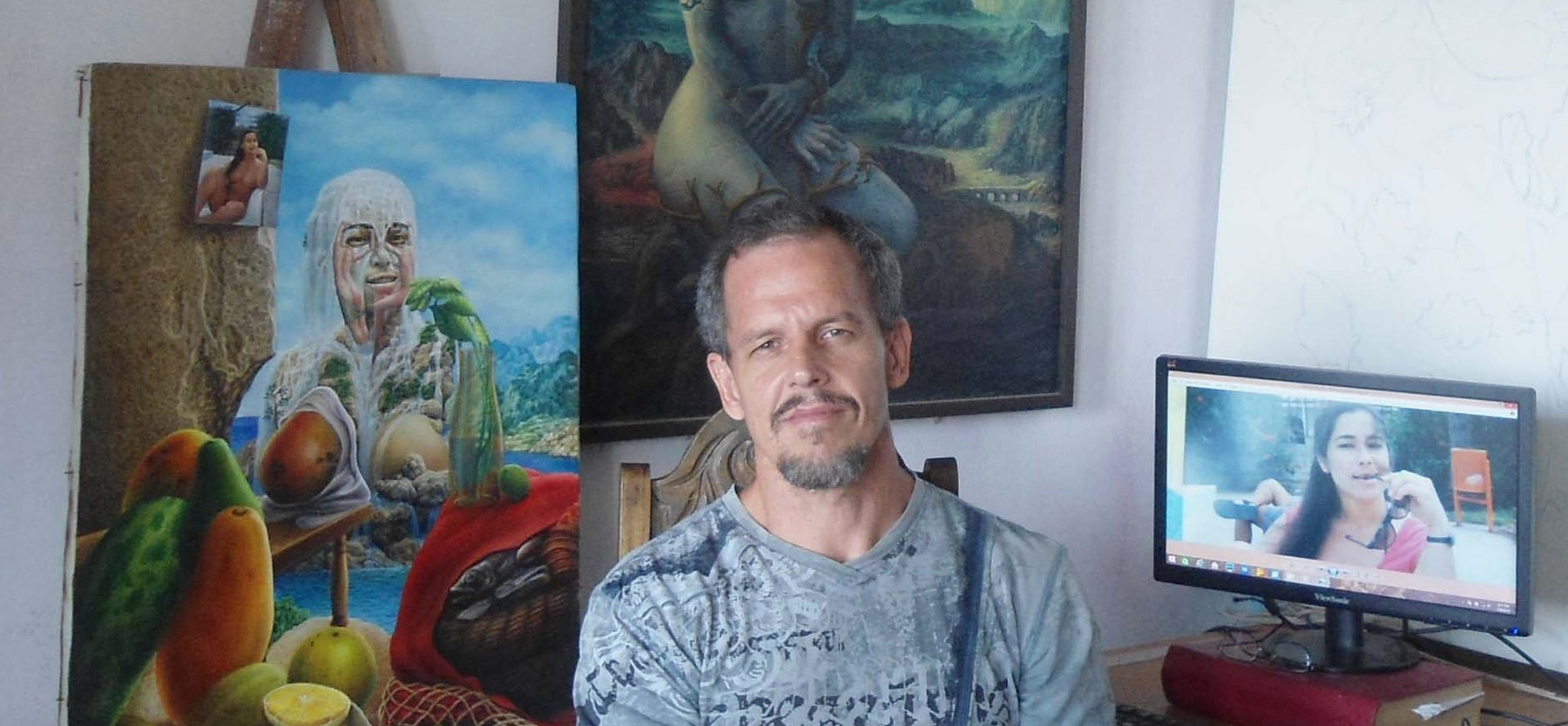
I was born in Havana, Cuba, on 27 November 1962 and so I didn't realise in time that I was being born in one of the most significant decades of the 20th century, and not just for art, because almost everything was trying to change for the better, or at least to be seen from a different, newer angle. My parents separated when I was barely born, but they both always stayed very close to me. My mother, of country stock, sang beautifully and had an above average hand for drawing. My father, the son of Spaniards, was an engineer, and you could tell from the lines of his plans that he could have been a good draughtsman too. Both of them, in spite of their professions, had a heightened sensibility for appreciating art, and they let me share in it.
When and why did you start painting?
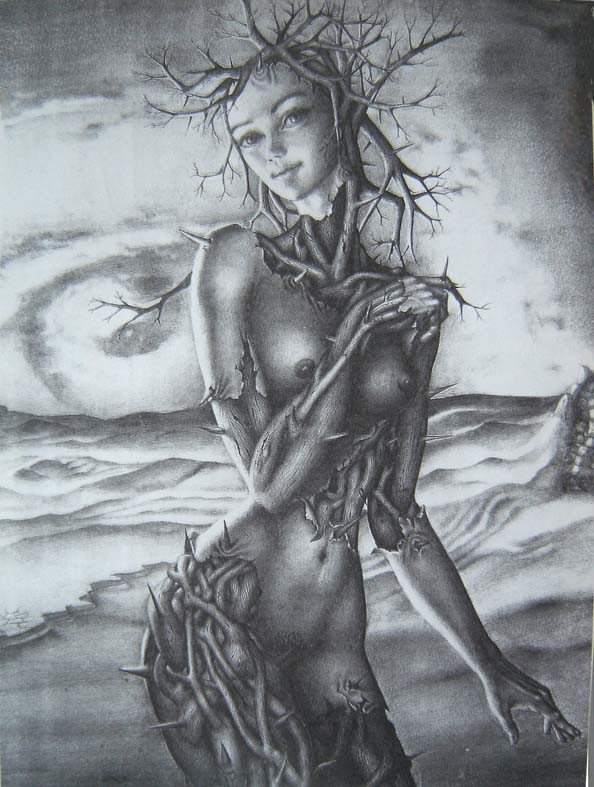
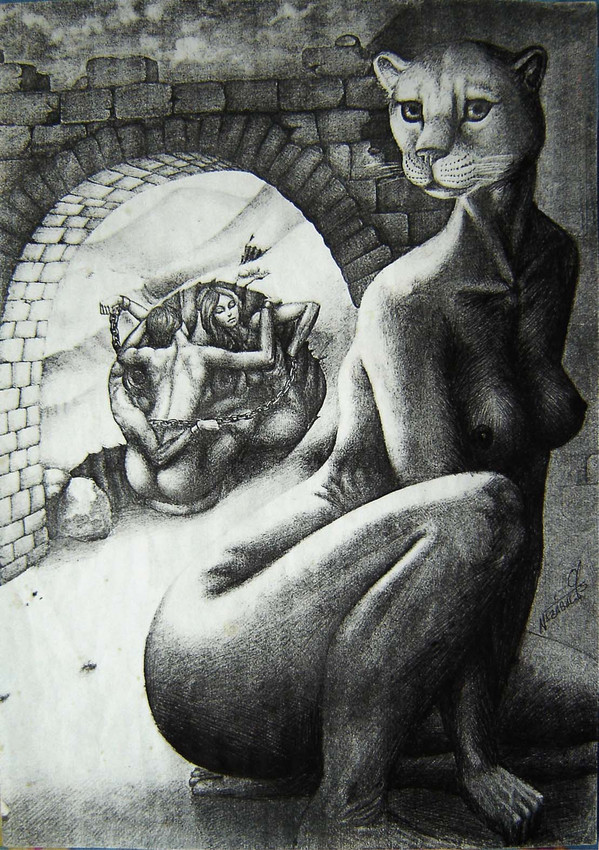
I still have drawings I made when I was only four years old. I was fascinated by recreating the characters from the cartoons I watched on TV. My parents marvelled at my attempts and proudly showed them to their friends. That was a big push for me to keep going down that road, and while I had fun drawing I was also refining my line. At twenty, playing down painting as a career and dreaming of being a marine biologist, I graduated with a degree in Biology from the University of Havana in 1985. But life sometimes takes us where we're meant to be, even when we don't intend it. In the 90s the country's economy and my family's became critical. I was working as a cytogeneticist in one of our hospitals, and I found myself almost forced to look for another way to improve my income. Painting and my drawings were the solution. The situation stirred my creativity and a lot of images came into my head, apparently out of nowhere. From that period came my first pencil drawings, which could be described as surrealist: creations with a dark context where I generally mixed the human nude with walls, ruins and deserts. I gave those drawings to craftspeople who had licences to sell at fairs and they practically gave them away. Shortly afterwards a Panamanian gallery owner saw one of my drawings and contacted me. He bought 5 boards from me at a very good price, commissioned new pieces and suggested I paint canvases as well. Surprised by the road opening up in front of me, I began to value what I was doing more. The business with this man didn't bear fruit the way I hoped, but by 1996 I had started studying painting. In 2000 I graduated as a Painter from the San Alejandro Academy in Havana and painting became my only profession.
How do you think a gallery and its artists should help each other?
The gallery and the artist have an almost obligatory bond, since galleries couldn't exist without the creators of the art they sell. That doesn't mean, however, that the interests of the two coincide exactly. Many galleries stock up on cheap, easy to sell art and on a small, closed group of artists who agree to play that game. Others shut their doors to artists who aren't well known, and a lot of art of equal or greater quality is left with no chance of becoming known. I think there should be collaboration and mutual support between galleries and artists, to the benefit of both sides. Galleries should take into account the particularities of each creator, with flexible rules and methods that adapt to some extent to that diversity. Artists, for their part, should set prices that take into account their real chances of selling, and in that way make room not just for their own income but for a profit for the gallery that lets it survive and grow. Spaces should be created for new artists with commissions that favour them, rewarding and promoting the quality of their work rather than its commercial appeal, so that these artists feel driven to grow as artists and not as mediocre creators.
What advice would you give to artists who are starting to show their artworks?
I think the most important thing for any Artist is that sincerity comes through in their artwork, and for that I believe they should work on the subjects they most enjoy, the ones that reflect what they need to express from inside themselves. There are many who only try to be fashionable and chase after new forms of visual expression as they appear, reproducing them coldly without feeling them as their own. That way they never arrive at a stamp of their own that identifies them, nor do they communicate anything about themselves, which is one of the aims of art and of being an artist. They may have temporary success, but their work is only an echo of authentic art. On the other hand, looking for promotion using every means available is essential. Try to put on shows often and at the same time promote them so the largest possible audience can see them. The Internet and websites like Artelista are a great help for that.
How did you sell your first artwork? Is there one you feel a stronger connection with?
It was the end of 1993 and my first son had been born a few months earlier. I'd heard that in the streets of our Old Havana artists showed their artworks and sold them to tourists. Spurred on, I took a piece of cardboard and in a few hours I painted in oils a figure that was half naked woman sitting with her legs crossed and half crouching panther. All around me there were plenty of artists and craftspeople selling all kinds of objects as well as artworks. Hours went by and nobody noticed my piece, until a relatively young woman came along, not a tourist but Cuban like me, and she fell in love with my oil. She offered me 200 Cuban pesos and I was delighted. That was my first sale.
It's hard for me to single out one artwork of mine as the one I connect with most, because when I'm absorbed in each one I always feel it's the most important. But once I'm out from under that magical influence, the ability to judge them from a more objective, more distant point of view comes back and there are some I like more than others. So I'll go with La Libertad del Pensamiento, an oil on canvas of 150 x 125 cm that I painted in 2002, with my wife as the model.
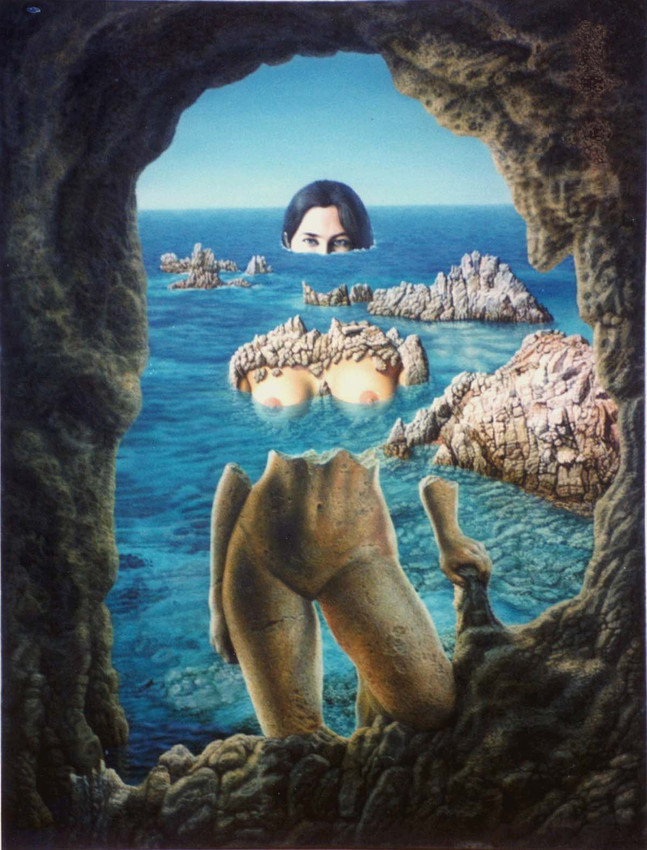
What is art for you? What part does it play in your life? Do you live off art?
Art is a form of expression where the deepest feelings are laid bare even without the artist intending it, and that's how a communication is set up between the artist and those who appreciate his artistic expression through empathy and identification, as if the sensibility of the viewers came into resonance with that of the creator, vibrating at the same frequency that drives his Artwork. The Universe is filtered through the Artist's heightened mind and represented anew, now through his codes and abilities, for everyone else. It's a message that stays and outlives its author as long as his creation exists and someone else appreciates it.
Art complements my Life in many ways, not just because it brings me an income. When I'm in the process of creating, generally listening to the music that motivates me most, I feel wrapped in a kind of indescribable magic that takes me out of everyday reality, life becomes intense and fills up with mysteries, widening its horizons. Thanks to Art I feel able to express ideas and many things that are impossible to say with words or logical reasoning. Art always goes with me, most of the time silent, unnoticed by others, but taking in every detail around me almost unconsciously. And then, with no warning or explanation, it suddenly sends my mind a message of ideas expressed in images and feelings, which I begin to need very strongly to turn into a palpable, real artwork. If that stopped happening to me, Life would lose part of its charm for me.
Your artworks bring Arcimboldo very much to mind, though they stand out for a sensual side the Italian artist lacked. What do you make of that comparison, do you identify with him?
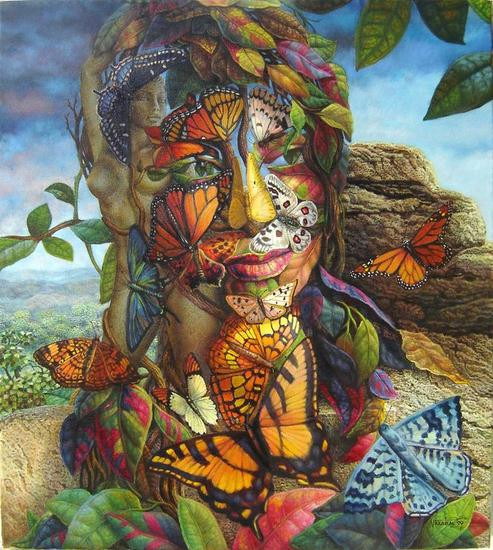
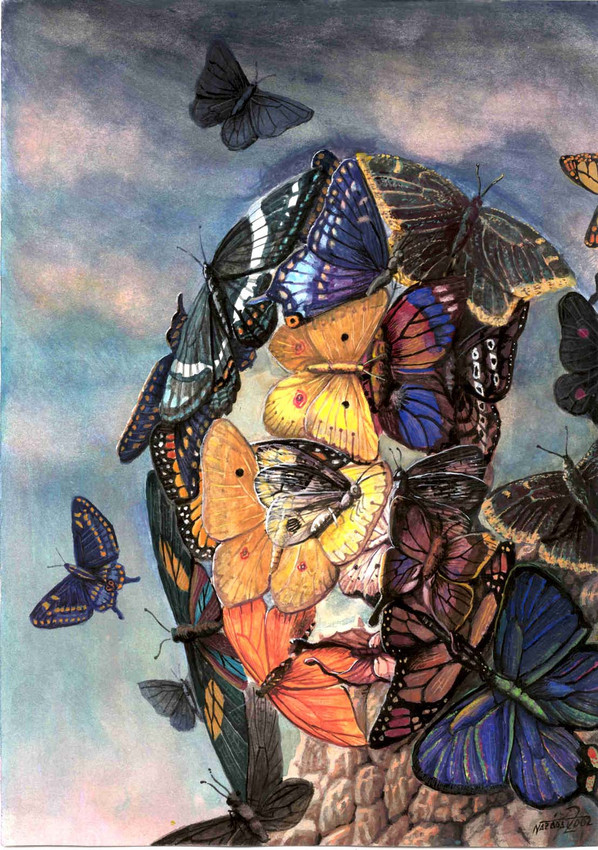
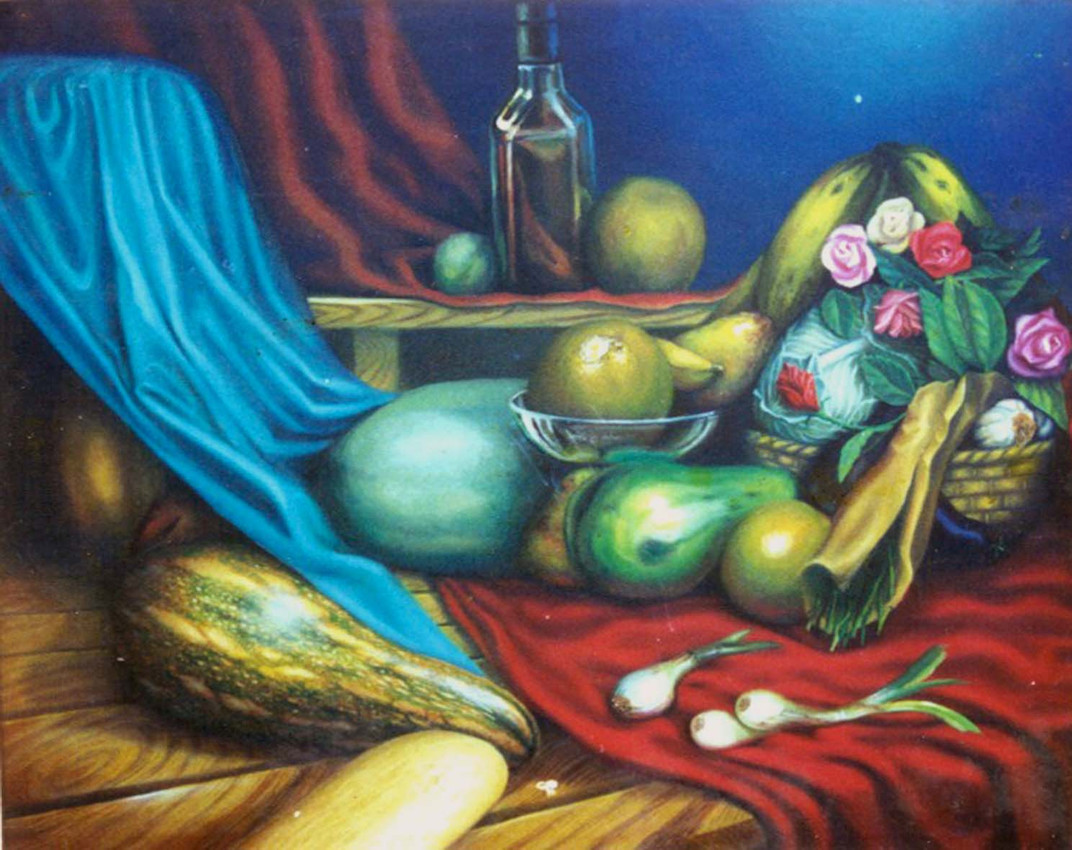
Honestly, when I painted my first “Mujer Fruta”, as I call that kind of work of mine, I didn't know the famous artist of the Italian Renaissance, Giuseppe Arcimboldo. I made the first piece of this type in 1998 in less than a week and titled it Naturaleza Mujer-Está, hinting at the phrase “Naturaleza Muerta”. I was after a more attractive, easier, more commercial artwork as a way of selling quickly. I arrived at that kind of figure more through my admiration for Salvador Dalí than through Arcimboldo, whom I discovered afterwards, precisely when someone mentioned how much my still lifes looked like the master's. Earlier I had drawn a Lioness's face made of Women, Mimetismo (1994), and a male face made of Ballerinas, Partenaire (1997). In both cases I was more influenced by Dalí's Paranoiac-Critical method, which was itself born of his admiration for Arcimboldo's work. In 2001 I made the small gouache Las Alas del Polvo, where I painted my wife's face with butterflies, and years later the small format canvas Cuando el Azar te Descubre, which comes closer to Arcimboldo's work but, as before, unintentionally.
What are your sources of inspiration? Do you identify with any other artist?
My sources of inspiration can be the beauty of a woman, love, a sunset from my balcony, the mystery behind the simplest everyday things, old walls or ruins blurring into the vegetation, nature itself, time, a moving melody, a magnificent canvas or sculpture and any other artistic expression that touches me deeply.
I think I've been influenced by many artists. As a child I loved looking at books illustrated with Renaissance works by Leonardo Da Vinci and Michelangelo and by Baroque painters like Georges de La Tour, Rembrandt and Velázquez. I most admired those works full of light and shadow where the beauty of human anatomy was exalted. I remember how most of the recognised Painters of the moment rejected the realist way of representing things, and I felt my taste didn't fit with modern art. One day I saw two surrealist works by Salvador Dalí in print, El Cristo de San Juan de la Cruz and El Puerto de Cadaqués, and I knew that Realism and modern art could coexist and merge. Once I was studying Art I got to know and admire the work of other surrealists such as René Magritte and Frida Kahlo.
Have you had any exhibitions recently, what can you tell us? Do you have any project in mind?
Family Life, my average rate of production and the commissions that come up more or less regularly haven't allowed me for some time now to build up enough artworks for a solo exhibition, but I haven't stopped taking part in important group exhibitions. In 2011 I became a Member of the Society for Art of Imagination, run by the well known artist Brigid Marlin (Art of Imagination). In November of that year I took part with three Pieces (Punto de Retorno II, El Eco de la Luz que un Día te Vio and El Rostro del Viento) in the society's Annual Exhibition, held in London, England, at the Pall Mall Gallery. In April of the following year (2012) those same artworks were shown in another exhibition of the society, this time at the Phantasten Museum Wien (Austria).
My project for the future is to manage to focus more on my work as an artist, organising my time better so I can have solo exhibitions more often. As for my style, sometimes I think about working the details less and achieving the same appearance of realism as in my current pieces with looser, quicker strokes, trying to learn from the work and the way geniuses like Velázquez or Sorolla painted. I'd gain in speed and spontaneity, but I might lose a bit of my stamp and of what makes my artworks appealing to those who follow my work. So I'd have to try it and weigh the two things up.
Could you recommend us:
- Un artista: Salvador Dalí.
- Una obra: Cisnes Reflejando Elefantes, de Salvador Dalí.
- Un libro: Fahrenheit 451 (1953) de Ray Bradbury.
- Una película: La Máquina del Tiempo, versión inglesa de 1960 dirigida por George Pal y con Rod Taylor.
Thank you very much, Ignacio.
We invite you to visit Ignacio nazabal's gallery on Artelista.
Comments (0)
Log in to leave your comment. Log in