
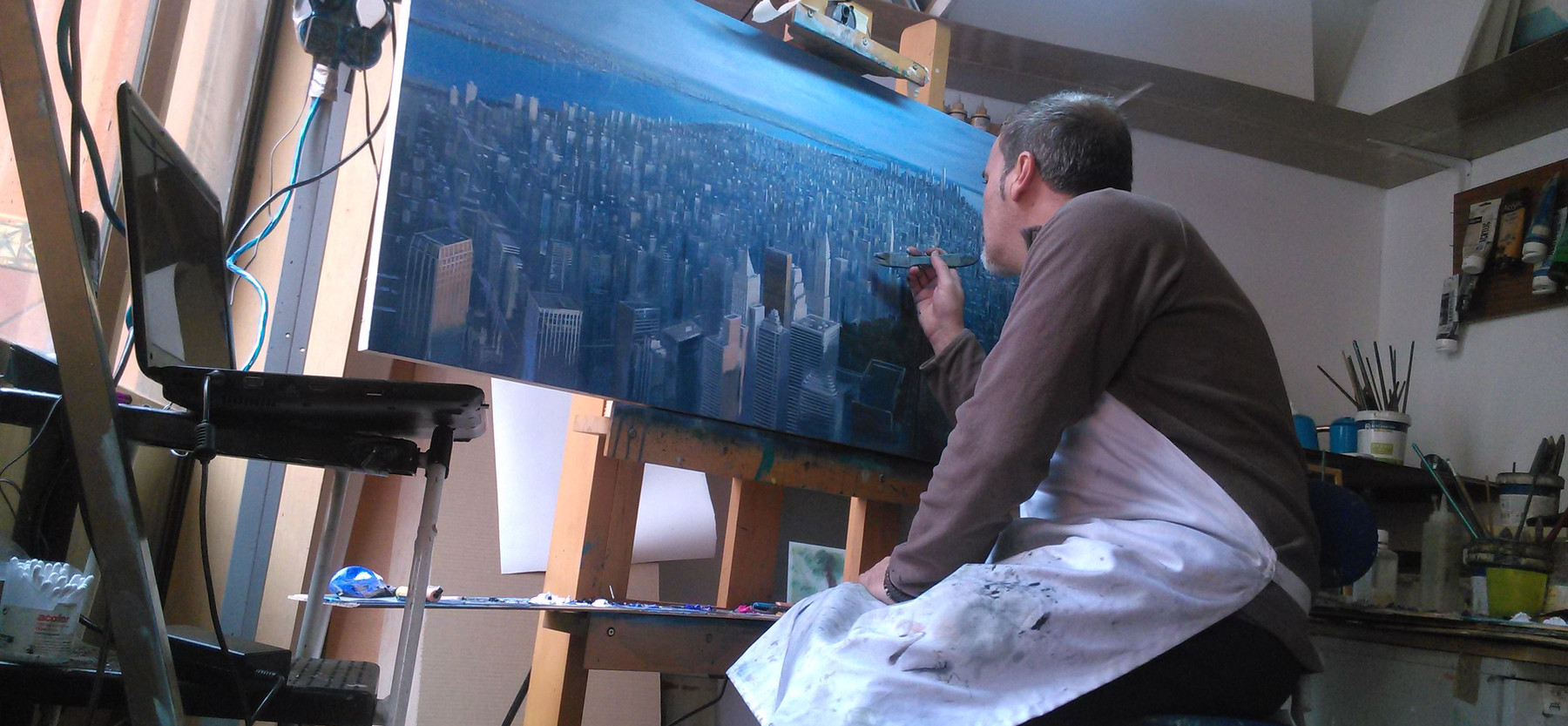
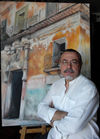
My name is Rafael Carrascal García, I was born in Olombrada (Segovia). When I was four we moved to Alcorcón and I've now been living in Fuensalida (Toledo) for a year.
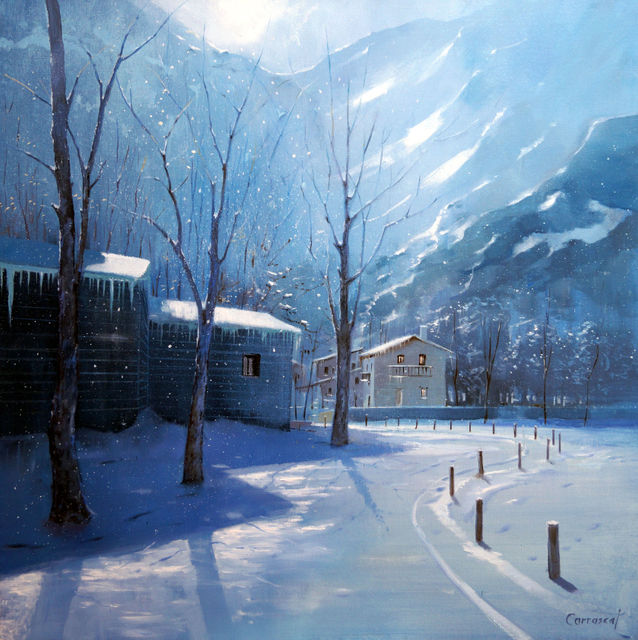
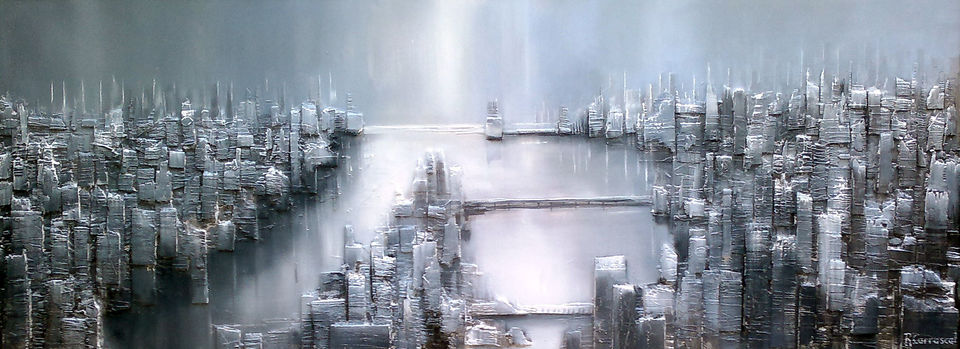
I'm self-taught, although I've had the odd class with painting teachers. I really like painting outdoors, in fact half the pictures I make belong to that genre. I consider myself a beginner and anyone who sees my artwork will notice that it's very broad and varied, because I'm in a phase of searching, learning, practising and experimenting. I like painting in acrylic, oil, mixed media, charcoal on board, and now I'm looking into the world of watercolour. If I had to categorise my artwork somehow, it would be Romantic.
I don't like talking much about my merits, I'd rather other people did that. I'm going to talk about my flaws, which maybe in the future could turn into my virtues, being a bit vain. I consider myself very rebellious and also a bit stubborn, I'm not a great expert on painting but I look at a lot of it and I'm learning bit by bit. As time goes by I meet more painters who enrich me with their advice. I consider myself transgressive and anarchic, maybe because I don't like following the rules that get laid down for us. The other day I was telling another painter that I didn't know the names of the formats that have always been used in painting, 40 figure, 60 landscape… I'd change things once and for all and use, for example, a mobile screen format (16:9), a TV format (4:3), or I'd use as the most common measurement 122, which is the width of the board when you go to the carpenter's for one. Compositions and formats now are innovative compared to what used to be done, and a seascape doesn't have to be landscape format.
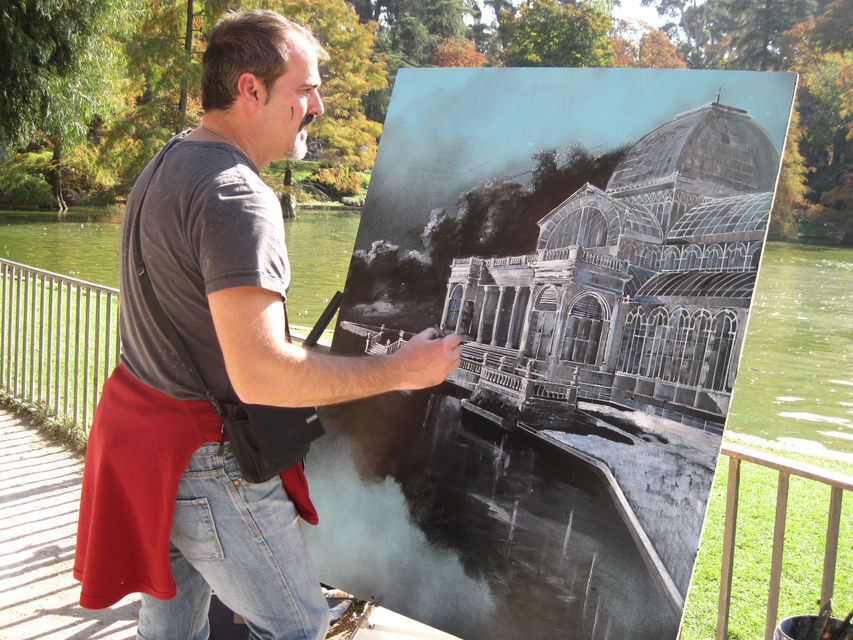
I think painting has run into a wall and needs new blood. Maybe the time has come for the self-taught, the inventors, the blunders. Why can't you put acrylic over oil? I'm sure there's already some product that makes it possible, and if it cracks, there's surely another one to fix that crackling. And why are margins left in watercolour and not in acrylics and oils… well, just so you know, they look great too.
When and why did you start painting?
I've always liked painting and it's always been there, trying to make a place for itself in my life. Now I consider myself a visual artist, but until very recently I was a quantity surveyor and I worked in construction. I never imagined I could make a living from painting, nor did I really have the chance to consider it, to be honest. I put in a huge number of hours in my site hut and I was fully dedicated to construction. Even so, painting always managed to grab a little gap so I'd get paint on about 4 or 7 canvases a year. And well, the day came when the 72-home development I was going to build ended up as one more of those structural skeletons that unfortunately are now part of our urban landscape. The property bubble burst and something else burst in my head, my love for painting, so I made myself a bet, to see if in five years I'd be able to make a living from it. In my fourth year dedicated exclusively to painting I've achieved my dream. Now I paint about 40 or 70 pictures a year. The idea was a bit crazy, like I am when something excites me. It was a very difficult time to change profession, and even more so to painting, because one of the first things people stop buying when things go badly is pictures. Anyway, you could say the crisis and I as a painter have grown up together. I hope it doesn't grow any more so I have more chance of growing myself.
How do you think a gallery and its artists should help each other?
I'm not very familiar with those matters, since I haven't exhibited in one yet, but what everyone says is that right now if you want to exhibit you have to pay for the space, on top of the commission they take, unless you're an established painter. What's clear is that in the end they avoid the risk in order to survive and we have to take it on in order to live.
I praise the galleries that trust in the artist's artwork and only ask for a commission on sales. There are now a lot of art sales portals on the Internet and that's the future of selling, although I think the commissions are too high.
What advice would you give to artists who are starting to show their artwork?
First of all, to show it without fear and to feel proud of it, to bet big. To believe in themselves, to learn and never think they already know everything there is to know. To be humble and patient. To look ahead with one eye and with the other at what they've left behind, and if that look is one of progress and improvement, to carry on to the end. To dream with their feet on the ground and a brush in their hand. To paint with emotion, to live their passion, to feel it and not let laziness, fear, discouragement or a blank canvas get the better of them one day, because that would be the end.
How did you sell your first artwork? Is there one you feel a stronger connection with?
My first sale was really odd. We put on an exhibition with the painting collective I belong to (VETTONIA) at a crafts fair in Alcorcón in 2008, and on one of the first days a colleague from the collective called me to say we'd made the first sale and it was a picture of mine, which made me tremendously happy. The buyers were a couple and since there was still a lot of the fair left, they were told that if they didn't mind coming on the last day to pick it up, so as not to leave empty gaps on the stand. They paid the €100 it cost, the guy left his name and ID number and off they went. The thing is that on the last day of the fair I was at the stand to meet them and hand over my precious artwork and they never came back for the picture. I felt awful about having made my first sale, having the money and keeping the picture. Thanks to the name and the ID number, a policeman friend of mine got hold of a landline, which I called many times without getting an answer until, after several weeks, someone picked up and I spoke to the mother of the guy who'd bought the picture. After I told her what had happened she said she found it terribly strange that her son had bought a picture when his girlfriend painted pictures too. She wasn't exactly friendly, and it was hard to keep the conversation going because she wanted to hang up straight away. In the end I got her to take down my mobile number so her son could call me and I could hand over the picture.
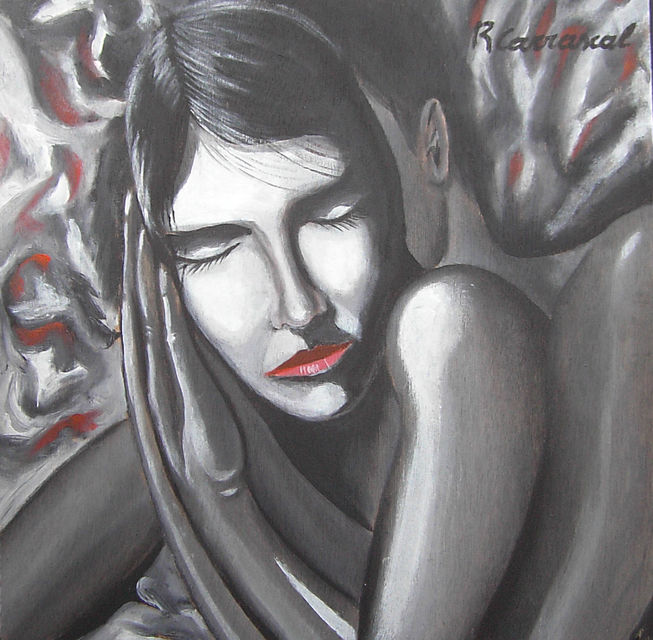
I never got a call and to this day I still have the picture at home with the name of the person who bought it on the back, and I hope that one day the mystery will be solved and the picture will be reunited with its rightful owner. The picture was a 40 x 40 cm acrylic on board titled Paz.
And the picture I'm fondest of is Tocando el cielo, oil on canvas 130 x 97 cm from 2007. It was the ninth picture I painted and it was for a group exhibition on the theme of "Music". Even today I'm surprised to see that I got an image like that out of my head and that it turned out that way when I'd barely picked up a brush. I was so moved that I even wrote a text:
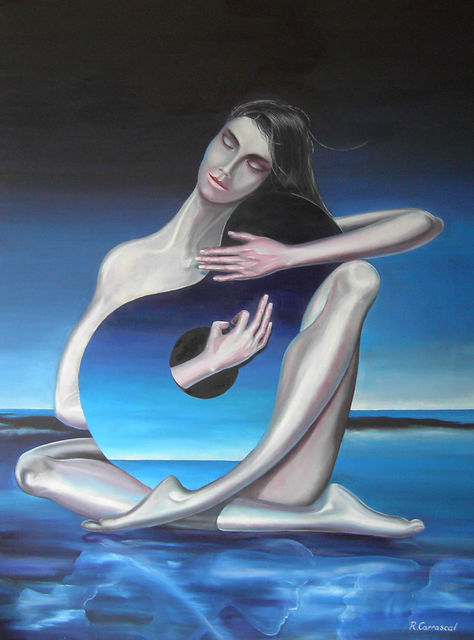
Painting music?
Painting music is difficult, because everyone has their own music and a different melody in each period of their life.
And what better melody than that of happiness, the one that lifts us above the clouds to a strange place and carries us beyond anywhere we know…
A woman closes her eyes and begins to listen to her own melody, music isn't heard, it's felt, it comes from within and it's even better when it comes from deep down.
For her there's no better music than that of love and no greater love than feeling the life of a newborn… She's beside herself with joy and her body twists with happiness, she's blessed and she thanks life for that chance, she remembers everything she has and everything she's achieved. All her loved ones are reflected in her life, her great love, her family and even her closest friends.
She holds him with the greatest tenderness and feels him as her own, she touches him, strokes him, cuddles him… she's touching the sky and she knows a little piece of that sky is hers, she's feeling happiness, love and peace, a lot of peace, like the peace the sea inspires when you're alone with it.
What is art for you? What part does it play in your life?
Well, right now it's my greatest calling. I think I'm privileged, because I'm lucky enough to be able to devote myself to what I've always loved. I don't think any other profession would give me the joy I feel getting up every day to paint. When I paint, time doesn't exist, or you don't notice it, and in life, when that happens, it's called happiness.
And not just that, one of the greatest satisfactions I get from this is that there are people who want to have something of mine hanging on a wall, which fills me up enormously because as well as your own enjoyment, you know you're creating a state of wellbeing for the person or people looking at it.
What are your sources of inspiration? Do you identify with any other artist?
My sources of inspiration are my head and my life. The way I most enjoy painting is inventing images and putting them on a canvas. My imagination is my main weapon and what I think I should explore and exploit. To feed it you have to live making the most of everything around us, feelings, images, events, experiences, any reason that stirs something in our head can be a great subject for a picture. At the beginning I loved Surrealism and I loved Dalí, precisely for what I said before: I find it admirable how out of nothing he could capture those dreams or images that went through his head. My aim right now is to invent an image, capture it and try to make it realistic.
In your creative process, do you have any habit, practice or quirk that's peculiar or curious?
Well, when I prepare the canvas or the board I really like running my hand over the surface, like a caress. I don't go as far as talking out loud to my canvases, but I do pamper them so they help me get inspired. And I have the habit of always marking on the frame, with little lines, the hours of work I put into each of my artworks, that way I know how many hours I paint in a year.
Have you had an exhibition recently, what can you tell us? Do you have a new project in mind?
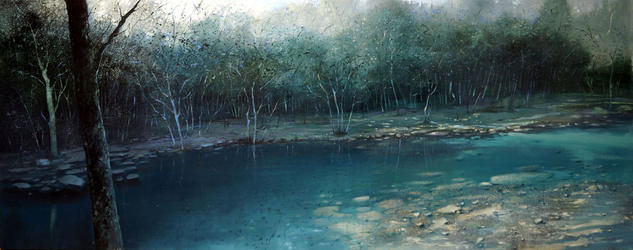
At the end of this month, from the 25th to 11 December, I'm exhibiting at the Ibercaja in Guadalajara under the title Dulce y Salado. It's a show in which water and nature are the protagonists. I'll be hanging 25 artworks that make up a good catalogue of everything I've been doing. When that one ends I'm doing another from 12 to 30 December at the Centro Cultural San Juan Bautista in Ciudad Lineal, Madrid.
And projects in mind, phew! Loads, the outbox in my head is packed with things, and I don't know if I'll have enough life to develop them. Time goes by very fast.
Could you recommend us:
An artist: Gustav Klimt.
An artwork: El beso, by Gustav Klimt.
A book: The Pillars of the Earth, by Ken Follett.
A film: Roman Holiday.
Thank you very much, Rafael.
You can see Rafael Carrascal's gallery and the review on Artelista.
Comments (0)
Log in to leave your comment. Log in