
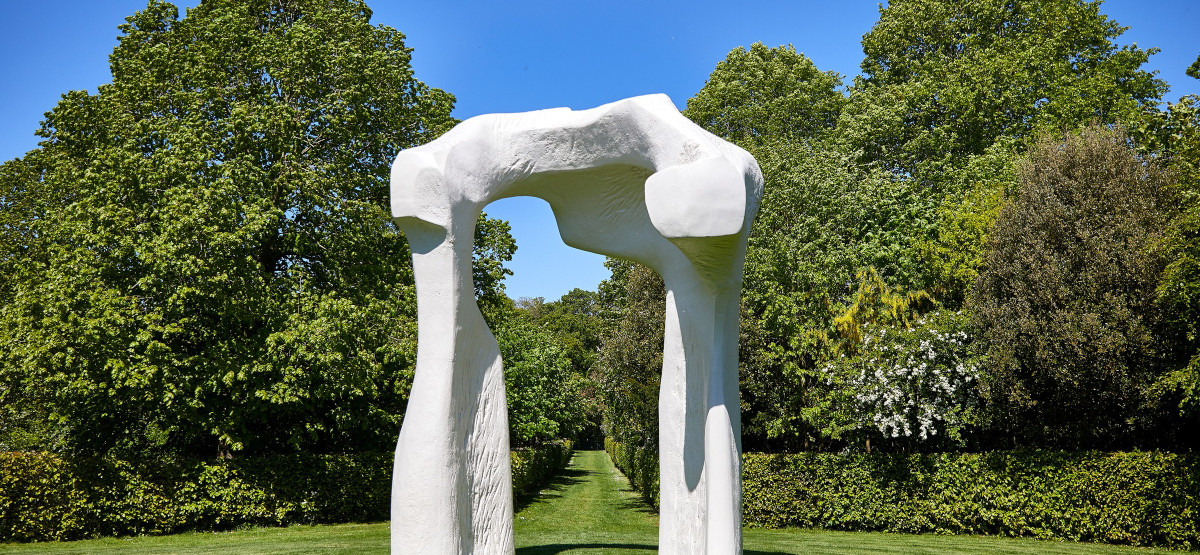
A key figure in 20th-century British art, Henry Moore was one of the great names of European sculpture. His career began hesitantly, misunderstood by his contemporaries, and then burst open in the 1950s, when he became the leading figure of sculpture in his country, which also earned him plenty of insults from younger generations who accused him of hogging everything.
Indeed, having a Moore in the garden became a must for British collectors between the 60s and the 80s. But the artist always tried to follow his own path beyond the praise and the criticism, his discoveries in dialogue with other great figures such as Oteiza and Chillida.
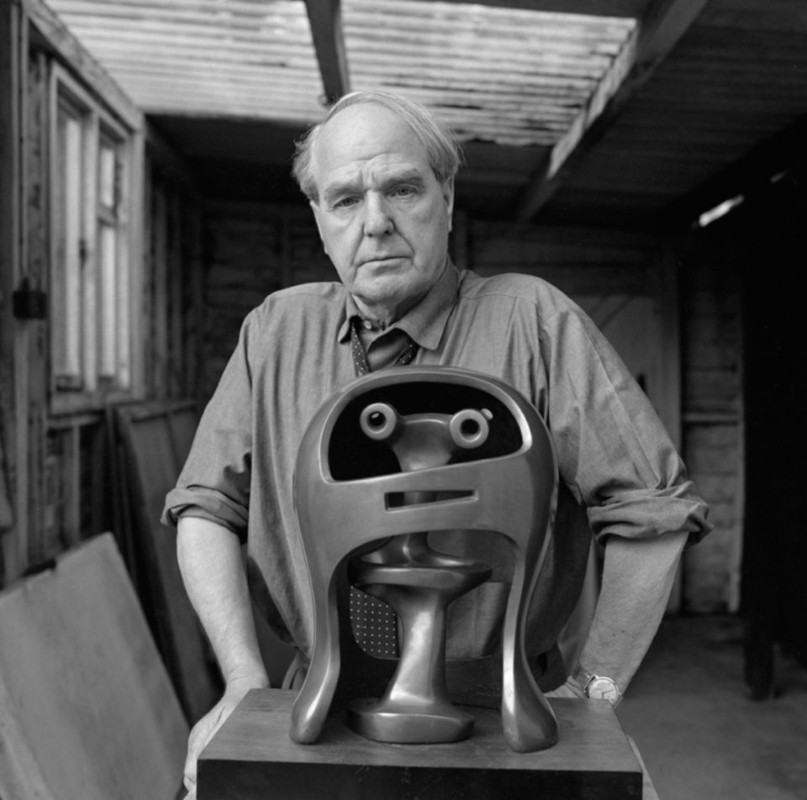
Henry Moore was born in a bad time, as happened to many of his contemporaries. Coming into the world in Europe at the end of the 19th century meant going through two world wars from the inside. And, sure enough, both wars were crucial in Moore's biography. In the first he was gassed during an attack in Belgium, which sent him home to recover. Thanks to the pension the Government granted him as a veteran, Moore left his job as a young schoolmaster and enrolled at the Leeds School of Art, where he met, among others, the sculptor Barbara Hepworth.
By 1924 he had moved to London, where he went on training until he landed a teaching post at the Royal College, where he met Irina Radetsky, his future wife and the mother of his daughter: two people who would shape not only the sculptor's life but also his professional career.
In the last years of the 1920s, Moore shaped his style around the influences he took from the avant-garde, with artists such as Cezanne, Picasso and Modigliani, and also took an interest in some masters of the early Renaissance like Masaccio and Giotto. But Moore also discovered the indigenous sculpture of Oceania, as well as pre-Columbian art, and both lit up the sculptor's future artistic path.
Although he later regretted it and made his peace with him ("my admiration for Rodin has grown and grown over time", he was saying by 1970), Moore started out rejecting the established sculptural current embodied by the French sculptor's heirs. Rejecting the official, dominant art, good or not, is more or less compulsory in a young artist, and he himself would suffer it years later...
That is how in 1933 he joined Unit One, a group bringing together avant-garde artists from different disciplines, and three years later he showed in a surrealist exhibition at the New Burlington Galleries in London. But his art was not quite winning over the public, or himself, since he had not yet found the style that would set him apart.
It was with the outbreak of the Second World War that his country's Government commissioned a series of drawings from him capturing the drama of the air-raid shelters in the London Underground, which brought him a certain amount of attention. Finally, in the 1940s everything falls into place in the artwork and career of an artist reaching maturity: in 1946 MoMA gave him a retrospective and in 1948 the Venice Biennale awarded him the International Prize for Sculpture. Around this time his daughter Mary was born and Moore returned to the theme of motherhood, which he had already developed successfully in the past.
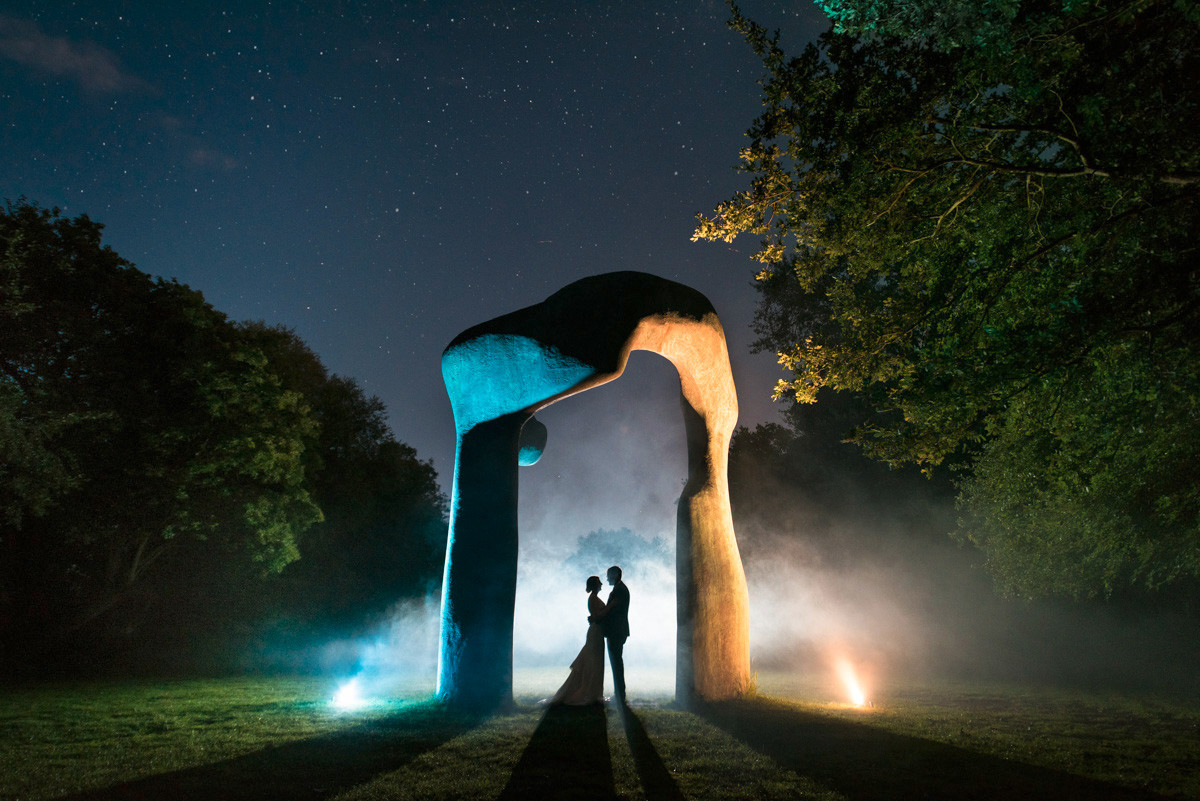
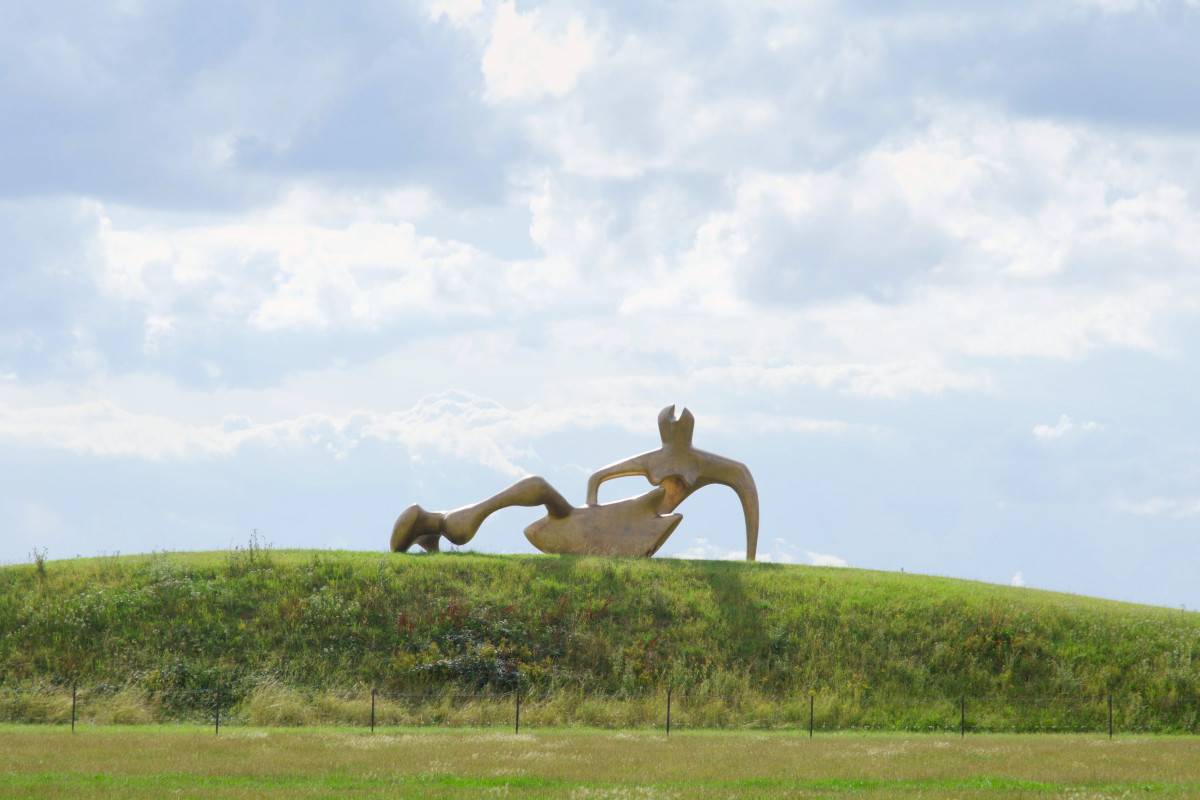
Thanks to his new standing as a world-renowned sculptor, Henry Moore carried out his most ambitious artworks, finally achieving his great goal: to integrate sculpture into the landscape, often bordering on abstraction, playing with voids, concave and convex volumes and the qualities of materials, but never losing sight of the human figure, almost always the woman-mother, as his main motif.
"Sculpture is an art of the open air. Daylight, sunlight, is necessary to it, and for me its best setting and complement is nature. I would rather have a piece of my sculpture put in a landscape, almost any landscape, than in or on the most beautiful building I know."
That is how Henry Moore spoke in 1951 about the relationship between his sculpture and the landscape, something that undoubtedly makes him kin to other great names of European sculpture such as Eduardo Chillida. This wish to tie nature to sculpture, freeing it from its stone container, be it a museum or a building, is one of the British artist's great discoveries, and it places him as the forerunner of a whole generation of artists that reaches as far as the land art of Christo himself.
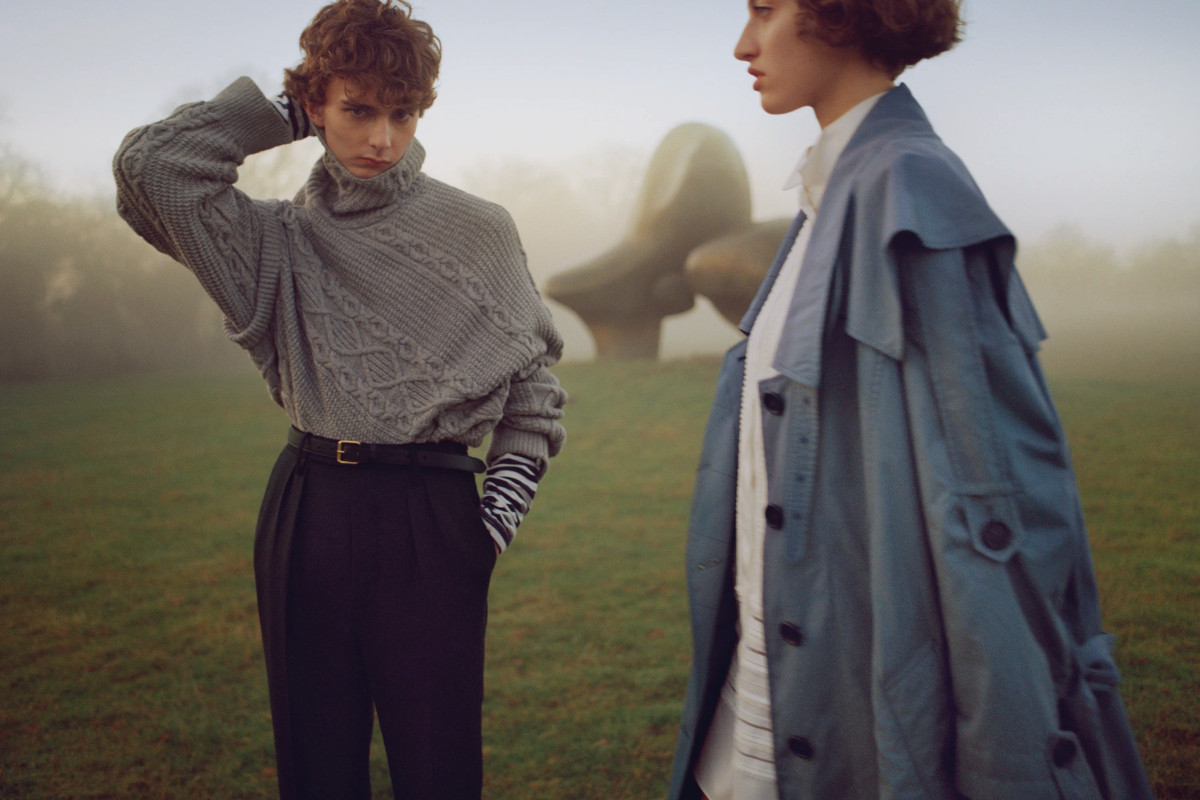
But this fame turned Moore into the Rodin of the young British sculptors of the 70s, who saw him as the establishment artist, as someone hogging public commissions and museum space... literally. When Moore announced a gift of various artworks to the Tate in London, a group of artists, including even some of his own collaborators, sent a letter to the Times protesting that there would be no room for other artists if Moore's artworks were put up.
But time passed and in the end Henry Moore's figure was valued for what it was worth, as the father of contemporary sculpture in the United Kingdom, as the man who modernised the language of sculpture in a country that, until then, had shown little enthusiasm for avant-garde advances in the discipline.
Comments (0)
Log in to leave your comment. Log in